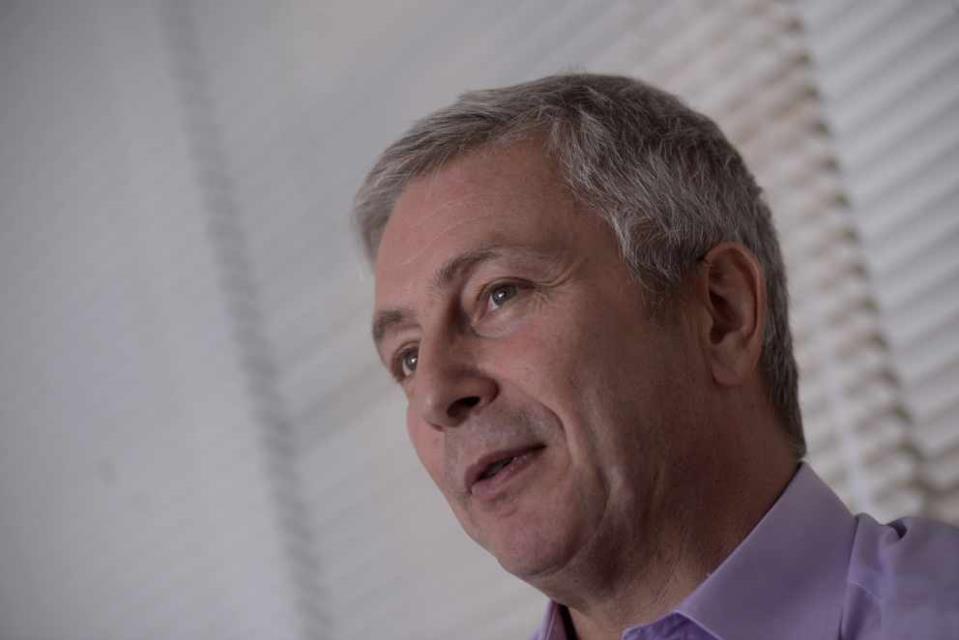
6PM founder and CEO Ivan Bartolo recently became the first Maltese person to receive a Doctor of the University Honoris Causa from Middlesex University.
During an interview with this newsroom, Dr Bartolo described the road taken that led to the creation of his successful business, gave advice to young entrepreneurs and described his emotional reaction to the Doctorate awarded.
At the age of 11, his flair for business was already evident. “My parents had bought me a Black and Decker Lathe during summer (later buying further tools). I ended up constructing 200 lampshades used in flats and apartments for tourists in Malta.”
His first job was that of a delivery boy. “I used to drive a large van, as I had never made it to University. This was in the early 1980s and the political situation at the time meant that doors were closed to people like me. I was hurt and angry but in hindsight it was one of the best things that could have happened to me.”
“Being in that van, meeting all sorts of people, taught me a lot about the streets, but I was also teaching myself IT.” He then worked for a company within its IT department when he saw an advert for a developer with Fino and applied. They immediately sent him to a computer language training course. By the age of 21 he, in collaboration with Fino, had opened a company which did not work out.
His next employment was with the Management Systems Unit, created by former Prime Minister Eddie Fenech Adami, before moving on to the Demajo group and eventually being given the opportunity to work abroad in the UK. He explained that all of this helped him build valuable contacts and learn skills required to be a successful entrepreneur.
He started up 6PM, a company now worth several million euros, in 2001. He spoke about 6PM’s beginnings having started in a garage before later moving into a flat and, eventually, into the building where it is today. “I always wanted to start a products company like this, but I could not just start from that point, as I could not spend the first three years developing the product without any revenue coming in.”
His vision for a products company only came into fruition in his third iteration of business evolution. “At first, we were a time and material business (where the employer agrees to pay the employees based on the time spent by the contractor's employees and materials used to perform the work), and then turned into a development house (where he would develop software, although the company who employed him for that work would retain the intellectual property rights). This gave me experience and the funds needed to create and invest in my own products. If there is a start-up that literally wants to launch on the product side, they can effectively only do that through having venture capital, bank loans or business angels.”
The most important attribute in his business is his passion for technology, and for applying technology to problem solving.
Dr Bartolo explained that honesty, out of the box thinking, integrity and the ability to step out of one’s comfort zone is critical advice needed for any striving businessman and employee.
As for those interested in setting up their own business, he said: “If I could do it, anybody can. There is nothing special about any business person. They are able to take risks and see opportunities and persevere.”
A fine line between passion and love
“There is a very fine line between passion and love, and people need to understand that. As an example, I love cars. When I hire a car in England, I can easily see myself on a Sunday morning walking down to my rented car and washing it. Although I have great business ideas, in business terms, for cars in Malta I will never do it. Why? Because the number one rule is to never invest where the heart lies. If you invest where the heart lies, you will go wrong. If, for example, I were to run a supercar club on the island, and the members would come and attempt a burnout, I would not be supportive of such action. So my business would fail from day one. On the other hand, I am passionate here at 6PM about improving patient outcome and patient safety, to making 21st century health affordable – however, I do not love the patients, I don’t even know who they are, so it’s a different thing.”
“The first thing young entrepreneurs must understand is their own relationship with their idea. The next step is to find a sponsor, not one that offers financial aid, but rather finding a home for the idea. I would need to find someone who would be experiencing the problem that my idea would solve. To get them on-board, there is the possibility that one would need to help them for free and, in return, they would become your reference. While I have an understanding of the problem from the outside, I would need people who have been experiencing the problem every day to bring in their perspective. Before any entrepreneur spends money on an idea, they need to know their audience or market, and would need to understand that if they are going to spend at least €1 in developing their idea, they would need at least €4 to take their idea to market.”
Mr Bartolo made a rather interesting statement - “one thing I would say is that they would never have all the skills they would need.”
“You need to slowly grow your business and learn how to use people with different skills. It’s not easy, and sometimes you would not have the funds to pay for those skills, but if the idea is a particularly good one, you could possibly pay them through equity. In a nutshell, the advice I would give is for the individual to have enough passion, have a serious understanding of the business problem they are trying to solve, identify who their target audience is and identify their competition. The most important thing, however, is to believe in what you are doing and to persevere.”
Turning to financial support for start-ups, he explained that a bank loan is the only real financial instrument offered in Malta in this regard, adding that banks will probably grant loans against a business plan.
“There is a sea to cross between a proposal and what actually occurs. The bank knows these risks but the truth is that Malta is Malta - people know people and overdrafts are given. A lot of money is then spent on a business idea without knowing if there are people willing to buy it and without knowing what kind of testing is being done. Things go belly-up and then there are mortgage problems, and so on. With that kind of financing, the maximum one could get in Malta is probably €500,000. When you get companies that kick off with a product straight away, they normally find venture capitalists who give them €6-10 million right off the bat, but then the person who owns the idea ends up with 5% equity. The question I would then ask is: “Would you want to retain 100% of the idea but have all this pain and be underfinanced, or to be properly financed and have 5% of the equity. What’s best, 100% of a €500,000 underfinanced project of 5% of a €15 million project?”
Patience is a virtue
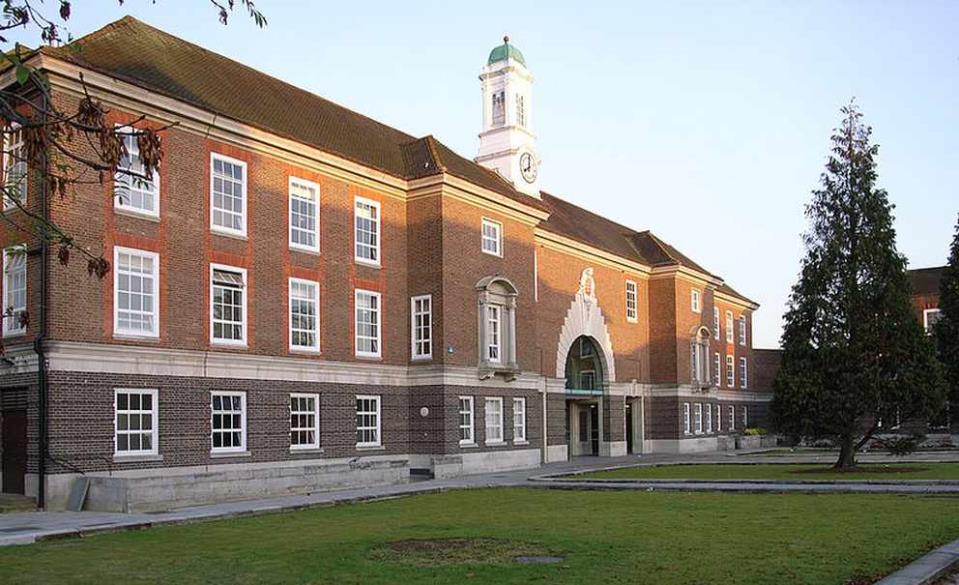
Turning to the Middlesex University ceremony, he said he was extremely pleased to see people who had 15 years of experience receiving their degree together with young students who were ready to embark on a career. During the ceremony, Mr Bartolo delivered an acceptance speech and as an employer he asked the graduates not to shy away from challenges but to think outside the box and move out of their comfort zone. His word of advice was that “patience is a virtue. I don’t believe in luck. Keep your eyes open for opportunities. Luck is a matter of preparation meeting opportunity.”
He has recently acquired a business for £4.2 million. “I knew there was something there, but I also knew I didn’t have the cash on hand, so I raised a bond issue and raised €13 million. Aside from this, there were other opportunities to buy businesses but they didn’t quite feel right. “Go home and pray on the opportunity. I can’t be blunter than that, as God will let you know. If I take a decision at 10pm, it’s not my final decision. When I wake up, the first thought that would come to mind is either that the decision feels even stronger or that it doesn’t quite sit right.”
I felt great pride
Dr Bartolo learnt about the Doctor of the University Honoris Causa through an email he received from the Vice Chancellor. “When I read it, I originally thought it was spam. If there is one outfit I never expected to see myself in, it was a (graduation) gown. I wrote back to the Vice Chancellor and accepted it. I didn’t give it much thought at the time, except for ‘why would they honour me?’ Obviously, Middlesex is one of the best universities for health and IT, and I know how popular it is in the UK, Malta and elsewhere. I then met their representatives in Malta and it suddenly became reality, realising that there was a whole process behind the decision. This made me feel honoured and privileged, as being an employer of 200 people I constantly recognise and tap others on the back. But it’s lonely at the top as there aren’t many who would recognise your achievement. If I had to look back at the ceremony, I would say that the five minutes where the orator presented me to the audience were truly special. In her introduction, she talked about my humble beginnings and the journey which brought me here. I think those few minutes recognised 35 years of hard work.”
Middlesex University Malta Graduation
Over 60 different courses, one of which is a post-graduate specialisation, full-time, as well as part-time students celebrated their hard work and perseverance.
Professor Tim Blackman, Vice-Chancellor of Middlesex University, had words of praise for the Maltese students who always performed very well, highlighting the high standards of tuition and preparation at the Malta campus. He highlighted that students studying in Malta not only get a quality education, but are also exposed to skills that employers value. Professor Martin Loomes, Dean of the School of Science & Technology, also commented on the employability of the Maltese graduates commenting that the University takes pride in preparing students for careers.