EY's annual Malta Attractiveness Survey Conference on Foreign Direct Investment has become the one to watch for both private and public stakeholders. How did you manage to build this reputation?
We started off 12 years ago by organising it on a smaller scale; a discussion based on a survey among 30-40 people. Over the years, we gradually built it up and turned it into a scientific survey of over 100 existing foreign investors, that is the vast majority, which is then discussed by a national conference. This year we are going to have around 50 speakers, all the key private and public stakeholders, and 450 participants.
Essentially, we have created a private forum, which is not government or politically lead, and in which key stakeholders in government, the Opposition, foreign and locally run businesses, and prospective investors put their heads together, debate and ask questions. We also get renowned international speakers who add value and an opportunity to network. Indeed, we make it a point to facilitate both informal and formal networking.
Those who come from abroad are really impressed by the scale of our conference, given the size of the country. They are also struck by the fact that they see the entire private and public leadership under one roof.
What will be different at this year's event? Will EY just be providing a platform for discussion?
Every year we try to scale up. Last year we had a bigger event and a larger audience and we had a number of panels. This year, on 7 October, we are being even bolder. For the first time, we at EY will be making a number of recommendations concerning the way forward in foreign investment. Building on our scientific study and an objective analysis of it, we are putting forward for discussion concrete proposals on how we ought to navigate to the future beyond the current horizon.
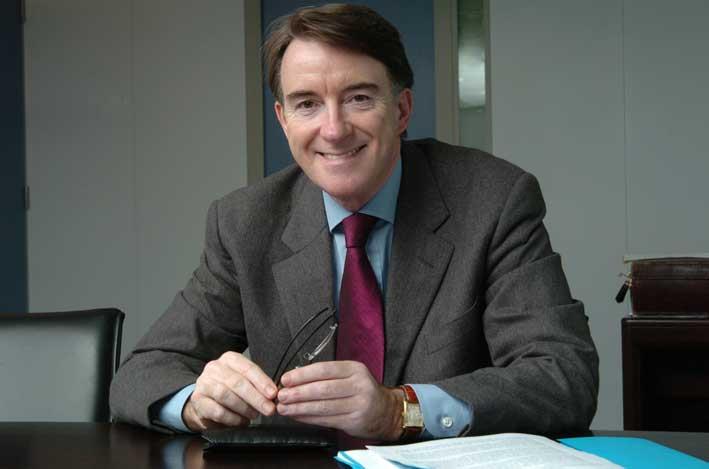
Your two foreign keynote speakers are Lord Peter Mandelson, one of the architects of Tony Blair’s ‘New Labour’ and Jan Peter Balkenende, a Christian Democrat who was the Prime Minister of the Netherlands for 8 years. What is their value-added to the conference?
The conference theme is ‘Malta: Open for Business’ and both these two renowned speakers held very important positions at a European level, in the heart of European politics, really. Also, they are two people coming from two different political camps but who converge towards the centre. What I would like them to do at our conference is to expound on how Malta as a European state can be more open for business. We have asked for their insights into how we can be more open to the digital economy and into the reality of a growing working population, always keeping in mind that we are a small island state in the EU.
This year’s theme is ‘Malta: Open for business’. Why this choice?
Last year’s was themed around 50 years of Independence and 50 years of foreign direct investment in Malta. We had Alastair Campbell, Tony Blair’s right-hand man, talking about branding and how we should make Malta more known. This year we are building on this theme - from branding we are shifting gear to the notion of enhancing openness to business. We would like to catalyse a national debate on making the setting up of a business here simpler, less bureaucratic, and more flexible to the requirements of new investors, new market sectors to explore and so on. Another key speaker at our conference is Paul Brody, an American who leads EY’s technology strategy practice in the US. He will be talking about the block chain and the internet of things. It will be interesting to listen to him because he will bring the American dimension to the proceedings.
Obviously, you are not going to reveal the results of your survey before they are unveiled at the conference. But can you give a bird’s eye view of the findings?
What we have done this year is to ask foreign-owned business operating locally to rate Malta in terms of its attractiveness, what it can do better. We also asked them to rate the various dimensions of the Maltese state on the openness for business scale. One small finding I can share is that our survey ranks bureaucracy as one of the areas which the country needs to work harder to curtail.
EY is now the fastest growing of the big four accounting firms and rapidly increasing staff numbers. You have just opened a Managed Services branch and will soon inaugurate new premises. Where is EY Malta headed?
This year alone, we have employed about 90 people and in the coming months we are planning to employee even more. In addition, historically, we have had a small staff, which is obviously very helpful for our growth. We do a lot of compliance services, we help investors cope with new regulations, and we are investing heavily in staff development - not just in accountancy but also in banking and other sectors.
Business is coming to Malta and for us this is important for it gives us the opportunity to grow further. What we want for this firm is for the investors to