Late summer notebook
It has, by all accounts, been an unbearably hot summer. It still is. It gave me a kind of satisfaction to check the temperatures in Malta and in the Mediterranean and compare them to those in Britain from my bolt hole in the Cotswolds. What a blessing to be able to wear something long-sleeved, to feel fresh after a shower, to enjoy walking and not to have to sit in the aura of an airconditioner. And more blessings. To catch up with old friends. At a certain age one becomes more conscious that who knows, perhaps this is the last time we shall see each other.
****
One of the highlights was a weekend at Windrush in the fairytale cottage of dear friends. On the Sunday there was a fair on the village green, a very small village green and barristers, doctors, consultants, the village blacksmith and grocer were all there.
There is a new and important addition to this little village: a little grocery shop. The owner has also put out a few tables and chairs and people meet there for a drink or for a meal cooked by the owner. There is a community feeling with everyone lending a hand in these small villages.
I've seen many a village and town in the Cotswolds thanks to friends who so generously volunteer to show me the sights. The latest discovery is Upton-upon-Severn. It is unspoilt by large supermarkets and the usual High Street chain stores which you see everywhere, most of them now in Malta, too. And so to lunch at The White Lion Hotel whose origins date back to 1510. Old timber is exposed in the Brasserie and other rooms. Henry Fielding the famous dramatist, journalist and author was once a guest. He wrote about it in his 1749 masterpiece The History of Tom Jones and called it 'A house of exceedingly good repute'. Other famous guests include Sir Alec Guiness, Sian Phillips, Francis de la Tour and several others. We had an excellent meal and good old fashioned hospitality and attentive service from well spoken English waitresses.
****
One of the delights of staying with friends is discovering their book collection. I was lucky as the book collection where I was enjoying generous hospitality is extensive and interesting. What is more I cut all connections with internet and gave myself a break from technology instead spending the time reading.
I picked up two biographies of Rebecca West, one by Gordon N. Ray H.G. Wells & Rebecca West and the other by Victoria Glendinning Rebecca West (1892-1983). Both authors were well acquainted with this formidable woman. Of course I had heard of her but have not read any of her works.
Ray's biography is based on over 800 letters which H.G. Wells had written to her during the 10 years they were together. Her letters to him had been destroyed by him. Only five survived but the author had the fortune of collaborating with the subject of his biography.
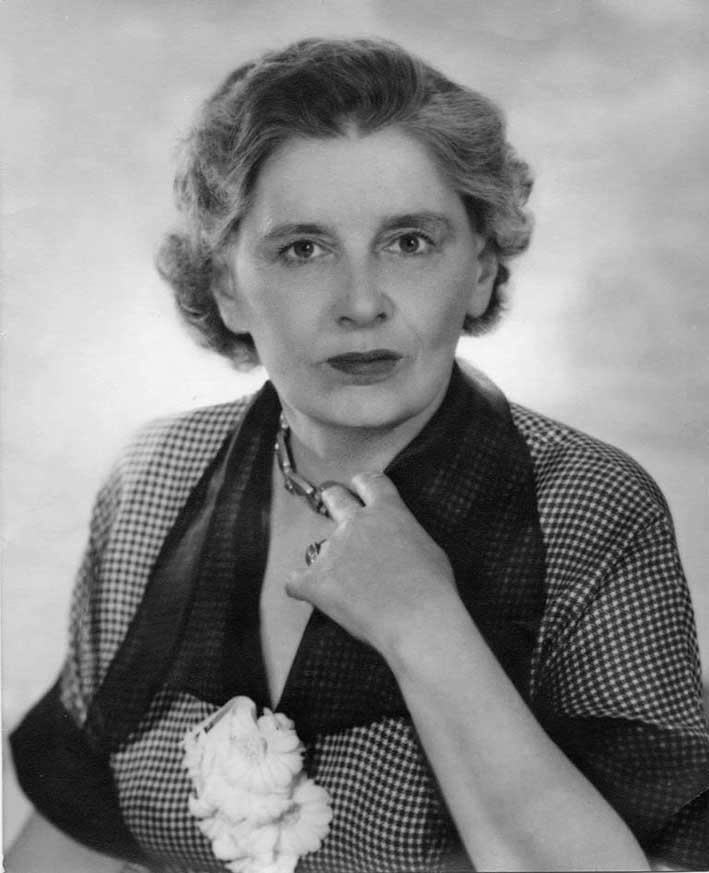
Rebecca's love affair with H.G. Wells began in 1913 when he was 46 and she just 20. He had no intention of leaving his wife Jane with whom he had two sons. A serial adulterer he had already left his first wife to elope with another woman. Jane, his second wife, agreed that he should lead his sexual life elsewhere, but without compromising her. As he moved from one woman to another he kept her fully informed about them though with friends she feigned ignorance of his affairs. (How pathetic is that!) He was averse to being publicly 'seen in sin' with Rebecca. He was an elderly, middle class variation on Lord Byron "mad, bad and dangerous to know." When Rebecca, as a device from freeing herself from him, pressed him to marry her, he replied that "if he divorced Jane, he would find 'all his work disorganized, obliged to attend himself to his translation business, his income tax returns, domestic bills, banking account." In short Jane had her uses, if not in bed. He wanted to have his cake and eat it at the same time. So Jane, kept intact a home for their two sons and maintained her position in the world as the wife of a great man. Nothing new there. Many women do just that content to live a lie. In fact Jane was relieved to see her erratic husband settled in a new pattern rather than flitting from one woman to another. Rebecca's mother unrelentingly opposed her affair with Wells. He had the reputation of being dangerous with women inspite of his small stature, plumpness and a high-pitched voice. He wanted Rebecca to stay within her role of young mistress. In spite of Rebecca's loyalty to him he was unfaithful even to her. One of his mistresses was Maxim Gorky's secretary. When it came to religion, he said he couldn't bank on it. "God has no thighs and no life. When one calls to him in the silence of the night he doesn't turn over and say ' What is the trouble Dear?'
In Paris he refused to take her to see Anatole France because 'she was not good looking enough'. Yet she had sultry looks in her youth and was described as being 'brune and adorable'.
After disastrous holidays with him in Spain and Paris she began to give serious thought to asserting her independence. How long, she asked herself, could she be expected to continue as a virtual nurse, to the total interruption of her own work. As time went on her attitude was 'If Jane is perfect, why don't you go back to her and if you don't will you please refrain from criticizing me because my house is not as comfortable as hers?' But he wouldn't leave her or get back to Jane who did not have Rebecca's intellectual qualities and was evidently uninterested in him sexually.
Rebecca's dream was to visit America partly as a way of her impasse with Wells. She wrote to an English journalist friend living in America, S.K. Ratcliffe: "I have had an appalling life with H.G. during the last five years, due partly to domestic difficulties arising out of our relationship, partly to an increasing nervous instability on his part which leads to long periods which begin with fits of almost manical rage and then end in weeks on end of childish dependence. I had for instance two months of last year with him in Spain when only ten days could he be described as normal. I have stuck to him partly for his own sake - mainly for Anthony's sake - but really quite a lot for his own sake, as he has, to an extent nobody quite realized, not a soul on earth who looks after him. I have however increasingly felt that I cannot go on. For one thing I cannot spend most of my time sick nursing while I also have to keep an eye on Anthony (their son) and do my work and I can assure you I am getting no adequate financial recompense. I have tried to leave H.G. innumerable times, but never without his following me and asking me to come back. It is also as I have a steady monogamous nature and would have been the most wifely wife on earth, extremely difficult not to take the job again. My only hope therefore of getting and keeping clear is to get to America."
****
She did go to America, many times and with enormous success athough she found it very difficult to foresee her audience from the title of their organisation. "The Women's Athletic Club of Chicago I had imagined to be a collection of husky young women in sweaters. They turned out to be a collection of elderly ladies who certainly weighed 250 lbs apiece and wore all the Crown jewels. They explained their title by saying that they had a swimming tank in the basement."
Yes, there was Anthony their son. But although H.G. made provision for him he did not like being 'encumbered with a little boy and a nurse' wherever they went.
She finally split up with H.G. and he was off the menu. Very soon he had another woman in tow. She embarked on the notable career as a writer which lay ahead of her during the second half of her life.
****
In 1930 she married Henry Maxwell Andrews and was to have, at last, a settled happy and orderly existence. She loved her husband but was to discover in the last 15 years of his life that he bought a lot of jewellery not all of which was destined for her. Rebecca kept up a brave face in public. Henry's last attachment was a ballet mistress at Covent Garden. Henry bought two identical expensive handbags, one for the ballet mistress and one for Rebecca. When the women met, each with her new bag, Rebecca carried off the situation by exclaiming 'Oh! How lovely! We've both got one!'
On his death Rebecca discovered evidence of the extent and nature of his philandering - indeed as some women do, or will.
****
She had her demons as most of us. "I hate going out into the grand world. I feel sick and inadequate. If only I could lose weight and look elegant." How I empatise! Her appearance mattered to her in her 80s nearly as much as it had at eighteen. After the age of 85, taking a friend as her adviser, she invested in a new mink coat.
At the end of her long life her death like her life was a battle. But her last thoughts were with her son Anthony, also a gifted writer, with whom she had fallen out because of a novel her wrote in which he showed little respect for her. In her last days she scribbled on a pad: 'Dear H.G. I know you have Anthony there but I don't care as long as he is happy. I love him so much.'
This is a woman you simply have to love. Hers is the story of 20th century women. She marched with the suffragettes as a teenager; embarked on an affair with H.G. Wells and became an unmarried mother. A radical socialist in her youth and a passionate opponent of Communism in her later years she won fame as a novelist, critic, travel writer and investigative journalist. Her intimate life was complex and were her public career and her politics. Even her successful marriage was not quite all it seemed and her relationship with her son was ultimately tragic. Her story evokes both admiration and pity. Wells wrote "I never met anything like her and I doubt if there ever was anything like her before."
She felt like Job, persecuted by God (and by man, woman and child). No wonder she wrote: "When I sit in judgement of myself I smother myself with wreaths."
Yes, I would smother her with wreaths too. If you haven't discovered her yet do buy Victoria Glendinning's biography and discover this gifted woman.