The national broadcasting station is not giving exposure to the Panama Papers scandal that involves a government minister and the OPM chief of staff, confirming that it has become more of a propaganda tool for the government than a media house, Nationalist Party spokesman Clyde Puli said today.
PBS chose not to report facts that were emerging about Konrad Mizzi and Keith Schembri, and when it started reporting the case it did so minimally. Neither did it report firmly and correctly when the Panama Papers were revealed 10 days ago.
In the last two days, PBS did not report what former Prime Minister Alfred Sant and Education Minister Evarist Bartolo said about Konrad Mizzi – that he should resign, Mr Puli said. The statement by Dr Sant garnered attention from both the PN and Alternattiva Demokratika so, in Mr Puli's words, there is no way that the PBS did not know about what happened.
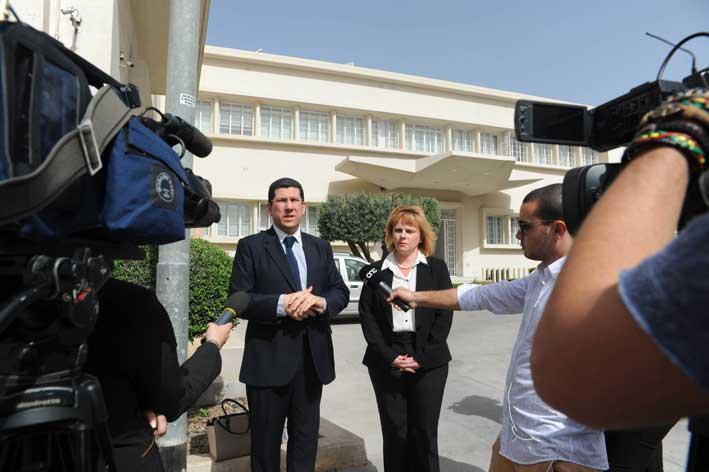
He also criticised the station for its choice of subjects during its own current affairs programme, with TVAM discussing the PN loan scheme the day after Panama Papers were revealed, and the Dissett programme on the following Wednesday discussing Valletta.
Mr Puli said that the PN will be sending an official letter of protest to PBS, specifically to get the attention of the head of news, Reno Bugeja because it seems that the entire channel is more focused on propaganda than fulfilling it's national duties.
Mr Puli said that a few weeks ago it was revealed that the Head of Communications for the Government, Kurt Farrugia, had sent an email to Mr Bugeja, telling him what kind of report was requested on the PM's visit to Azerbaijan.
The Santa Lucija Councillor and PN Candidate, Caroline Galea, spoke of Mr Bugeja's obligation to read the Right of Reply from the PN after choosing to only invite Minister Konrad Mizzi on Dissett, without any sort of opposition representation, to discuss the Panama Scandal.
Ms Galea said that PBS failed to report the incident last November between PL MP Joe Debono Grech and Independent MP Marlene Farrugia. PBS at the time had agreed with the PN that the national broadcasting station had not fulfilled their obligations when they decided not to refer to the incident.
PN letter
In reaction, PBS CEO said that PBS followed standards and editorial lines based on balance and impartiality. It denied that it was covering up for the government.