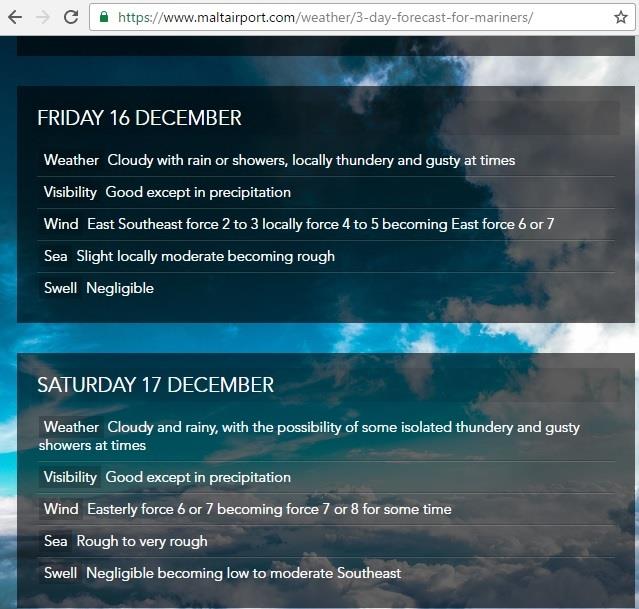
With the Marsaxlokk Bay forecast to be battered by Force 6 to 8 south-east (xlokk) winds and rough to very rough seas this weekend, Electrogas is testing its Spread Mooring System for the first time in real conditions since the arrival of the new power station’s controversial LNG tanker.
Electrogas had recently tried out the mooring system, designed to allow the tanker to remain berthed next to the jetty during rough weather, on 31 October in a relatively strong east-northeast wind. The company had claimed the system as a success, in a move that had been ridiculed by Marsaxlokk’s fishermen since such weather, coming from inland, has little impact on the bay.
This weekend’s strong southeast winds, however, will present the first real challenge for the safety mechanism, and although the tanker is considered to still be relatively innocuous as it is still to be filled with LNG, the power station’s operators are taking the necessary precautions and the tanker was moved over to the Spread Mooring System at 3pm yesterday.
Should this weekend’s winds and seas grow stronger, this newspaper is informed that Transport Malta has the facility to order the vessel to leave the port altogether. For the time being the tanker can do this on its own steam, but come next year it will need to be towed should such a contingency be necessary, according to the risk assessments reports published by Electrogas.
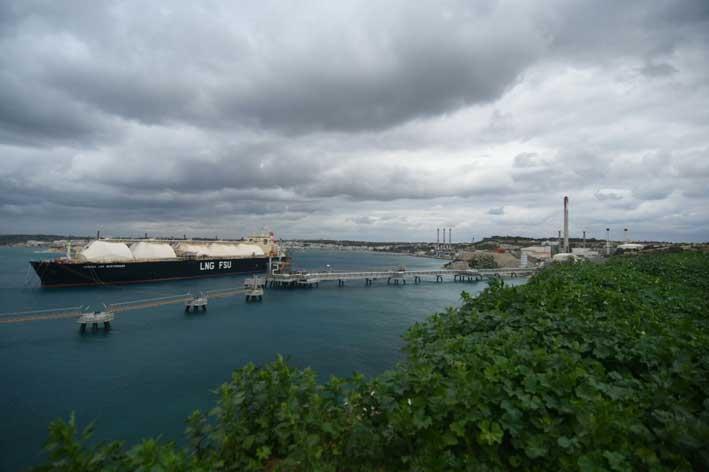
The problem is, however, that tug boats are usually unable to operate in waves over two metres in height, which are not a rarity in Marsaxlokk Bay, particularly during winter storms such as the one expected this weekend.
Sources speaking with this newspaper yesterday have said that, to date, Transport Malta has not received the required certification from the Classification Society Bureau Veritas, on the maximum wave height that the jetty can withstand when the ship is berthed alongside it.
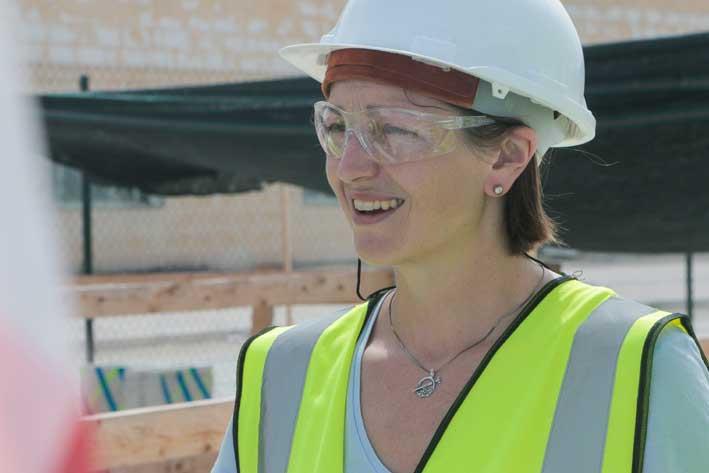
Last October, during The Malta Independent online programme ‘INDEPTH’, Commercial Director at Electrogas Catherine Halpin (below), said that, “in the case of a strong storm, the tanker will be moved into a 'spread or storm position', some 70 metres away from the jetty. Asked about what would happen to the provision of gas once the tanker is forced to move, she said the decision to move the ship would be taken before the storm arrives and the captain will let the local authorities know in advance.
The storm mooring system
Early last October Electrogas had installed the contingency measure for the LNG tanker, also known as a Floating Storage Unit, exactly for occasions - when strong southern and south-easterly winds batter Marsaxlokk Bay, as previously reported by this newsroom.
Mrs Halpin had informed this newspaper about the contingency plans in the event of storms that are known to lash the bay. One such system was the storm mooring system, which is what the FSU resorts to as a safety measure during severe southerly and south-easterly storms.
The use of such a system, Ms Halpin said, “will avoid the FSU having to leave the harbour by providing a safe mooring. Ocean Installer, an experienced subsea and marine operations contractor are installing the mooring system over the next two weeks”.
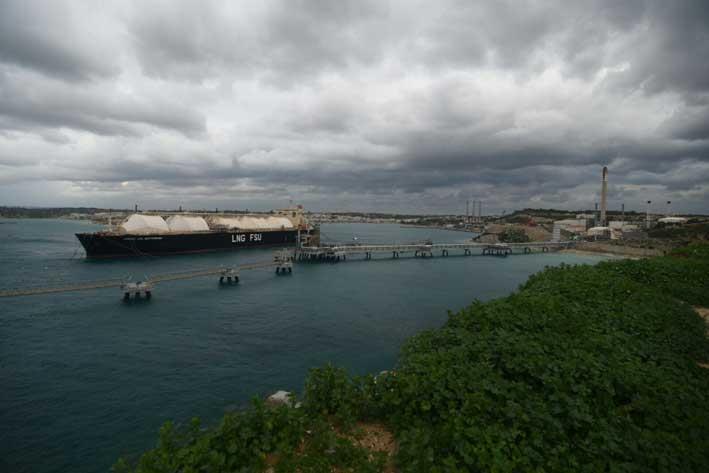
The mooring system, she said, will be connected to the FSU by way of custom-built winches on its deck, which will be held slack when it is not in use.
She added, “This means it is always connected and ready for use, but not impacting navigation to other vessels. When the mooring system needs to be used, the winches shall pull in on the chains and the FSU shall move out a short distance into the bay.
“It will be safe here to ride out the storm, with a full double installation of chains and anchors at every corner of the ship. Then when the sea conditions are reduced it can winch back onto the jetty.”
Ms Halpin said that when there are strong winds from other directions, including the prevailing northwest wind, there is adequate shelter for the FSU and the jetty has been designed for that.
Alternative energy source required for downtime periods
Once in operation, in instances when such downtime is required, another source of energy will be required to provide electricity to the country, but that will be in Enemalta’s hands. Such sources could include either the Chinese-owned BWSC plant or the Malta-Sicily electricity interconnector.
The matter, however, lies beyond Electrogas’ remit, as Ms Halpin explained: “With regard to the alternative energy sources, it is not our place to say what Enemalta would choose to do, however we know they are fully prepared.”
Studies carried out by Electrogas indicate that the storm mooring system will rarely be required for use.
Ms Halpin said that, “During the short periods of time the FSU is away on the spread mooring, LNG will not be sent to shore and other backup energy sources will be used. The presence and use of backup electricity generation systems is quite normal to cover for downtime for maintenance and so on, so this would be considered at design stage.
“There will be no onshore storage of LNG as per our Environmental Impact Assessment recommendations. We have ensured a high redundancy of equipment within our facilities to minimise downtime for maintenance.”
Photos Jonathan Borg