What makes revolution so appealing for those living beyond the real moments of terror, precarity, and oppression, is arguably the fervent energy of a collective will for a time liberated from the cruelties of creative and intellectual incarceration. The body, by nature of it being something physical, poses limitations on the act of being present and alive. Other faculties are immaterial, hence stronger, ageless, and borderless.
The problem is that the mind can be effectively shackled, engineered to follow the established logic that guides each particular era, even in times of quotidian freedom, such as our present. It is, quite paradoxically, explicit oppression that provokes the soul and mind to transgress the delineations of order. Happiness contains an undetectable asphyxiating strand of complacency. This is palpable today; lots of funds are being injected into the arts, events are mushrooming practically on an hourly basis, but is the end result really all that fulfilling? The blossoming of the art industry has sadly, but quite naturally, mitigated its essentiality as an action of human creativity.
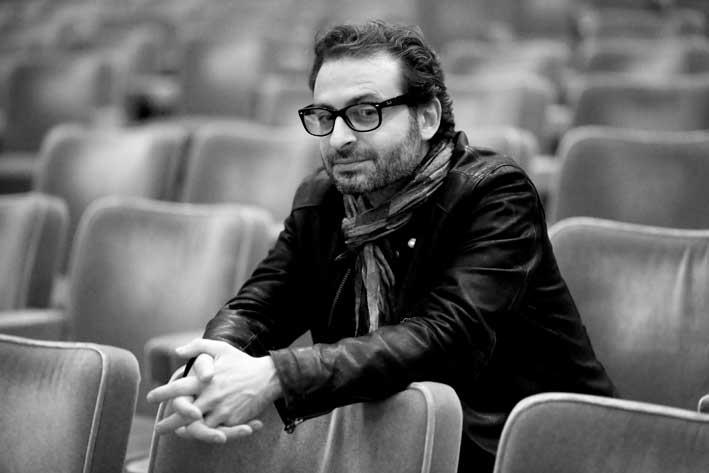
Karl Fiorini, the Malta-born, Paris-based composer, has chosen to centre this year's International Spring Orchestra Festival, now in its twelfth year, on the notion of revolution and those unparalleled musical masterpieces created in times of revolution: Shostakovich, Stravinsky, Bartok, and others. Fiorini's annual pilgrimage to his home country presents a delightful array of old and new music, each programme tailored to make us think as well enjoy some of the more iconic musical compositions.
2018 marks 50 years since the years of the 1968 movement; a time of freedom, hope, and the global fight for the overthrowing of violence and injustice. The Utopia years were, for a brief while, lived by those not out on the battlefield. That freedom was quickly sublimated and converted into the technocratic liberalism that governs our contemporary life, as Giuseppe Schembri Bonaci posited in a 2016 paper on the meaning of utopia in the post-WWII years. The events of half a century ago will be reflected upon through the music of the composers selected for this year's festival.
Revolution and Its Composers, this year's chosen theme title, comes at a time when art's dedication to building a new and fulfilling life must be urgently debated, precisely because art as a creative practice, unrepressed and uncensored, has been overshadowed by the engulfing power of the market. Utility and mundane purpose today justify the existence of art. What of non-buttressed beauty? Beauty as the exclusive reason for engaging in the unrelenting world of artistic creation? As correctly stated by Fiorini, art requires a non-conformist attitude, meaning that not only is it inherently subversive, but that beauty itself is a confrontation to power and its network of pan-societal influence. Appearances are just one element of beauty in a myriad of others. Beauty's real strength is hardly restricted to form.
The inextricable relationship between the arts and power was eruditely analysed by Schembri Bonaci in his 2014 publication 'Shostakovich, Britten, Stravinsky and the Painters in Between: 1936'. By retrospectively observing modernism, specifically happenings from the year 1936 and others in its close orbit, Schembri Bonaci's assessment conveys the tragic truth of the inevitable co-option of subversive art by power, resulting in its neutralisation, and thus diluting its core purpose as a radical statement. The image remains but it is muted, a Warholian appearance with no personality.
If institutional silencing is the ultimate fate of art, then what hope do we have for the future of meaningful creation? On a mass scale, the prospects are quite dire. However, there are those who will continue to protect, preserve, and perpetuate the memory of those who dedicated their life to beauty against all odds; exile, torture, even death.
With his new composition titled Pentimenti, Fiorini reminds us that revolution is not a steadfast progressive force without the human qualities of doubt, error, reflection, and change. The layered marks of retouched paintings reveal an evolving thought process, a reaction to unplanned scenarios aimed at improving upon each situation. References to the visual arts form an integral part of this year's event. The poster features the Louis Marcoussis' The Musician (1914), a cubist painting that, for Fiorini, evokes a sense of hopelessness through its tools of visual expression.
Pentimenti will be premiered at the opening concert of the 2018 International Spring Orchestra Festival on Friday 6th April, a concert that will be conducted by Maestro Brian Schembri. The night's programme includes Shostakovich's Symphony No. 14 (1969), written towards the end of his formidable life, a composition that takes up the melancholy of death as its subject, and Arthur Honegger's Symphony No. 2.
The International Spring Orchestra Festival 2018 will run from 6 to 14 April, with the closing event featuring the work of Hungarian composer Béla Bartók. The full programme with information on all nine concerts may be found on the ISO's official website: http://iso-festival.com. Tickets may be purchased online from the Teatru Manoel website. All concerts are free for children.