The Environment and Resources Authority (ERA) has said that an Environmental Impact Assessment (EIA) is not required for three of the four beach re-nourishment projects that have been undertaken, although studies – perhaps less comprehensive than an EIA – need to be carried out on such projects, according to marine biologist and University academic Alan Deidun.
Speaking with The Malta Independent on Sunday, Deidun said that studies prior to the commencement of work on beach re-nourishing projects are necessary not only to protect the marine wildlife but also to ensure the investment of the project.
Just last week, Tourism Minister Konrad Mizzi re-opened Balluta Bay after the completion of a re-nourishment programme. Speaking at a press conference, he said that, as a result of the work of the Malta Tourism Authority, the country now has an additional four beaches to enjoy, these being St George’s Bay in Birzebbuġa, Fajtata Bay in Marsascala and Għar L-Aħmar in Marsaxlokk, apart from Balluta.
From information on the ERA website, however, it appears that the EIA was only required for Balluta Bay and not those in Marsaxlokk, Marsascala and Birzebbuġa. The ERA was contacted by this newsroom to confirm why the EIAs were not required but no replies had been forthcoming at the time of going to print yesterday.
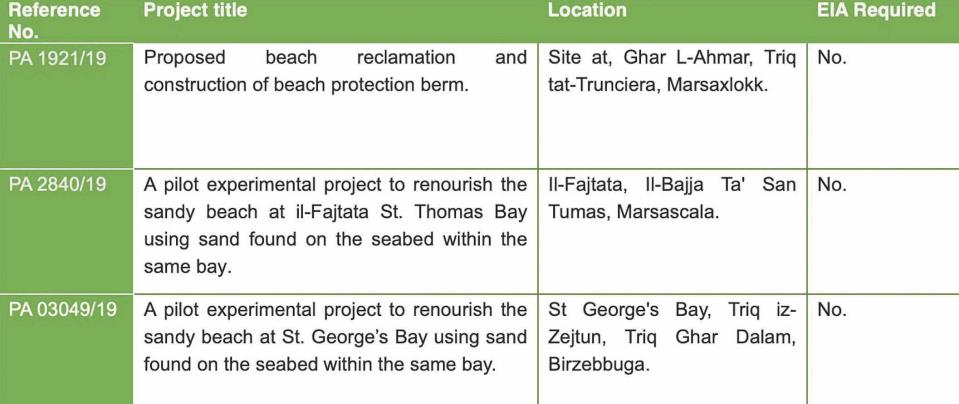
Deidun explained that there are local EIA regulations which define where an EIA is necessary. The Balluta Bay project warranted such a comprehensive study by virtue of the Posidonia seagrass meadows at the site. Although no EIA was necessary for the other sites, Deidun pointed out that other studies, less comprehensive and shorter, were being conducted on the same sites.
His comment regarding the protection of the investment comes about after Balluta Bay was completely destroyed last year, following a replenishment project, after a sustained wave attack and heavy rainfall. This was due to the fact that the relevant studies had not been sufficiently carried out before the project was implemented, Deidun noted, as they would have anticipated the hydrodynamic forces that ultimately carried the sediment away.
Some of the studies being requested regarding beach re-nourishment projects are post-intervention, which would monitor the impact after the project had been carried out. Deidun did point out that “To tell the truth, this season it was particularly difficult to carry out studies in the spring because of the stormy weather. However, planning for these studies has to be done much earlier in the year.”
Beach re-nourishment can affect marine wildlife and it depends on a number of factors including the site, the nature of the studies conducted before the work and the work itself, Deidun said. “There is a big difference between a sheltered site within a harbour and an exposed site. For example, the beach in Birzebbuġa is very different from Balluta Bay. The exposure to the elements is much greater in exposed sites, which could result in sediment being transported out to sea.”
Deidun added that the fact that the authorities were envisaging the inclusion of a submerged beam at Balluta as an extra measure to protect the beach sand surface was positive, given the exposed nature of the beach.
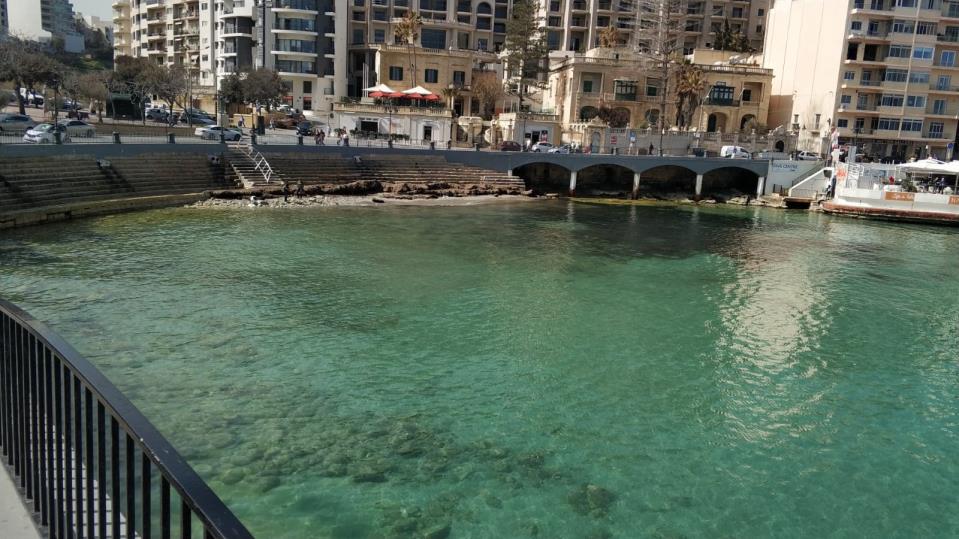
He explained that if the sediment used for the beach nourishment is carried away, it could affect marine wildlife because it is dumped by currents elsewhere, where it should not be, thus altering what is known as the ‘sediment budget’. This would create turbidity, a measure of the degree to which the water loses its transparency due to the presence of suspended particulates.
The turbidity would block light entering the water column so any species that are on the seabed and that need light would suffer, he explained.
The second biggest impact would be siltation, as this sand would stifle any species that are stuck to the bottom, he said. These are the two major impacts on marine wildlife, although there are others.
“These two issues do not necessarily happen with all beach re-nourishment,” Deidun comment. He added that the beach re-nourishment at St George’s Bay, St Julian’s, had been carried out properly, following a lot of studies, and any impact had been mitigated. This is not to say that there were no impacts, but they were minimised because of the studies.
Deidun continued to explain that the nature of the studies carried out are also important, as are the level of detail they go into. Ideally, some form of hydrodynamic modelling should be done as it might anticipate what could happen.
“These are lengthy studies which need to be conducted well ahead of the summer season in the planning process for such projects.”
The type of sand used also makes a difference because different sand types are not found randomly. In harbours, the sand is fine, whereas it is coarse in exposed areas,. Studies on the granulometry – the measurement of the size distribution in a collection of grains – should also be studied, said Deidun.