Your work evokes the delicacy of lace and the permanence of stone. What inspired this fusion of fragility and strength?
Porcelain itself holds this contradiction at its core. Before firing it is fragile and vulnerable, collapsing under the slightest touch. After firing, however, it becomes resilient, translucent, and able to endure for thousands of years. I am fascinated by this transformation from dust-like fragility to strength.
Do you draw from any particular cultural or historical textile traditions in your designs?
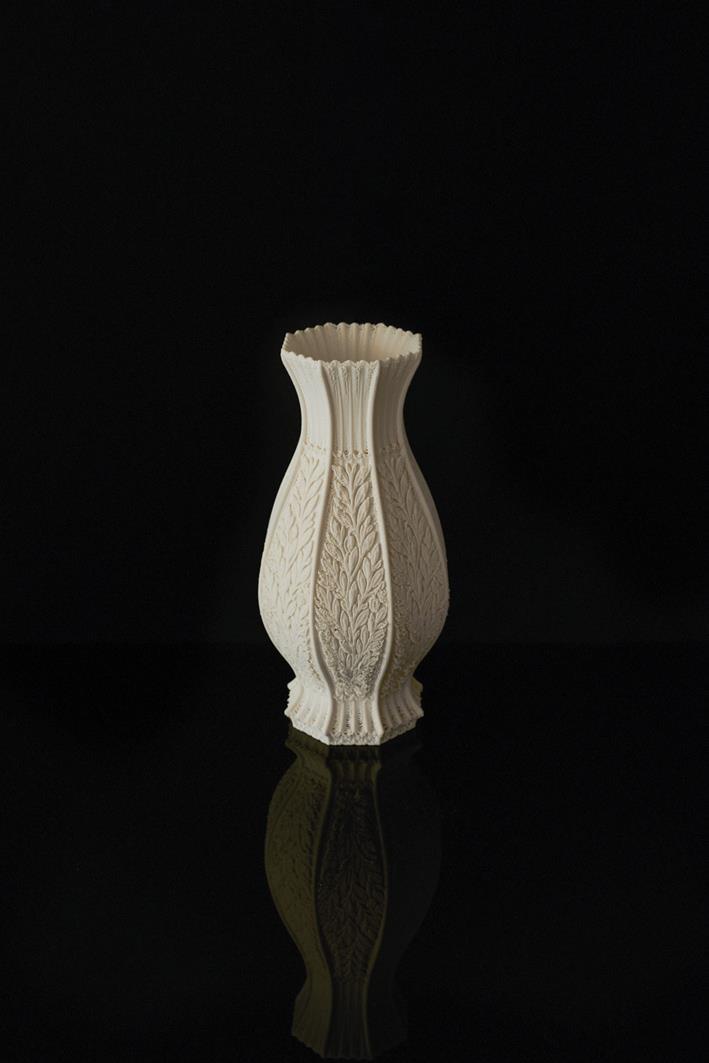
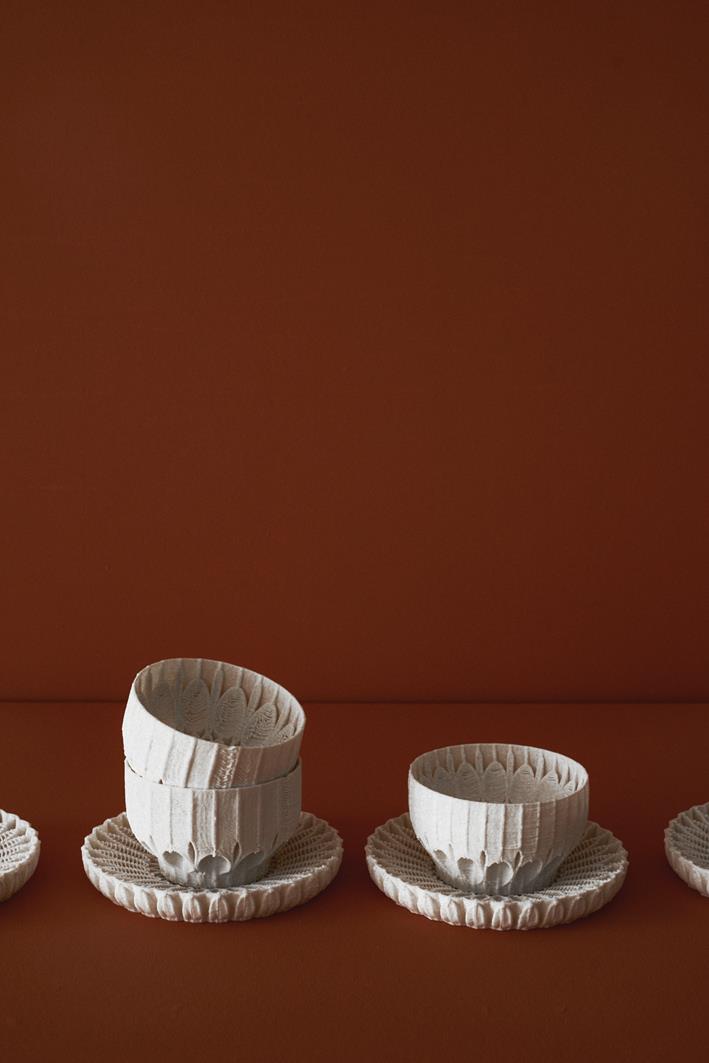
Yes. I am deeply inspired by lace and filigree traditions. Both use the finest threads, whether silk or silver, to create intricate structures and patterns. In my work I do something similar, but with porcelain. I also look to classical forms, particularly vases and architectural details, as visual inspiration. Since porcelain itself carries such a rich history across cultures, I try to bridge this historical depth with contemporary methods like 3D printing.
How do you want people to feel when they encounter your pieces for the first time?
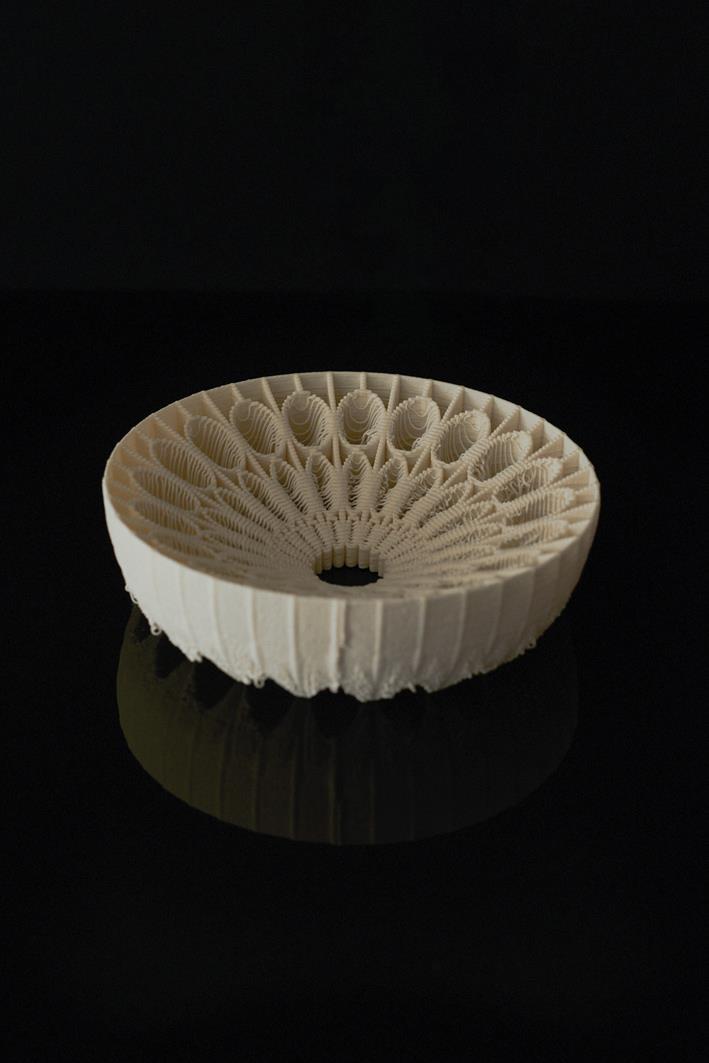
I hope they experience a sense of wonder. I want them to appreciate the craftsmanship, but also to feel the vulnerability and emotional weight being communicated through porcelain. What I often notice is curiosity. When viewers do not fully understand what something is or how it has been made, their instinct is to make comparisons. They tell me my work reminds them of coral, or a sea urchin, or even sugar paste. I find these reactions interesting because they show how people try to connect something new to things they already know. For me, that is part of the experience. Porcelain can remind someone of nature, like coral or sea urchins, or of something sweet and delicate, like sugar paste. At the same time, it still stands on its own as something lasting and strong. My hope is that viewers leave thinking not only about porcelain, but also about memory, care, fragility, and resilience perhaps in their own lives.
Could you walk us through your creative process from concept to finished piece?
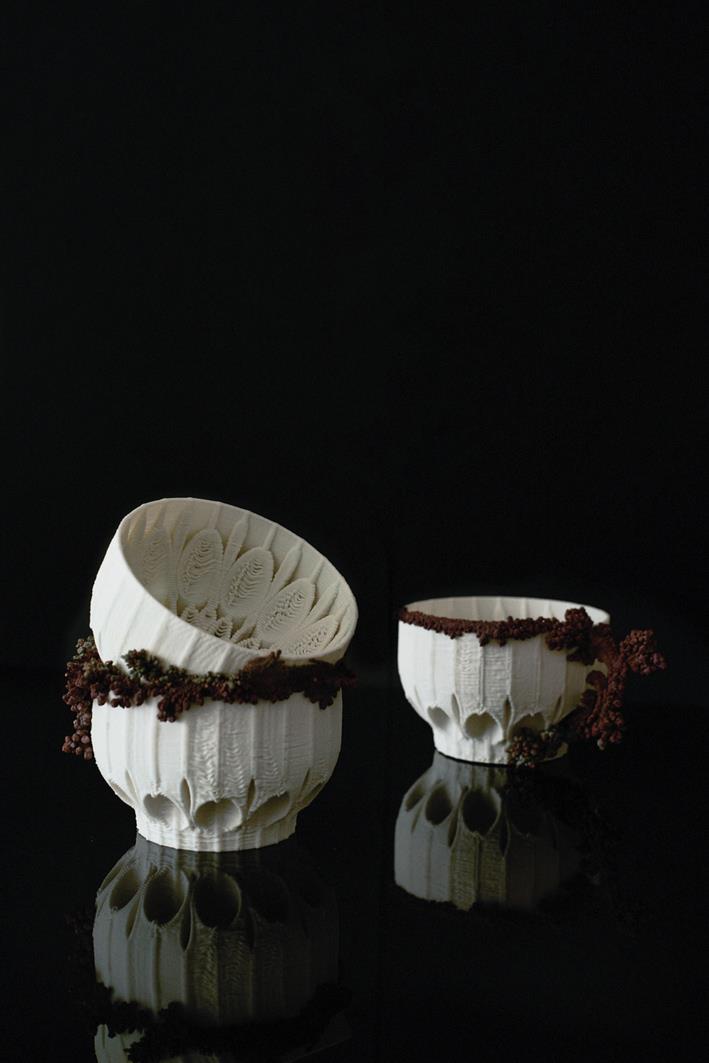
Conceptually, I often begin with memory, nostalgia, and softness. I sketch forms inspired by architecture, lace, or classical vessels, then move to digital modelling. Once the digital design is ready, I prepare it for printing by "slicing," essentially dividing the model into thin layers so the printer can build it up gradually. I use a porcelain mixture that I adapt for printability. The printed piece then dries slowly over weeks before being fired at 1300 degrees Celsius.
The textures are incredibly intricate. Are they hand-carved, moulded, or digitally designed?
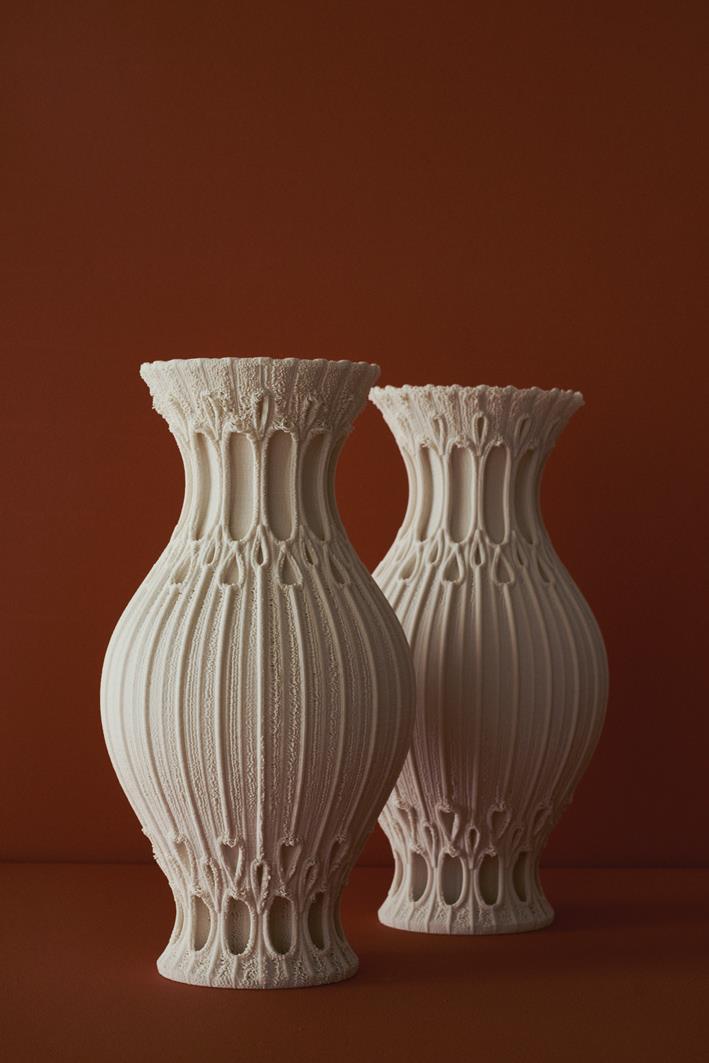
All my recent work is digitally designed and 3D printed. Yet I welcome unpredictability into the process. Machines are often seen as precise and reliable, but even they have glitches, misalignments, or shifts. I use these imperfections as opportunities, as they often generate some of the most delicate and unexpected textures.
Do you use any unconventional tools or techniques to achieve these lace-like patterns?
Yes, and this relates to my time at the Royal College of Art. I was one of the few students without prior ceramic training, so I approached tools differently. I did not carry preconceived rules about what could or could not be done. This allowed me to experiment freely with machines and methods, to push them beyond standard use, and to embrace risk. That way of thinking shaped how I work with digital tools and porcelain today.
What materials do you prefer working with, and how do they influence the final texture?
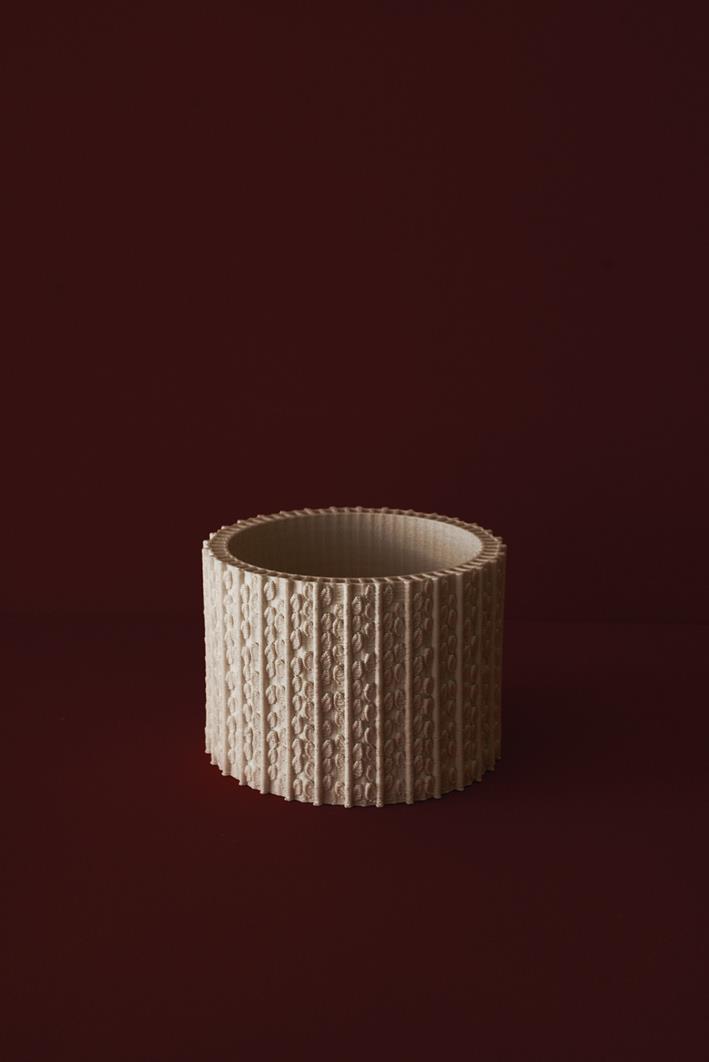
I work only with the finest porcelain, often imported from Australia or New Zealand for its purity and whiteness. I tested many variations before settling on these. The lack of impurities allows me to achieve the clean, translucent finish I want. I am conscious of the environmental footprint of transporting materials, so I make sure to reclaim and recycle clay whenever possible. Once porcelain is fired it can last for thousands of years, which I think makes its impact more balanced compared to materials that do not last as long.
How do you balance form and function in your pieces. Are they meant to be used, or purely admired?
Making functional objects sometimes limited my creativity, so I decided to step away from traditional functional ceramics. Porcelain has always had two sides to it, both practical and symbolic. My work leans more toward sculpture and storytelling, inviting reflection rather than use. I want the pieces to be experienced visually and emotionally, not as everyday objects.
You often work with 3D printing. How does technology shape your practice?
Technology is essential, but I see it as a partner rather than a replacement for craft. 3D printing allows me to explore structures that would be impossible by hand, yet the material still demands patience, care, and skill. For me, it is about keeping craftsmanship alive and relevant in today's world by blending tradition with innovation.
Is there a personal story or philosophy that runs through your body of work?
Yes. Nostalgia is central, as is contradiction. I often return to feelings of softness, innocence, and beauty, but also to tension and fragility. My work reflects a search for harmony between opposites: memory and futurity, tradition and innovation, fragility and resilience.
Do you see your ceramics as part of a larger conversation, perhaps about nature, memory, or impermanence?
Absolutely. Reflections on Porcelain is not only about the material but also about transformation. Porcelain, for me, becomes a metaphor for memory. It is fragile yet enduring, vulnerable yet lasting. It also speaks about care, because porcelain demands patience and attention at every stage, from printing to drying to firing. At the same time, it reminds us of impermanence. Some works survive while others collapse, and that uncertainty is part of the process. I think this connects to larger conversations about life itself, where fragility and resilience, permanence and loss, always exist side by side.
How do you decide when a piece is finished?
There is no strict formula. Some pieces take weeks and are discarded, others come together in days and feel complete. It is instinctive, a sense of harmony or beauty that I either trust or I do not. Interestingly, pieces I doubted have sometimes become favourites of others.
Who do you imagine as the ideal collector or viewer of your work?
I appreciate all who connect with my work, from young contemporary audiences drawn to the digital aspect, to established collectors who value craftsmanship. When a museum acquires a piece, it feels surreal, knowing it will probably outlast me. The idea that my porcelain work can carry a story forward for generations, is deeply meaningful.
What do you hope your work contributes to the world of contemporary ceramics?
I hope it demonstrates that technology and tradition do not have to be in conflict. Younger generations, who grew up with technology, often see my work as a bridge to the craft world. Older generations approach it with curiosity, eager to understand how something so ancient can be reimagined today. Once, I presented my work to King Charles, and his genuine interest really surprised me. Ultimately, I see my work not as competing with tradition, but as contributing to a growing and evolving conversation in ceramics.
Your studio seems to be a blend of analog craftsmanship and digital innovation. How does your workspace shape your creative process?
My workspace is carefully controlled, especially because porcelain requires absolute cleanliness. Even the smallest impurity can ruin a piece. I always say that my studio is both a laboratory and a workshop, where computers and printers coexist with buckets of clay and tools.
What does a typical day in your studio look like?
I like to keep tasks short and varied. I might begin by reclaiming clay, then spend time designing digitally, then move on to printing or cleaning. Working with porcelain requires constant cleaning, as it is one of the most unforgiving materials and even dust can contaminate it.
How do you handle creative blocks or moments of doubt?
I try not to fight them anymore. In the past I pushed myself to keep making, but I was rarely happy with the results. Now I let myself take a break and use that time to rest without feeling guilty. Usually, the ideas come back on their own once I stop forcing it. I have come to see doubt as a natural part of the process.
Your work seems to straddle sculpture, architecture, and design. Do you collaborate with professionals from other disciplines?
Not as much as I would like, but I hope to do more in the future. I dream of collaborating with metalworkers to create large-scale lighting structures, like porcelain chandeliers. I have collaborated with a cake-maker before, creating porcelain elements for a royal coronation.
Are there any non-ceramic artists or architects who have influenced your aesthetic?
Yes. I would not say their work directly inspires mine, but there are elements in it that I connect with. From Tadao Ando, it is his respect and understanding of materials. From Rachel Whiteread, it is the way she creates monumental, ghost-like structures. From Iris van Herpen, it is her technological innovation and how she combines this with fashion. These are qualities I really value and try to carry into my own work.
How do you choose to present your work, on pedestals, in installations, or as part of curated environments?
Presentation is crucial. For sculptural pieces, pedestals are not just supports but extensions of the work. In my exhibition, there is a variety: pieces on plinths, suspended works, and large-scale installations. Each way of display changes how the viewer engages with my work, and it becomes part of the storytelling.
Do you consider the viewer's physical interaction with your pieces when designing them?
Yes, but not always in a tactile sense. My work is not meant to be handled directly, but I do think about how people will move around it, how light passes through it, and how shadows change from different angles. Porcelain is stronger than many expect, but it can still shatter into a thousand pieces if dropped. I want people to feel that tension when they look at it, the mix of strength and fragility, and to approach the work with a kind of quiet attention.
As our conversation draws to a close, what lingers is not just the elegance of porcelain, but the artist's quiet insistence that fragility is not weakness, and that memory - like clay -can be shaped, fired, and made to endure. In a world often rushing toward permanence, this work reminds us that beauty lies in the delicate balance between holding on and letting go.
BIOGRAPHY
Who is Nico Conti?
Nico was born 1992 and until recently was residing in London. Following his B.A. (Honours) in Fine Arts at the Institute for the Creative Arts (2016) in Malta, he then moved to London to study ceramics at the Royal College of Art. During his time at the RCA, Conti was awarded various awards and was also invited to present his 3-dimensional printed work to HRH, the Prince of Wales. Here Conti found new ways of subverting processes, drawing together his fondness of material and his inquisitive nature. Conti recently relocated his studio back to Malta.
His forms often represent nostalgic memories of nature and religious architecture. By embracing the tradition and heritage that surrounded his upbringing, Conti's work is autobiographical at its core. By pairing humble materials like clay with the latest technologies in 3D printing, Conti imbues his work with qualities of elegance, balance, luxury and beauty.
