A Pleasant Surprise
My visit to the Mosta church began with an unexpected encounter. I discovered that the CEO of the Mosta Rotunda Foundation, responsible for conserving and promoting the church, is Giovanni Chetcuti, a former schoolmate from the 1990s. We had spoken on the phone a few days earlier, but I had no idea it was him. Even more incredible, we had not seen each other for nearly 30 years. What a way to start the day.
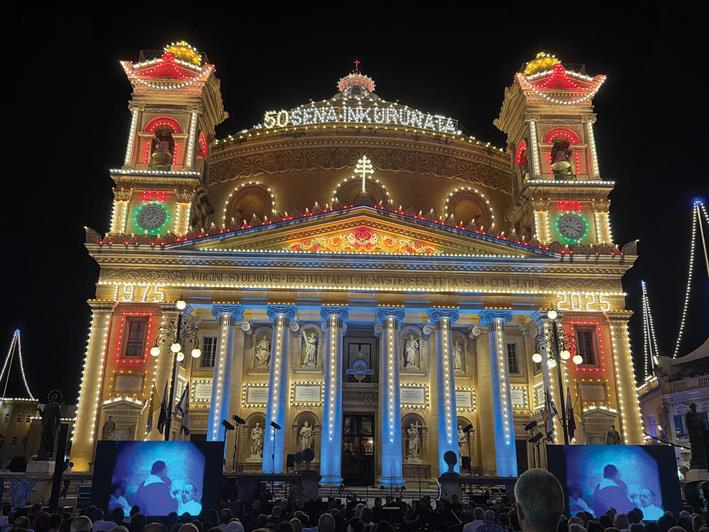
Giovanni told me that on 31 May 2018, the Rotunda was declared a Minor Basilica. He also mentioned that 2025 marks the 50th anniversary of Archbishop Michael Gonzi's coronation of Stefano Erardi's painting of the Assumption and the 75th anniversary of Pope Pius XII's proclamation of the Dogma of the Assumption on 1 November 1950.
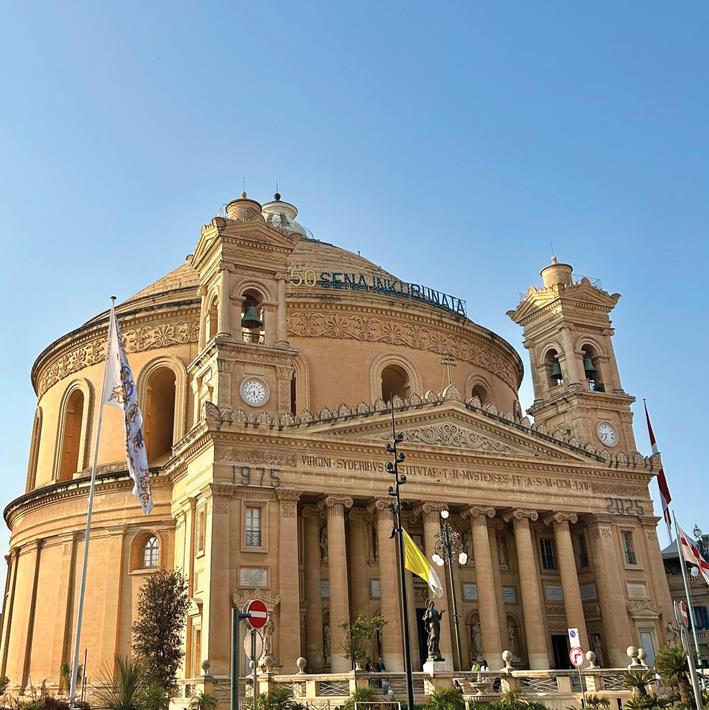
The Architecture of the Rotunda
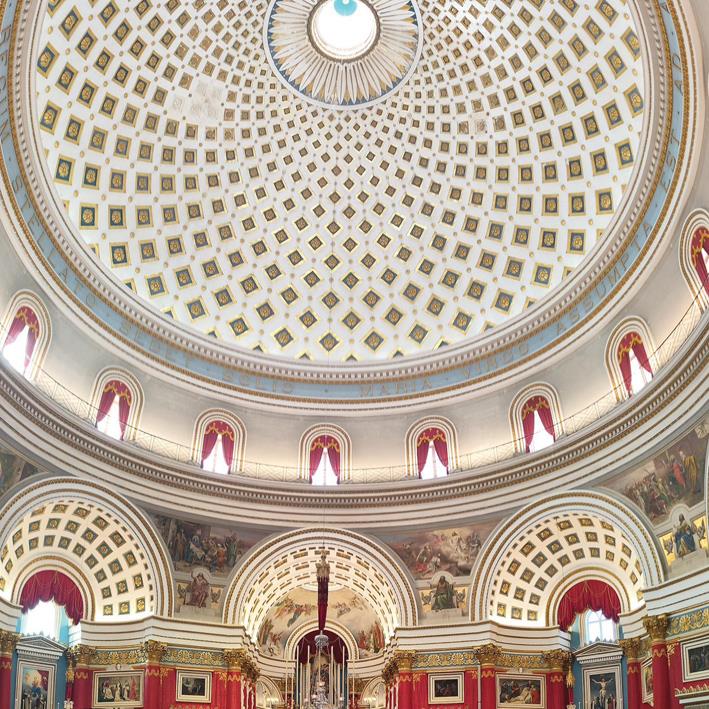
The Rotunda never fails to impress. Built between 1833 and 1860 by Maltese architect Giorgio Grognet de Vassé, it was inspired by the Pantheon in Rome, while its façade draws on the temple of Diana at Ephesus. The dome is breathtaking, spanning almost 40 metres across and soaring more than 50 metres high. Even the floor feels part of the design, guiding the eyes upward.
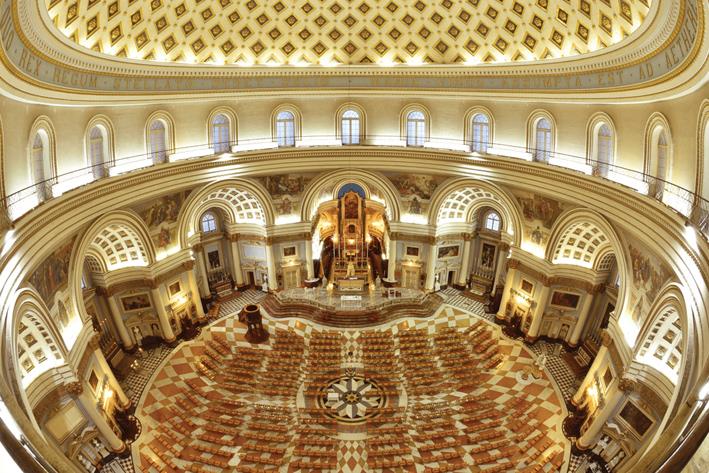
Art and History In and Around the Rotunda
As I wandered through the Rotunda's six serene chapels, I was captivated by the rich tapestry of art and devotion that fills every corner. My eyes were drawn to Erardi's magnificent titular painting on the main altar, which immediately commands attention and immerses the viewer in centuries of faith and mastery.
Along the walls, Anton Agius's delicate stone carvings and the finely crafted wooden frames of the Stations of the Cross were highlighted by gentle sunlight, revealing the subtle earthy tones of the stone and the rich, polished browns of the wood.
Scattered throughout the sacristies, Carlo Darmanin's Good Friday procession statues, a set of nine papier-mâché figures, stood in solemn majesty. Their expressive faces, body postures and silent gestures captured the gravity and poignancy of the Passion in vivid detail.
The bomb monument by Gianni Bonnici, cast in bronze, served as a striking reminder of resilience, contrasting beautifully with the surrounding vibrancy. I was also drawn to the six statues of archangels by Vincent Apap, their delicate gesso figures radiating strength and serenity. The friendly and knowledgeable volunteers told me that one archangel, Michael, was missing.
Perhaps because I share his name, I have a soft spot for David, King of the Jews. It was a treat to find two paintings of him by Giuseppe Calì, one of Malta's great 19th-century artists. I was also drawn to Salvatore Barbara's works on the life of St Paul in the Chapel of the Conversion of St Paul, fittingly devoted to one of Malta's patron saints.
Climbing the spiral stairs of the dome was a highlight. I paused often to admire the Ionic columns up close, then stepped out to take in a bird's-eye view of the church parvis and the bronze statues of St Joseph and St Mary by Vincent Apap. Moments like these will stay with me forever.
Every corner, every statue, every brushstroke and chisel mark made the Rotunda not just a church, but a living, colour-filled gallery of Maltese devotion and artistic brilliance.
Fascinating Facts
A friend of mine, Mikiel Tabone, a seasoned Gozitan drama actor, once told me a story that left me both thoughtful and awed. Giorgio Grognet de Vassé, the architect, was convinced that Malta was the lost mythical island of Atlantis and even published a book promoting this theory. Before becoming an architect, he had studied for the priesthood and later served as a military engineer in Napoleon's army in Egypt.
The Forgotten Legacy of Giuseppe Briffa
As I chatted with the volunteers, I learnt the sad tale of Giuseppe Briffa's angels, painted around the cupola. They were eventually whitewashed because they clashed with Calì's paintings, leaving only faint shadows behind.
Briffa was devastated by the decision, and his career in sacred art never fully recovered. I can only hope that one day those frescoes will be recovered and restored to their original beauty.
A Fully Immersive Visitor Experience
On Tuesdays, the Rotunda offers more than just a church visit. With a single ticket, visitors can see the exact spot where a bomb struck the dome during the war, explore the underground World War II shelter, join a guided walk through the old streets of Mosta, visit the Marquis Mallia Tabone Farmhouse, which is now an art and exhibition centre, and complete the day at the Speranza Chapel in the valley that bears its name.
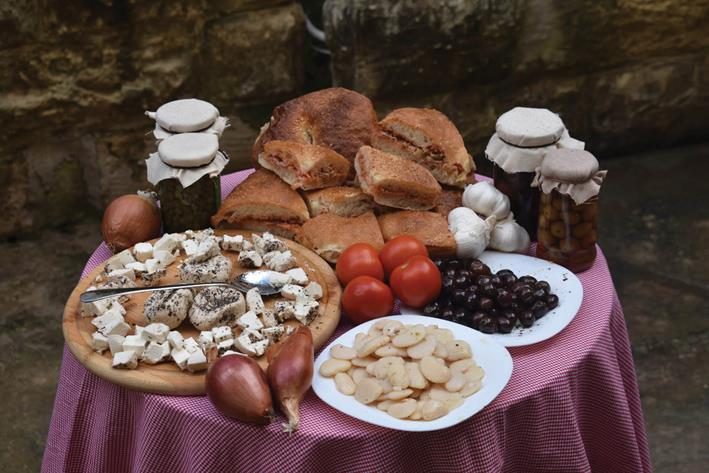
Maltese Culinary Delights
My day in Mosta ended in the best way possible, with food. We gathered at Dar Mustija, a traditional Maltese house with its own garden, where local volunteers served a homemade buffet. The dishes reminded me of family lunches at my grandparents' home: simple, fresh and full of love. It was not just a meal, but a memory rekindled.
Looking Ahead
I left Mosta with a sense of gratitude. What struck me most was not only the history or the art, but also the people. Everywhere I turned, volunteers gave their time without expectation of anything in return.
Preserving the Heritage
The Rotunda is more than an architectural marvel. By 2026, a new visitors' centre and museum will open, along with access to the crypt and the foundations of the previous church by Tommaso Dingli, which was demolished when the current church was completed.Thanks to the dedication of the Mosta Rotunda Foundation, the Rotunda lives on, not only in stone and paint, but also in the hearts of those who treasure it.