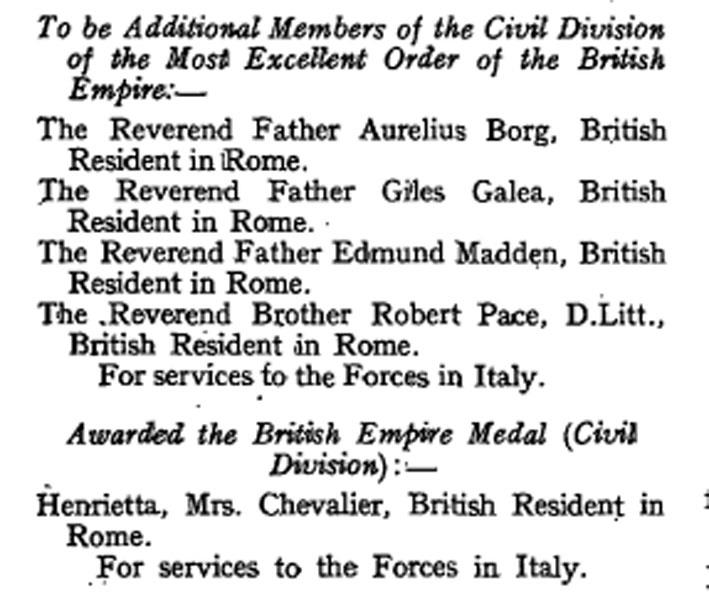
As I delved into books on the Second World War, one title struck me The Vatican Pimpernel, the story of Monsignor Hugh O'Flaherty, the Irish priest who outwitted the Gestapo in Rome. Within its pages emerges a Maltese woman whose quiet heroism stands alongside his - Henrietta "Chetta" Chevalier. A widowed mother from Sliema, raising her children in a modest flat near the Vatican, she was neither soldier nor spy yet became a vital pillar of O'Flaherty's network. Her home, under constant threat, sheltered Allied soldiers, Jewish families, and other fugitives. Every knock could have meant betrayal, yet she persisted. Awarded the British Empire Medal in 1945, she returned to Malta in quiet obscurity, though her legacy endured, later inspiring Hollywood's portrayal of Ms. M, a tribute to her courage and defiance.

In Nazi-occupied Rome, a modest third-floor flat at No. 9 Via Imperia became a secret fortress. Henrietta Chevalier, a widowed Maltese mother and semi-trained nurse, turned her home into a lifeline for Allied soldiers, Jewish families, and other persecuted individuals. Under the guidance of Monsignor O'Flaherty, the Irish priest coordinating the Vatican Escape Line, she became one of the network's most daring operatives. Untrained in espionage, her courage, quick thinking, and moral conviction made her indispensable.

The network moved soldiers to safe houses, forged documents, and guided them to safety until the Allies landed at Anzio. O'Flaherty was constantly watched by SS Sturmbannführer (Major) Herbert Kappler, the relentless Sicherheitspolice chief, who sought to catch him and anyone assisting him red-handed. Chevalier, her daughters, and her aged mother were in constant danger; discovery meant deportation, imprisonment, or death. Her younger daughter was sheltered with Maltese nuns, while her elder son, with a diplomatic Swiss passport, assisted operations from outside the city. Vatican-forged passports and support from the Swiss Embassy allowed refugees to move undetected, communications to continue, and countless lives to be protected under the ever-present shadow of Nazi surveillance.
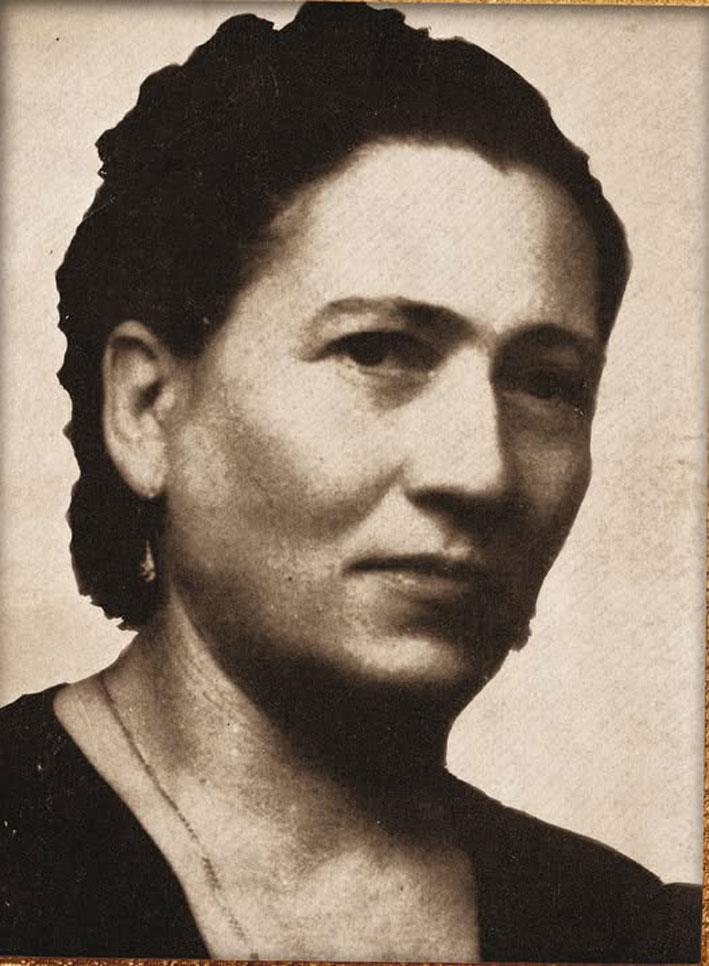
Chetta's collaborators formed a tight, clandestine web of allies. Maltese Augustinian priests, Fathers Egidio Galea, Aurelio Borg, and Ugolino Gatt, assisted in hiding refugees and providing logistical support, while Brother Robert Pace coordinated movements between safe houses. Another collaborator liaised with the Swiss delegation for safe passage of refugees. Chetta also relied on vigilant Italian neighbours, who often provided early warnings about Gestapo patrols, giving her just enough time to conceal fugitives behind false walls, floorboards, or hidden rooms. Soldiers in hiding were among those she aided, often requiring urgent medical attention for injuries sustained during perilous escapes across occupied Europe.

Eyes on the streets: Gemma's perilous run
One of the most perilous incidents occurred when Henriette's eldest daughter, Gemma, ventured out to collect cigarettes for the soldiers hiding in their flat. The cigarettes were in high demand among the escapees and usually distributed by priests. On this occasion, the flat had run out, and Gemma went to the usual local shop. The shopkeeper, a friend of the family, discreetly warned her that she was being watched. Realizing the danger, Gemma had to improvise to protect the family's cover.
She made a desperate detour on the way back, narrowly avoiding being hit by a tram as a large bundle of cigarettes spilled onto the street - a close call that could have exposed them to the Gestapo, who were ready to catch anyone aiding fugitives red-handed. Gemma's calm instructions and quick thinking later ensured that every soldier and refugee remained safely concealed, turning what could have been disaster into yet another narrowly averted triumph.

A Christmas under watch
In December 1943, under curfew and constant Nazi surveillance, Henrietta managed to host a modest Christmas gathering in her flat near the Vatican walls. With her family and several Allied soldiers in hiding, the evening became both an act of faith and quiet defiance. Food was scarce, drawn from ration cards and the clandestine escape network, yet even a simple meal carried immense symbolic weight. That night, laughter and prayer briefly replaced fear. Outside, the Gestapo patrolled the streets, unaware that within those walls a mother and her companions were daring to keep hope alive.
Chevalier's courage extended far beyond her flat. Under the cover of darkness, she navigated Rome's perilous streets, delivering supplies and tending the sick and injured. Drawing on prior nursing experience, she stabilised those weakened by hunger, illness, or wounds. She occasionally worked with associates, including the Yugoslav Milko Scofic, assisting in hiding Allied soldiers and informants while providing essential care. Each journey, through narrow alleys, along Vatican walls, or across the city risked Gestapo detection. Yet she moved with calm determination, quietly visiting safe houses and ensuring the vulnerable received food, medicine, and attention. Her resourcefulness and dedication offered vital lifelines, sustaining countless individuals throughout Rome and demonstrating extraordinary courage under constant threat.
The Vatican, under Pope Pius XII, discreetly facilitated these operations, offering safe havens in convents, monasteries, and other Church properties. The Pope's neutral stance enabled the Church to shelter refugees and coordinate escapes, balancing diplomacy with decisive humanitarian action, and allowing operatives like Henrietta to act with critical institutional support.
Gestapo raids were a constant threat. On one occasion, officers stormed her building, searching apartment by apartment. Chetta met them with composure, concealing several fugitives' mere metres away. Each tense encounter tested her nerves, yet she consistently turned peril into opportunity through quick thinking, courage, and unwavering faith.
Within the network she became known by the codename Ms. M. British officer John Furman gave O'Flaherty carte blanche to involve her as an operative and assigned the nom de guerre Ms. M to keep her real name as covert as possible. This secrecy was vital: Herbert Kappler's security services were ruthless, and the Vatican had a later-identified mole, Aleksander (Alexander) Kurtna, an Estonian former Russicum seminarian who worked in the Curia and spied for the Soviet NKVD (and, under duress, for German handlers), making concealment of identities especially urgent.
From Rome to refuge
As the Gestapo intensified their searches and danger escalated, Monsignor O'Flaherty recognised that Henrietta Chevalier and her family were at imminent risk. With the approval of Lieutenant John Furman, he orchestrated a covert evacuation. Their flat on Via Imperia was discreetly emptied, with belongings quietly removed to avoid arousing suspicion from the SS. Chetta and her family were then relocated to a secluded farm on the outskirts of Rome, where they remained in hiding for the remainder of the war. This careful withdrawal ensured their safety and marked the conclusion of their active involvement in the Vatican Escape Line, preserving the life of the mother whose courage had already saved countless soldiers and refugees.
Reflecting on Henrietta's unwavering courage, John Furman, a senior British officer and key operator in the Rome Escape Line later remarked: "What can be said of this incredible woman, who I guessed to be in her early 40s? I would not call her brave for it seemed to be she had no conception of fear. Her kindness and generosity were unparalleled, her maternal spirit and compassion boundless."

Valour through a Hollywood lens
Hollywood brought fragments of Henrietta's bravery to the screen in The Scarlet and the Black (1983), dramatising the tense operations of Monsignor O'Flaherty's underground network in Nazi-occupied Rome. Gregory Peck portrayed O'Flaherty, the calm and determined priest coordinating the rescue of Allied soldiers and refugees, while Christopher Plummer embodied Herbert Kappler, the relentless Gestapo officer whose pursuit created constant peril.
The character of Francesca Lombardo, played by Greek actress Olga Karlatos, was inspired by Henriette Chevalier herself. For narrative purposes, she was depicted as Italian, and many details of her life were simplified, including her Maltese origins and personal sacrifices. Yet the film successfully conveyed the essence of her heroism: a civilian woman navigating extraordinary danger with courage, ingenuity, and faith. Through her tireless care for soldiers and refugees, and her composure in the face of imminent Gestapo discovery, the character captured the moral conviction and quiet bravery of Henriette. Though her real name was omitted, the cinematic portrayal immortalised the spirit of Ms. M, a mother and guardian operating in the shadows.

A humble life, a hero's legacy
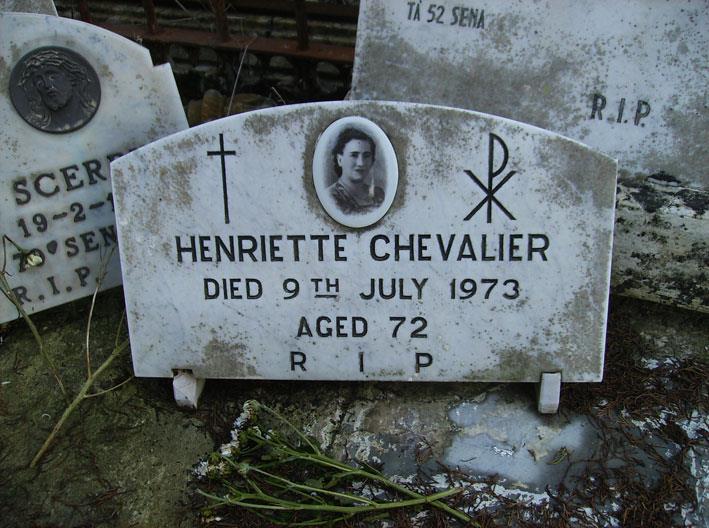
Henrietta passed away on 9 July 1973, in Malta, having returned after the war to raise her children in quiet dignity. Awarded the British Empire Medal (BEM), one of the highest honours a civilian can receive, she had no noble lineage, no wealth, and no formal military training, yet she displayed extraordinary courage. While figures like Oskar Schindler, who saved around 1,200 Jews, are widely celebrated, Henrietta was part of the Rome Escape Line network that sheltered and aided thousands of Allied servicemen and refugees during the Nazi occupation. From her modest flat in Rome, she provided food, shelter, and care to many who were hunted by the Gestapo, transforming her home into a haven of safety and compassion. Her composure and moral resolve became a quiet but powerful act of defiance, and her legacy endures as one of Malta's unsung wartime heroines.