Maltese photographer Lorella Castillo has always believed that art is not just about what we see, but what we remember. In an interview with The Malta Independent on Sunday she spoke candidly about her creative journey, her deep connection to Maltese culture and language, and the quiet perfectionism that drives her work. Through her photography, Castillo captures what it means to be Maltese in a changing world - turning familiar expressions, emotions, and moments into powerful visual stories that reflect both the beauty and contradictions of the island she calls home.
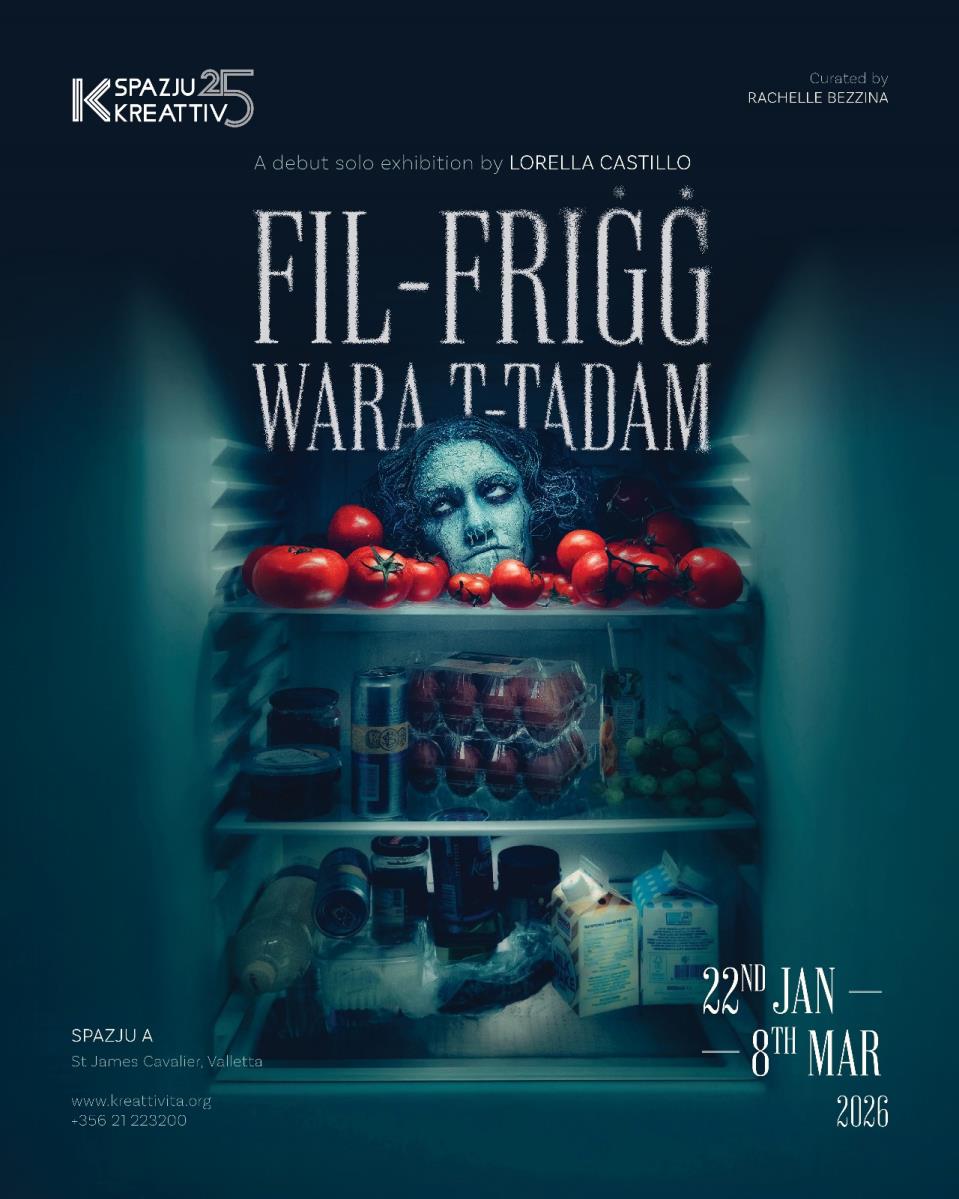
Her upcoming exhibition, Fil-Frigg wara t-tadam, takes its name from a Maltese expression filled with sarcasm and local humour. The collection, curated by Rachelle Bezzina, transforms everyday Maltese sayings into striking photographs and sculptural installations that visitors can both see and feel. It's an exploration of how language shapes culture, how words evolve over time, and how identity can be preserved through art. "Language for me is like a mirror," Castillo said. "It reflects who we were and who we are becoming. When I translate these expressions into images, I'm giving them a second life."
Her work is playful yet profound and deeply rooted in Maltese heritage. Castillo's love for her country's language and traditions is woven into every project she creates. "I wanted to be able to showcase my identity and the things from my childhood and upbringing," she said. "My family always valued the Maltese language and culture, and that naturally impacted how I view ideas and inspiration for my projects."
Those early influences were strong ones. Castillo grew up in a family where creativity and culture were part of daily life. Her grandfather, Paul Camilleri Cauchi, one of Malta's most respected painters, introduced her to the world of colour, composition, and detail. She recalls spending hours watching him work in his studio, mixing paints and taking photographs of the simplest things. "He used to photograph everything," she smiled. "Even a small object on the ground. Back then I thought it was strange, but now I realise I do the same thing."
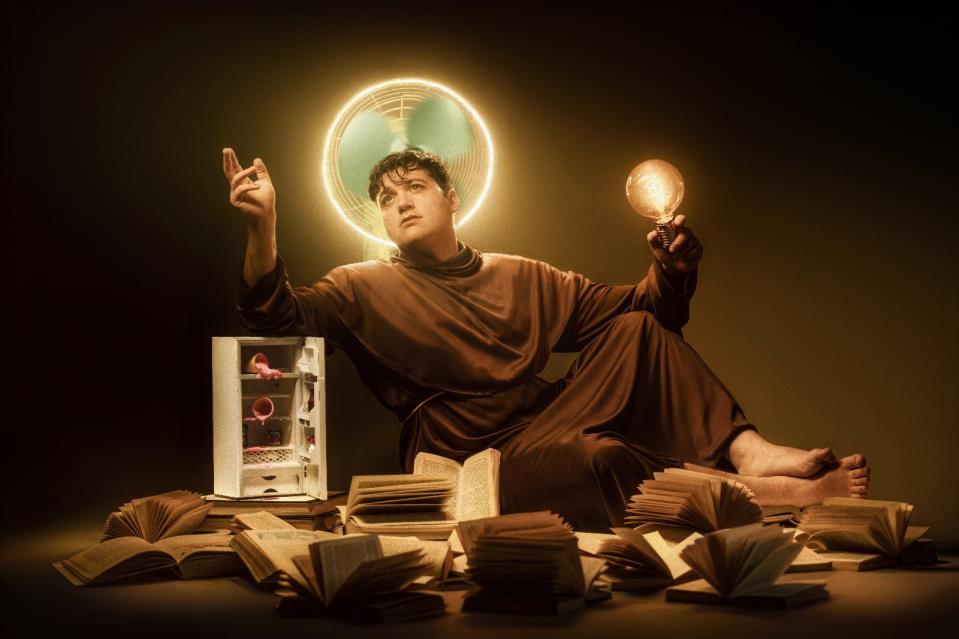
That quiet attention to detail became the foundation of her own artistic vision. She learned early on that beauty often lies in the smallest things - in overlooked corners, in silence, and in stories that seem ordinary at first glance. Her grandmother, too, left a strong impression on her imagination. "My grandfather used to paint saints in churches all over Malta, and my father often took me to village feasts, which both really shaped my early imagination," Castillo recalled. "That inspired me to create my own patruni - modern-day patrons that reflect what's happening today. It's my way of showing that Maltese culture and language are still so relevant."
In these patron recreations, Castillo fuses tradition with modernity, blending the sacred with the contemporary. Her art doesn't aim to preserve culture in a museum-like way - it brings it to life in today's context. She takes the language, idioms, and imagery of her upbringing and turns them into something audiences can relate to, both visually and emotionally. Her goal is to make people stop, smile, and recognise themselves in her work. "Through my projects, I want people to feel connected," she said. "Even if they don't understand every detail, they can sense the story."
That sense of connection extends to her process as well. Castillo describes herself as a person who values calm and solitude. "I'm not someone who enjoys chaos or being surrounded by a lot of people," she admitted. "I like being home, I like quiet, and I find importance in that. I keep my circle small because I believe in quality rather than quantity - and that applies to everything, even my art."
Her ideas often start in silence, appearing suddenly in her mind before she sketches them down. "When I think of a new concept, the idea just comes out of nowhere," she said. "Then I start matching colours and creating the composition in my head." She even applies principles of visual geometry, like ensuring balance through triangular shapes to draw the viewer's eye toward the centre of an image. Yet she's quick to point out that what works on paper doesn't always work behind the camera. "Most of the time, the plan changes," she said. "That's the beauty of photography - you have to improvise with what you face."
Her perfectionism, though, is both a gift and a challenge. "I tend to be quite a big perfectionist, and I fear I've let that take over my anxiety at times," she admitted. "I want to create work that people will like, but over time I started to care less about what others think. I realised that the projects I was most scared to show were the ones that made the biggest impact."
Those moments of vulnerability became part of her growth as an artist. Castillo acknowledges that her struggles with self-doubt and imposter syndrome still linger, even after years in the industry. "I doubt myself a lot," she said. "My OCD makes me feel like I can't deliver a project unless it's completely perfect. It's something that holds me back, but it also pushes me to give my best." Her honesty about these emotions makes her work feel even more human - each photograph a product not only of creativity, but of courage.
For Castillo, the act of creating is also a form of therapy. "When I'm stressed, I cope by turning it into a new idea," she said. "Even if the project doesn't make me money, it helps me mentally. Photography gives me peace - it helps me make sense of things." This approach keeps her inspired, even during times when motivation feels far away. Like many artists, she goes through phases of doubt and disconnection, but she's learned to trust that creativity will return.
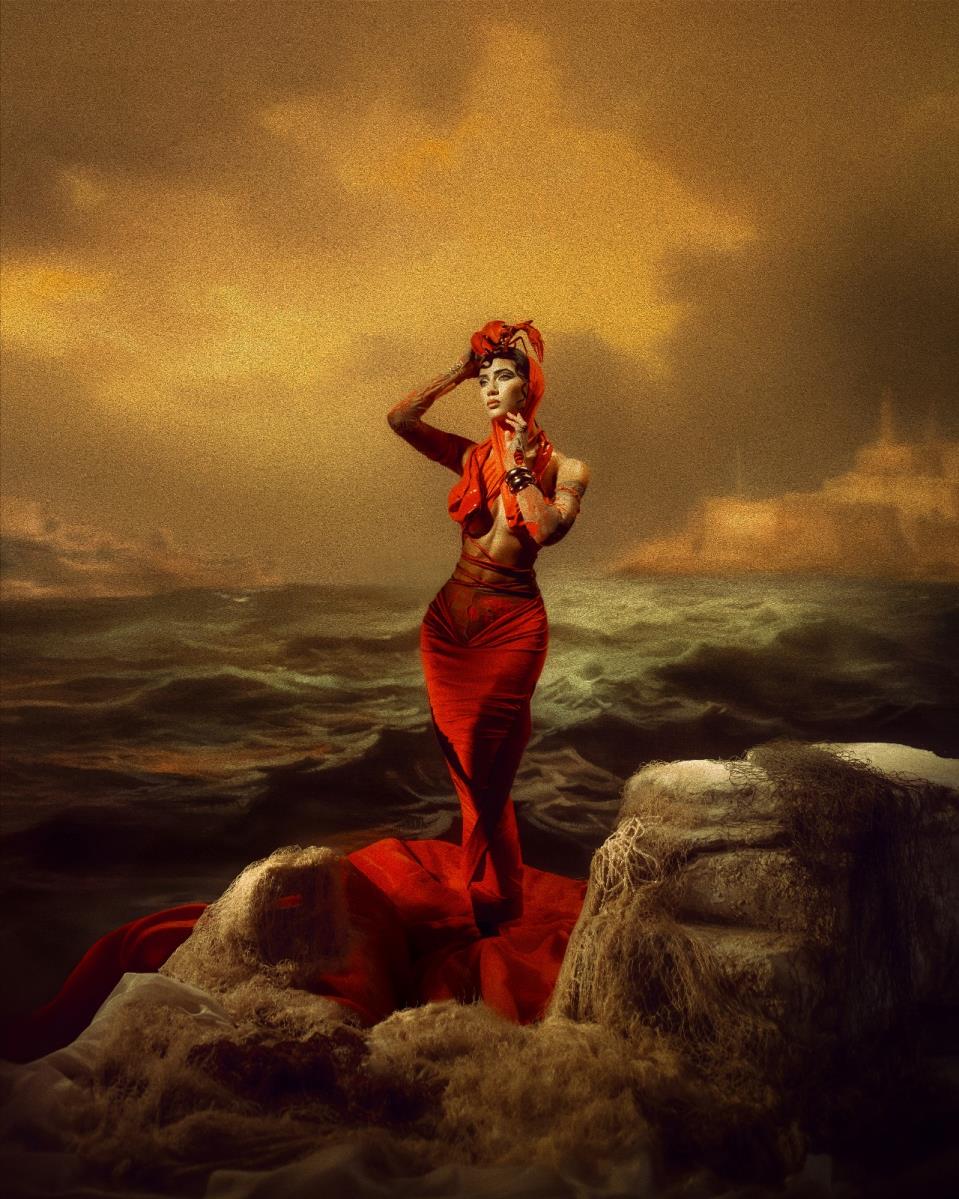
One of her greatest sources of inspiration is the sea. It appears often in her work, both literally and metaphorically. "The sea inspires me so much," she explained. "It can be so calming but also aggressive and passionate. It reminds me of a person, of what I go through as a person. Sometimes it's the colour, the strength of the waves, or how they hit the rocks that inspires me the most." For her, the sea represents life in all its contradictions - beautiful and unpredictable, tranquil and fierce, much like the Maltese spirit itself.
Castillo began photographing seriously as a child but officially entered the field around 10 years ago. She became self-employed in March 2020, just as the Covid-19 pandemic began. The timing, though uncertain, proved transformative. The isolation of that period allowed her to turn inward and fully embrace her artistic voice. "I grew up watching my grandfather paint and take photos," she said. "He showed me how colours work and how important it is to really understand them. I think that's why I'm so drawn to composition and detail - it's in my blood."
She speaks of her career not as a straight line, but as a continuous evolution. "I see my work differently in the future than what it is now," she said. "That's the beauty of it - I never know how my style will evolve. It all depends on my mental state and where I am in life." For her, photography grows alongside her; it mirrors her emotions, her experiences, and her sense of self.
Through it all, Castillo remains grounded by her purpose, to create meaningful art that connects people and sparks conversation. "At the end of the day, what I want to do with my work is create a conversation," she said. "The strongest projects are the ones that make people think, the ones they can relate to, even in their own way."
Her upcoming exhibition, Fil-Friġġ wara t-tadam, which will be held at Spazzju Kreattiv between 22 January and 8 March, 2026, reflects this beautifully. It turns the humour and wisdom of Maltese idioms into something physical, bridging generations and reminding people that language is more than words - it's memory, identity, and emotion. In doing so, she keeps Maltese heritage alive, not by preserving it in the past, but by giving it new meaning in the present.
Castillo's work captures Malta not as a postcard, but as a living, breathing experience - a blend of sea spray, stone, sound, and soul. Her photographs celebrate the island's imperfections and beauty alike, mirroring her belief that art, like life, doesn't have to be perfect to be meaningful.
In her images, there is calm and chaos, humour and sadness, tradition and change - all coexisting. Through her lens, Castillo preserves more than Maltese language or culture; she captures the rhythm of what it feels like to belong here. Her work, much like Malta itself, speaks in many tones - quiet, bold, and beautifully human.