Long before Salina became one of Malta's best-known nature reserves, it was a busy Roman harbour, a strategic military stronghold and the centre of one of Malta's most valuable industries. Today, the historic salt pans continue to tell a story stretching back almost 2,000 years, bringing together history, engineering and wildlife in one remarkable landscape.
This unique story comes to life during Salt Fest on 25 and 26 July, from 4 to 8.30pm, when guided tours of the historic salt pans offer visitors a rare opportunity to step into Malta's past.
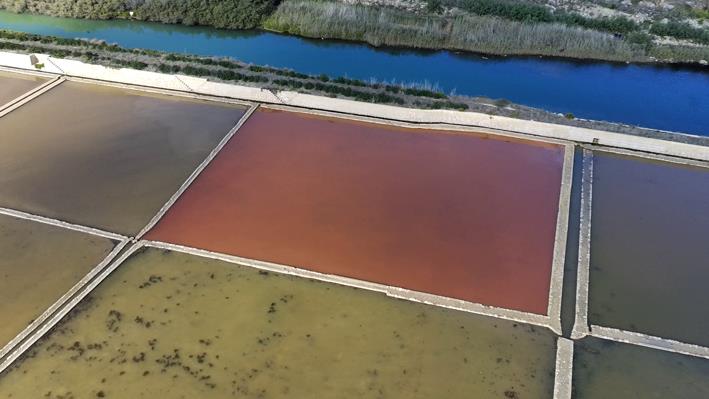
A pink evaporation pond at Salina Nature Reserve, coloured by microscopic algae that thrive in highly saline water. Photo: BirdLife Malta
From harbour to white gold
In Roman times, instead of the salt pans seen today, a large sea channel stretched inland from present-day Kennedy Grove towards Burmarrad. This natural harbour lay closest to Mdina, then Malta's capital, making it one of the island's most important trading ports. Goods arriving by sea were unloaded here before continuing their journey inland to the city.
When the Knights of St John arrived in Malta, they immediately recognised the site's strategic value. Protecting the harbour became a priority, not only from enemy attacks but also from nature itself. Storms regularly blocked the entrance with seaweed and debris, threatening access to the harbour.
To solve the problem, the Knights engineered an impressive canal around the reclaimed island where the salt pans stand today. Known as the Sukkursu, the canal still surrounds Salina Nature Reserve, and visitors enter the reserve by crossing a bridge over this canal.
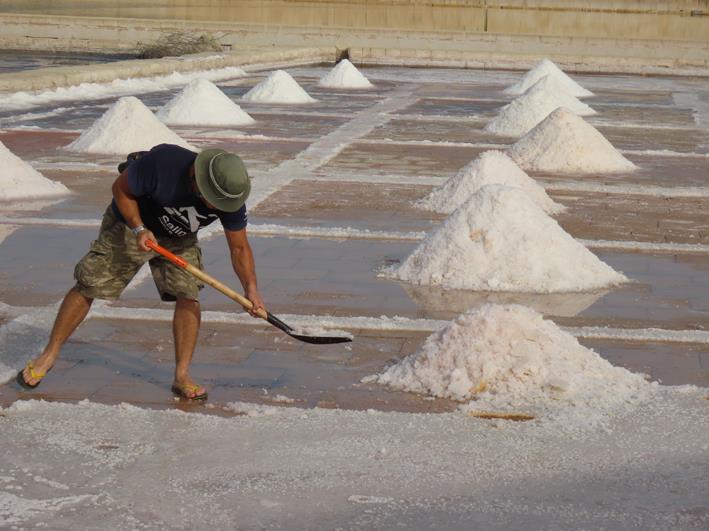
Traditional salt harvesting at Salina Nature Reserve, with salt being raked into piles using centuries-old techniques. Photo: Dominic Frendo
The salt pans seen today were developed during the 16th century, although older salt pans once existed further inland. They appear in frescoes painted by the Italian military engineer Francesco Laparelli, offering a rare glimpse into Malta's earlier salt-making history.
Among Salina's most distinctive features is the Dejma Cross, which still stands proudly in the middle of the salt pans. It marked the gathering place of the Dejma militia, a force of part-time soldiers ready to defend the coast against pirates and invading fleets. Its location highlights how valuable Salina once was: it protected both an important harbour and one of Malta's richest resources.
That resource was salt.
Today, it sits quietly on our dining tables, but for centuries salt was one of the world's most valuable commodities, earning the nickname "white gold". It preserved food and was traded across Europe.
For hundreds of years, Salina remained one of Malta's main centres for producing this valuable resource. Even in the 1970s, a successful season would produce around 700 tonnes of salt during one summer.
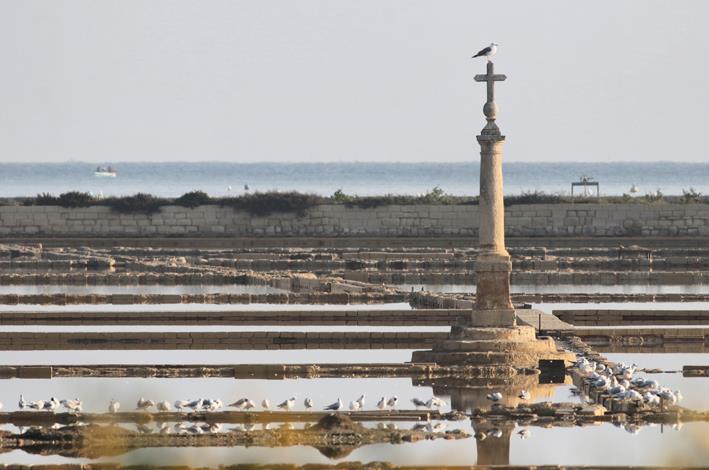 The historic Dejma Cross, which once served as the gathering point for the Dejma militia at Salina. Photo: Aron Tanti
How the salt pans still come to life
Behind every harvest lies a surprisingly sophisticated system.
The salt pans are carefully designed to move seawater through different stages of evaporation. Water enters large outer reservoirs before flowing into clay-bottomed ponds, where the Mediterranean sun slowly concentrates the salt.
As the water becomes saltier, it gradually turns bright pink due to microscopic algae that thrive in highly saline conditions. As salt crystals form, the increasing salinity prevents the algae from surviving, leaving behind the brilliant white sea salt harvested each summer.
The concentrated brine finally reaches the stone-lined crystallisation ponds, where pure white salt crystals begin to form.
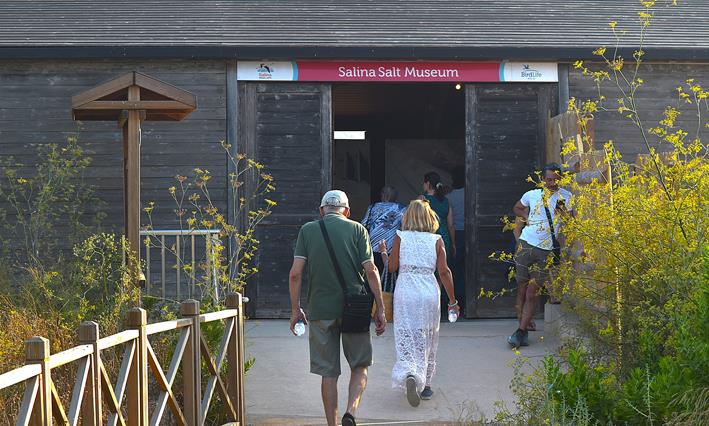
The Salt Museum at Salina, showcasing the history of one of Malta's oldest industries. Photo: Charles Coleiro
Producing salt has always required patience and precision. Every March, the crystallisation ponds are completely emptied. Today, this is done using electric pumps. Centuries ago, workers relied on large hand-operated Archimedes screws to remove the water before the season could begin.
Cleaning the pans was equally demanding. Traditionally, workers, mostly from nearby Naxxar, prepared the basins for each season. Today, BirdLife Malta continues this tradition with volunteers, keeping one of Malta's oldest practices alive. Although only one salt pan is used, the aim is to preserve traditional salt-making techniques.
Managing the water remains a delicate balancing act. The salt-producing pond needs extremely high salinity, while neighbouring ponds must remain much less salty to support wildlife.
Among the remarkable species living here is Malta's national fish, the Mediterranean killifish, or bużaqq, which can survive in water almost twice as salty as the sea, but even this resilient fish has its limits.
Maintaining this balance is essential for another reason. Every August, migratory birds returning from Europe stop at Salina to feed before continuing their journey to Africa. Healthy fish populations provide the energy migratory birds need to complete one of nature's greatest migrations.
Once the salt was harvested, its journey was far from over. Workers loaded it onto small carts running along narrow tracks that resembled miniature railways. The carts carried the harvest to the nearby Ximenes Redoubt, originally built as a military fort equipped with rock-cut cannons known as fougasses.
As warfare evolved, the fort found a new purpose. It became a warehouse where the salt was stored, sorted and prepared for export. Boats could then collect the finished product from the nearby jetty and transport Malta's white gold across the islands.
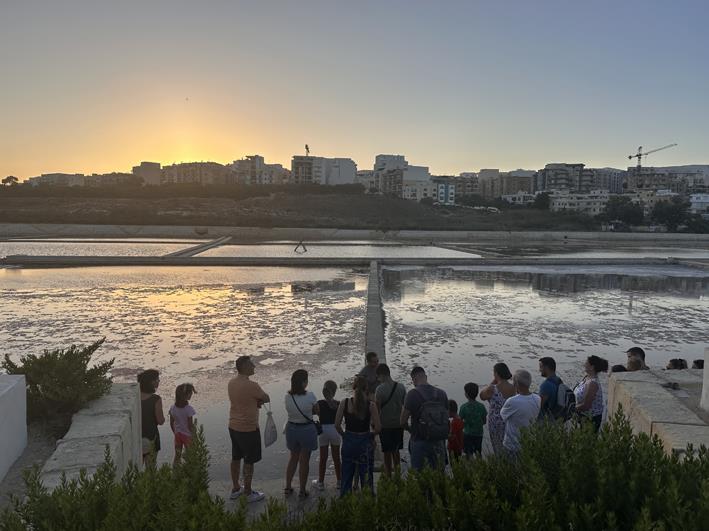
A guided tour of the historic Salina salt pans during Salt Fest. Photo: Camilla Bianco
Experience centuries of history at Salt Fest
Visitors can still discover these stories today at the Salt Museum. Yet the experience becomes even more memorable during Salt Fest, when guided tours of the historic salt pans reveal hidden corners, remarkable engineering and fascinating stories that cannot be appreciated from the roadside.
Whether you are interested in history, nature, science or heritage, Salt Fest offers a rare opportunity to discover Salina, where nearly 2,000 years of history continue to shape one of Malta's most remarkable landscapes.
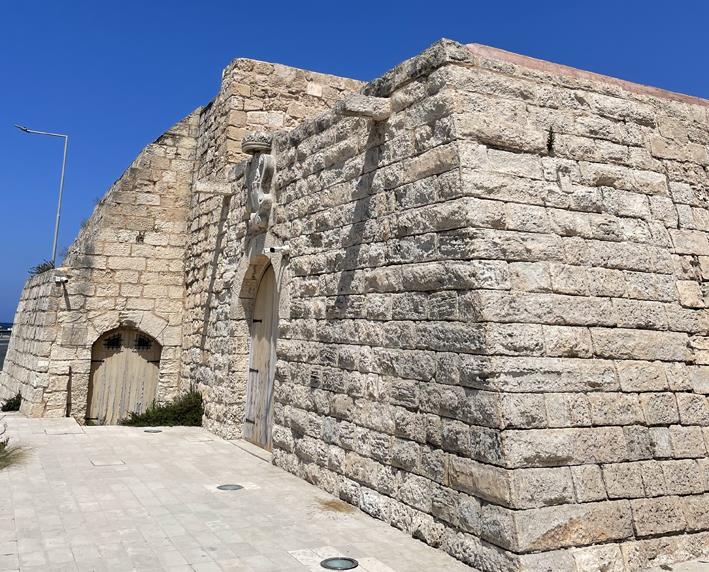
The Ximenes Redoubt, originally built as a military fortification, later served as a salt warehouse for the Salina salt pans. Photo: Martin Austad
Manuel Mallia is Salina Park manager