Your earlier exhibitions leaned toward ethereal abstraction. What inspired the shift toward more symbolic and spiritual realism in this latest body of work, Saints & Trees?
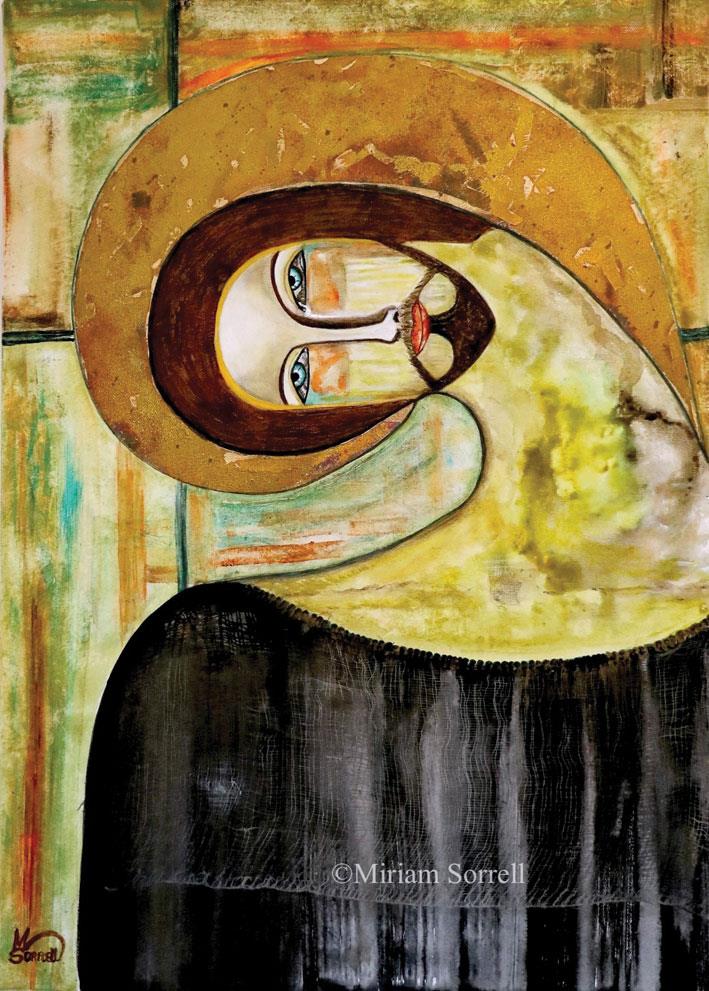
This shift came from a deep inner urgency - a spiritual sorrow at watching the last pockets of Nature in Malta and Gozo disappear. I felt compelled to restore a sense of sacredness by merging the symbols of saints with the presence of trees, reuniting Heaven and Earth on canvas. It reflects where my heart is and what my soul feels: the need to express the beauty we are losing and are a part of. The natural world here is tiny and therefore precious - a treasure we should behold. This led me toward more figurative work using saints, trees, and the chapels that are always somewhere in sight. What began as abstraction naturally evolved into clarity, compassion, and emotional truth.
Your use of vibrant colours is striking. Can you share how colour functions in your work - emotionally, symbolically, or spiritually?
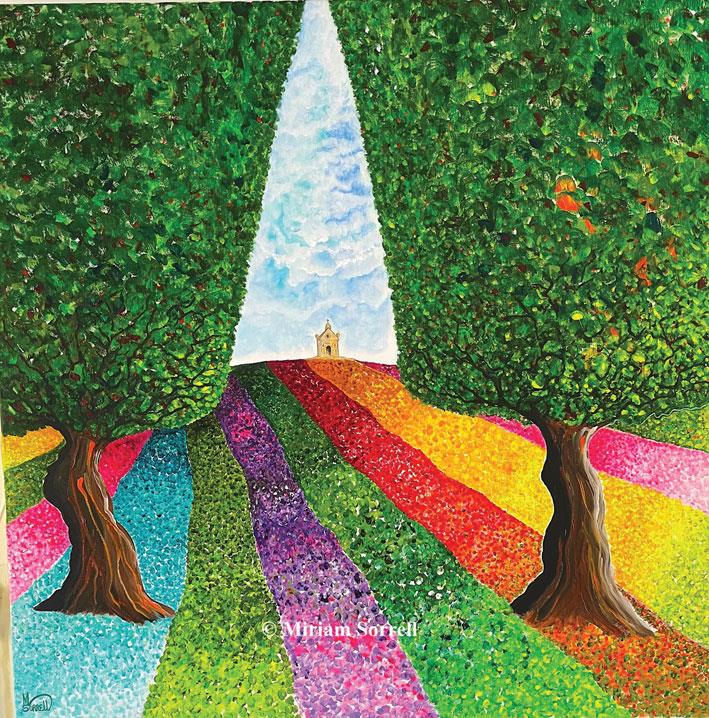
Colour is the language of my yearning soul. It counters the grey, non-porous concrete reality of environmental destruction - concrete that steals the earth's ability to breathe and restore - with a vision of hope, beauty, and child-like wonder. My palette restores what has been lost - not as escapism, but as a reminder of what we once had and must still protect and nurture.
You speak passionately about the loss of greenery in Malta and Gozo. How does this environmental grief manifest in your art?
Grief forms the emotional backbone of this exhibition. Every tree I paint is an act of remembrance, resistance, and tribute - a way of reclaiming the lush, breathing landscapes taken from us. My paintings become a sanctuary where Nature is honoured, protected, and given back her dignity.
Do you see your art as a form of ecological activism or spiritual ecology?
Both. I see my work as spiritual ecology - activism through reverence. My intention is not to protest loudly, although I speak clearly when the subject arises, but to awaken an inner memory of harmony with Nature. If my work helps viewers feel even a moment of awe, tenderness, or responsibility, then the message has done its quiet work - perhaps even planted a seed.
You've mentioned saints, chapels, and sacredness in your work. How do religious symbols interact with your ecological themes?
The saints represent moral guardianship and compassion; the trees represent the living world we are meant to care for. By placing chapels in the distance, I unite these forms of sacredness - the spiritual and the natural. Both have always been intertwined and both deserve reverence.
What role does Ta' Pinu Church play in your creative and spiritual life?
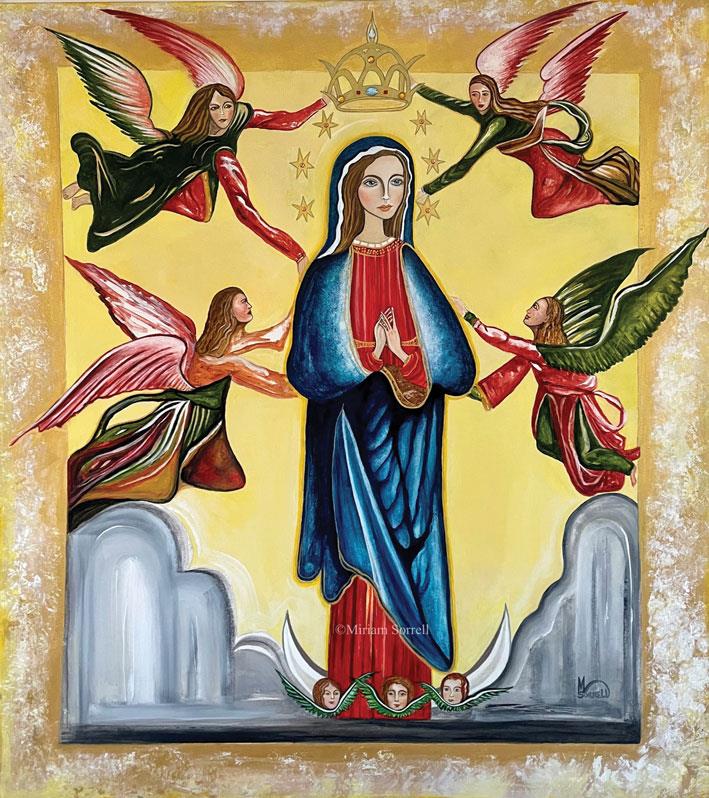
Ta' Pinu holds a very special place in my heart - a symbol of grace, solace, and beauty. Painting the Madonna during my injury became a profound healing process that restored both body and spirit. The church is my refuge from the shadows of destruction. I have felt a magnetic pull to both the church and the Madonna Ta' Pinu for years; its energy is deeply healing and spiritually inspiring.
How do you interpret the relationship between spirituality and nature in your paintings?
For me, spirituality and Nature are inseparable - two expressions of the same Divine presence. When I paint, I feel like a channel for that presence. The imagery often feels received rather than created, as if the trees, light, and quiet wisdom of the natural world are speaking through me. My work explores the point where inner stillness mirrors the outer landscape. When we honour Nature, we honour something sacred within ourselves. Every painting invites viewers to return to that connection.
You've cited Satish Kumar and Paramahansa Yogananda as inspirations. How have their teachings shaped your worldview and artistic expression?
Satish Kumar's teachings remind me that we are Nature, not separate from it. Yogananda's words - "Darkness cannot exist where there is Light" - have guided me for decades. Both root my work in compassion, awareness, and the quiet power of Light. Other influences include Deepak Chopra and Alan Watts.
Can you tell us more about the emotional and physical challenges you faced while creating your Madonna Ta' Pinu?
Painting the Madonna while recovering from two fractured vertebrae was painful yet transformative. Each brushstroke felt like a prayer, a movement toward healing, and a reclaiming of strength. She became my companion through those months - a symbol of peace that held me together. I worked with sacred chants and music which fed my soul; the process became like a dance, a freedom of my soul speaking through my hands.
How did the injury to your spine and recovery period influence your creative process and the themes of Saints & Trees?
The injury forced me into stillness, where I reflected on what truly matters - beauty, Nature, spiritual ethics, love, compassion, and the fragility of life itself. From that quiet place emerged the need to paint saints and trees as reminders of goodness, resilience and renewal. The themes of the exhibition were born from that healing and helped me re-evaluate my priorities.
What does a typical day in your studio look like? Do you follow rituals or routines when painting?
My studio days are sometimes quiet, gentle, and intuitive; other times the music is loud and I lose myself for hours. Painting is my therapy - a place of creation, play, introspection, and flow.
How do you know when a painting is finished - especially one as emotionally layered as your Madonna Ta' Pinu?
This painting took months to complete. I know a painting is finished when it reaches a point of stillness - when it no longer asks anything of me. With the Madonna, there was a moment when she radiated peace and I felt I could step back. That silence told me she was complete.
You've said your work is about giving Light, Love, and Peace. What do you hope viewers take away from this exhibition?
I hope viewers leave with a softened heart - a moment of wonder, gratitude, and renewed reverence for what we have and are losing. If Nature is a part of us, then destroying it is like harming ourselves. If viewers feel even a small reconnection with Nature or with their own sense of spirit and responsibility, then the work has fulfilled its purpose. I want them to feel uplifted, inspired, and reminded of what truly matters.
In a world that often feels disconnected from nature and spirit, what role do you believe artists should play?
Artists are torchbearers of remembrance. Our role is to restore beauty, meaning, and conscience - to remind society of sacredness. Through colour and form, we help reconnect people to the soul of the world. But I also believe in freedom of expression, so long as harm is absent. Recently I connected with Tracey Emin's work, and although not my type of art, I found new respect for its honesty. There is space for all shades of feeling in art - a reminder that others can think, "I am not alone," - a much-needed confirmation of our shared humanity.
If you could send one message to future generations through your art, what would it be?
Cherish Nature as you would your own breath. Protect beauty, honour the sacred, and never lose sight of Light - for it is Light that guides us back to wholeness, Light that banishes confusion, Light that shows us the way forward. And breathing love into the lives of others is indeed Light itself. Shine your Light - share your aliveness, love until you can love no more, or better still, until you draw your very last breath.
There will be high-quality prints of the works available on demand. Can you tell readers a little more about this?
Yes - prints will be available in various sizes, including my Madonna Ta' Pinu, as I cannot part with the original. Offering prints is my way of sharing her grace, and the spirit of this exhibition, with those who feel a connection to it. Most of the original paintings will be for sale, prints can be ordered through my website, and commissions are always welcome.
How do you unite the many parts of your life - artist, nature-lover, vegan food author, mother, poet, writer, and natural therapist - and what inspires you, and sustains and drives you through life's highs and lows?
If I'm honest, what keeps me grounded are the simple, essential things that have nourished me for decades. I adore Woody Allen's films - they still make me smile and laugh, and that lightness has stayed with me throughout my life. Music is another lifeline; I cannot exist without it. It feels like another form of oxygen.
Books have been loyal companions for as long as I can remember. A little exercise keeps my joints moving, and I spend a great deal of time in my kitchen creating food for my family and loved ones - one of my deepest expressions of care. When time allows, I reconnect with Nature, which restores me in ways nothing else can.
Animals are another great love. I care for my own cats and for strays, and recently I adopted a Siamese who ran into the church opposite our home. I'd always dreamt of having a male Siamese, and there he was - a little bundle of joy I named Tiny Tim.
I live a fairly reclusive life in a world that often feels chaotic, and I've faced my share of challenges. But my inner sanctum remains peaceful. And what drives me most? Love. I have an abundance of it - both given and received. It is my light, my compass, my sense of aliveness.
The exhibition will run for the entire month of December.