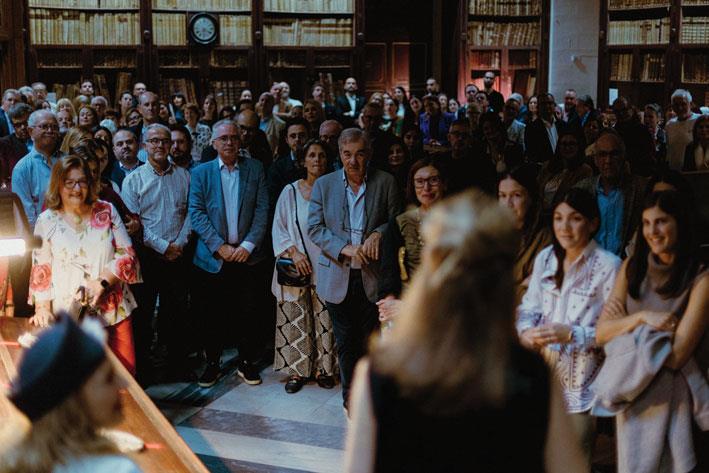
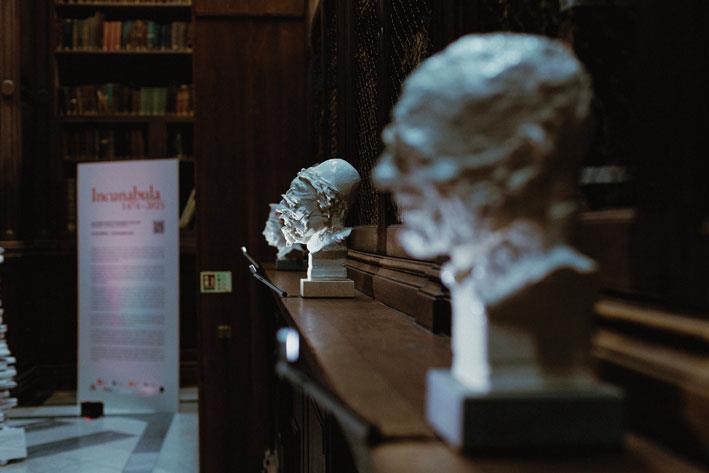
Francesca Balzan's solo exhibition Incunabula 1474-2025, curated by Justine Balzan Demajo, opened in November. It presents a new collection of sculptures. The exhibition bridges the historical and the contemporary through an innovative sculpture installation, inspired by the National Library's collection of early printed books; the 15th century incunabula. The base of these sculptures is 3D printed in porcelain, and from there, Francesca's hand takes over, completely manipulating and reshaping the form to give each sculpture an individual character.
The contrast between the precise lines created by the printer and the distinct, sometimes rough yet delicate features moulded by Francesca creates an engaging dialogue. One that highlights the coexistence between the digital and the handmade, reminding us that, even in an age of rapid technological progress, the human hand and mind remain profoundly relevant, and can, in many ways, still overpower the machine.
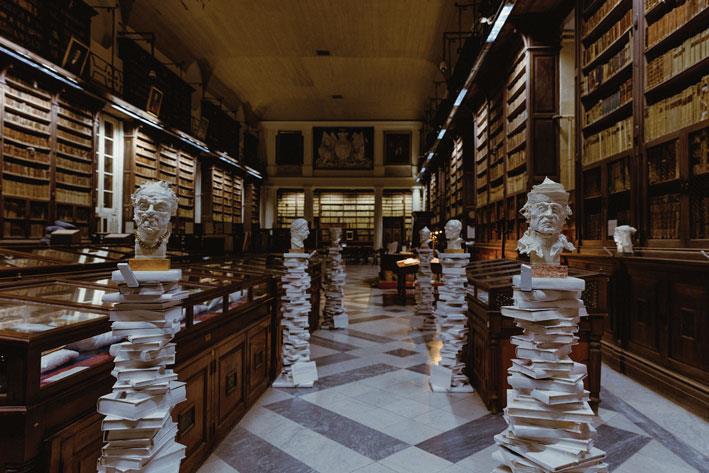
After visiting the exhibition Ceramic artist Nico Conti commented enthusiastically: "I really resonated with the show and with Francesca. Her new show is a celebration of the union between craftsmanship and the digital, the hand and the machine, the unfamiliar and the human. And while technology progresses, with the machine often overtaking the hand, this progress in Balzan's show moves in the opposite direction. The artist provides flesh to technological bones. All the busts begin as the same anonymous, generic, lifeless form - an imitation of a human bust. However, through Balzan's intervention and her deep understanding of material, the forms begin to gain consciousness, personality, and warmth.
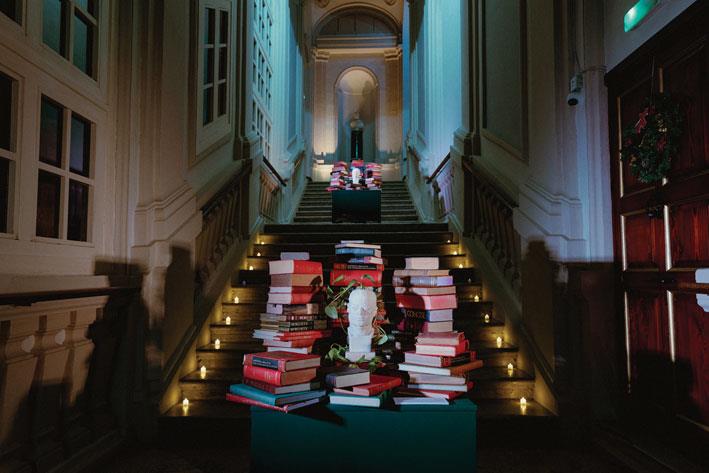
Having said that, Balzan does not conceal the traces of the technological foundation. She does the opposite. The lines formed through 3D printing are often celebrated and used to enhance the forms shaped by hand. Ivan Illich, in Tools of Conviviality, wrote that "A tool is good when it allows us to do something with greater care, not with greater speed" and Balzan's use of 3D printing in clay embodies this sentiment. It is not a shortcut, but a necessary means to explore the connection between the digital and the handmade. There is no fear of technology in these works. Instead, there is an embrace of it, a sense of how the artist finds a strong voice within these tools and transforms what could have been a sterile object into something vital."
Thomas Camilleri owner of the shop Hollywood in Valetta who visited commented: "I enjoyed it and thought it was Francesca at her most creative and exciting."
Incunabula 1474-2025 runs till 12th December, 2025 at the National Library of Malta, Valletta. Entrance is free. Opening hours: Monday - Friday, 8.30am - 4.30pm, Saturday until 12.30pm.
Photos: Lisa Attard