You grew up in Malta and later moved to England. How has your Maltese childhood shaped your storytelling voice?
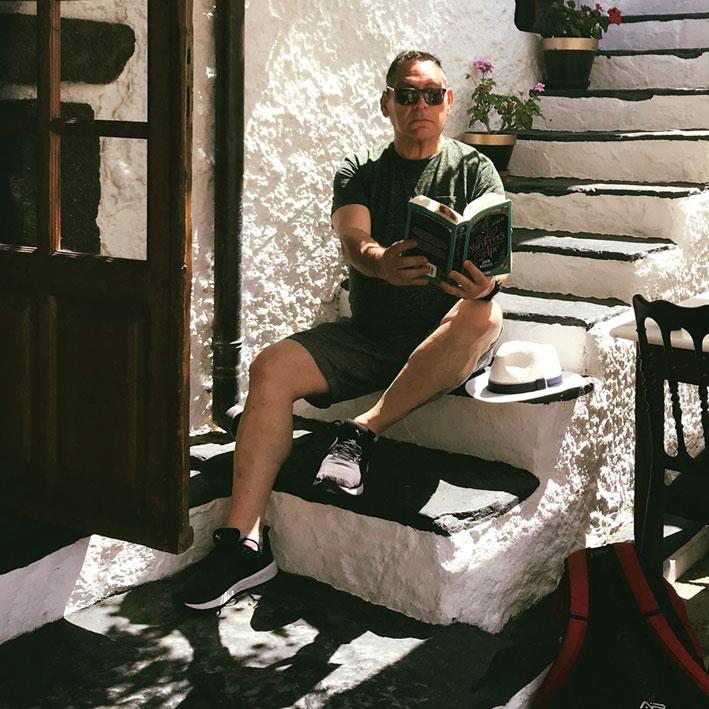
I have been fascinated by story-telling ever since I can remember. When I was a kid in what was then semi-rural Naxxar, we only had television for a few hours a day. The rest of our free time was spent playing on the street. I wasn't interested in games so much. The women chatting outside their front doors could spin the slightest of incident into a nail-biting drama. Even the unlikeliest of ghost stories was recounted as if they had witnessed it with their own eyes. I hope my storytelling captures that immediacy.
What first inspired you to write for children, and do you remember the moment you decided to become an author?
As a child, I grew up listening to Bible stories. I like epic canvasses that not only encompass a personal story but also open a window on to an entire world. I remember reading CS Lewis's The Lion, the Witch and the Wardrobe when I was eight or nine. The idea that you could step into something as commonplace as a wardrobe and come out into a magical universe blew my mind. By the time I finished that book I knew I wanted to be a writer.
You've worked as a storyteller for audiences ranging from schoolchildren to royalty. How does live storytelling influence the way you write books?
Live storytelling creates a very personal bond with the listener. Every moment of the story, no matter how ancient, becomes alive in the present. No matter how big or small the audience is, you are reaching out one on one. My writing tries to recreate that energy. The biggest satisfaction for me is when I receive fan mail saying, 'that story was about me.'
Many of your books retell myths and legends. What draws you to these timeless stories, and how do you make them fresh for young readers?
When I moved to the UK in 1981, most of the children's books being published were gritty dramas, usually about kids living on council estates. This was pre JK Rowling who blew the children's book world apart.
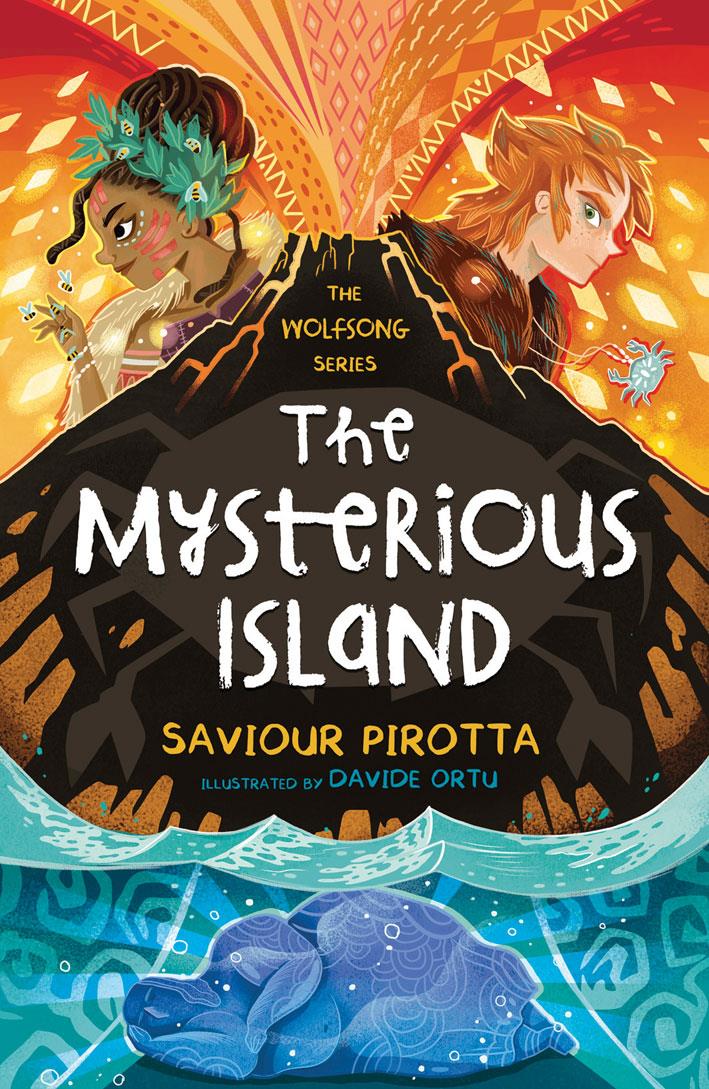
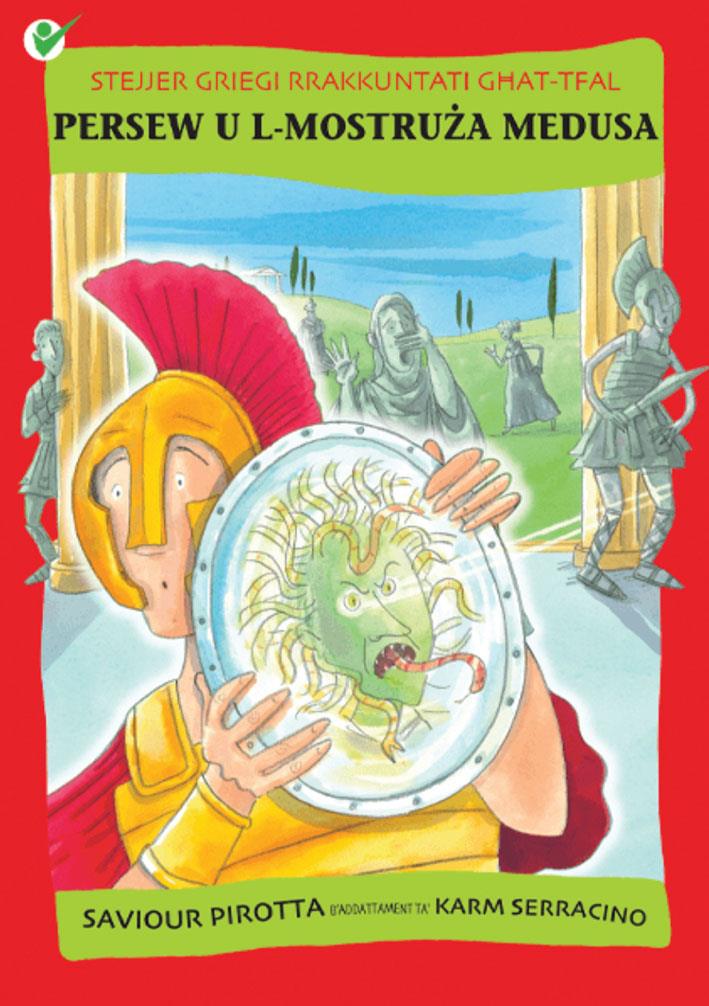
Having grown up in sunny Naxxar, I couldn't relate to a childhood in a Northern country so I started retelling world myths and legends. I soon discovered that these stories have lasted millennia because they deal with universal truths that still hold true today. I focus on those truths to make them relevant to children today. I recently adapted my First Greek Myths book into a show for Teatru Malta. It was performed at the Teatru Salesjan last year and again in Strasbourg in September. In both instances, the audiences came from diverse backgrounds but they still connected with the universal concepts.
Could you walk us through your writing process - from the spark of an idea to the finished manuscript?
Even for an established author, the journey to publication is a long one. I keep all my ideas in a notebook that I carry around with me everywhere. You never know when the gods of literature are going to shoot the next arrow. Every so often, I sit down with my agent who's very good at putting her finger on the one idea that might make it all the way to publication.
I then develop a proposal with a one-page synopsis which she shows to publishers, starting with ones we've worked with before. If and when we get the go ahead, I write up a treatment, which is a longer synopsis but with a chapter-by-chapter breakdown. Once the editor is happy with it, I start on the first draft. I write in longhand, with my trusted Parker fountain pen. The process of writing by hand gives my brain time to keep up with my fingers. When I'm satisfied the story is starting to take shape, I transcribe into Word and the draft goes to my editor.
There could be anywhere between two to four more drafts after the initial reading. Sometimes there is more than one editor involved and each one brings a different perspective to the project.
When I had my first book published, I celebrated with a Quattro Stagioni pizza and a hot chocolate. I still go through the same ritual with every book, except that now I also buy my cat Gino a tin of luxury cat food.
Then I start going through my notebook again, wondering which one of my ideas has the best potential to be my next book.
You often write historical fiction, taking readers to Ancient Greece, Egypt, and beyond. Which period of history fascinates you most, and is there one you still dream of exploring in your work?
The Ancient Greek civilisation has captivated me ever since I read about it in Look and Learn magazine in the 1970s. If there's a civilisation I haven't yet covered and would dearly love to, it's the Byzantine empire.
Your books have been translated into over twenty languages. How do you feel about your stories reaching children across such different cultures?
Reaching out to children in so many different countries is a rare privilege and one that I am aware of while I'm writing. P.L. Travers, who wrote Mary Poppins, once said, "a writer is only half his book. The other half is the reader." I couldn't agree more. A book is only finished when a kid reads it, and every reader brings their own life experience into the equation.
What do you hope children take away from your stories - beyond entertainment?
I very much hope they learn something new about the world, even if it's just an interesting fact about food in the Golden Islamic Age or cave paintings in the Stone Age. More importantly, I hope they discover something about themselves, an idea or a feeling that will help them on their life journey. It might sound pompous saying that but stories shape us up, they make us who we are. They influence the way we see the world.
How do you balance educating young readers about history with keeping the narrative exciting and magical?
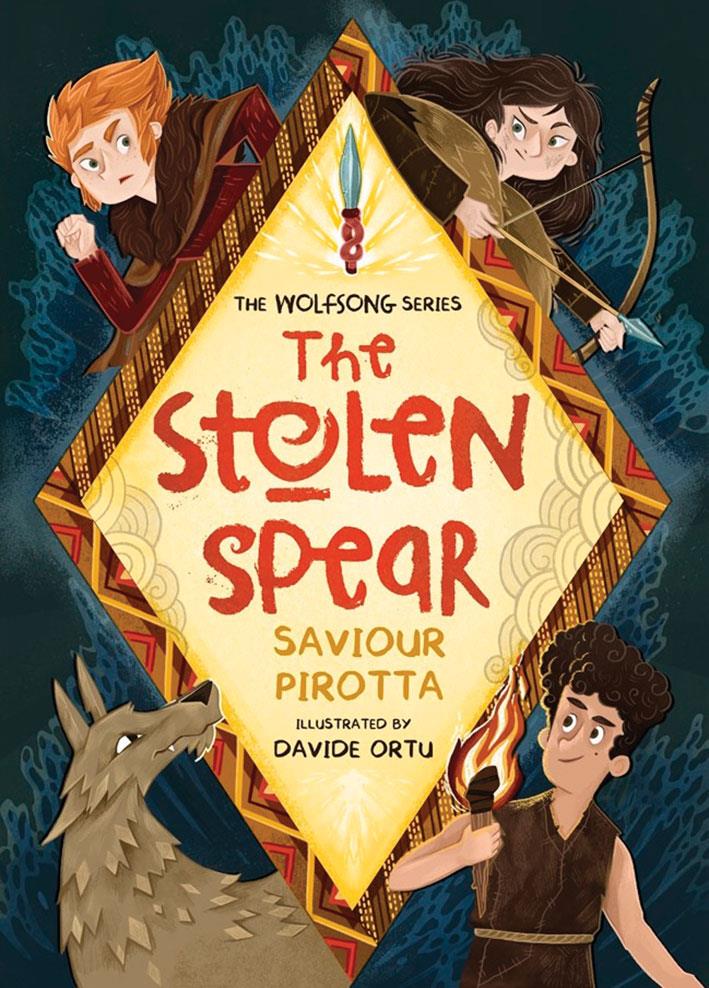
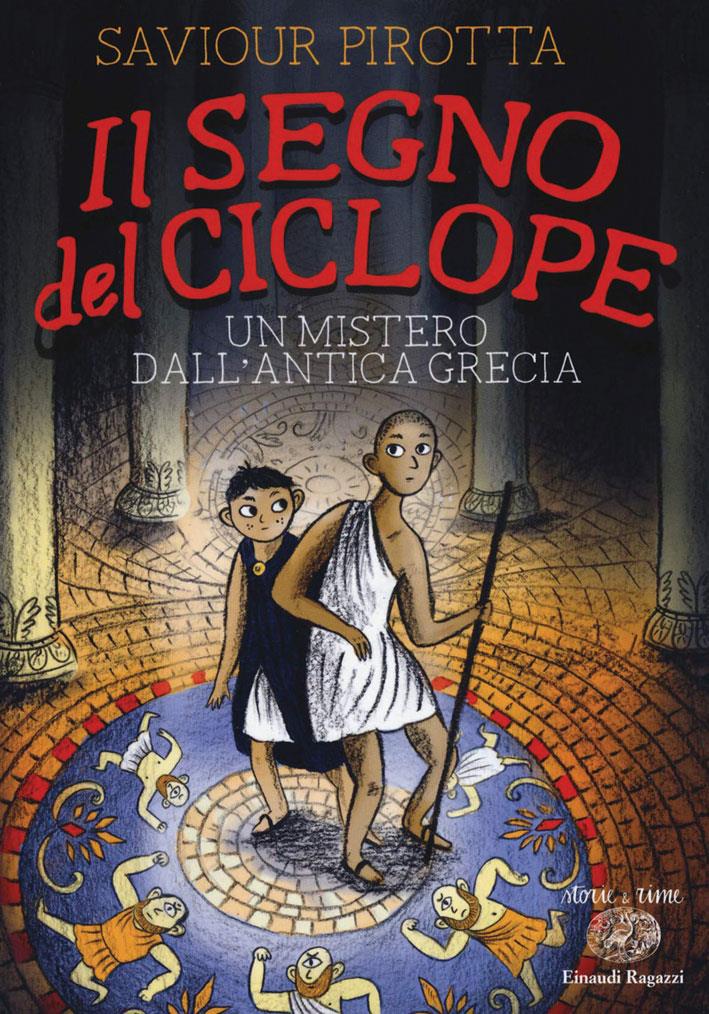
The first draft of my debut novel, Mark of the Cyclops, was weighed down with information about daily life in Ancient Greece. I was obsessed with getting things right: the price of food; the distance between cities etc. As edit followed edit, I soon learned that I didn't need to explain everything. All I had to do was create a mood, a feeling. The reader's imagination would do the rest. By the time the book was published, I had learnt a very important lesson: The story comes first; everything else the reader takes away with them is a bonus.
You've also written plays, including Granny's Exploding Toilet. How does writing for the stage differ from writing for children's books?
When you write a book, you are basically one voice creating a whole narrative. You and, to a certain extent your editor, are responsible for the characters and their entire journey through the world they inhabit. You carry the whole project.
With a play, you are creating a base layer for the theatre company. The director, the actors, the set, costume and lighting designers, not to mention the composer if you write a musical, all bring a unique viewpoint to what essentially becomes a patchwork of ideas. I find it liberating.
Do you find that humour plays a different role in your plays compared to your novels?
My children's books tend to be infused with a sense of awe. If there is humour, it's always quite subtle and it usually comes from the mouths of the antagonists. In Mark of the Cyclops, I have a character who is a useless poet but thinks he is gods' gift to literature. The main themes, however, tend to be serious ones.
My plays deal with serious matters too, but the humour is more prevalent. Granny's Exploding Toilet is a show about finding your inner hero but it also features an outside lavatory that blows up onstage. It depends on getting the laughs to deliver the message. I think it's because reading is a solitary pleasure. The writer is reaching out to one person at a time. In a theatre they have to motivate an entire audience, so the sweep of the humour needs to have a bigger arc.
What advice would you give to aspiring children's writers who want to capture the imagination of young readers?
Reach inside you to connect with your inner child. Create stories that would have swept you along when you were a kid. Don't try to emulate other writers. Young readers have an uncanny ability to recognise relatability. They can tell if a writer is being true to themselves. So be true to your inner voice and readers will be true to you.
I understand you do quite a bit of travelling, including in the Middle East, in connection with your books. Can you tell us something about this please?
I visit a lot of schools to talk about my work, both in person and on the internet. I even did a book tour in Malta just before the Covid pandemic. I especially like visiting the Middle East and so far my physical travels have taken me to Oman, Jordan and Qatar with a few more countries lined up for next year. Most of the schools I've been to are international, so the children come from different backgrounds and cultures. It's always fascinating to me that no matter the culture, children always aspire to the same universal things: they all want to be loved, to be protected. They all want to be reassured there is a future for them in which they can thrive and be happy.
Looking back at your career, what legacy do you hope to leave in children's literature?
I want the kids to remember my stories as cracking good reads, the same way I enjoyed CS Lewis on our doorstep in Alley 6, Saint Lucy Street. But I also hope that readers can see themselves reflected in my books. The leitmotifs in my stories tend to be empathy, kindness, belonging and, most important of all, the celebration of individuality and uniqueness. If just one child turned the last page in one of my books and thought to themselves, "I am special, I matter," I would consider my job done.