Commissioner Micallef, when this interview is published, you will have been in office as the Maltese EU Commissioner for exactly one year and one week. How has it been for you?
It has been quite a ride. Almost 50 missions to 30 countries, more than 400 meetings and engagements with ministers, stakeholders and citizens. These are figures that underscore one of my main priorities, namely bringing Europe closer to its citizens and communities and bringing the citizens and communities closer to Europe.
You are the first ever EU Commissioner for Intergenerational Fairness and you recently launched a consultative process, including a European Citizen Panel, to help shape the forthcoming EU Strategy on this topic. Can you share what concrete preparatory work or priorities you have already advanced in the past year, and when citizens can expect the strategy to be published?
Over the past year, we have laid a solid foundation for the forthcoming Strategy on Intergenerational Fairness. A broad consultation process was launched by the Joint Research Centre's EU Policy Lab in the beginning of 2025. It involved scientists, policymakers, and civil society. We then strengthened outreach through the Citizens' Engagement Platform, where people across the Union were able to share their perspectives and ideas and follow the process transparently. From September to November, we have prepared and run a European Citizens' Panel, ensuring that the voices of younger and older generations give us their perspectives. In parallel, we launched a Call for Evidence, generating valuable input from stakeholders across Europe. The Commission will be adopting the Strategy in the first quarter of 2026.
Given the breadth of issues under "intergenerational fairness" - from housing and pensions to climate, AI and social services - do you feel the Commission is risking spreading itself too thin? How can you ensure that the final strategy will produce tangible results rather than just broad principles?
The breadth of issues covered by intergeneration fairness reflects the importance of the topic as well as a reality we increasingly need to acknowledge, namely that decisions in key sectors like housing, pensions, climate action, digital transitions and public finances are deeply interconnected. For instance, fiscal sustainability shapes budgets, which determine the resources available for areas such as research and education, and these, in turn, influence Europe's long-term competitiveness and the opportunities available to future generations. One policy field inevitably feeds into the next.
Rather than spreading ourselves too thin, we are embracing this interconnectedness, and we are launching a process aimed at identifying practical ways to integrate intergenerational considerations across existing policies, building a foundation for long-term and consistent action.
The goal is to ensure that decisions taken today are guided by their long-term implications and that the interests of all generations are duly considered.
On youth involvement, your portfolio foresees regular Youth Policy Dialogue sessions and setting up a President's Youth Advisory Board to give young people a stronger voice. Over the past year, what tangible changes or policy proposals have been directly shaped by youth input, and how will you ensure that this remains more than symbolic?
As we had promised, we are making policies with young people and not for young people. The input of youth has shaped several concrete initiatives. Through the Youth Policy Dialogues for the first time in the history of the European Union, Commissioners discussed directly with young people, guiding our general work, and feeding directly into specific proposals. In the first 100 days of this mandate every Commissioner hosted a Youth Policy Dialogue and we now have had more than 40 Youth Policy Dialogues.
The last Youth Policy Dialogue I hosted focused on cyberbullying and it will contribute directly to the upcoming Action Plan against Cyberbullying, which we will publish in February 2026. Young people also contributed to the development of the Union of Skills, Preparedness Strategy, the EU's Vision for Agriculture, the Ocean Pact and the EU Democracy Shield, just to mention some other examples. These dialogues are not one-off events, as the main takeaways for each Youth Policy Dialogue are discussed further online via the Citizens' Engagement Platform.
Furthermore, the first meeting of the President's Youth Advisory Board, for which I coordinated the preparations, took place this week. Youth representatives from across Europe gave their advice to President von der Leyen on the pressing issue of the impact of social media on young people.
The Youth Policy Dialogues and the President's Youth Advisory Board are two of several initiatives that clearly demonstrate one thing: In Europe we count on young people.
In our previous interview in May, you said that "culture must pay the rent" and cultural work should allow people to earn a decent living without needing a second job. After a year in office, what concrete measures have been launched (or are in final design) to improve working conditions and income stability for cultural and creative professionals across the EU?
Advancing artists' working conditions is one of my top priorities. Artists and cultural professionals, from the actor to the architect, from the musician to the museum curator, are the ones who bring our cultural sector to life. We should never take their invaluable contribution to society for granted.
The phrase "Culture must pay the rent" is a commitment. The almost eight million people employed in the cultural and creative sectors represent 3.8% of total EU employment. Yet, many are stuck in a cycle of short-term contracts, undeclared work, lack of stability, and juggling multiple jobs. Freelance and self-employment are far more common than stable positions.
The Culture Compass for Europe, the AgoraEU Programme and the EU Artists' Charter are our tools to address these challenges. The EU Artists Charter will outline the fundamental principles for fair working conditions and offer vital guidance on artists' rights and working conditions, currently fragmented across Member States.
AgoraEU, our future funding programme, will place a strong emphasis on respecting and improving artists' working conditions, ensuring that those who benefit from EU funds threat artists fairly.
Reflections on the Compass and the Charter will start immediately with a High-level Roundtable on the working conditions of artists, which will take place next week. Together with the European Parliament, social partners in the cultural sector, and other stakeholders, we will start discussing long-term solutions for artists. It's time for cultural and creative professionals to thrive and not just survive.
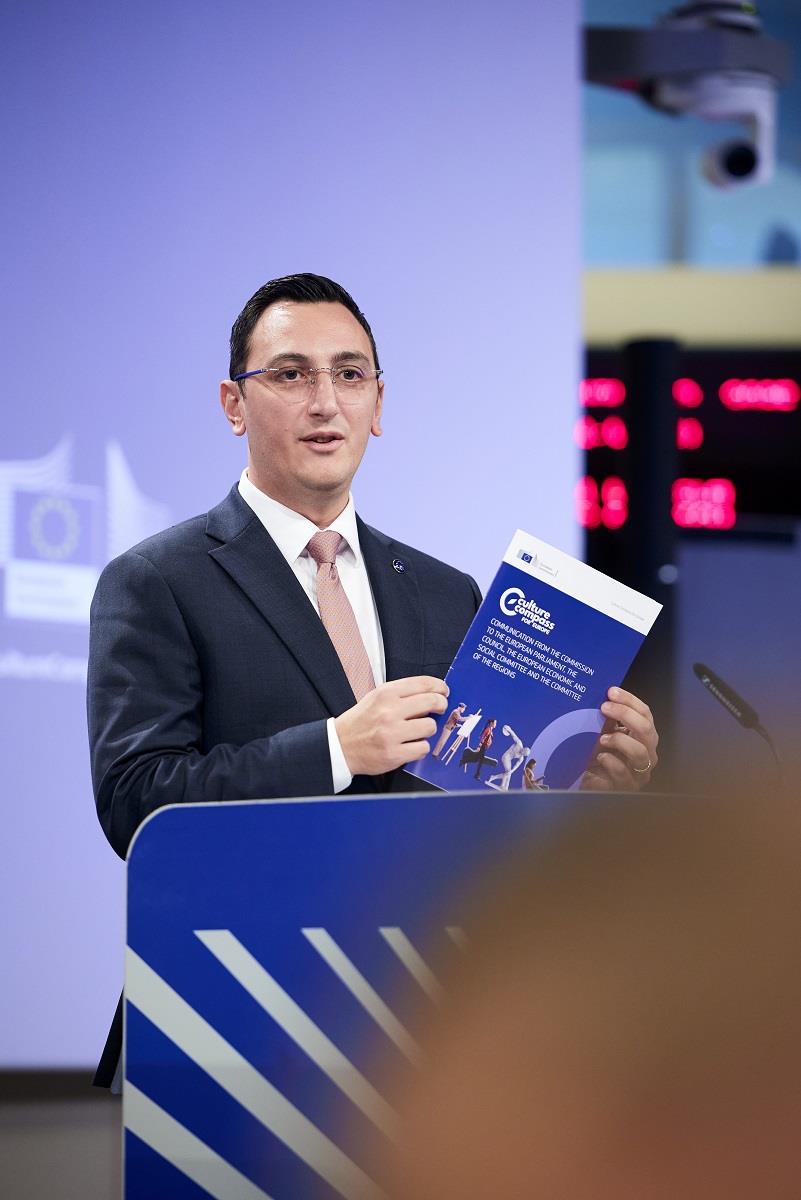
You already mentioned the Culture Compass for Europe, your flagship initiative which aims to give a voice to small theatres, independent artists and creative freelancers often unheard. Can you point to the first tangible successes of the Culture Compass, in terms of funding decisions, improved working-conditions frameworks or policy changes? If none yet, what timeline do you foresee for results?
The Culture Compass for Europe is a bold and highly anticipated strategic Communication. It points to what keeps Europe human and is driven by a simple, yet visionary idea: Europe for Culture - Culture for Europe. In practical terms this means Europe standing up for its cultural ecosystem, while unlocking the potential of culture to serve as a powerful catalyst for societal change.
The Compass is anchored in four key directions and 20 flagship initiatives, which we will roll out over this mandate, with timeframes clearly stipulated in the Communication. Just to mentioned some of the 20 flagships, we have announced the State of Culture report, the EU Artists' Charter, the setting up of an EU Cultural Data Hub, a new European Prize for Performing Arts, Guidelines on culture and mental wellbeing, and an EU Strategy on international cultural relations. We will also be launching a Euro-Med initiative for culture, sport and tourism in the context of the Pact for the Mediterranean.
With the rise of Artificial Intelligence (AI), you had acknowledged serious challenges around copyright, fair compensation and transparency, warning that existing frameworks (Digital Services Act, AI Act, Copyright Directive) were designed before the current AI boom. Has there been progress with your task with developing a strategy to align AI and the cultural and creative sector?
The rise of AI presents exciting opportunities for the cultural and creative sectors. As we navigate this digital transition, a forward-looking approach is crucial. AI and other new technologies offer significant potential for creative sectors, but their benefits can only be realized if the right conditions are established. Our priority is clear: we must ensure that these technologies are embraced by cultural industries, enhancing their competitiveness and reinforcing human creativity.
Over the last year, I have engaged with numerous stakeholders, including musicians, artists, and authors. Their insights to the current challenges and opportunities have been invaluable.
The dedicated Strategy for AI within the cultural and creative sectors, which we will adopt early in 2027, will ensure that AI amplifies human creativity whilst protecting cultural and linguistic diversity. We will focus on fostering innovation through collaboration between tech and cultural sectors, encouraging ethical AI use, and equipping cultural and creative organisations with the necessary resources to embrace AI advancements.
The past year included the celebration of the European Week of Sport and the first round of meetings with European Olympic Committees presidents. In your view, what are the most significant strides made in promoting sport across Europe, particularly in underprivileged or rural areas, and what remains the hardest challenge?
We are seeing progress in the promotion of sport and physical activity across Europe. The European Week of Sport, which is our flagship campaign, continues to be a powerful driver of this momentum. Now in its tenth year, it has grown into a genuinely Europe-wide movement, with nearly 80,000 events and more than 15 million participants across 39 countries. What makes it especially impactful is its reach, from schools and workplaces to parks, clubs, and community spaces, it brings the opportunities of being active directly into people's daily environments.
This broad engagement is essential, because one of our biggest challenges remains ensuring that people in underprivileged or rural areas have real access to sport. Too often, limited infrastructure, a lack of programmes, or simply limited awareness about the benefits of physical activity prevent participation. Changing this requires a cultural shift. Sport is not just about competition. It strengthens health and mental well-being, builds social cohesion, fosters inclusion, and helps communities develop resilience and a sense of shared responsibility.
That is why promoting physical activity is one of my priorities in the field of sport for the next four years. We need community-based solutions that bring sport to where people are: inclusive grassroots initiatives, family-friendly activities, intergenerational programmes, and low-threshold projects that welcome everyone, regardless of background or ability. The Sport strand of the Erasmus+ Programme offers many inspiring examples of how European cooperation can help communities rethink how they engage people in physical activity and build a more inclusive sporting culture.
Crucially, none of this progress happens in isolation. Working closely with stakeholders, from local authorities and civil society organisations to clubs, federations, and international partners, is essential.
My first round of meetings with the presidents of the European Olympic Committees underlined this point. We share the same ambition to expand access to sport, strengthen its societal role, and ensure that no community is left behind. Their commitment reinforces the idea that promoting sport in Europe is a collective effort.
We have made significant strides, but the hardest challenge remains ensuring that everyone, regardless of where they live or their socio-economic background, can enjoy the full benefits of sport and physical activity. With continued cooperation and shared ambition, I am confident that we can close this gap.
Sports, especially at grassroots level, often struggle with funding, inequity, and access. What mechanisms will your office push for to ensure equal opportunity and inclusion, rather than prioritising elite sport and high-profile events?
Grassroots sport is the foundation of Europe's sporting ecosystem, and this is exactly where the EU directs its support. Through the sport actions of Erasmus+, we invest in inclusion, participation, and local capacity-building, rather than elite sport.
Erasmus+ provides concrete tools. Collaborative and Small-Scale Partnerships help local clubs, NGOs, schools and municipalities create inclusive programmes, open doors for under-represented groups, and promote physical activity for all. Our support for not-for-profit European sport events boosts mass participation and community engagement, with themes such as social inclusion, health-enhancing activity and equal opportunities at their core. We back projects that advance gender equality and accessibility and safe sport, ensuring that no one is left behind.
These mechanisms empower organisations that use sport to break down barriers and strengthen community cohesion. The message is simple: our focus is on equal opportunity, access and participation. We are investing in the foundations of sport where it changes lives.
My vision is clear: a more inclusive, active and resilient Europe where everyone has the chance to participate in sport and enjoy its benefits.
Looking ahead to 2026, when the full Intergenerational Fairness Strategy is expected, what concrete milestones should civil society and citizens be watching for, and how will you measure success in a way that's transparent beyond broad slogans about fairness, inclusion, or European identity?
I believe this question goes to the heart of what we do not want to reduce this strategy to.
Our ambition goes well beyond a list of potential outputs. Intergenerational fairness is not something that can be achieved through a single strategy or a set of Brussels-based actions. It requires a shared commitment that spans individual choices, community engagement, and the work of local, regional, and national authorities. The realities and pressures felt by different generations are most directly experienced at those levels.
At the European level, we can and will play a supporting role, for example by facilitating cooperation, identifying and promoting good practices, and helping to create the conditions for long-term thinking across policy areas.
Ultimately, this is a collective endeavour. The strategy can help provide direction and coherence, but genuine progress depends on joint efforts across governance levels and society as a whole, so that today's decisions contribute to a fair and resilient future for all generations.