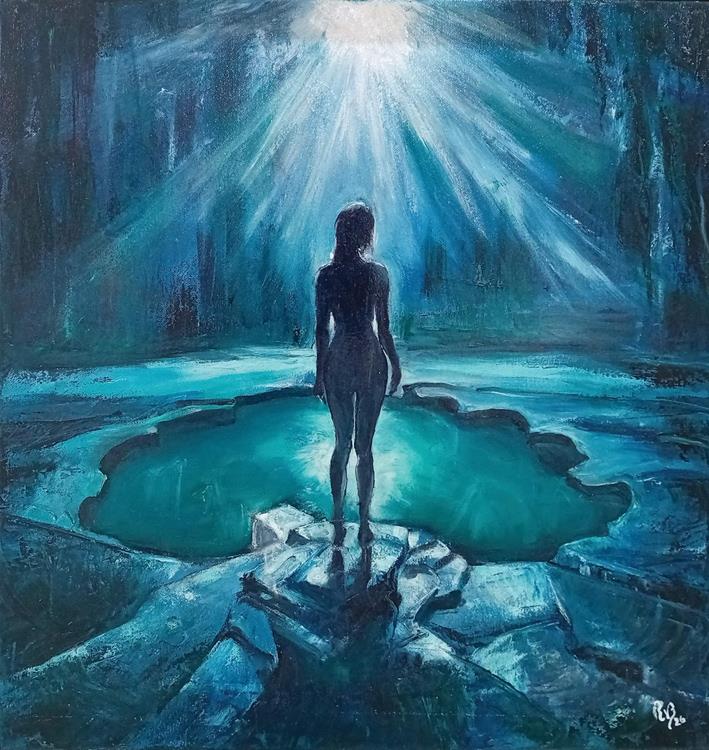
Oil painting is positioned as a medium capable of sustaining layered imagery, material depth, and shifting visual narratives. Within this context, a selection of works spanning landscape, figuration, still life, and a single abstract artwork is situated within a shared material framework that foregrounds both technical versatility and divergent approaches to painterly practice. The question remains whether "reflection" is produced through the artworks themselves, or merely projected onto them in fragments.
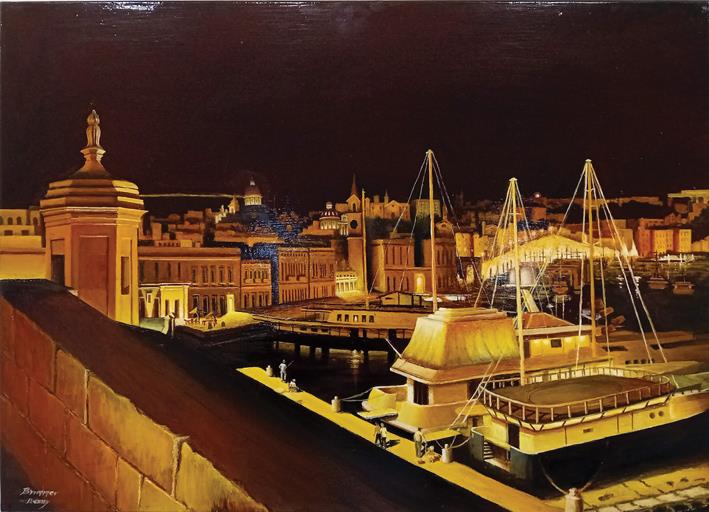
Reflections in Fragments at Creative Expressions Art Gallery (Old School Studios) explores the versatile properties of the oil medium. The exhibition is curated by Kris Debono, a multimedia practitioner with an extensive portfolio accumulated over six years. With a focus on community building and artist representation, this collective brings together three artists who specialise in this medium: Benny Brimmer (b. 1959), Ramon Vella Bamber (b. 1971) and Silvio Agius (b. 1953).
Each artist brings a distinct perspective to the medium, shaped by differing experiences and approaches to practice. Brimmer's paintings emerge from a self-taught journey, where experimentation with oil has led to a confident and individual visual language. Vella Bamber approaches art with an academic background, blending landscape and figurative subjects, often inspired by natural surroundings and Impressionist traditions. Agius similarly reflects a longstanding engagement with artistic training, further enriched by his background in conservation, which informs a considered approach attentive to both technique and the material life of the artwork.
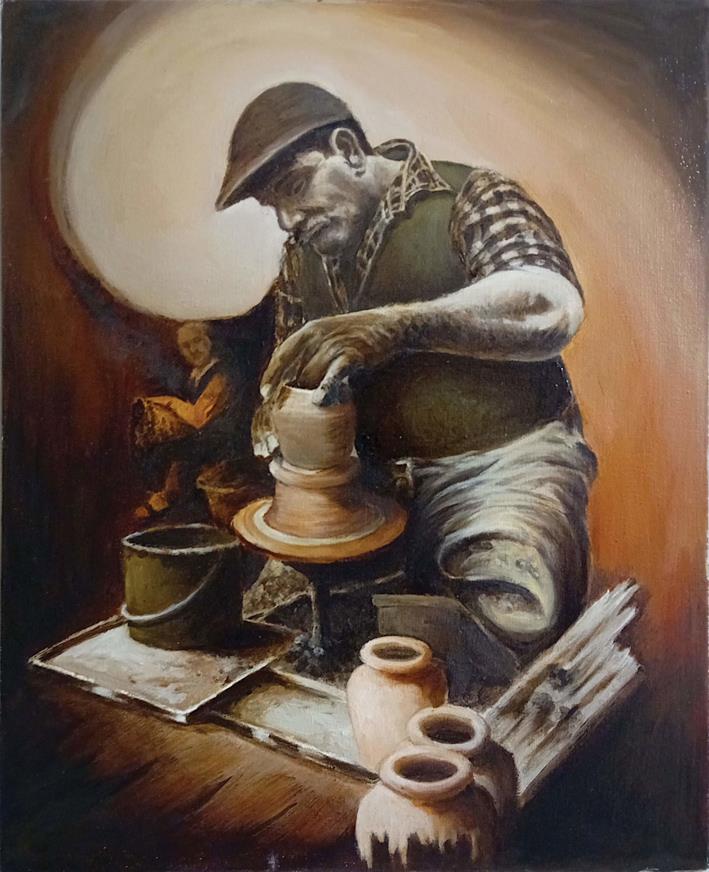
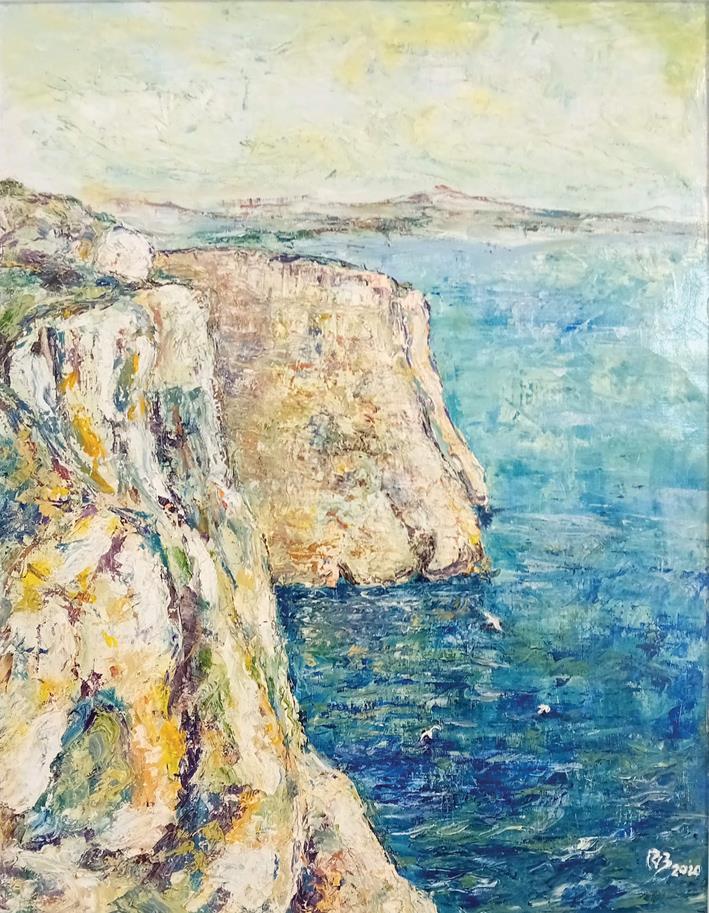
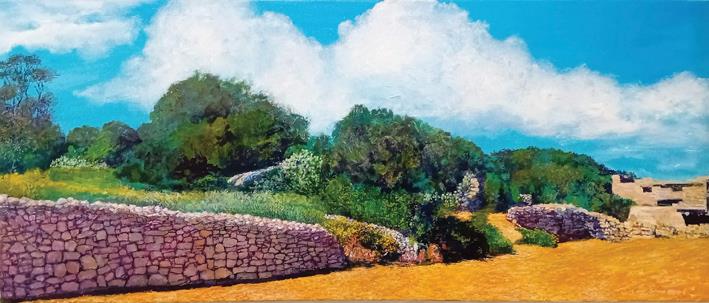
Brimmer primarily presents landscapes, while Vella Bamber divides his work between landscapes and female nudes. Agius extends further, including landscapes, still lifes, portraits, and an abstract work. Each artist is assigned a dedicated wall, which reinforces separation while also structuring the exhibition around parallel practices rather than direct dialogue. The physical arrangement of the artworks themselves allows themes to alternate and provides breathing room towards the landscape aspect, which is a point of connection for each artist. Brimmer's darker tonal range and use of sfumato combined with sharper detailing sets his work apart from the more varied approaches of the other artists. Comparing the local seascapes and landscapes, Vella Bamber's created atmosphere contrasts nicely with Agius' meticulous details, as can be seen through Ta' Cenc Cliffs and Field at Santa Liberata Church Kalkara Malta by the respective artists.
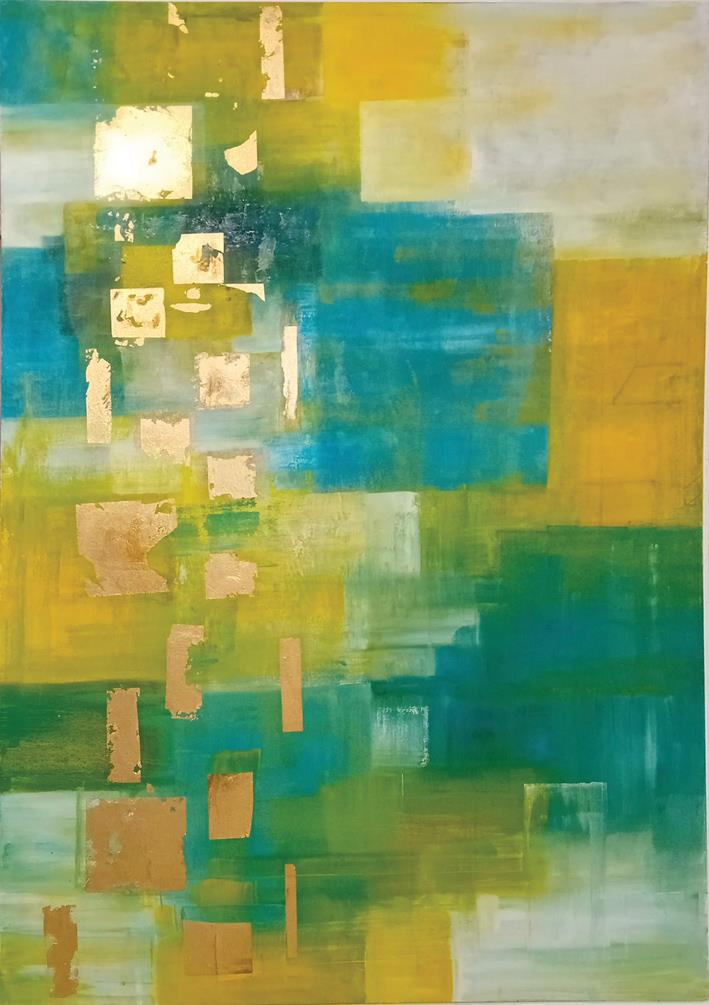
While the focus is on the material properties of the oil medium and the intermittent alternation of landscape subjects, the selection of works only partially engages with the exhibition's title, Reflections in Fragments, as moments of visual fragmentation are not consistently supported by narrative or conceptual coherence. The unresolved relationship between reflection and fragmentation remains unanswered, without clear direction towards understanding or resolution. Rather than operating as works in dialogue, the exhibition reads as an accumulation of individual practices contained within the safe unifying label of oil painting. This is evident throughout but a distinct example of this is with the inclusion of the single abstract painting by Agius which, while aesthetically pleasing, finds itself out of place with the artist's own works and the others. What emerges is a potentially interesting proposition regarding the versatility of the medium and the elasticity of artistic identity, yet this is not fully developed. Instead of being structurally explored, fragmentation appears as a curatorial premise that is stated rather than constructed, giving the impression of a thematic framework applied retrospectively rather than meaningfully embedded.
Despite its structural limitations, the exhibition retains value in its sustained engagement with oil painting as a shared material language across three distinct practices. The individual works hold particular strength at the level of surface, tone, and handling, where material sensitivity and painterly execution remain the most convincing aspect of their presentation. Yet, the exhibition's invocation of fragmentation remains largely descriptive rather than operational: separation is evident, but relational tension between works is not actively produced. What emerges instead is a collection of materially resolved fragments that coexist without generating a sustained conceptual field.
'Reflections in Fragments' is open to the public until 1 May at Creative Expressions Art Gallery, Zejtun