The Easter issue is one of the three annual editions of the journal published by Fondazzjoni Patrimonju Malti.
This is a beautifully balanced issue - part scholarship, part memory, part celebration of Maltese cultural identity. It feels like a spring bouquet of themes: fashion, music, maritime history, diaspora, photography, two book reviews and two heartfelt commemorations.
It starts with a richly illustrated article by that expert and lover of fashion, Caroline Tonna. Feathered Fashion: Millinery, Fashion, and Social Identity in Malta. In this article the author studied feathered hats - their European origins, their peak in the late 19th and early 20th centuries, and how Maltese women embraced them as symbols of elegance, status, and cosmopolitan identity. It traces the millinery trade, imported fashions, and the social rituals surrounding dress.
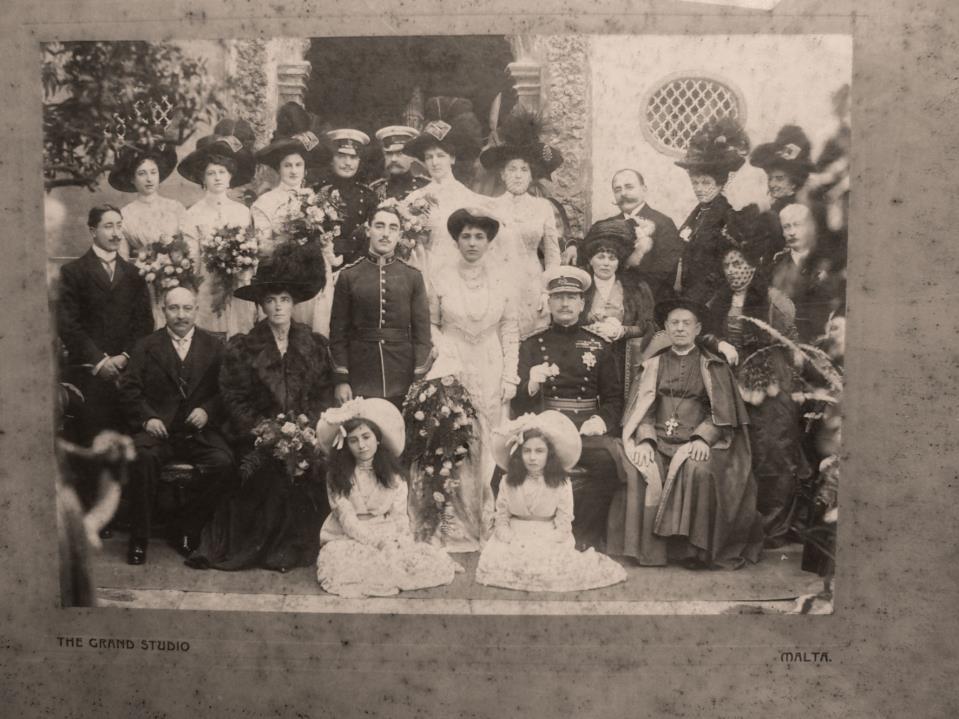
Group photograph of the wedding of Contino Sant Cassia and Noble Maria Manduca dei Conti di Mont’Alto, with flowergirls, bridesmaids, family, and friends; photograph by The Grand Studio, Malta, 1910. (Courtesy of the Nicholas Jensen Testaferrata Collection)
Anna Borg Cardona in her article The Fashionable Mandolin and Maestro Gian Felic Buhagiar - 1865-1919 - looks at the cultural history of Malta's mandolin craze. She follows Maestro Buhagiar's influence on performance, teaching, and the spread of mandolin ensembles. The article paints a portrait of a musical Malta that was far more interconnected with European trends than often assumed.
I remember two mandolins and guitars in the home of my childhood, apart from the piano, with Miss Dolly coming home to give us piano lessons. They were inherited from my father's side of the family. His brother was a culture vulture, painted and played several instruments. What a shame that as children we were allowed to play with them, which kept us quiet for a while I suppose, and eventually, we ruined them and my mother must have thrown them out.
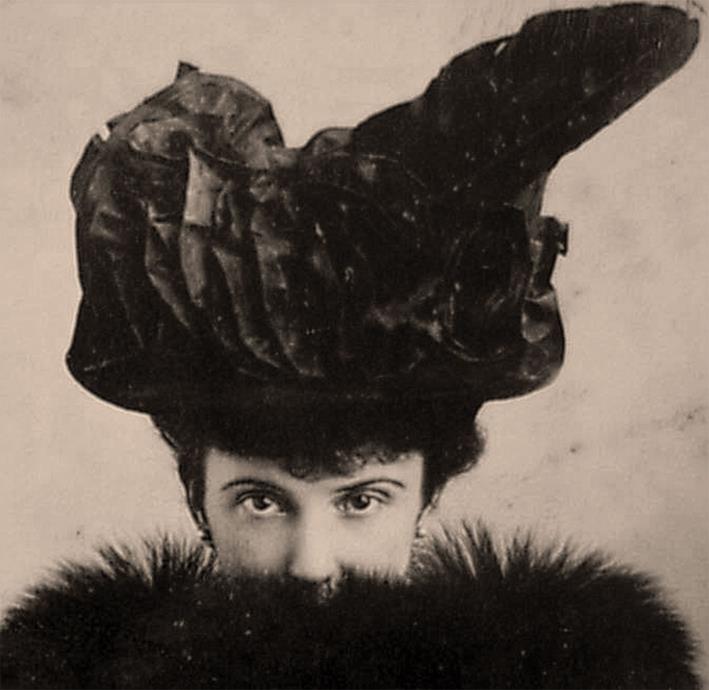
Baroness Mary Frances Carmen Sciberras d’Amico Inguanez, Baroness of Djar il-Bniet and Buqana and Castel Cicciano, c.1890. (Courtesy of the David Arrigo Collection)
In A Pulse on the Sea: The Vedetta of the Borsa and Commercial Maritime Signalling Nikolai Debono takes a closer look at a now vanished Valetta landmark - the vedetta tower used for maritime signalling. The piece blends architecture, maritime history, and the rhythms of the port, showing how merchants once relied on visual signals to track ships and markets.
Prof. Arnold Cassola, academic and politician, through a series of intimate postcards, writes about The 1913 Visit to Corfu of a Maltese Businessman. His latest book, published in 2025 is entitled The Maltese in Corfu (1815-1831) so this article must surely be an extract from his book.
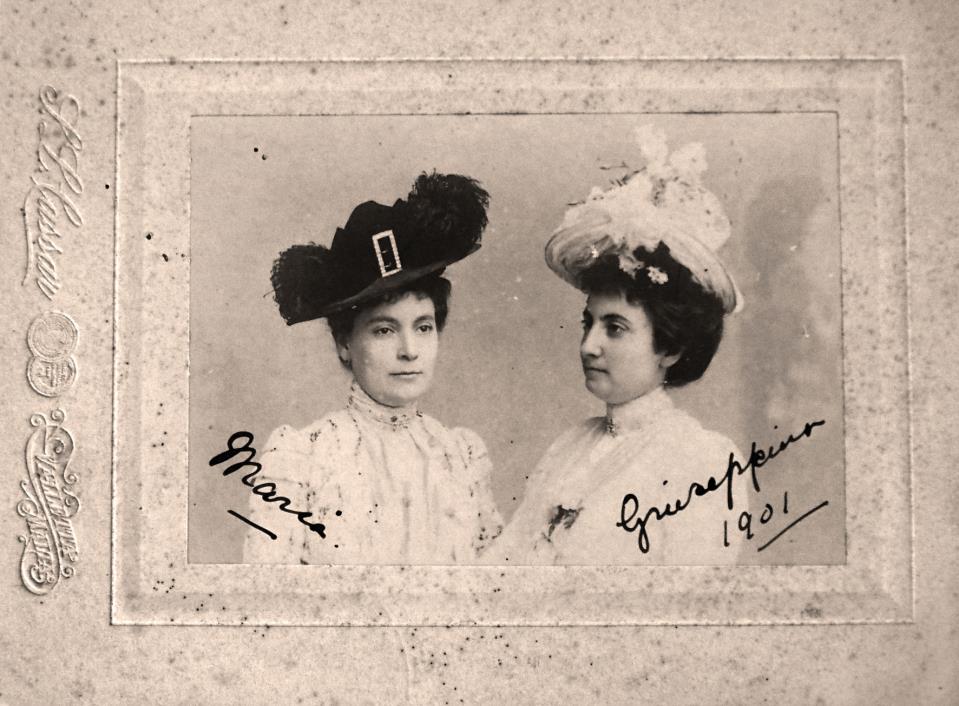
Maria and Giuseppina; photograph by Salvatore Lorenzo Cassar, 1901. (Courtesy of the Henry Caruana Gatt Collection)
In this article he traces the Maltese community in Corfu - their language, identity, and daily life. The postcards which illustrate the article are addressed to members of the Agius family who lived in 26, Via Stella Maris, Sliema. It's a gentle, human piece about diaspora, belonging, and the small threads that tie islands together.
In the next article Stan Fraser and Cecil Satariano: A Journey in the Recovery and Restoration of Photographic and Film Heritage, Veronica Galea writes about the tracking down the photographic and 8mm collection of Stan Fraser and the restoration, after tracking them down, of Cecil Satariano's award winning 8mm films.
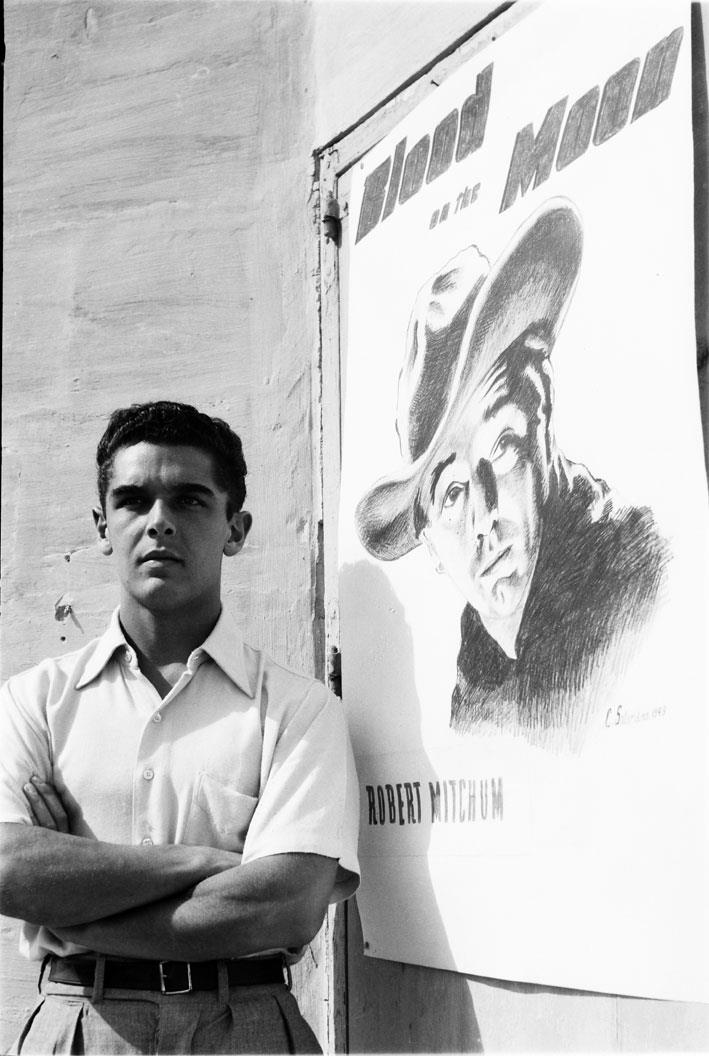
Cecil Satariano in front of a self-sketched film poster for the Gaiety Cinema, Sliema. As a young man, Satariano painted in oils and also created poster sketches like this one of Robert Mitchum in Blood on the Moon. (Courtesy of Margaret Micallef Somerville)
I admire Veronica for her determination and capacity for hard work. What she has done to retrieve films, restore them and save them is truly marvellous.
Much enjoyed the picture of Cecil in his youth. I met him when he was in his late 50s. Then handsome but much more so in his youth. But isn't that true of most of us?
There are two tributes in the In Memoriam section. One about Professor Mario Buhagiar (1945-2026). Charlene Vella contributed a scholarly yet affectionate remembrance of one of Malta's foremost art historians.
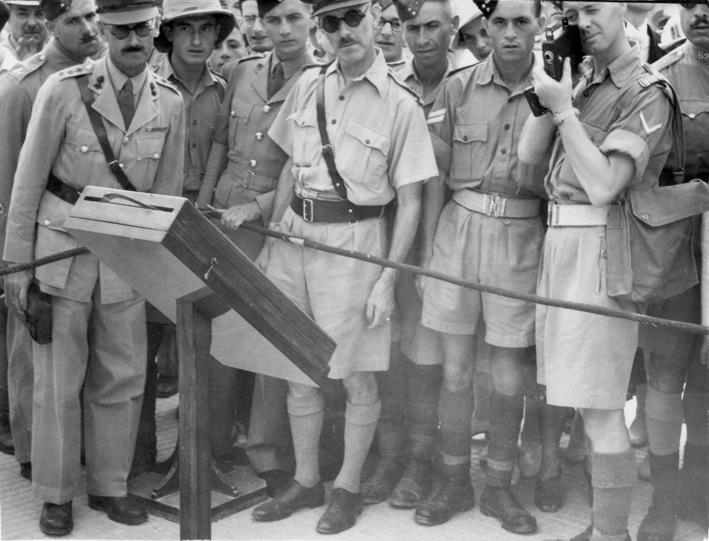
Stan Fraser films the George Cross on display in Valletta, 15 April 1942.
The other of Philip Farrugia Randon (1949-2026) written by the editor of Treasures. A personal, elegant tribute to the writer, lawyer and cultural figure. Is there anything Judge Emeritus Giovanni Bonello writes which isn't elegant?
From Our Digitisation Studio series we are given updates on ongoing archival preservation. This time Gabriel Caruana recounts his first meeting with Victor Pasmore. We are also treated to a photo of Gabriel and Victor Pasmore in front of one of Pasmore's works.
Another interesting series is My Favourite Object, always published on gray paper and therefore easily identifiable. This time Colin Formosa talks about a 16th century gold zecchino with the inscription da mihi virtutem contra hostes tuos - a small object carrying centuries of devotion and power. So interesting. Who says we are not a nation of collectors?
Dr Paul Xuereb, in 'My Favourite Object', wrote about the fascinating 'grain' document signed by Alexander Ball and counter-signed by a Maltese official, Felice Cutajar which is in Dr Xuereb's collection of Melitensia.
In Bookshelf two books are reviewed. One Antoine Favray (1706-1798) by the so clever Theresa Vella.
The second Katabasis, A Stygian Odyssey by Richard England reviewed by Jean Noel Cutajar. I have a copy of Richard England's book. I am a great admirer of his work and what I know of him as a human being. He has a big heart added to his many gifts. That much I gathered.
I did not find this work, so beautifully illustrated, easy to understand. However, after reading Jean Noel Cutajar's review I understand it better. I found this long and thorough review more than interesting. Dr Cutajar too, is a Richard England fan I was to learn.
Richard England's Katabasis traces a symbolic descent into HadeanHell, a mythic underworld shaped from scripture, classical lore, and his own architectural imagination. Guided by the shades of Cain and Judas, the traveller moves through seven citadels of human frailty, meeting figures like Mulciber and Khronos along the way. The journey becomes an allegory of reckoning and renewal, enriched by England's own illustrations and his fusion of myth, theology, and design.
Dr Cutajar's is such a thorough review. Where has he been hiding. I hope we shall see more of his reviews, indeed writings. Good reviewers are rare and becoming rarer each day I am told. Please note that I am not a reviewer. I simply give publicity to books and journals like this which is so richly deserved.
As we go further into the magazine there are more interesting items to read. There is an explanation of the visual concept of the cover by Colin Formosa. Cecilia Xuereb's Cultural Review is there, reminding me of what I have watched and what I have missed, regretfully.
Calendar Highlights by Antonia Critien is always interesting as we get to know of upcoming exhibitions, talks and cultural happenings which I shall try not to miss.
This Easter issue is elegant, varied, and quietly emotional - a blend of fashion, music, maritime memory, diaspora, photography, and homage. It feels like a portrait of Malta in motion: looking back, preserving, and renewing.
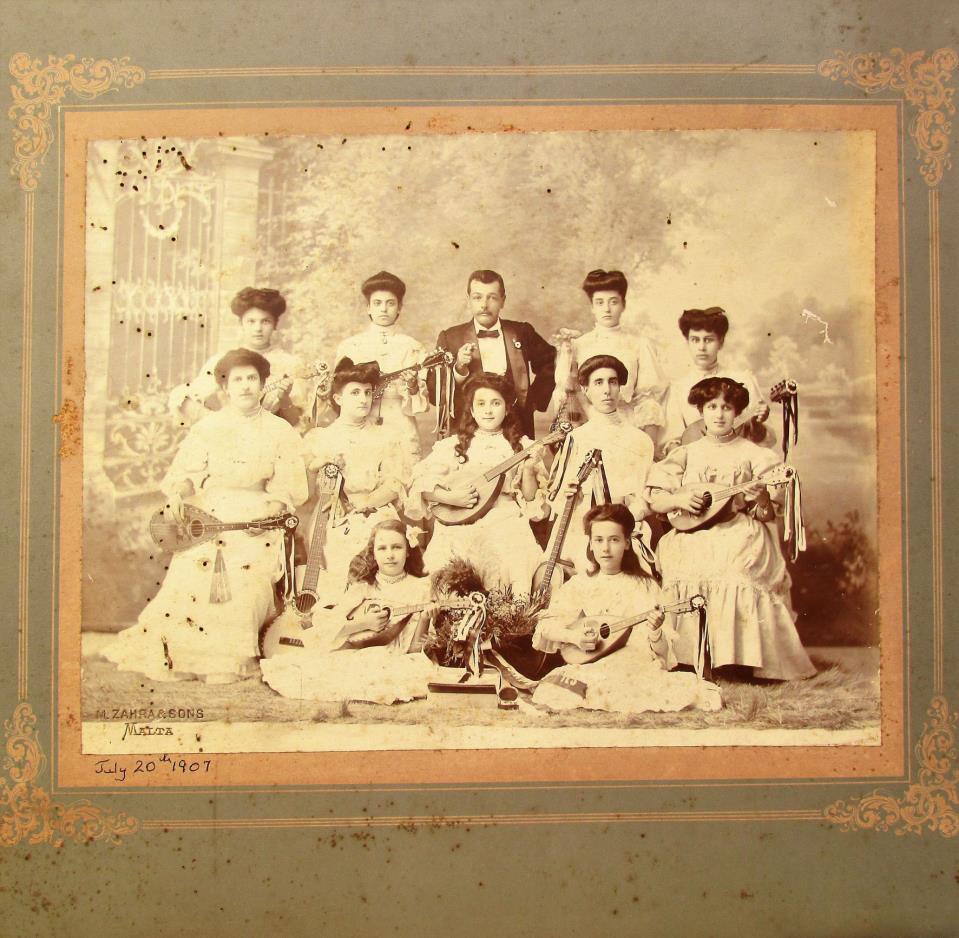
Photograph of the Ladies’ Band by M. Zahra and Sons, Malta. Dated 20 July 1907. (Courtesy of the Buhagiar Family Archives)
It moves gently from feathers to mandolins, from a vanished vedetta tower to postcards from Corfu, from film reels rescued out of oblivion to two beautifully written farewells and two book reviews which make you want to go out and buy both books. It feels like Malta in spring: memory, renewal, and a touch of nostalgia. More nostalgia than anything else, in my case.