The Nationalist Party today presented plans for the construction of an underground transport system linking the airport to Pembroke.
The PN promised to build the first line in the next legislature, with eight stations being constructed concurrently while the underground tunnel is being excavated.
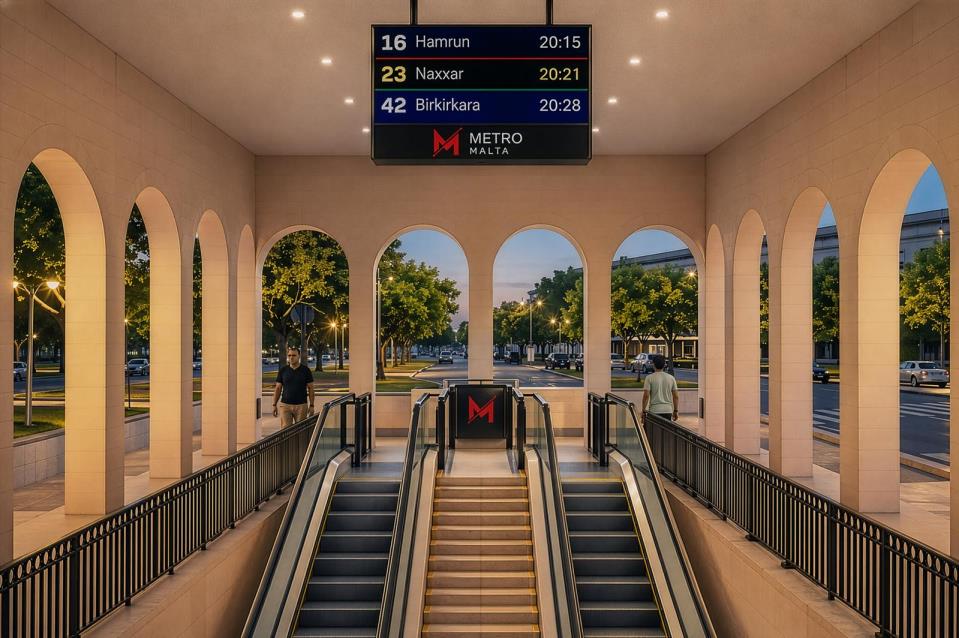
Apart from Pembroke and MIA, the other stops will be at St Vincent de Paul, Qormi, Mater Dei/University, Gzira, Sliema and St Julian's.
The plan is to ease the road congestion, with the PN saying that traffic issues are costing the country €900 million each year.
The underground line is designed to serve as the foundation for the PN's broader mobility strategy, with various stations acting as hubs where commuters can transition to alternative transport methods like buses, shuttles, taxis, ferries, or park-and-ride facilities.
Details of the plans were given in a press conference addressed by PN leader Alex Borg, finance spokesman Adrian Delia and candidate Julian Borg, who is an architect with a background in structural engineering,.
During this presentation, Borg said that while traffic remains one of the country's most salient issues, traffic solutions have remained ideas plastered on billboards by the incumbent administration.
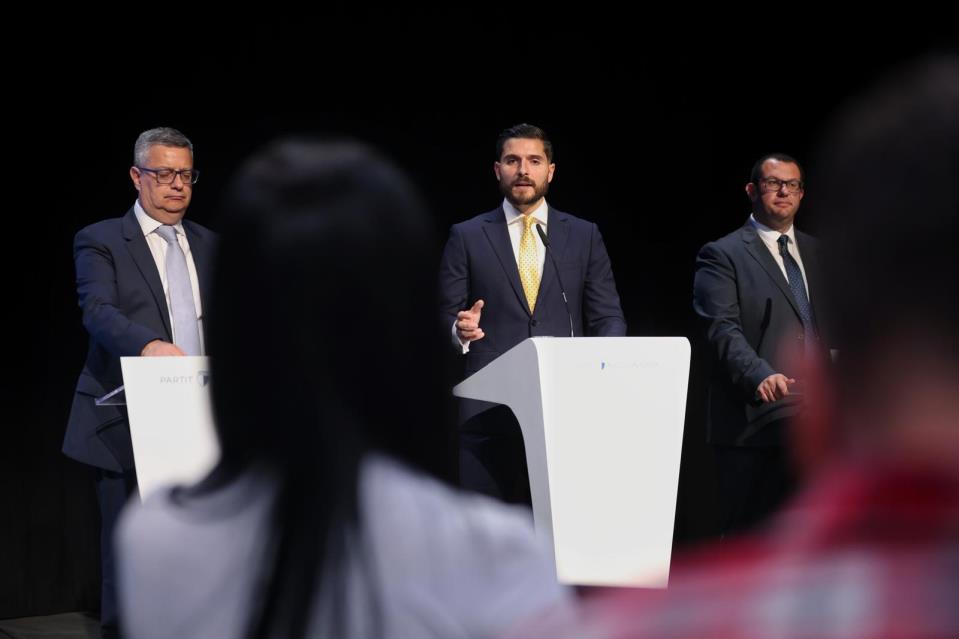
Borg said that Maltese roads have reached their saturation point and that the time has come for "radical change in the country" to solve the traffic problem.
He stated that his party is "ready, prepared, and determined" to give people living in Malta and Gozo "your precious time back" through this massive proposal.
Perit Julian Borg, who is a PN candidate on District 6, provided the technical details behind the rapid transit system (RTS).
The metro line that the PN is pledging would be operable within 60 months. The stations were selected for being some of Malta's most congested areas and were chosen with a logic factoring in demand, population densities, and transport connections.
Julian Borg said that all identified stops have their station locations earmarked already. While these are slightly subject to change, "the places identified are either already infrastructural land or public land."
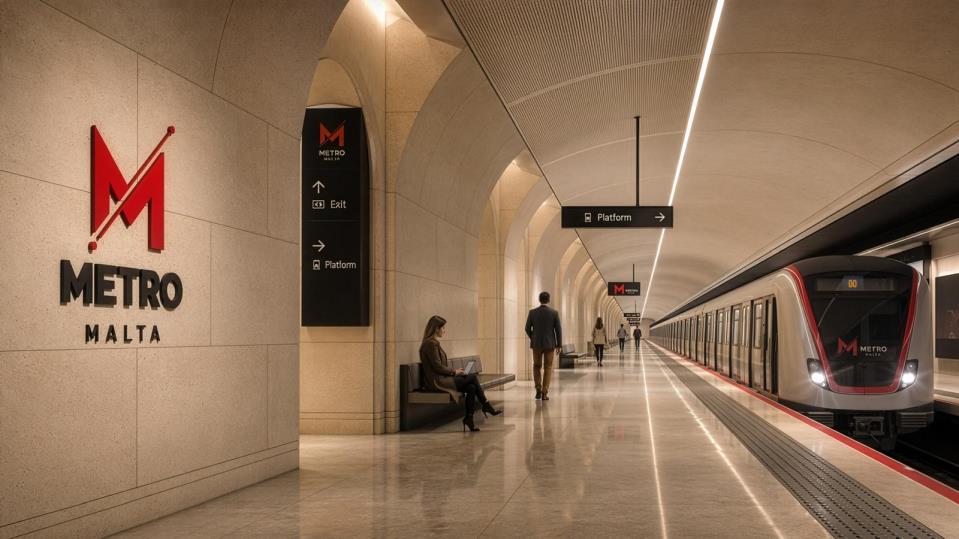
A PN government, if elected, would also be offering "feeder lines" - such as new bus routes and shuttle buses - to take people directly to their nearest train station.
Consisting of eight trips per hour, each trip would be seven minutes long, and being underground, this metro would not experience any traffic congestion, Borg said. He added that this metro design would mostly be underground "because Malta is small and our roads are already full, and we cannot create more pressure on our localities," stressing that this traffic solution must not create "more disorder."
"We shouldn't penalise people for using cars, we should offer them a better alternative. Some people use cars simply because they do not have a better alternative available," he said.
The PN candidate said that this first line is project to carry around 36 million passengers per year and that once the second line is developed, afterwards, this will rise to 55 million.
Borg, who is also the mayor of Siggiewi, gave details how the PN aims to implement this major infrastructural project in exactly five years. This timeline is divided into six key phases.
In the PN government's first 100 days in power, it would appoint a dedicated implementation unit, comprised of technical experts, that would report directly to the Cabinet on this underground mass rapid transport system.
Upon initiation, an implementation framework would be set out to develop a technical baseline report to validate exact routes, analyse Maltese geology, and observe how to manage connections between all transport infrastructure.
Three months later, a 14-month statutory process would begin. This would feature finalising the metro design and the precise locations of the first line's stops as well as the permitting and procurement process.
17 months in, the project would begin mobilising; this would progress for 21 months and would overlap with other phases within this project timeline. This phase would feature the project's official shop drawings and would mark the time for works on stations to begin. The boring of the train tunnel could start at around the 26-month mark, Borg said.
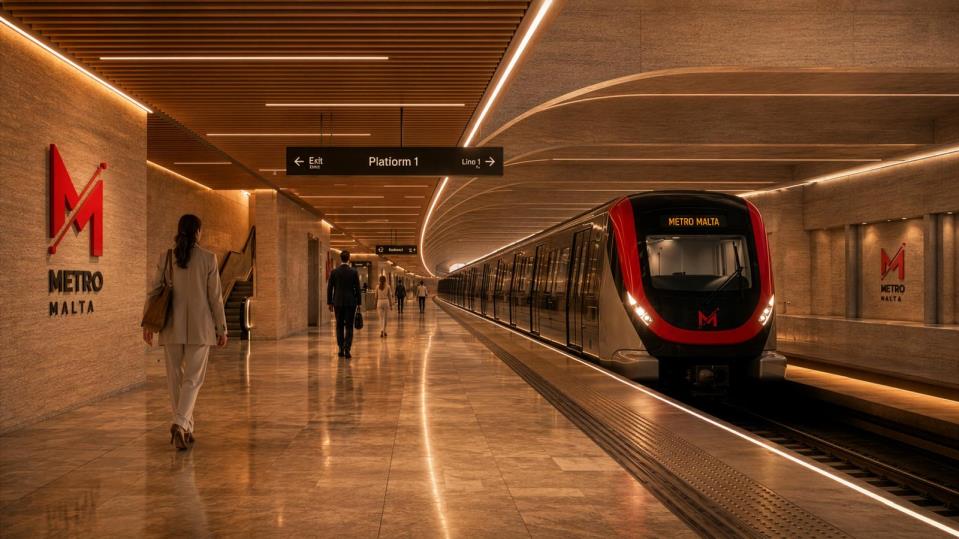
29 months in, just around the halfway mark, 15 months of boring and surfacing will follow. Borg said that this duration was calculated based on industry production rates while factoring in downtime. This phase should be completed exactly three and a half years (42 months) since the initiation of this project.
A tunnel boring machine (TBM) would be used to drill the underground tunnels required for this metro proposal.
The fifth phase, 43 months in, would be dedicated to another 15-month period - this time for signalling and rail services.
If the Nationalist Party wins this general election, begins this project, and everything goes to plan, then the first line should be completed and begin its operations after exactly five years.
Borg said that this first line has a projected total capital cost of around €1.4 billion. He added that each train is set to cost €8.5 million and each station should cost €15 million on average to construct, with some envisioned to be larger than others.
PN finance spokesman Adrian Delia stated that this service would be free at point of use for Maltese and Gozitan residents, arguing that for people to be enticed to use this alternative means of transport, it is important for them not to be deterred by daily tariffs. Similar to the present bus system, Delia noted that tourists however would need to pay to use the metro.
Delia outlined the financial side of this major project. He said that while analysing this pledge, it is important to ask how much it would cost the country if nothing is done.
This north-south line has a total project complex cost of €1.4 billion. The second line the PN wants to construct, after this five-year period, is estimated to amount to €2.5 billion alone while adjusting for inflation and other factors, thus bringing up the total cost to some €3.9 billion.
Delia said that this project must not depend on a single source of financing and said that a PN government aims to fund this project through a blend of EU funds, through long-term financing from international development banks, national financing instruments, plus annual payments related to operations and availability of service.
He said that around €400 million of EU funds could be used in this project, outside from EU cohesion funds that are already used all-year round to fund several infrastructural projects. Overall, he said that 30% of the first metro line can be financed by EU funds.
The PN estimates the first line's finance servicing to cost around €35.5 million annually, over a period of 40 years. This would equate to €1.42 billion if followed precisely.
Delia continued that a PN government would also pay for a concession fee of €37.5 million per year for the line's operation and a given ridership bonus. For the latter, he said that "if the operator is only paid to keep the service open, it will have limited objectives, but if part of the payment ties to how many passengers it can attract, then the operator's interest aligns with the country's."
"We want to guarantee a system where the operator has a clear interest for the service to be good, punctual, clean, safe, frequent, comfortable, and used by as many people as possible," Delia said.
Delia stated that once both lines are active, this would carry a financial burden of around €178 million annually in the government's books. He said that at the moment, the government already spends some €100 million on the national bus network, "while people are still suffering in traffic."
Concluding this press conference, PN leader Alex Borg said that unlike the Labour Party, the entire PN is behind this project. He referenced how Finance Minister Clyde Caruana has repeatedly states how he will not sign off on the PL government's pitched Malta in Motion project if he is unhappy with its costings.
He also criticised that "the Labour Party has been inconsistent" when it comes to the transport sector. Here, Borg noted the changes in the government's metro proposals (from a fully underground system to one that is now mostly overground) as well as how it launched a driving licence surrender scheme earlier this year while promoting a pledged vehicle upgrade scheme during this election campaign.