A promised crackdown on the short-let fuelled disorder and overtourism plaguing Swieqi has failed to appear more than a month after it was due to come into force, with the locality's mayor warning that the situation is spiralling out of control and residents describing nightly scenes of public urination, vandalism and drunken disturbance outside their homes.
Stricter enforcement measures were meant to have been enrolled out on 1 June. As of today, they still have not been implemented, according to Swieqi mayor Noel Muscat, who spoke to The Malta Independent about the scale of the crisis and the government's failure to act.
"Local councils, you know our powers," Muscat said. "It is the escalation of the situation that cannot be controlled, the right decisions were clearly not taken."
The mayor said that the fundamental problems in the locality had not changed since last year, but their intensity had. "The difference from last year is that the numbers of tourists have increased but the main issues have remained," he said. "These are the consequences of the lack of action." He warned that, without intervention, "numbers will keep on getting worse."
At the centre of the crisis, Muscat said, is the unchecked proliferation of short-let accommodation, some of it on an industrial scale. He pointed out one building in the locality alone that houses more than 500 beds. Unlike conventional businesses, he said, these operations largely escape scrutiny. "These short lets are not monitored or controlled the same way as any other business opening. They don't apply with the planning authority," he said, adding that developers were building blocks of flats with no declared short let use and never go through the Planning Authority at all. As a result, he said, "the government doesn't even know which buildings are for short let."
Muscat said the council had previously offered to take on a greater monitoring role but had been rebuffed. When the idea was proposed, he said, the government "didn't accept us being the ones to monitor these applications" and instructed the council to liaise directly with the Planning Authority instead. "But then we were never called in, and then the election happened, so it just never happened," he said.
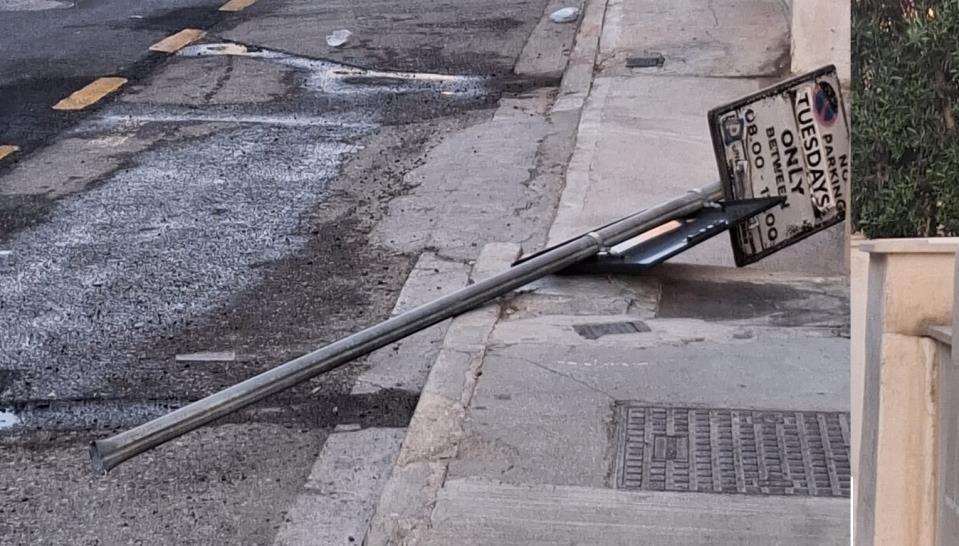
Describing the transformation of the locality, Muscat said Swieqi had effectively become disfigured by the scale of the disruption, and cautioned that, left unchecked, it risked turning into an extension of Paceville, St Julian's nightlife district. "The behaviour of tourists is not normal; it isn't about having fun any more," he said. "I am worried that these people are not in control of themselves."
The mayor did not hide his frustration. "I feel helpless as a mayor that I can't do anything more about it," he said. He also criticised the government for never having addressed the council directly on the crisis, and said the council was being sidelined entirely from decisions affecting its own community. He warned of a growing rift between residents and the council itself, when the two sides should be united. "We are going to end up the council versus the community when we should be as one and fighting it together," he said.
Muscat drew a comparison with the national electricity blackout, suggesting the government tends only to act once a crisis has already caused visible damage. "Malta had to end up without a supply of electricity for the government to do something," he said. He accused the administration of lacking any strategic direction, operating instead on a reactive basis, waiting to see what happens before deciding what to do once the consequences have already occurred.
He credited the Malta Tourism Authority with making progress on enforcement, but placed the blame for the wider paralysis squarely on government. "MTA is actually working on this and enforcement has done a lot, but the issue is the government," he said. He added that when Ian Borg, the former tourism minister, was asked whether he would give a handover to the new tourism minister, he gave no response, leaving the council in the dark as to whether prior discussions on the issue would be carried forward.
Residents contacted separately described a locality as being under siege, particularly around Airbnb-operated buildings. One resident, describing an incident just metres from their home, said four young guests emerging from a nearby Airbnb had used a nearby street corner and residents' gardens as a toilet. "This kind of tourist is not welcome," the resident said, arguing the situation had reached a point where Malta should follow Spain's lead and ban Airbnb outright.
In a residents' WhatsApp group, complaints have circulated over why Ian Borg, when he was tourism minister, never implemented the relevant law with immediate effect. One resident said the minister's efforts appeared focused only on what happens inside apartments, leaving authorities and landlords alike with no clear jurisdiction over disturbances taking place on the street itself. Other residents reported vandals removing bricks from unsafe construction sites, alongside broader complaints of exhaustion and fury over disrupted sleep caused by drunken tourists breaking windows.
As matters stand at the start of July, residents say none of the promised measures have materialised. On-the-spot fines, repeatedly promised, have still not been introduced, with residents questioning who would even be tasked with enforcing them, given that neither of the ministers involved appears to have a clear plan. The night patrol police initiative has been welcomed as a positive step, but residents note officers cannot be everywhere at once given staffing shortages. Vandalism continues unabated on specific streets, and residents say CCTV coverage remains ineffective unless cameras are placed strategically.
A detailed set of proposals drawn up by residents, titled "Making Swieqi Safe: A Resident's Case for Urgent Police and Local Government Action," sets out a catalogue of daily and nightly problems, including loud shouting and drunken arguments into the early hours, broken bottles and overturned bins, people found naked or half-naked urinating from balconies onto neighbouring terraces, chaotic scenes on glass-collection days, police response times exceeding 20 minutes, and an overreliance on outdated phone reporting. The document identifies the Swieqi tunnel entrance and Triq il-Hemel, along with surrounding residential streets, as particular hotspots.
The proposals call for expanded CCTV coverage with visible warning signage, a fully staffed Swieqi police station with walk-in access, permanent manning of the tunnel during peak hours, increased foot and vehicle patrols, rapid-response teams based locally, on-the-spot fines for public drunkenness, littering, noise nuisance, urination, vandalism and indecent exposure, plainclothes patrols, a dedicated 24/7 WhatsApp reporting line, mandatory internal refuse storage in new developments, reform of glass collection, and a permanently extended seasonal rubbish collection schedule between April and September across high-density localities including Swieqi, Sliema, St Paul's Bay and Qawra.
According to the resident behind the document, the proposals were first presented to then Home Affairs Minister Byron Camilleri in a face-to-face meeting in June last year. In October, Ian Borg proposed a follow-up meeting, but the resident instead met his personal assistant, Dr Rachel Powell, and left a copy of the proposals with her.
Of the proposals, only the WhatsApp hotline and a night patrol of four officers, operating from 10pm to 6am, have been adopted so far. The resident said the four-strong team was welcome but insufficient given at least five separate hotspot areas across the locality, and noted that Swieqi falls under the St Julian's police district, meaning it competes for the same resources as St Julian's, Paceville, Ibraġġ, Pembroke and San Ġwann.
As of today, residents say fines on the spot, regulated enforcement of garbage disposal, and the new Airbnb rules that took effect on 15 June are still not being properly enforced. Thirty new CCTV cameras promised in the media on 12 May have yet to be fully delivered, with residents saying the total appears to include a number of existing, obsolete units rather than representing a genuine net increase. The local council says it is still awaiting the installation of signage before the cameras can be monitored and used by the Local Enforcement System Agency. Residents argue that even a full complement of 30 cameras would be inadequate for a locality of Swieqi's size, and are calling for comprehensive CCTV coverage across every street, crossroad, junction and known hotspot.
A police station operated in Swieqi in 2016 but was shut down after roughly a year. Residents and the mayor alike say the case for reopening a permanent, fully staffed station in the locality has now become urgent, given the scale of the disorder and the distance residents must otherwise travel to St Julian's, a station they say is already overstretched.
For now, the gap between what has been promised and what has been delivered remains stark. A month after enforcement was due to begin, Swieqi residents are still counting broken bottles, missed fines and cameras that do not yet work, while their mayor warns that without a change of course, the locality he governs will keep sliding further out of anyone's control.