Comino is one of the most important refuges for birds in the Maltese Islands. Even at just 2.8 km2, its continuous extent of natural habitats is exceptional for the Maltese Islands. Across the archipelago, only around 18% of the land, roughly 58 km2, is classified as natural or semi-natural, much of it occurring within an otherwise highly fragmented landscape. Comino, by contrast, retains a rare continuity of garrigue, maquis, valleys, cliffs and rocky coastline.
Birds are a major reason why the island enjoys a high level of protection. Comino is a Bird Sanctuary and forms part of the EU Natura 2000 network. Its designation as a Special Protection Area (SPA) under the Birds Directive recognises its importance for wild birds and requires their habitats to be safeguarded. Comino is also a Special Area of Conservation (SAC) under the Habitats Directive, which places additional emphasis on conserving its natural habitats and the protected species they support. Comino is additionally recognised by BirdLife International as an Important Bird and Biodiversity Area (IBA).
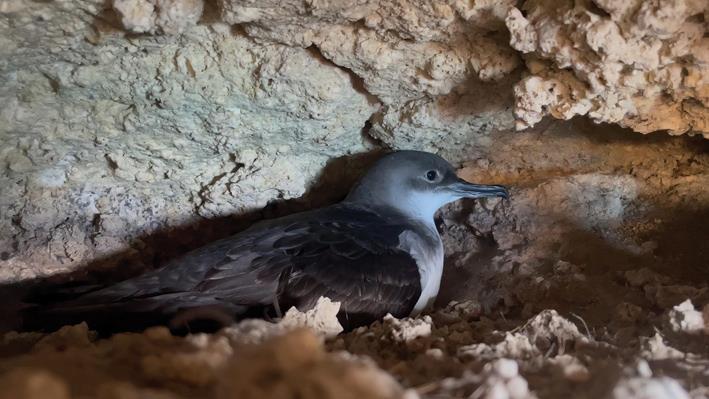
Incubating Yelkouan Shearwater in burrow. Photo: Martin Austad
Another characteristic that makes Comino unique is that with only one permanent resident and no operating hotel since 2019, human activity drops dramatically once daytime visitors leave. The Blue Lagoon and Santa Marija Bay can be extremely busy seasonally but, after the last ferries depart, Comino is effectively returned to wildlife for much of the evening, night and early morning; something impossible to find elsewhere in densely populated Malta and Gozo.
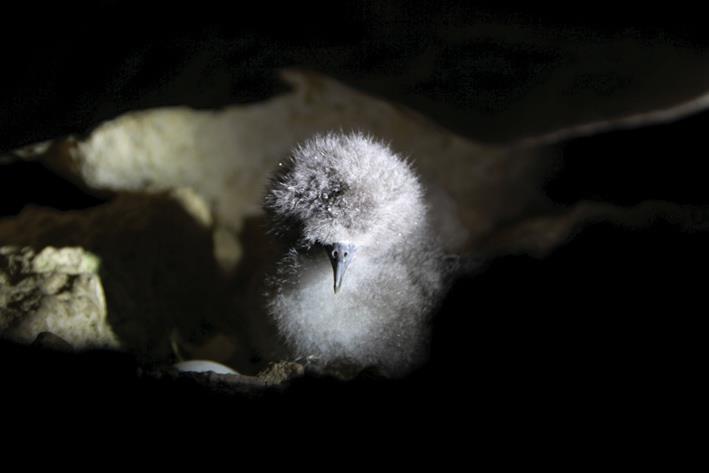
Puffinus yelkouan Photo: Benjamin Metzger
Comino supports a variety of breeding birds, with the most important found along its cliffs and caves. Yelkouan and Scopoli's Shearwaters spend most of their lives at sea and return to land to rear chicks only after dark. The latest Malta Breeding Bird Atlas estimates that Comino supports 125-360 pairs of Yelkouan Shearwater and 30-50 pairs of Scopoli's Shearwater. Malta is internationally important for both species and holds almost 10% of the global breeding population of Yelkouan Shearwater. For these seabirds, darkness and tranquillity are essential. Adults approach colonies only at night, in the cover of darkness and do not attend their nest if the cliffs are exposed to artificial light. Fledglings can be disoriented by light pollution on their first flight, ending up flying inland instead of out to sea. Noise, light and increased human activity can therefore affect them even when the nesting cliffs seem to remain untouched by development.
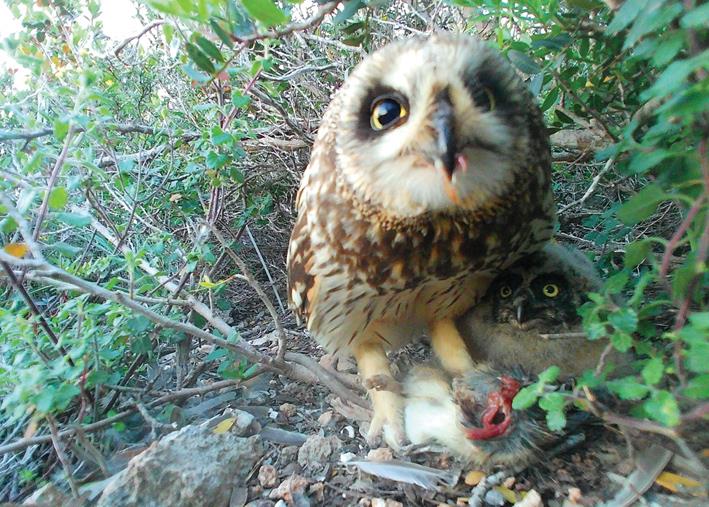
Female Short-eared Owl and chick feasting on rat at nest on Comino - Photo: Nicholas Galea
Comino's quiet nights are important inland too. Short-eared Owls and European Nightjars, both nocturnal species, now also breed on the island. These are two remarkable species in Malta's breeding avifauna, which are both listed in Annex I of the EU Birds Directive. Comino is most likely the southernmost known breeding site for the Short-eared Owl in Europe, a species otherwise restricted to higher latitudes. For both species, Comino is the only known breeding site in the whole Maltese archipelago.
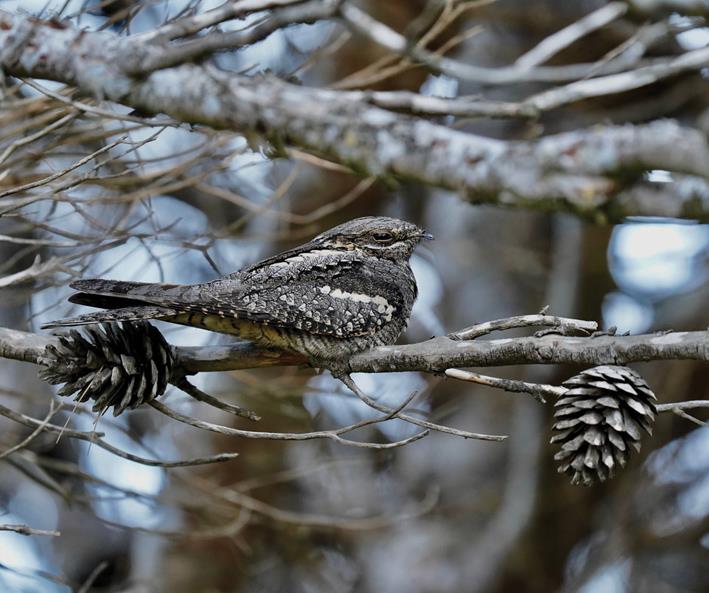
European Nightjars can easily go unnoticed when roosting through the day on Comino - Steve Zammit Lupi
Other breeding birds include Yellow-legged Gull, Eurasian Collared Dove, Greater Short-toed Lark, Blue Rock-thrush, Spectacled and Sardinian Warblers and the Spanish Sparrow, as well as the occasional pair of Common Kestrels. Comino's garrigue should never be dismissed as barren. Birds like the Greater Short-toed Lark and the Spectacled Warbler, both species associated with open Mediterranean habitats, with the former also an Annex I species, need open and sparsely vegetated areas.
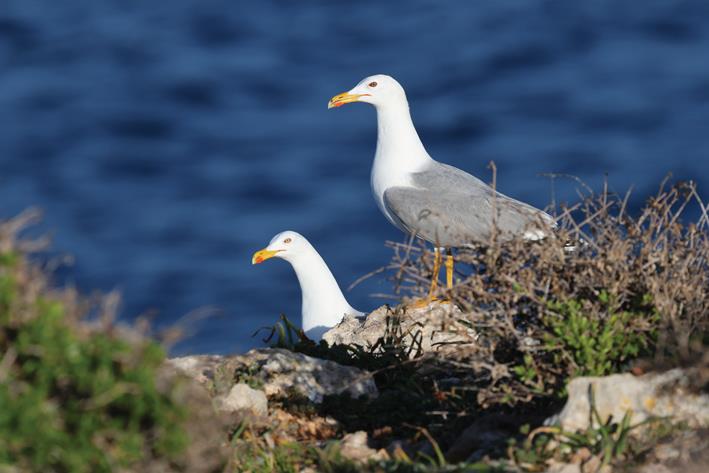
Pair of Yellow-legged Gull at their breeding colony on Comino, Nicholas Galea
Beyond the birds breeding there, Comino is also a vital stopover during migration. Every spring and autumn, birds travelling between Africa and Europe descend onto the island whilst crossing the Mediterranean. For a small migrant that has spent hours flying over open sea, Comino offers a place to shelter, feed and rest before continuing its journey, especially when meeting adverse weather conditions.
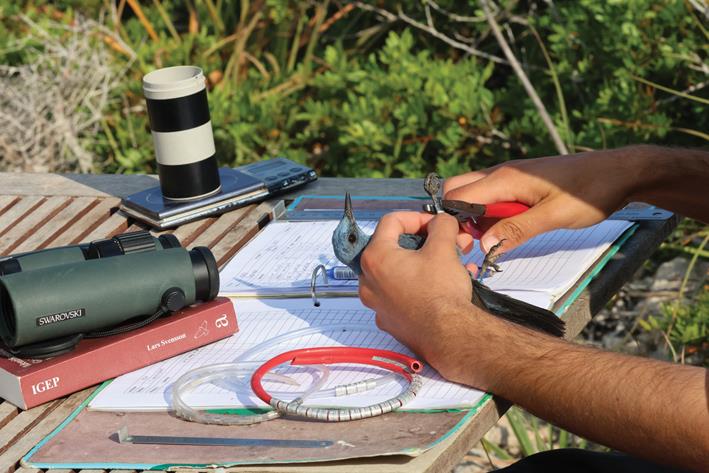
Male Blue Rock-Thrush being fitted with a scientific ring at the Comino Bird Observatory. Photo: Nicholas Galea
The diversity can be spectacular, especially in spring. Eurasian Scops, Short-eared and Long-eared Owls occur on migration, together with Marsh, Pallid and Montagu's Harriers. Eurasian Thick-knees, Lapwings and Dotterels often rest on the island's undisturbed garrigue, while European Bee-eaters, Common Cuckoos, Golden Orioles, European Rollers and Wrynecks use its small pockets of woodland to rest and feed. Being a bird sanctuary means that Comino also offers a rare refuge from gunfire for heavily persecuted species such as Quail, Turtle Dove and Song Thrush, which are hunted across Malta and Gozo, where Quail and Turtle Dove are also legally hunted during their peak spring migration. On a good spring day, 50 or more bird species can be recorded on Comino alone. At times, migration arrives in spectacular "falls", when adverse weather forces thousands of small migrants down onto the island almost at once. Suddenly every patch of vegetation seems alive with birds: in April a single bush may hold ten Common Whitethroats, while in October the same bush may shelter ten European Robins. Warblers, flycatchers, chats, pipits and finches can occur in remarkable numbers. Many of these birds may stay for only a few hours, while others spend a few days before continuing their migration.
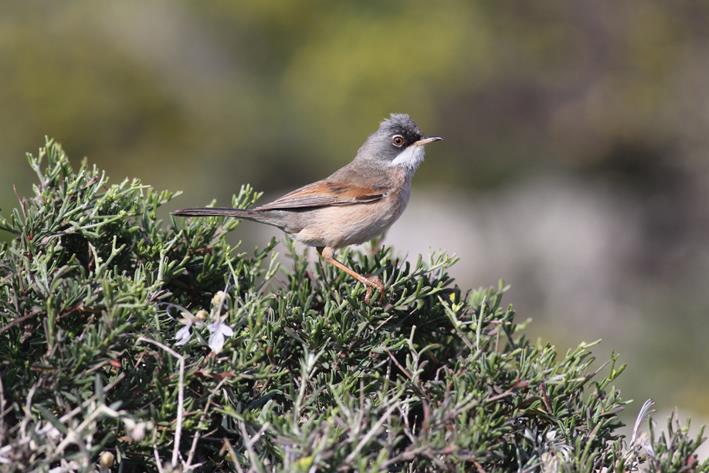
Male Spectacled Warbler, one of Comino's breeding birds. Photo: Nicholas Galea
Comino's importance extends beyond the birds that actually land there. Its position in the Malta-Gozo Channel places it at the centre of one of the most distinctive migration funnels in the Maltese Islands, where birds moving north or south are concentrated through the narrow channel between Malta and Gozo. The channel itself is internationally recognised for its ornithological importance: it was Malta's first marine IBA and nowadays forms part of the wider Marine Protected Area (MPA) around Gozo. Thousands of ducks, particularly Shelduck, Garganey, Northern Pintail, Northern Shoveler and Ferruginous Duck, pass through in Spring, together with other waterbirds such as Whimbrels, Ruffs, Glossy Ibises, Grey, Purple and Squacco Herons and Little Egrets. Raptors also use this corridor, regularly moving through or over Comino during migration, together with other diurnal migratory birds such as Swallows and Swifts. This makes Comino one of Malta's best places to experience visible migration.
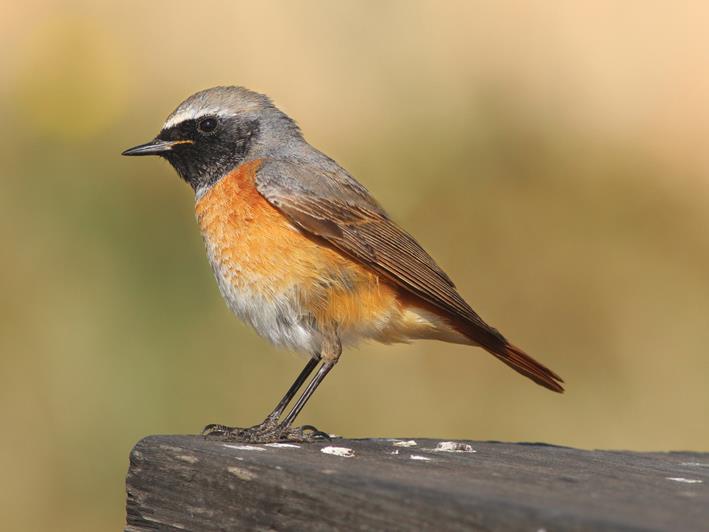
Male Common Redstart, a springtime sight on Comino, shows off his striking breeding plumage. Photo James Aquilina
Winter brings another community of birds. Huntable species such as Woodcock, Skylark, Song Thrush, Blackbird and Common Starling can spend the season on Comino without the persecution that is present across much of Malta and Gozo. Its abundance of prey, including wild rabbits, rats, mice and feral pigeons, supports wintering raptors such as Short-eared Owl, Common Kestrel and Peregrine Falcon, with occasional Hen Harriers, while its cliffs provide roosting sites for wintering Grey Herons and Great Cormorants.
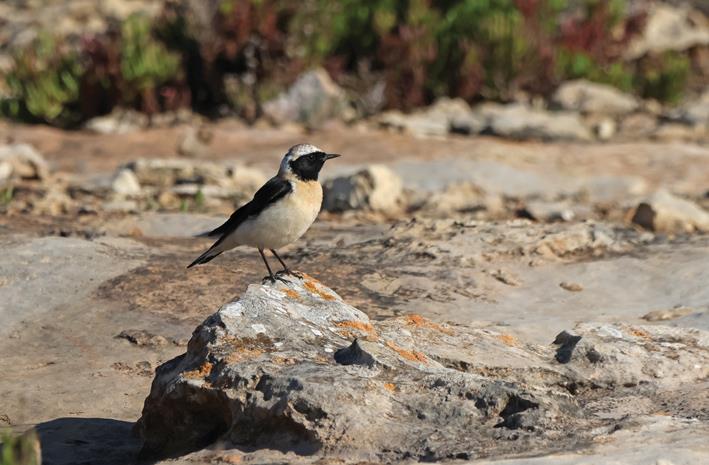
Black-eared Wheatear, a spring migrant often seen on Comino in open garrigue or perching on rubble walls. Photo: Aron Tanti
In many ways, Comino offers a glimpse of how much richer Malta's birdlife - and hence how much more rewarding birdwatching could be - if hunting pressure, illegal killing and disturbance were better controlled.
We know all this because BirdLife Malta has been studying Comino's birds for decades. The Comino Bird Observatory has operated systematic surveys through bird ringing every spring and autumn since the early 1990s, building one of Malta's longest-running migration datasets. BirdLife Malta also has a long history of monitoring Comino's seabirds, studying their colonies, movements and threats.
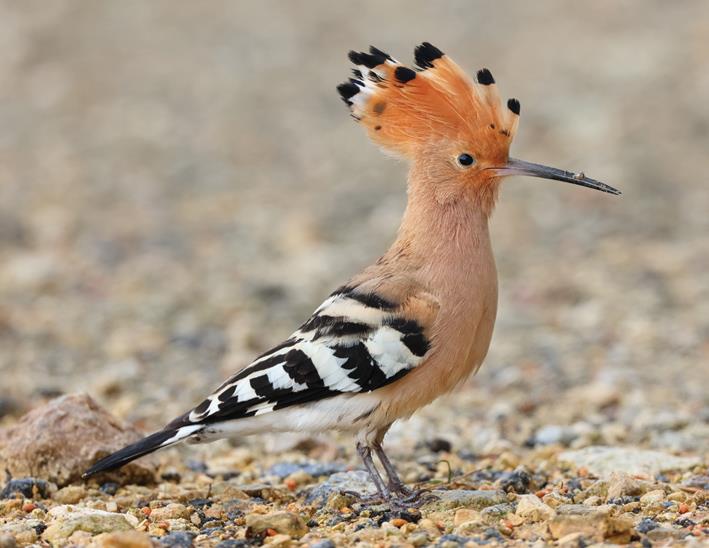
Common Hoopoe, one of Malta's most exotic-looking migrants, stops on Comino to refuel during its journey. Photo: James Aquilina
It is against this rich ornithological background that the planned hotel and bungalow development must be considered. The concern is not only the footprint of the buildings themselves, but the years of intensive construction needed to create them, followed by a return to large-scale overnight tourism and the associated disturbance to birds and wildlife using the island.
A functioning hotel and bungalow complex would mean guests, staff, servicing, transport, lighting, noise and land and marine traffic continuing through the evening, night and early morning. These are crucial hours for breeding, migrating and wintering birds, particularly species active or arriving after dark. Even without direct habitat loss, disturbance, light and noise can be enough to greatly reduce the value of habitat for birds.
The fact that hotel and bungalow structures already exist should not mean development on those sites must continue forever. The same applies to the abandoned pig farm, built in the 70s to take advantage of Comino's isolation during a swine fever outbreak. The farm closed in the early 2010s, yet the structures remain derelict to this day. If every existing structure within a protected landscape becomes justification for future development because something is already built, genuine ecological restoration becomes impossible.
Malta's forthcoming National Restoration Plan, required under the recently adopted EU Nature Restoration Regulation, should offer a much more ambitious alternative, especially noting the various obligations related to the improvement and re-establishment of natural habitats. Comino could be a flagship restoration site. Rather than replacing dilapidated structures with another tourism development, their removal and the restoration of the land they occupy should be the way forward.
Comino has another major advantage in this respect: the island is government-owned. Although some sites are leased or subject to concessions, the underlying land is public. This is very different from many other protected areas in Malta, where land ownership and use are fragmented between numerous stakeholders and restoration measures can consequently be difficult to implement. On Comino, the government does not face the same political pressure that can arise when restrictions on private land become an electoral issue. Nor would it need to take the politically difficult step of banning hunting from the area, since any hunting and trapping is already banned on the island since March 1969. Recent public reactions also suggest that protecting such places is increasingly what people expect; the hotel development on Comino attracted thousands of objections, while the campaign to return Manoel Island to the public also gathered thousands of signatures and ultimately won support from both major political parties. There is therefore a genuine opportunity to plan for Comino as a whole rather than restoring isolated fragments.
This could also support a different vision for tourism. Protecting Comino does not mean excluding people. The island has real potential for carefully managed nature-based tourism centred on its birds and habitats. Visitors can experience bird migration, watch birds moving through the Malta-Gozo Channel, or visit the Bird Observatory and learn how birds weighing only a few grams travel between continents. In this model, tourism depends on protecting the qualities that make Comino special rather than replacing them.
There are already examples of this alternative approach on Comino. BirdLife Malta welcomes visitors to its Bird Observatory; Din l-Art Ħelwa looks after the historic Santa Marija Tower, while Friends of the Earth Malta is working to transform the old bakery into a visitor and interpretation centre - showing how existing structures can be given a useful public purpose without introducing intensive new development.
Malta has nowhere else like Comino: a protected island that is practically uninhabited and which, once the daytime crowds depart, can still become quiet. That combination of habitat, protection and tranquillity is precisely what makes it so valuable for birds and wildlife.
Comino offers Malta a rare opportunity to protect what remains and restore what has already been lost. It is an opportunity we should not waste.
Nicholas Galea is the head of BirdLife Malta's ringing scheme.