A jury on Wednesday acquitted businessman Yorgen Fenech of masterminding the 2017 assassination of investigative journalist Daphne Caruana Galizia, bringing the long-running murder case against him to an end.
Fenech, a prominent businessman, had been accused of complicity in the murder and of taking part in a criminal conspiracy to kill Caruana Galizia. He pleaded not guilty to both charges.
After deliberating for eight hours, the jury returned not-guilty verdicts on both counts.
Caruana Galizia, 53, was killed on 16 October 2017 when a bomb planted in her car was detonated as she drove near her home. Her assassination sent shockwaves across Malta and Europe, triggering mass protests and contributing to the eventual resignation of then Prime Minister Joseph Muscat.
The killing also exposed deep concerns about corruption, political influence and a culture of impunity.
Fenech was indicted in 2021 and was the last of six people charged in connection with the assassination to face prosecution. Prosecutors had alleged that he played a central role in planning and ordering the murder. The other five are in jail.
Caruana Galizia was one of Malta's most prominent investigative journalists through her reporting on alleged corruption involving politicians, businessmen and other figures close to the country's political establishment.
At the time of her death, Caruana Galizia was facing more than 40 libel cases.
An independent public inquiry into her assassination, published in 2021, concluded that the Maltese state had to bear responsibility for her death because of a culture of impunity that had developed within the country and "emanated from the highest levels" of government.
The inquiry found that the state had failed to protect Caruana Galizia and had created an environment in which those seeking to silence her could believe they would not face serious consequences.
In the morning, Madam Justice Edwina Grima concluded her address in which she highlighted the main points brought up during the testimony in the last two months.
Judge Grima delivered the final segments of her address to the jurors, guiding them toward deliberations.
The trial started on 1 July.

20:20 Yorgen Fenech walks out of court with his team of lawyers, who proved his innocence.
19:53 The prosecution team and parte civile lawyers walked out of court without making any comments
19:48
The court room is split. On one side Daphne's family are seen crying, while Yorgen Fenech's family members hug.
19:47
As the verdict is delivered, an emotional Fenech turns to his lawyer Charles Mercieca and embraces him tightly.
Shouts of 'yes' erupt across the courtroom from the defence table as the 8-1 verdict is delivered.
Daphne's sister rushes out of the courtroom moments later.
The jurors have now been exempted from jury duty for life.
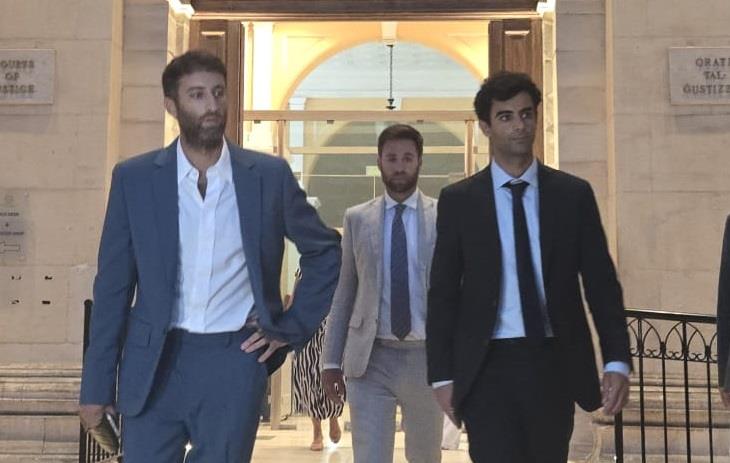
19:45 Daphne's sons left the court house without commenting.
19:37 Fenech celbrated with his lawyers.
19:35 As the verdict is read out in court, jurors found Fenech not guilty on the first count by eight votes to one.
The same verdict followed on the second count, with eight jurors voting to acquit and one voting against.
19:29 Such has been the interest that some lawyers have been left in the corridors as the gallery is full.
19:27 Members of Daphne Caruana Galizia's family have been given a place close to journalists. Her husband Peter and sons Matthew, Andrew and Paul are all present. Her sister Corrine Vella is also here. Members of Yorgen Fenech's family are seated on the general public's end of the courtroom.
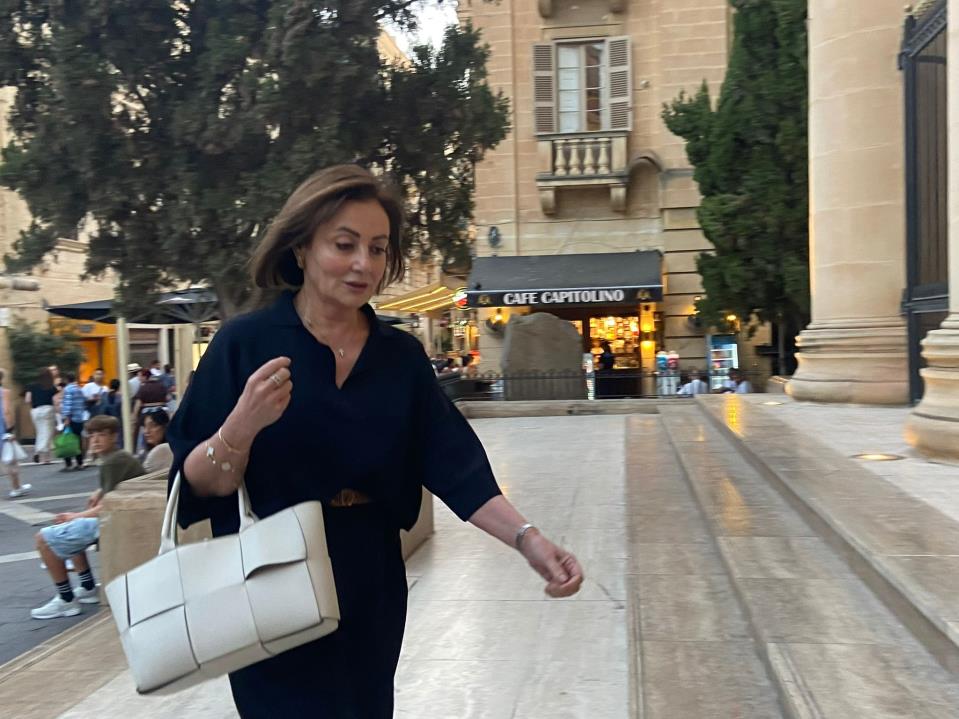
19:25 Defence lawyer Gianella Caruana Curran has also arrived.
19:19 Our reporters have made their way through the court building's security checkpoint, and our now waiting to be let into Hall 22.
A large crowd is waiting to be let in, and the corridor outside the court room is packed with people.
19:10 The tension is palpable as court reporters wait to be let in.
The scene is like that on a full-up bus, with shouts of "move back" heard as they wait to be let in by security officials.
19:05 Everyone is rushing to get inside the courtroom to hear the verdict. Our court reporters say the heat is unbearable as they try to make their way inside.
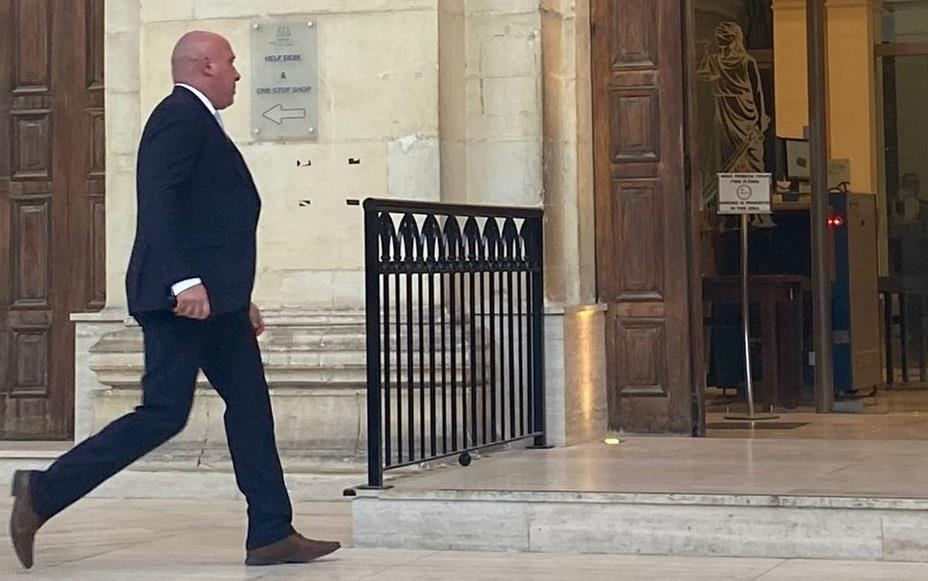
19:16 Lawyers and investigators are entering court. Lead investigator Keith Arnau is among the first.
19:01 There are signs that a verdict has been reached.
18:20 Jury deliberations continue. The jurors have been deliberating for more than seven hours. Journalists are waiting outside and inside the law courts building. A reminder that jurors are not constrained by having to give a decision today. They can seek the judge's approval to continue their deliberations tomorrow.
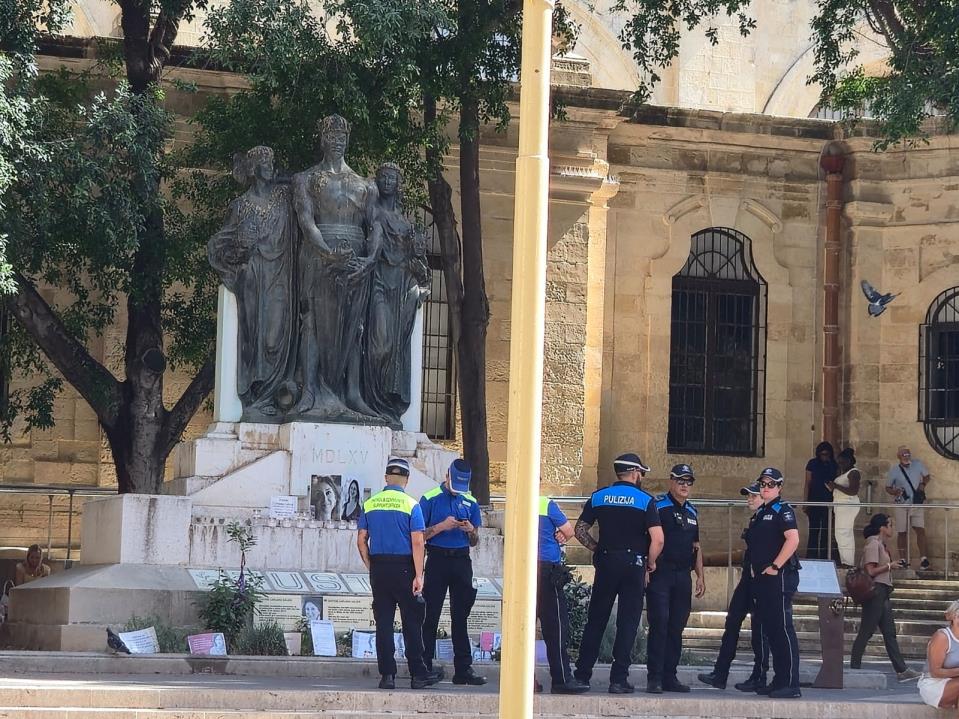
15.31 Police officers are gathering outside the law courts, many of them next to the Great Siege Monument which also serves as a memorial to Daphne Caruana Galizia.
11:10 Jurors have been sent out of the courtroom to reach a verdict.
11:09 Bringing her comprehensive review of the evidence to a close, Judge Edwina Grima instructed the nine jurors to examine every piece of direct and indirect testimony in its entirety. She stressed that their sole responsibility is determining the guilt or innocence of the accused, warning them not to get sidetracked by third-party names like Keith Schembri, which she characterized as a defense strategy. The judge reminded the jury that their role is strictly to establish the facts rather than grapple with complex legal points, urging them to set aside all emotion, sympathy, and antipathy to focus entirely on whether the state has proven its case.
11:01 Judge Edwina Grima is explaining to the jurors the procedure they must follow during deliberations and how the vote on the verdict will eventually be taken.
She explained that for a verdict to be valid, there must be a majority of at least six to three. In the event that the vote is, for example, five to four, the jurors will be sent back to continue deliberating.
The judge stressed that the deliberation must take place collectively, with all nine jurors discussing the case together, but when the moment of voting arrives, each juror must cast their vote separately. She also explained that it will be the Foreman who writes the verdict. Since there are two counts of the indictment, the jurors must vote separately on each of the two counts.
10:55 Judge Edwina Grima is reminding the nine jurors about the responsibility now in their hands, while giving them final directions on how to conduct their deliberations. She is summarising the principles that should guide them, including what they should consider and what should not enter into their decision when deciding on the guilt or innocence of the accused.
10:55 Judge Edwina Grima has finished taking jurors through the evidence heard during Yorgen Fenech's trial, bringing her extensive recap to an end.
Having dealt with the last three witnesses brought forward by the defence, the judge now shifts her focus to the concluding section of her address.
Grima is expected to outline the main legal considerations jurors must keep in mind when assessing the case and ultimately reaching a decision.
The proceedings are now approaching the point at which the nine jurors will retire to begin their deliberations.
10:52 Having wrapped up her review of Yorgen Fenech's evidence, the judge now begins going through testimony from other witnesses brought forward by the defence.
She starts with John Abela, an Office of the Prime Minister director, whose evidence dealt with the protocol in place for people entering Castille to attend meetings.
Grima then moves to the final evidence concerning Electrogas, recalling testimony from the company's head of legal affairs about information leaks from within Electrogas.
10:44 Grima is now going over Fenech's account of what he knew before Daphne Caruana Galizia was killed.
Fenech had conceded that he knew of the alleged murder plan but never passed that information on to investigators, despite his friendship with Silvio Valletta.
He also denied meeting businessmen while in prison and claimed that Keith Schembri had taken advantage of him.
Turning to 17 Black, Fenech said he could not say when the company changed its name and maintained that Caruana Galizia had never contacted him by phone.
10:31 Proceedings are moving swiftly this morning, with Grima already nearing the end of her recap of Yorgen Fenech's testimony.
The judge now recalls Fenech's evidence concerning his personal relationships, including his acknowledgement that he may have bought gifts for Rosianne Cutajar on occasion and that he was friends with Edward Zammit Lewis.
10:17 The judge continues retracing Yorgen Fenech's evidence, now focusing on events surrounding searches of his property, including his boat, Portomaso office and residence.
Fenech had told jurors that his state of mind was deteriorating during this period. He claimed he became increasingly concerned for his safety because of what he knew, with his anxiety eventually leading him to turn to doctor Adrian Vella for help.
He also recalled an exchange with investigator Keith Arnaud, who told him: "There is always light at the end of the tunnel."
Grima then moves to Fenech's account of correspondence allegedly coming from Keith Schembri. Fenech said his wife had informed him that he received a letter from Schembri after he was granted bail.
According to his testimony, Schembri later called him and indicated that a second letter would reach him through Adrian Vella.
10:03 The judge now turns to the part of Yorgen Fenech's testimony dealing with 17 Black. Fenech had confirmed to jurors that he was behind the company, while maintaining that it had no connection to the Electrogas project.
Grima also recalls Fenech's account of how Melvin Theuma allegedly obtained updates about the murder investigation.
Fenech said Theuma claimed Edgar Brincat, known as il-Ġojja, was feeding him information which Brincat was allegedly receiving from then-police commissioner Lawrence Cutajar.
09:58 Grima's summary now moves to a gathering at the Fenech family ranch, where conversation turned to a blog post by Daphne Caruana Galizia concerning Keith Schembri's health.
Fenech had told jurors that Schembri appeared to have become fixated on the journalist, recalling that Schembri and Melvin Theuma continued discussing her during the gathering.
His account then shifts to December 2016, when Theuma was driving him to the airport. Fenech said it was during that journey that Theuma first spoke to him about an alleged plan to have Caruana Galizia killed.
Grima then moves further into Fenech's testimony, during which he had shown jurors his passport to establish the dates when he was abroad.
Fenech had described relaying messages between Theuma and Schembri as one of his biggest mistakes.
According to his testimony, Theuma began contacting him repeatedly after the arrests of George and Alfred Degiorgio and Vince Muscat. Fenech recalled Theuma being in a state of panic and believing the three men had betrayed him.
Fenech said that during the same period, he also began receiving calls from Johann Cremona.
09:54 The judge now begins going through Yorgen Fenech's own testimony before the jury.
Fenech had spoken about joining his family's business at 18 and later working with his uncle, Ray Abdilla, after his father passed away.
His evidence also dealt with his relationship with Keith Schembri. Although the two had known each other from an early age, Fenech said they became much closer after Schembri took up his role as chief of staff to Joseph Muscat.
He portrayed Schembri as someone he was extremely close to and said he "used to look up to him".
Fenech also recalled that Schembri would visit his family's ranch. During one such visit, Schembri suggested they cook a lamb, leading Fenech to contact Melvin Theuma, whom he knew from Marsa, and ask him to get one for the gathering.
09:44 Grima now moves on to the testimony of Andrew Caruana Galizia, who had spoken to jurors about his mother's journalistic work and the relationship she maintained with her sources.
He had explained that his mother largely worked independently and that those who provided her with information trusted her to protect their identities. Andrew, who had spent eight years living abroad before returning to Malta, said he deliberately avoided asking about who those sources were.
He further recalled knowing that his mother was working with his brother, Matthew Caruana Galizia, and that she had been investigating the ownership of 17 Black.
Andrew had also described how his mother spoke to him about the harassment she was facing and how it was affecting her ability to live peacefully. At one point, she told him: "They are trying to fry me alive."
09:37 Grima now moves through another part of Kurt Zahra's evidence, turning first to Melvin Theuma's recordings and how they were sent to Europol before being presented as evidence in court.
Her summary then shifts to the searches carried out at properties linked to Keith Schembri. Zahra had told jurors that no SOCO personnel accompanied police to Schembri's home and that officers initially had trouble finding the residence. The search yielded no items, with Schembri telling investigators that his phone had gone missing.
The judge also recalls what Zahra said about Schembri's office at Castille. No police officer had been stationed outside the office, and while Zahra could not remember who unlocked the door, he was clear that Schembri went inside ahead of the officers.
09:32 Judge Edwina Grima continues to revisit Inspector Kurt Zahra's evidence, including how Melvin Theuma came onto the police radar during the investigation.
Zahra had explained that while he was not directly involved in the inquiry for its first two years, fellow investigator Keith Arnaud kept him informed of developments.
Theuma began attracting police attention after Vince Muscat, il-Koħħu, started sharing information with investigators. At the time, Muscat was not granted a presidential pardon because what he told police was considered hearsay.
Investigators subsequently obtained further information through intercepted calls, which indicated that Theuma was handing money to the Degiorgio brothers. The FCID then began looking into Theuma in connection with an illegal lottery operation.
Following his eventual arrest, Theuma told investigators about an ice-cream box in which he had stored electronic material, including screenshots of messages and a photograph showing him with Keith Schembri.
He then informed police that he also wanted to speak about Daphne Caruana Galizia's assassination and asked for a presidential pardon.
09:25 Zahra had testified that in October 2017 he was informed of an explosion and that there were suspicions Caruana Galizia had been inside the vehicle. When he arrived at the scene, he saw body parts scattered on the road.
He had also spoken to Matthew Caruana Galizia, who told him that his mother had left home in the rental car and returned because she had forgotten her chequebook. She then left again, with the explosion occurring shortly afterwards.
09:22 Judge Edwina Grima is addressing jurors for a third day.
Grima immediately resumes her review of the evidence heard throughout the trial and begins taking jurors through the testimony of Inspector Kurt Zahra, one of the lead investigators in the case.
09:12 The trial by jury of Yorgen Fenech has entered its final stages. Judge Edwina Grima has entered the courtroom alongside the jurors, with today's sitting now set to begin.