An artwork's materials shape its physical presence, but what viewers make of it depends on the experiences and perspectives they bring to the encounter. In Noel Attard's practice, material experimentation informs both the individual character of his work and its relationship to the wider development of Malta's artistic landscape.
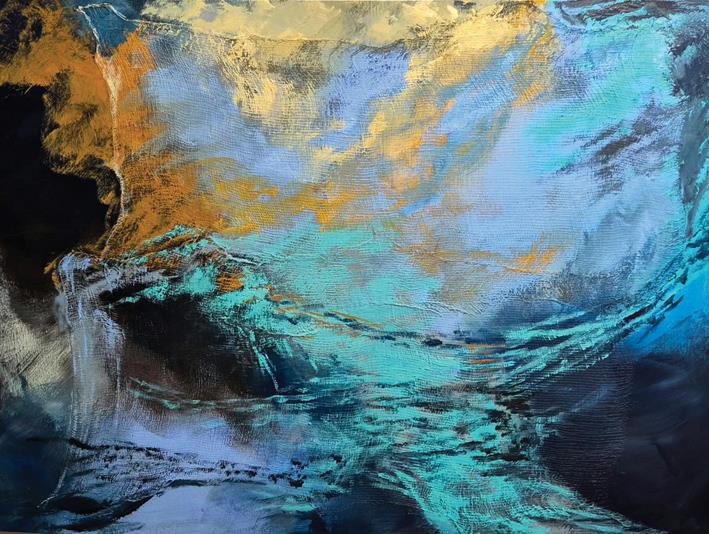
Attard (b. 1966) developed an early interest in art within a family environment shaped by his father's own artistic practice. This early exposure led him to pursue formal training at various art schools before continuing his studies at the University of Malta, where he graduated with honours in History of Art in 2006 and obtained a Master's degree in Fine Arts in 2016. His practice has since reached audiences in Malta and internationally, with works exhibited and held in public and private collections across Europe, Asia, the Middle East and the United States. Among the honours his work has received are commissions for the President of the Republic of Malta and the creation of an artwork presented to the King of Jordan, which is now part of the Jordan Museum's collection.
His seventh solo exhibition, The Connection, curated by Rudy Buhler, brings together over 20 mixed-media works in which organic forms and abstract compositions emerge through a range of materials and techniques. The exhibition invites consideration of how meaning develops between an artwork and its viewer, particularly when the artist's intentions do not necessarily correspond with the interpretations that follow. Michael Baxandall's (1933-2008) notion of "mental baggage" offers a useful framework for understanding this process, recognising how the cultural knowledge and experiences viewers bring to an encounter shape their perception of an artwork. Attard's decision to identify the works by codes rather than titles for the first time further engages with this relationship. By withholding the interpretative cues that titles might provide, he leaves the viewer to negotiate the encounter without an explicitly prescribed point of departure.
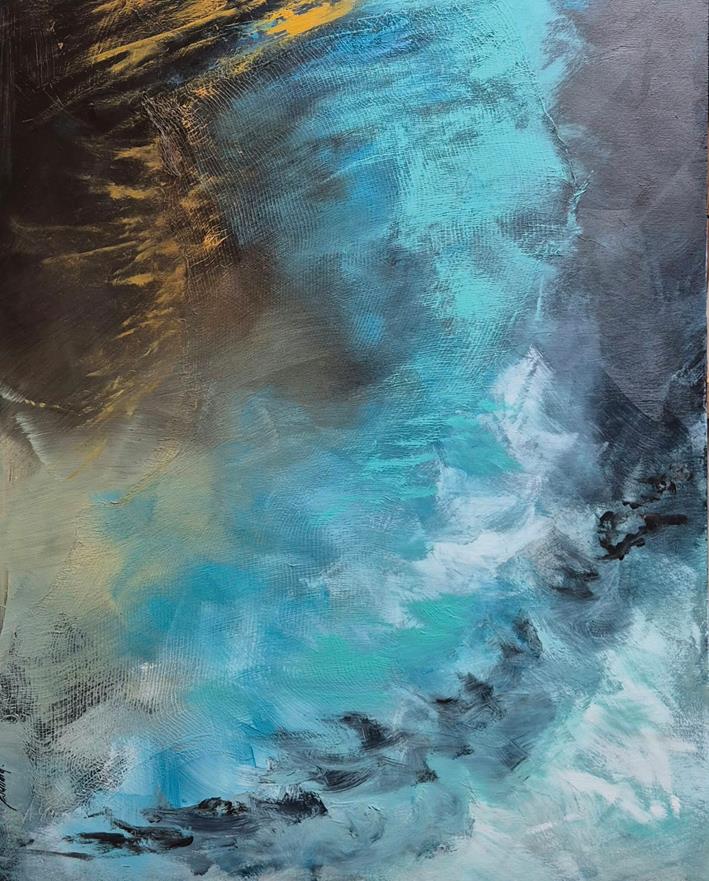
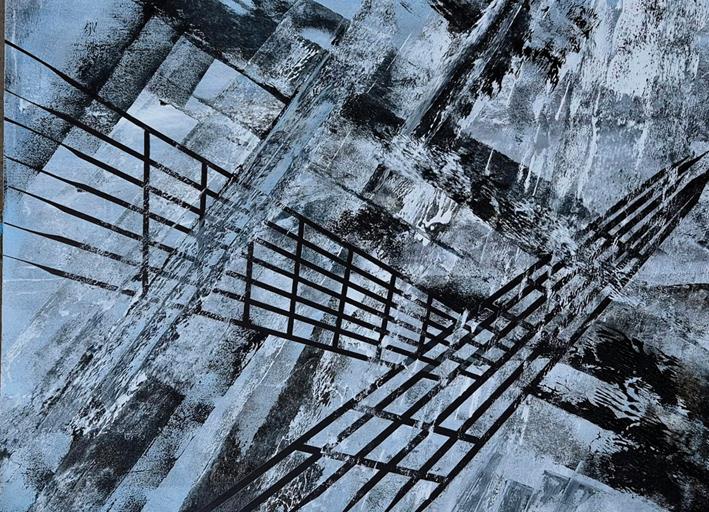
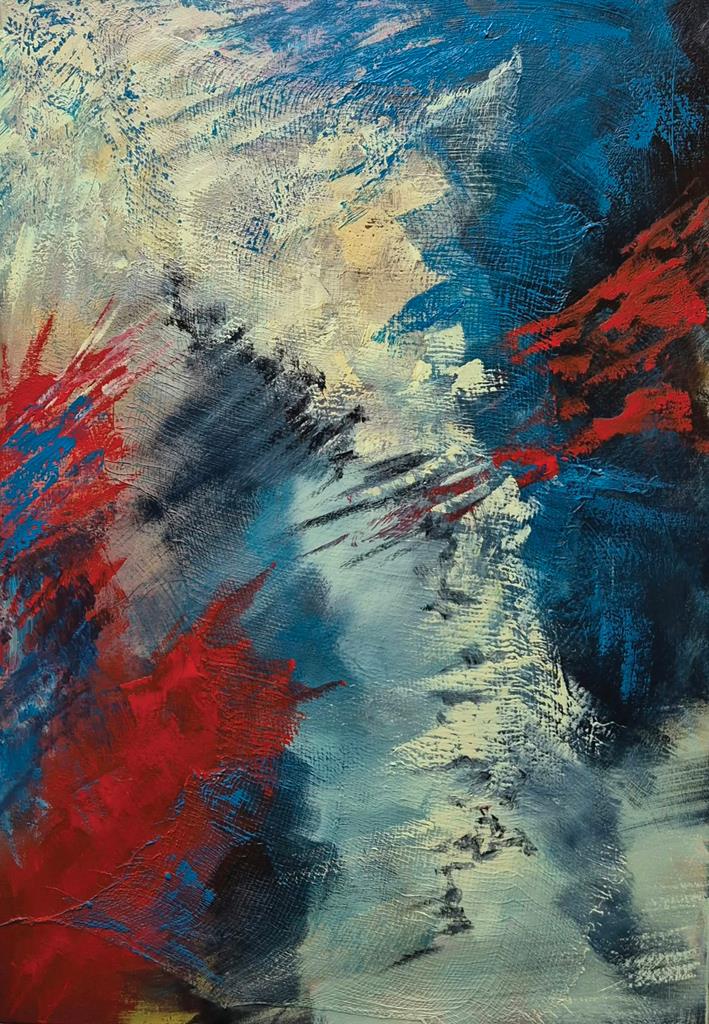
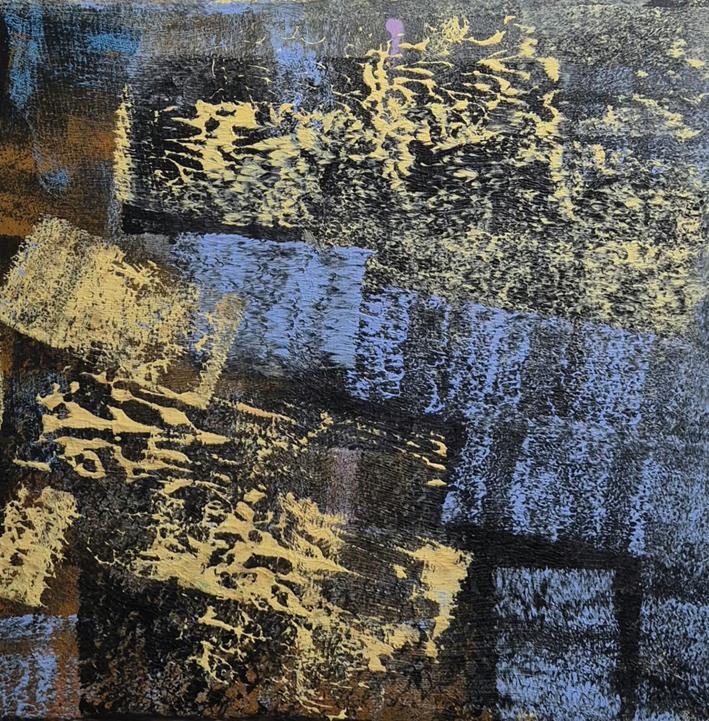
Colour, technique and materiality are central to Attard's practice, with the vibrancy of his palette matched by a considered approach to the application of each tone. The artist remarks that viewers are "going to be invaded by colour", capturing the intensity with which colour asserts itself across much of the exhibition. Yet this vibrancy is not merely a matter of intensity, but of how individual tones interact with one another. The juxtaposition of monochromatic works with compositions employing a broader palette brings these different approaches into focus. The monochromatic works vary in their ability to sustain a similarly strong presence, with two standing out through the dialogue between clean, sharply defined lines and the textured surfaces beneath them. Here, the contrast between precision and material irregularity gives the compositions a visual complexity that the more restrained palette alone does not always achieve.
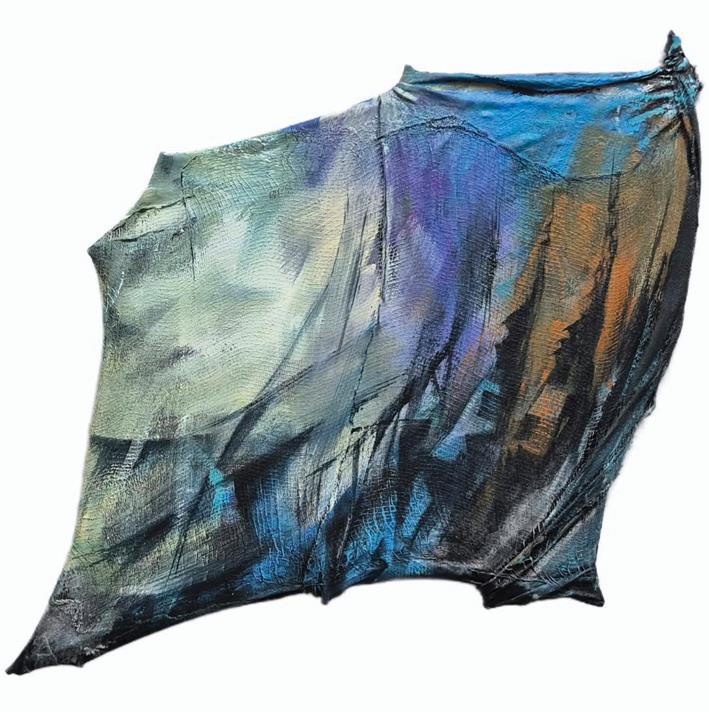
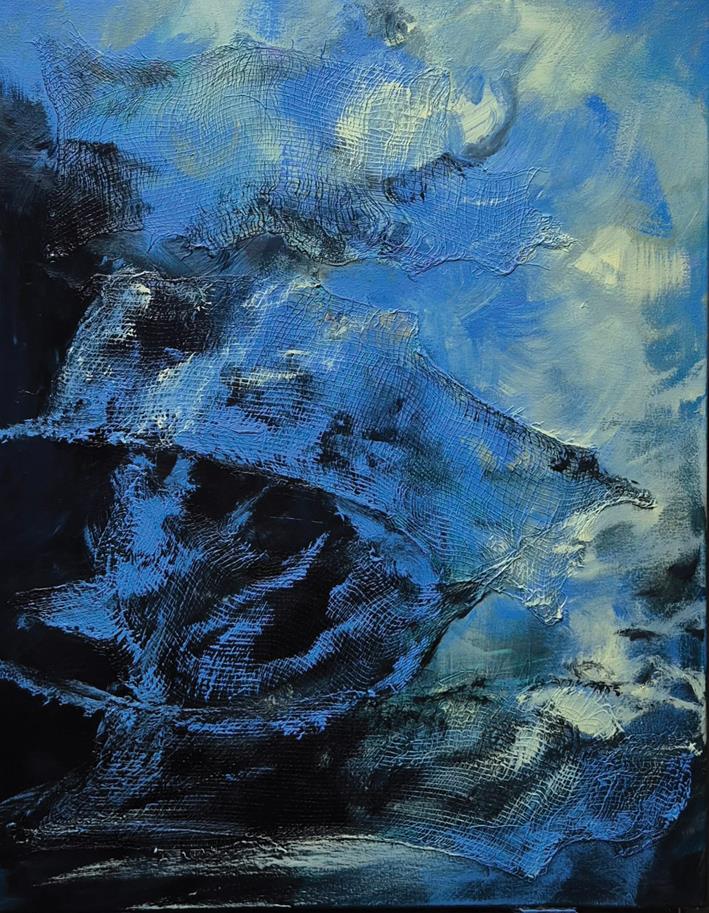
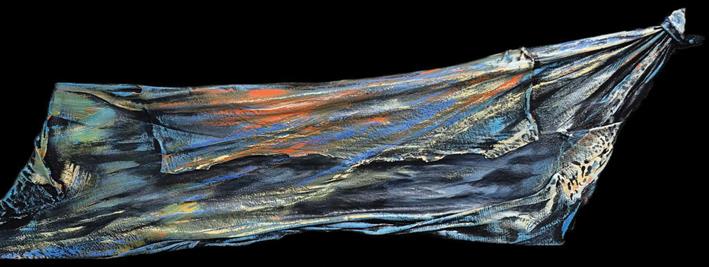
Material experimentation is central to Attard's practice, particularly his use of gauze to construct textured surfaces and forms. His exploration of this technique in sculpture developed with encouragement from the late Professor Mario Buhagiar (1945-2026), who recognised the potential of his early works even through photographs. These evolved from hanging structures into works conceived in the round, exploring dimensionality and positive form. By combining metal frameworks with glue-soaked gauze, Attard transforms a delicate material into rigid sculptural structures. His experimentation also extends to the combination of aerosol sprays and water- and solvent-based materials, whose interaction produces cracks across the surface, an effect that further attracted the attention of architect Richard England (b. 1937). In other works, gauze mediates between surface and depth, partially obscuring the acrylic paint beneath it. The final application of varnish catches the light across the gauze, accentuating its texture and creating a subtle interplay between the painted surface and the material layered over it.
Beyond the physicality of his work, Attard emphasises the importance of art history in understanding the evolution of artistic practices and individual contributions to Malta's visual culture. He observes that some contemporary artists remain unfamiliar with the work of 20th century Maltese artists, overlooking connections that situate their own practices within a broader art historical trajectory. His reference to Toni Pace's (1930-1989) experimental metal sculptures, which challenged established approaches through welding, reflects his interest in the relationship between artistic innovation and historical awareness. Attard's own experimentation with gauze and metal frameworks offers a distinct approach to sculptural construction, transforming materials associated with flexibility and delicacy into rigid, three-dimensional forms. Read within this broader trajectory, such experimentation becomes part of a continuing development of Malta's sculptural practice rather than an isolated innovation.
This awareness also informs his reflections on artistic reception and criticism. Referring to Andy Warhol (1928-1987) and Amedeo Modigliani (1884-1920), Attard considers the tension between artistic conviction and public approval, questioning the extent to which popular opinion should determine artistic value. His acknowledgement of the late Maltese art critics Emmanuel Fiorentino (1946-2008) and Dennis Vella (1953-2009) further underscores the importance of criticism that goes beyond affirming popular opinion, offering considered evaluations of artistic work, whether favourable or unfavourable, while situating individual practices within their historical and cultural contexts. For Attard, engaging with art requires looking beyond immediate responses to consider how works are produced, interpreted and evaluated.
The connections Attard establishes between materials, artistic trajectory and individual expression extend beyond the process of making. His observation that "every artwork you create has an owner" acknowledges the point at which a work passes beyond its creator, entering relationships shaped by its viewers, its reception and the contexts in which it is encountered. In this manner, the exhibition extends beyond the physical relationships that inform his sculptural practice to consider how art connects individual expression with a wider cultural landscape. The work's significance lies not only in what the artist physically constructs, but also in the connections it makes possible beyond his own intentions.
The Connection, is open to the public until 8 November at Rudy Buhler Art, Marsaskala.