Humanoid robots could be doing chores in Maltese households "within a year", Professor Saviour Formosa, from the University of Malta's Department of Criminology, told The Malta Independent on Sunday.
Formosa said that the cost of robotics has already fallen so dramatically that we are very close to entering this new era.
"Within a year, they'll have these in households. The prices have gone down so low," Formosa said.
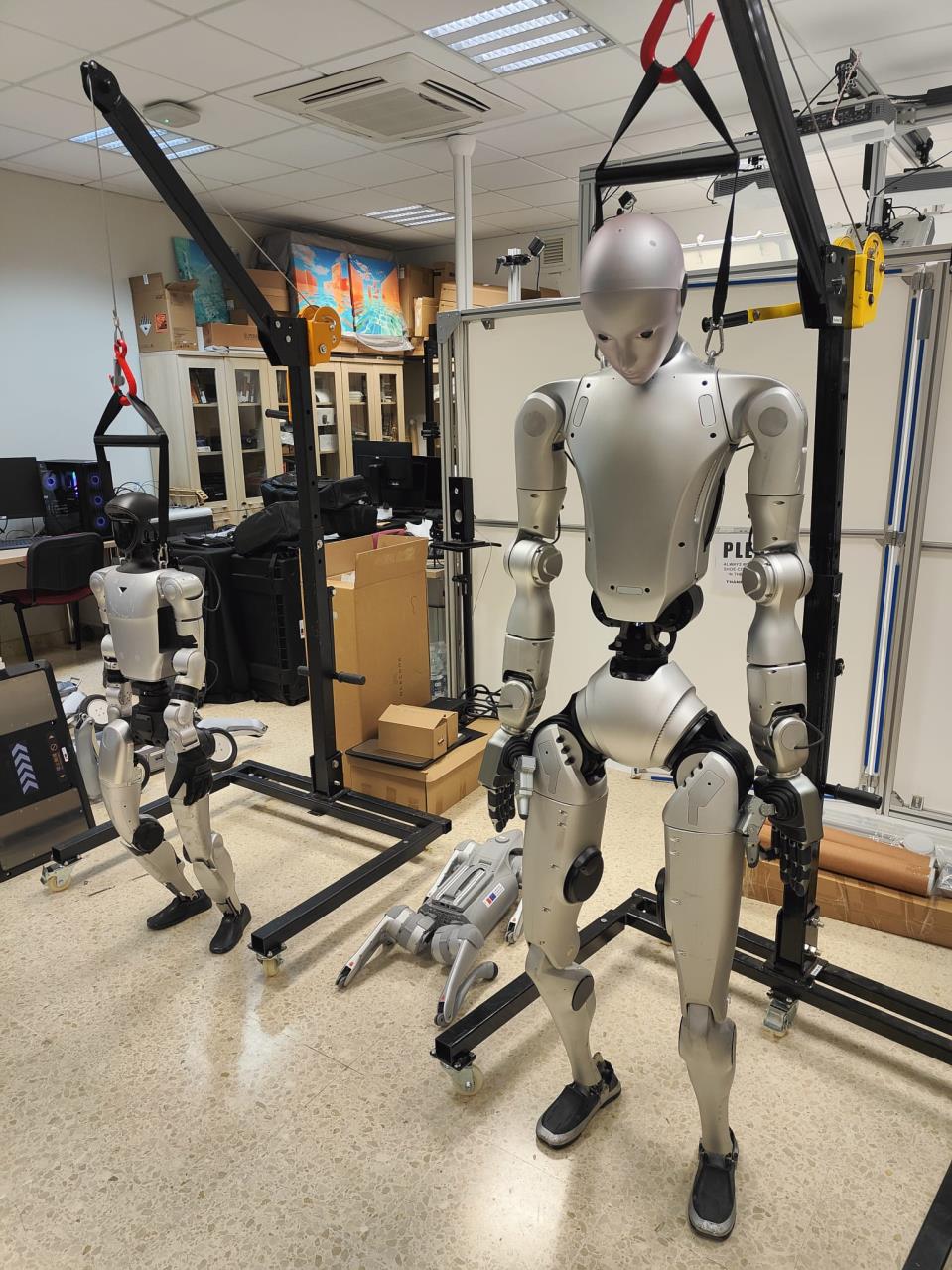
Humanoid robots can vary tremendously in price. The most expensive humanoid Formosa's team has costs around €160,000, though one can find a much simpler, smaller, and more available model for around €4,400.
Formosa leads the University of Malta's Immersion Lab, which features humanoid robots, robotic dogs, augmented reality headsets, and several other technologies used by the lab's researchers to scan 3D scenes. Through these data cycles, the team designs, scans, and analyses data before exporting it in 3D for various uses.
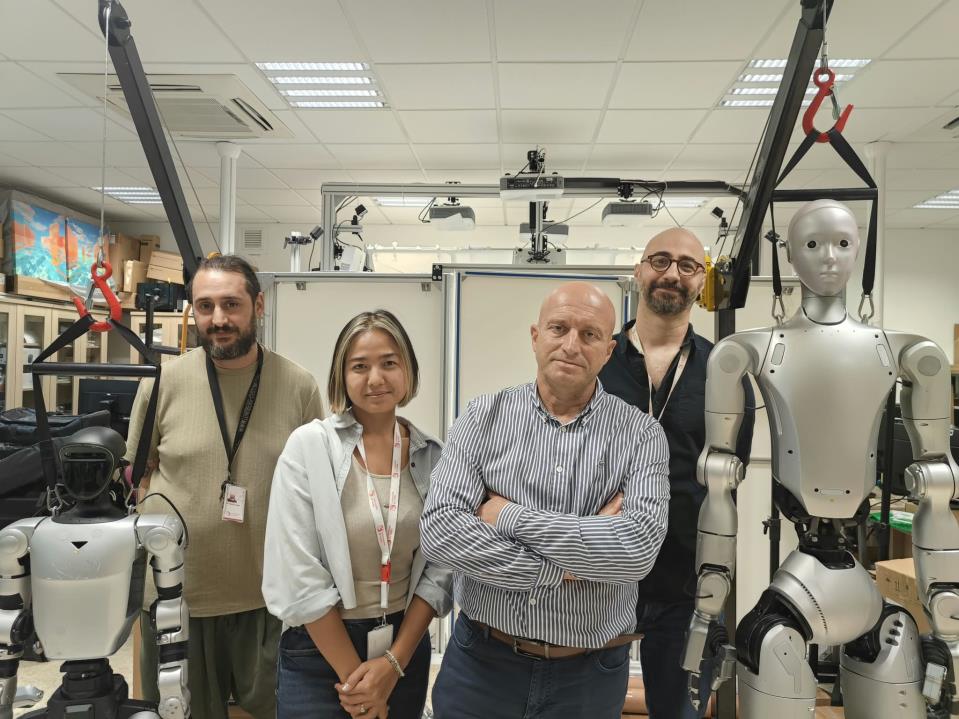
MAKS Dean Matthew Galea, Tram Nguyen, Prof. Saviour Formosa and Fabrizio Cali
Ultimately, through these scans, the team is virtualising parts of the Maltese islands at the request of several authorities.
With its scope lying in "spatial information systems", this team is often deployed to inspect specific locations, such as wartime shelters, caves, and crime scenes, before people are given the all-clear to enter and assess the sites themselves.
A few days ago, the team was called in to scan the damaged cistern exposed by the recent road collapse at Tarxien Square. Earlier this summer, it was contacted to provide a landscape reconstruction of the scene of Daphne Caruana Galizia's assassination in Yorgen Fenech's trial by jury.
The Immersion Lab is the result of a collaboration between researchers from the University of Malta's Department of Criminology and its Faculty of Media and Knowledge Sciences (MAKS). Working alongside Formosa in the Immersion Lab are MAKS dean Matthew Galea and doctorate students Tram Nguyen and Fabrizio Cali, with the assistance of Frank Farrugia.
The researchers told this newsroom that having humanoid robots helps them scan "very specific places" where no humans can enter. Humanoids can also carry equipment in their hands. Although collaborations with industry have become increasingly common, the researchers' primary focus remains on research, driving them to push these machines to their limits.
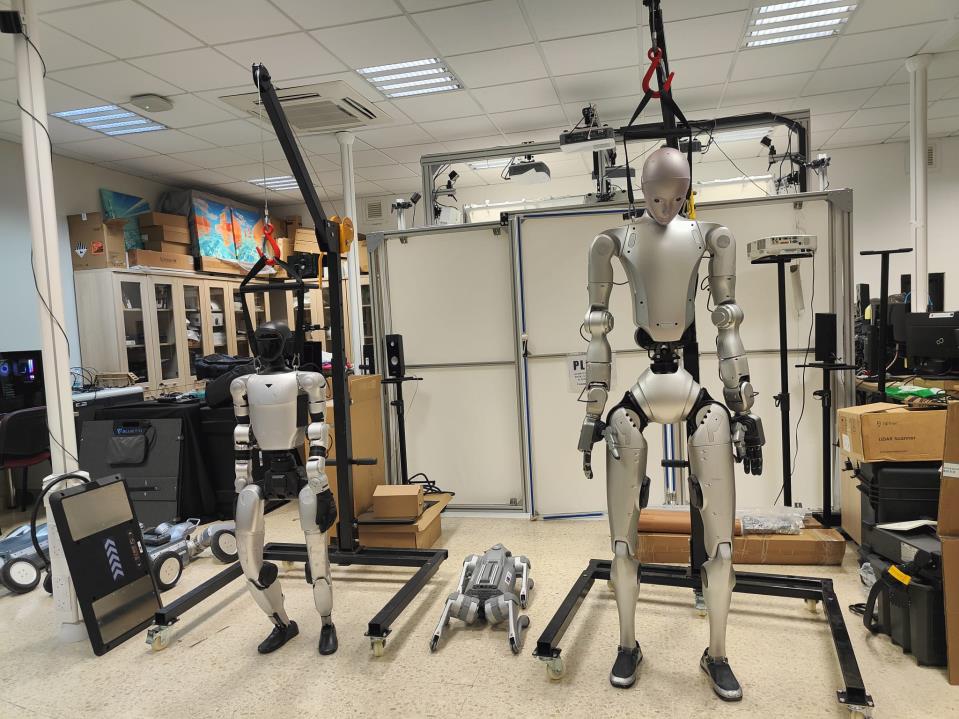
Right now, the researchers are still learning how the humanoid robots walk and navigate their surroundings, having acquired them only a few months ago. In the meantime, they have been working with quadruped robots, which could be casually described as robotic dogs. These are much easier to manoeuvre across different types of terrain, including up and down stairs. All these robots have laser scanners that allow them to scan the environment around them in real time.
"Now they're very common," Formosa said on these robots, "they're producing them so rapidly - they're no longer unique items."
Formosa said that the high-end technology at the Immersion Lab is funded by NextGenerationEU. Around €8 million in EU RRF funds have been given to this team, for its inMotion project, to purchase its fleet of vehicles to help it do most of its scanning. He told this newsroom that while some robots can seem quite "toy-like", "they're very serious business".
While discussing some of the most advanced tech in the robotics industry, Formosa noted that one humanoid robot in development, called Clone, is being marketed to be able to do household chores, speak, memorise one's home layout and kitchen inventory, and will be programmed to be able to learn new tasks by simply copying a person's actions, hence the name. This humanoid robot is being marketed as, essentially, a premium robot servant.
Formosa said that some robots could be used to support law enforcement officers to disorient perpetrators while keeping humans on the job in a less perilous position, that is, further away from the line of fire.
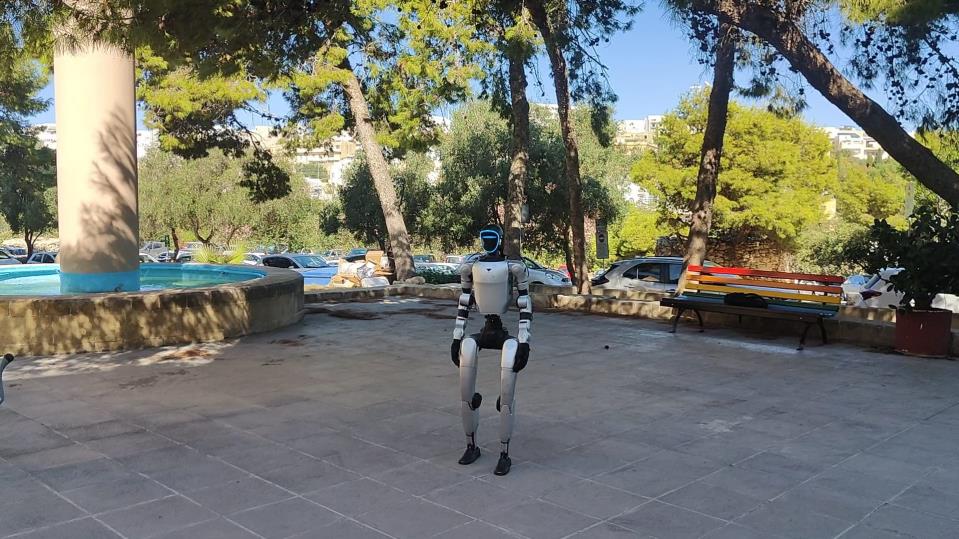
He added that humanoids could be used to conduct police negotiations with perpetrators prior to their arrest, with the reasoning that it's better for a robot to be harmed rather than a human being. Dean Galea noted that, in such scenarios, the humanoid could be programmed with a specific facial expression to appear more threatening or empathetic, depending on the situation. Formosa said he hypothesised this shortly after the St Julian's shooting, which happened right outside The Malta Independent's offices in July.
"We are in uncharted territory; we're in really beautiful times. But we have to realise that these are machines, and some machines learn on their own depending on the programmes they have," Formosa said, referencing inbuilt AI technology.
During the interview, Formosa told this newsroom that, the previous week, one of the humanoid robots had spoken for the first time, in English, by repeating something said by a team member. He mentioned that on another recent occasion, the same robot spoke and, to everyone's surprise, one of the robot dogs repeated its words while it was on and waiting for the team to move it. "It had never done this before," he said.
The Immersion Lab team clarified that this feature must have come in through a software update that same week, rather than the robots teaching themselves how to speak like a scene straight out of a sci-fi film.
Aside from these advanced robots, the Immersion Lab's research support officers have a wide variety of tech available to them - over 2,500 items and 50 unique technologies - to help them carry out different scanning jobs, such as drones for aerial views, tech for submarine scans, ground-penetrating radars (GPRs), holographic projectors for augmented and virtual environments, thermal scanners, x-ray fluorescence (XRF) technology (used for example to identify drugs inside a baggage), and thermal scanners.
From scanning all Maltese caves with the ERA to doing "horrendous work" and analysing and reconstructing crime scenes, all this tech is put to use in all kinds of environments across the country.
Formosa noted that, until technology advances further, living dogs - not their robotic counterparts - remain "the gold standard" in certain scenarios, thanks to their ability to draw on multiple senses.
For instance, this team recently used its GPRs to check for sub-surface artefacts. They are testing this technology by finding manholes that have been tarmacked over. Through these radars, they may find shelters, caves, and who knows what else, Formosa said, however, high-end tech like the robots are needed for safe exploration.
After scanning an environment, this team then works to digitalise that space. To demonstrate this work to this newsroom, the researchers gave me a pair of augmented reality goggles that allowed me to see an aerial view of Floriana, in situ, while still being able to see my surroundings inside the Immersion Lab.
Nguyen said that scanning Floriana took "an hour or two", processing this data took a few days, and then "a couple or few more days" were needed to transfer the high-resolution data into their computers for post-processing.