The Broadcasting Authority’s decision on Friday to censure Xarabank for its coverage on 6 June of the case of a man who was allegedly wrongly imprisoned for sexually abusing his daughter is, according to Xarabank host Peppi Azzopardi, “a serious threat to democracy and freedom of expression”.
In an exclusive interview with The Malta Independent on Sunday, Peppi Azzopardi says the Broadcasting Authority’s decision claims that the programme crossed a fine line without specifying which lines it crossed.
“The BA’s decision fails to specify exactly which line we crossed – I am publicly urging the BA to point out exactly at which point(s) Xarabank crossed the line,” he said yesterday.
He stressed that the mother, who allegedly forced her daughter to give false testimony about her father, was never mentioned once. Such a decision, he said, limits the media’s right to freedom of expression, and poses a serious threat to democracy.
The BA’s decision states that “there is a very fine line between the use of freedom of expression and the breach of third party rights, particularly when the person in question is undergoing a judicial process”.
The decision goes on to state that there is enough proof that this line has been crossed and that the way in which the programme was conducted led viewers to come to wrong conclusions about persons not present to defend themselves – in this case, the husband’s former wife.
The decision refers to Paragraph 8.9 of Article 350.14 of the broadcasting legislation. The article states: “Persons accused with criminal acts should not be represented in any way as if they’ve already been found guilty...When reports are made regarding an accused individual; one needs to respect the fact that the person might be innocent.”
This, however, clearly does not apply to the case at hand.
Peppi Azzopardi says he made it clear that no presumptions should be made
At the start of the 6 June programme, Mr Azzopardi stated unequivocally, “We need to make it clear, that just because someone is innocent, this does not mean that someone else is guilty. Let us allow the judiciary do its work – we are not here to judge, and we urge you not to judge either.”
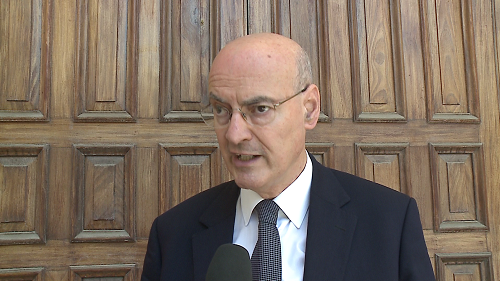
Dr Tonio Azzopardi (pictured above), appearing for the accused also emphasised that “in no way should presumptions on the person’s innocence be made”.
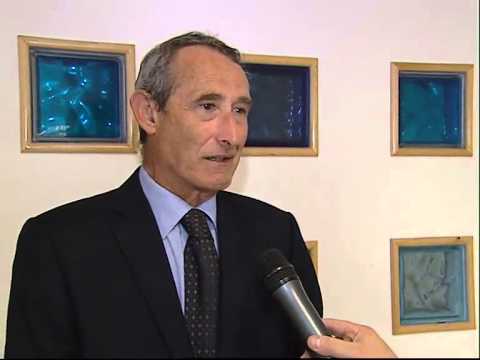
Furthermore, lawyer Austin Bencini (pictured above) said: “Up until today, this man is still guilty of any charges brought against him, he is guilty 100%. The Constitutional Court never said that the man is innocent.”
Mr Azzopardi says that during the programme, the mother was never mentioned and a 50-minute interview with the accused’s daughter was cut down to four minutes, because the rest of the interview could have tarnished her reputation, and that was not Xarabank’s mission, in any case. “We never even mentioned she was being accused.”
Accused contacted Xarabank eight years ago, but producers did not act until magisterial inquiry
According to Mr Azzopardi, “This man contacted us seven years ago when he was being wrongly accused, but at that point in time we felt we shouldn’t go through with the issue, because the court judgment had not yet been pronounced. It was only after a magisterial inquiry was published saying that there might be an innocent individual serving time in prison that we stated working on the programme.”
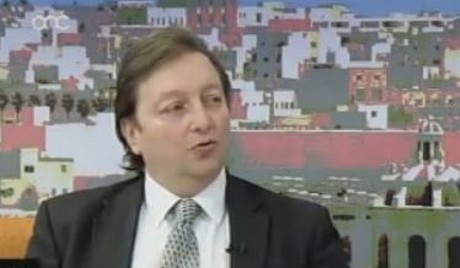
Asked whether he thinks that the programme could have been one-sided because the woman was not represented, Mr Azzopardi pointed out that the woman’s lawyer, Martin Fenech (pictured above), had been invited, but did not accept the invitation. The Attorney General was also invited.
‘A serious threat to democracy’
“Can you imagine being accused of defiling your daughter and being innocent? The media has every right to make it clear that making a false accusation is a grave mistake. What about Anthony Mifsud’s torture, should Xarabank have waited? Should Xarabank not discuss Giga’s case – and what if it turns out she was innocent?
“This is a serious threat to our democracy. The media should serve as the fourth estate of a democracy. The public should be against this decision, because they too might require the media to speak for them.”
Mr Azzopardi hinted that Xarabank has other similar cases its team is already working on. “I will do everything in my ability to bring these cases to the public. I will not in any way let the Broadcasting Authority stand in the way of freedom of expression.”
Mr Azzopardi stresses that there is a clear distinction between the Broadcasting Authority and the Public Broadcasting Services (PBS) which are completely separate entities. “We never had any sort of interference from PBS or the government – we are accountable to PBS; in fact we consulted Reno Bugeja regarding the issue. PBS was completely supportive of us going ahead with this programme.”
The complaint was filed by the woman’s lawyer Martin Fenech who said that the programme was one-sided and harmful to his client.
Days before the programme was aired, Dr Fenech insisted that Xarabank should pull out arguing that the case was still to be heard in court and, until found guilty, the woman is presumed innocent. At the time, Dr Fenech also urged the BA and PBS to stop Xarabank from producing the programme; however it went on as planned.
The case in question is that of a man who is in prison after being found guilty of defiling his daughter. The man was serving a two-year prison term for allegedly sexually abusing his daughter. He was released after serving 400 days in prison.
Right to freedom of expression
According to the European Court of Human Rights states that “everyone has the right of the freedom of expression...receive and impart information and ideas without interference by the public authority.” However, it goes on to say that the exercise of this freedom carries with it duties and responsibilities which may be subject to conditions and restrictions, for protection of reputation of rights, or maintaining impartiality of judiciary.
The BA’s decision states that while the right of freedom of expression should be upheld, and journalists have every right to investigate with the aim of revealing the truth, this right is not absolute.