Alleanza Bidla is launching a crowdfunding initiative today to raise funds with which it intends challenging the Maltese government's involvement in the European Union's planned campaign against human traffickers in Libya.
The party contends that Malta's involvement in the campaign, which has left the door open to military intervention on the ground in Libya, violates Malta's constitutional neutrality.
In an opinion piece in today's issue, Alleanza Bidla president Ivan Grech Mintoff writes, "A military intervention requires approval of all 28-member states, including Malta. Alleanza Bidla will start crowd-funding today to pursue a court case against the government to stop this unconstitutional military campaign.
"A military intervention in Libyan waters, air or land against the wishes of both the Tobruk and Tripoli governments would constitute an invasion of a sovereign state and obviously breaches the neutrality clause. Furthermore, any such intervention is more likely to destabilize Libya further rather than stem the flow of migrants.
"The Constitution also prohibits Malta from joining any military alliances. The government's participation in preparing an EU military planning document and agreement for any military intervention is therefore itself a breach of the constitutional non-alignment (even if Malta does not actively participate in the military missions at a later stage).
"Malta is a neutral state actively pursuing peace, security and social progress among all nations by adhering to a policy of non-alignment and refusing to participate in any military alliance."
Government's handling of the Tripoli letters 'beyond neglect'
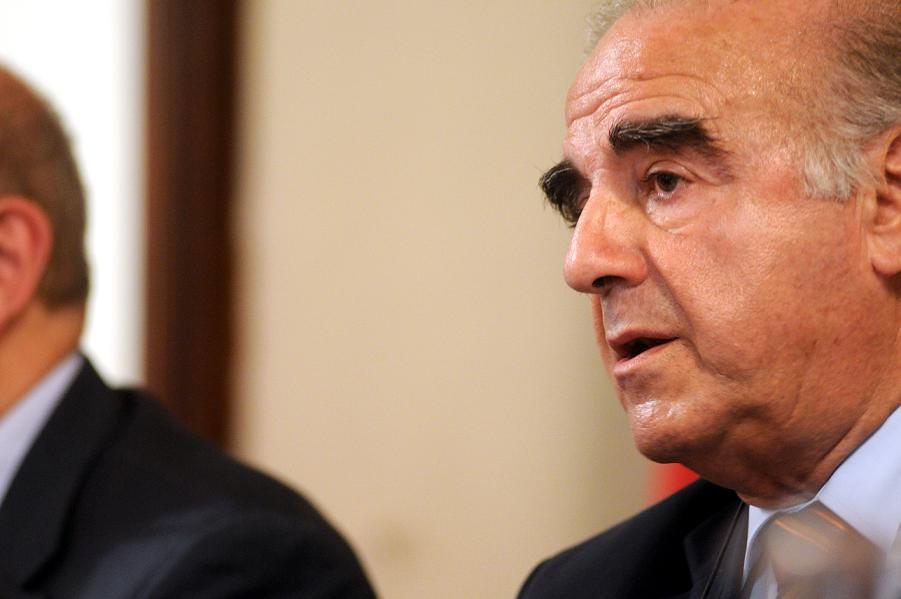
Foreign Affairs Minister George Vella earlier this week denied that his ministry had received diplomatic communications from the Tripoli government - which is not recognised by Malta - requesting that peace talks are held here with the Tobruk government and to finalise 2014 agreements, including a fuel-related deal.
Dr Vella was replying to questions put by The Malta Independent on Sunday on whether his ministry received three diplomatic letters sent by the Tripoli government asking to visit Malta to hold peace talks with representatives from the Tobruk government in a meeting held under EU and UN auspices; to discuss the issue of the two Libyan embassies in Malta, along with reinforcing a number of agreements signed last year.
The Malta Independent on Sunday reported that the three letters - seen by this newsroom - sent to both the Foreign Affairs Ministry and to the Prime Minister directly - were not acknowledged.
On the issue, Mr Grech Mintoff comments, "There is mounting evidence that the statements by Foreign Minister George Vella regarding the Tripoli government letters are quite incorrect, and that his ministry as well as the Office of the Prime Minister have had these letters for months without taking action.
"I don't know what is worse: for the Foreign Minister to be untruthful to the media about the Tripoli documentation or if he does not know what is going on in Malta's relations with Libya, or if the Prime Minister doesn't trust the Foreign Minister to deal with the issue and has not informed him about events.
"The handling of the Tripoli letters is beyond neglect. To be unresponsive to offers to negotiate peace in the civil war of a neighbouring country, the growth of terrorism there and present lack of security and therefore our present stability makes me wonder what was more important, especially when the Foreign Minister has sworn to uphold the Constitution's requirement to 'actively pursue peace'. The Foreign Minister must come clean on this."
The 2014 agreements are related to the Malta-Libya fuel deal which would have enabled Malta to purchase fuels at advantageous prices from Libya, the agreement of which was initially reached between Prime Minister Joseph Muscat and then Libyan Prime Minister Ali Zeidan.
Mr Vella had highlighted, "Malta is open to dialogue as long as the persons who want to engage in dialogue", in this particular case referring to the unrecognised Tripoli government, "does not request such meetings with the aim of trying to convince Malta to breach international regulations".
He continued: "The Tripoli government is not internationally recognised, it is Tobruk one which is," he emphasised.