The Auditor General is expected to compile a list about the changes in oil price between 2008 and 2015, after former minister Tonio Fenech stressed that the Nationalist government had no choice but to increase electricity and water tariffs because of the price of oil and to cover Enemalta's investments.
Dr Fenech was speaking during a Public Accounts Committee, which met to continue to discuss the report on effectiveness of the Enemalta Corporation's fuel procurement.
Former finance minister Tonio Fenech said that because the Nationalist government could no longer increase Enemalta's debts, they had to take the decision to increase electricity and water tariffs, saying that it was a 'responsible government' for doing so. He said that two factors came into play -the price of oil which was constantly changing and Enemalta's investments.
He said that if the government had to decrease taxes on electricity, the price would have only been increased as oil-rich countries would now that people are able to pay more. He said that the idea was for people to be more cautious when using electricity.
Dr Owen Bonnici asked whether the price of oil between 2008 and 2012 increased by 4% - to which Dr Fenech said he does not have the exact percentage, however the price of oil had sometimes gone up to $140 per barrel. Dr Bonnici pressed Dr Fenech to state at what rate the price of oil increased, the former minister said that the Justice Minister is trying to push him into saying what he wants. At one point, Dr Fenech slammed his mobile phone on the table, getting angry about being asked the same questions over and over again.
He said that if Dr Bonnici wants a list of changing rates of oil, the government should ask Enemalta to compile it, adding that these should include the past and present legislatures. The Auditor General will now be asked to compile the list of oil prices between 2008 and May 2015.
Dr Fenech said that the Labour government was able to decrease the price of electricity because the BWSC plant was fully working, because the price of oil had gone down sufficiently, and because of the interconnector project, which started prior to the general election. He said that the government knew the reduction in prices the interconnector would bring, and was merely hoping things would fall into place. He reminded that Minister Joe Mizzi used to criticise the PN's decision for the interconnector.
Dr Fenech added that according to calculations, the Labour government should have reduced tariffs by more than 25%, given the price of oil today.
He stressed that a management structure was in place and the situation at Enemalta was being properly addressed.
File on suspected tax fraud
Dr Fenech said that the ministry received a file from the Malta Security Service about suspect tax fraud. The ministry then sent the file to the tax compliance unit; however he said, he did not go into which companies were involved. The police commissioner was also informed.
He said that he felt no need to inform anyone that an investigation was about to start.
Enemalta's debts incurred by investment in 1990s - Fenech
Dr Zammit Lewis asked whether the Enemalta situation was discussed in the PN's parliamentary group, to which Dr Fenech said that there were various discussions on the corporation.
He stressed that the financial situation of Enemalta was very different than what the government is implying. He said that Enemalta had older debts involving an investment in 1990. The debt accumulated during the last two years were incurred by the interconnector project - debt that amounts to €54 million, he said. He said that the parliamentary had agreed that the older debts - reaching €300 million - was to be staggered across 25 years.
Dr Zammit Lewis questioned how Dr Fenech did not think that Enemalta was in an alarming state.
Dr Fenech replied that the government should look at the entire story when speaking about Enemalta, referring to the €88 bank guarantee over the new power station, reported in the media recently.
Tonio Fenech’s infamous clock
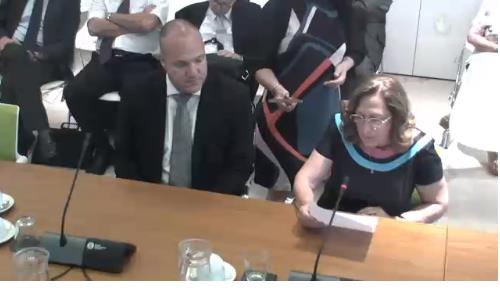
Testifying during the meeting, Ines Farrugia, the wife of Raymond Farrugia said that she had met Tonio Fenech during the Christmas period and they talked about the making of and they even talked about the making of clocks, and later her husband suggested giving Dr Fenech one of the clocks. She said that this took place a long time ago, but she can’t remember the exact date- only saying it was one of her first works after he course in 1982.
She said that it was her husband who took the clock to Dr Fenech, and that they only gave him the clock because he showed interest in the work. She said that the clock cost about Lm200, however it cost more if one included the work to do it. Asked about the claim that it was power plan that paid for the clock, Mrs Farrugia said that she knew nothing about that.
“There was definitely no scope of bribing Dr Fenech, we only gave him the clock because he appreciated the work of art. The value amount of €4,000 –as reported by the Labour Party was not true.” Mrs Farrugia insisted.
Raymond Farrugia was the managing director of companies, involving power plant.