One of the three contractors forming part of a ‘joint venture’ contracted by Siemens – the engineering, procurement and construction contractor to ElectroGas Malta – has been identified as one of the suppliers of weak concrete in the inquiry regarding Mater Dei hospital.
Following a story published last Sunday by this newspaper, in which reliable sources revealed that some of the concrete piles at the new power station had had to be replaced after stringent tests ordered by Siemens revealed that the concrete used was substandard, this newsroom contacted the three contractors entrusted with the job.
While Polidano Group took exception over being singled out and immediately denied any wrongdoing, claiming that the company had only supplied iron rods and dug the holes in which the concrete piles were placed, Tal-Magħtab Construction, one of the three partners in the joint venture, failed to reply to our questions.
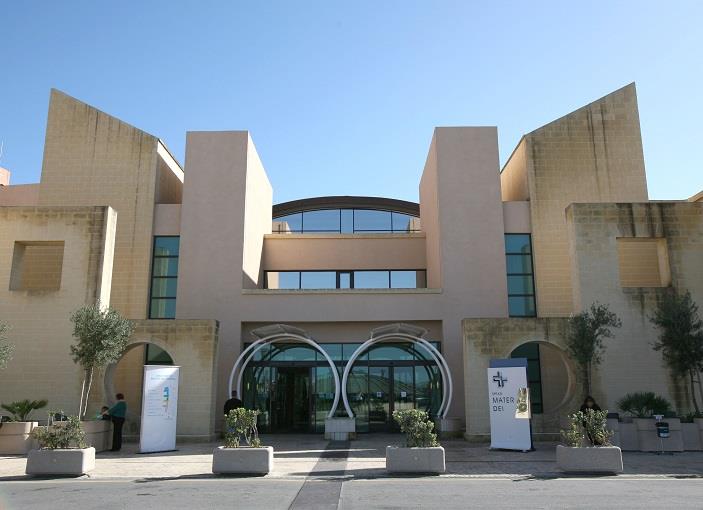
Tal-Magħtab had been amongst the contractors identified in the inquiry into weak concrete at Mater Dei hospital.
When contacted by this newsroom, Dennis Baldacchino of Tal-Maghtab Construction would neither confirm nor deny that the company was involved in supplying the concrete for the piles at the new Delimara power station. Mr Baldacchino suggested that the facts published by this newspaper were not actually factual, but when pressed to say whether or not the company was involved, insisted: “I am not saying that we are involved or that we are not involved.”
Later in the week, Mr Baldacchino contacted us to say that a reply had been issued by the “consortium”.
That reply, in fact, came from the other partner in the power station construction consortium – Elbros Ltd. A spokesman for Elbros also refused to state who had done what, insisting that: “The exact duties assigned to each contractor, including the piling, the supply of the pile casings, the fabrication of the reinforcement steel cages for the piles and the supply and casting of the concrete is the subject of a private agreement.”
The reply was practically identical to the one received from the Polidano Group, in which it was claimed that “at no time during the works was the joint venture required to carry out rectification/repair works to any of the piles.”
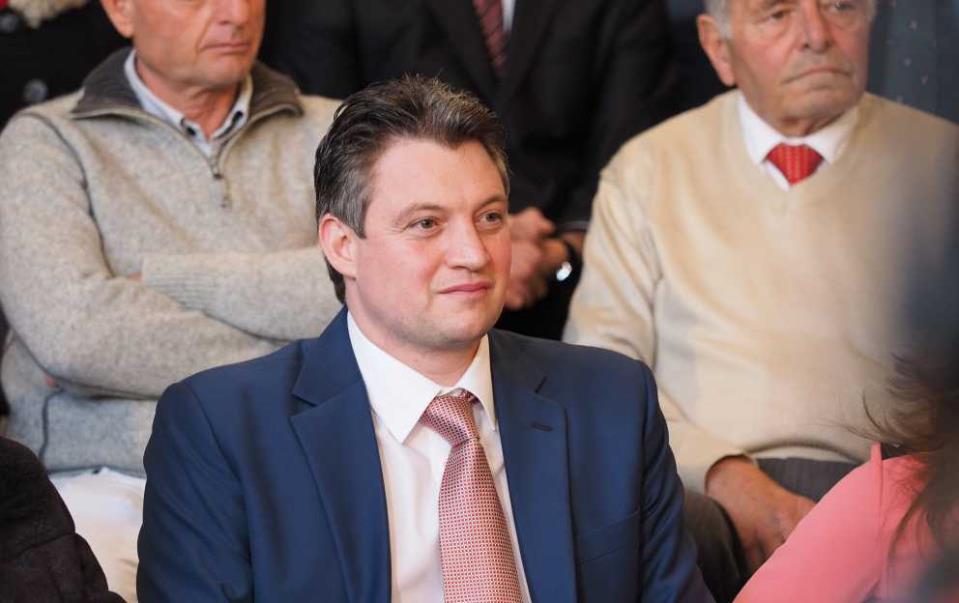
This statement is in direct contrast to what Energy Minister Konrad Mizzi said last Sunday on ONE TV when asked to comment on the story published by The Malta Independent on Sunday.
As quoted by the media, Dr Mizzi said: “Quick action taken over inferior quality concrete found in a small number of concrete foundation piles at the new power station was in sharp contrast to what had taken place at Mater Dei Hospital.” He said in his televised comments that six out of 260 concrete piles being laid at Delimara for the new power station had been found to have inferior quality concrete.
“The concrete,” he said, “was not as weak as that found at Mater Dei, but Siemens, which is providing the equipment for the new gas-fired plant, immediately ordered its sub-contractor to crush the defective piles in the presence of its officials.”
This, he said was a positive development in that it showed how quick action was taken and defective concrete was immediately removed. At Mater Dei, he said, more than half the concrete used in the first half in 1996 had been found to be inferior, and it was still retained.
It is significant that, over the past seven days, neither Siemens nor Electrogas has felt the need to clarify the story published by this newspaper last Sunday. In contrast, Electrogas immediately issued a statement to react to a story published in The Sunday Times revealing that an €88 million bank guarantee was given to Electrogas by the government.
However, the construction consortium stuck to its guns all week, threatening to sue this newspaper. Last Sunday, The Malta Independent on-line published two statements issued by the Polidano Group. The following is the full text sent to this newsroom:
“Reference is made to the front page article of The Malta Independent on Sunday of 7thJune 2015 with the headline ‘Weak concrete found at new Delimara power station’.
Polidano Group categorically refutes the claims made in the article as they are unfounded and untrue. The facts relating to Polidano Group’s involvement in the piling works carried out at the new Delimara power station are:
1. Polidano Group forms part of a joint venture, consisting of a number of contractors, which was awarded a contract by Siemens for soil improvement works carried out at Delimara.
2. The works allocated to Polidano Group, by the joint venture, was limited to excavating the majority of the piles, supplying the pile casings and fabricating the reinforcement steel cages for the piles.
3. Polidano Group was not responsible for the supply and casting of any of the concrete used in connection with the contracted works and no concrete was delivered to the site from concrete batching plants operated by Polidano Group.
4. The contract of works provided for extensive quality assurance and control procedures by an independent third party accredited (ISO17025) laboratory, approved by Siemens. The quality control procedures included conducting:
(a) a pile dynamic load test on a sample of piles;
(b) a pile integrity test on each pile installed; and
(c) the testing of the concrete delivered to the site.
5. At no time during the works was the joint venture required to carry out rectification/repair works to any of the piles which were installed and to date the joint venture has not been advised of any failings relating to the quality of the concrete supplied or the integrity of the piles installed.”
A concrete pile is a component in a pile foundation that is driven into the ground to ensure that the foundation is deep. Large quantities of concrete piles can be used during the construction of pile foundations, with the piles connecting to the footers of the foundation. The piles distribute the weight of the finished structure safely, reducing the risk of structural failure or collapse.
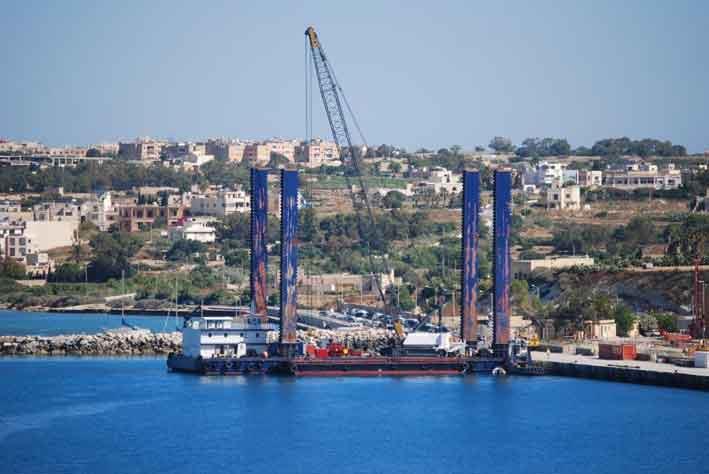
Last March, the Polidano Group said a €1.2 million BG 30 Piling Rig equipped with the latest technology was to be used at the new Delimara power station site to drill hundreds of piles prior to the construction of the platform that will house the new generation plant.
This newsroom is still investigating the matter further.