Senior prelates, diplomats, politicians and journalists attending the official launch here last Thursday of the Pope’s Encyclical Laudato Si’ on integral ecology were confronted with a top scientist’s dramatic warning about the extreme urgency of global action to combat climate change.
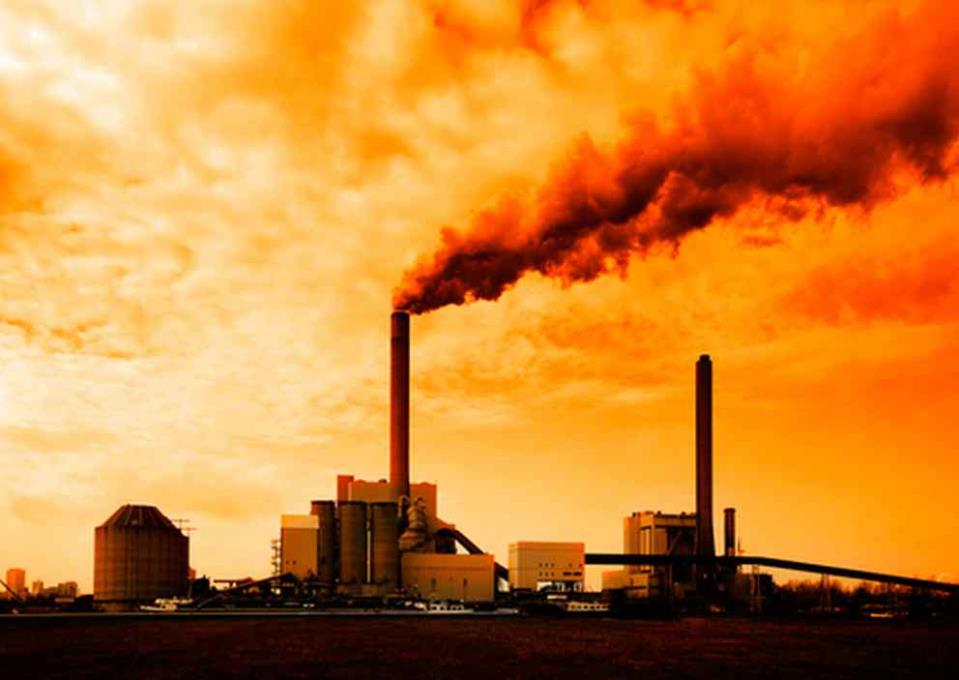
Professor Hans Joachim Schellnhuber, director of the Potsdam Institute for Climate Impact Research, Germany and a leading scientific adviser to Pope Francis warned that the continuing rise in the world’s average temperature since the industrial revolution caused by ever increasing emissions of greenhouse gases from burning fossil fuels, deforestation and a range of industrial and agriculture practices had brought the planet to an extremely dangerous point.
“The human body has a temperature of 35C, add 2º and you have fever, add 5 and you are dead. This is precisely what will happen on this planet whose temperature has been finely balanced throughout recorded history, but whose vital organs are now heading for collapse. Global warming impacts will not be gradual, but often happen in an abrupt, surprising way.”
Answering a question during the presentation put by The Malta Independent on Sunday, Prof. Schellnhuber said that the goal agreed by the world’s nations at the UN climate change conference in 2010 to limit global warming to 2C above pre-industrial levels, “the absolute maximum we might be able to digest”, could be achieved by a planned global industrial revolution over the next 50-60 years. However, recent scientific findings indicated that this increase implied unacceptable risks to many of the world’s ecosystems and vast numbers of its inhabitants.
A lower target of +1.5c supported by scientists, environmental movements and over 100 of the world’s poorest developing nations would be much safer – but imply an industrial revolution completed within 25 to 30 years. “It can be done if all human beings could decide this is what we want to go for. There are no laws of physics against it, or even economics and it is the pollution by the rich, not the poor which is the threat to survival”.
While Professor Schellnhuber warned that climate change issues were still secondary in business strategies, lacking “urgency and priority”, Dr Carolyn Woo, chief executive officer and president of Catholic Relief Services, a US-based non-governmental organisation told the audience that “the Encyclical message to the business world is profoundly hopeful”.
“It sees the potential of business as a force for good whose actions can serve to mitigate and stop the cumulative, compounding, irreversible catastrophic effects of climate change driven by human actions. The correct response according to Pope Francis is a true ecological conversion involving business as part of the solution, adopting the virtues of solidarity and sustainability, oriented toward the common good and true development of all peoples.
“However, the market alone cannot solve environmental problems while technology can bring great benefits but also great costs as it allows those with knowledge and resources to dominate humanity and the entire world. The Pope reminds us that job creation is possibly the greatest responsibility entrusted to business – ‘a sacred trust always to be prioritised’. He also speaks forcefully of the dangers of short-term thinking and a selfish mindset.”
“As the Pope says, to stop investing in people in order to gain short-term financial gain is bad business for society, and I would add, bad business for business too,” Dr Woo concluded.
Ghanaian Cardinal Peter Kodwo Appiah Turkson, president of the Pontifical Council for Justice and Peace stated that the Encyclical, whose title included the words ‘care for our common home’, launched a dialogue with all people, institutions and organisations sharing this concern – an approach also undergirding the document’s preparation. It starts by invoking the words of St Francis of Assisi and its title ‘Laudato si’ (early Umbrian for ‘praised be`) is taken from his ‘Canticle to the Sun’. In it the saint describes the earth as our common home which is also like a sister with which we share our existence and like a beautiful mother who welcomes us in her arms.”
“As the Encyclical says, St Francis is the prime example of care for the weak and an integral ecology lived with joy and authenticity. Today, the earth our sister is mistreated and ransacked, her groans united with those of all the world’s discarded and poor but the Pope assures us that humanity still has the capacity to collaborate to build our common home.”
The concept of integral ecology as proclaimed by St Francis – the fundamental relationships of the human person with God, him/herself and creation – was at the centre of the Encyclical. “Humanity in its relationship to the environment is facing crucial challenges which require the development of adequate policies on the international agenda,” the Cardinal continued. “Certainly, Laudato Si could and should have an impact on these processes.”
(The Encyclical judges current international negotiations on environmental and poverty topics as failing to deliver the necessary solutions, with politicians sacrificing the global common good for short-term national political considerations).
Representing the (Orthodox) Ecumenical Patriarchate of Constantinople, the Metropolitan of Pergamon, John Zizioulas, expressed his Church’s joy and gratitude at the issue of the Encyclical, recalling Orthodox advocacy on environmental issues over the last 30 years.
Focusing on the theological significance of ecology, the spiritual dimension of the ecological problem and the ecumenical significance of the Encyclical, Archbishop Zizioulas warned that “the threat posed to us by the ecological crisis bypasses or transcends our traditional divisions. Pope Francis’ Encyclical is a call to unity – unity in prayer for the environment, in the same Gospel of creation, in the conversion of our hearts and our lifestyles to respect and love everyone and everything given to us by God.”
Since 1989, the Patriarchate has annually celebrated the environment on 1st September – the first day of the Orthodox liturgical year. “Might this not become a date for such prayer for all Christians? This would mark a step to further closeness among them.”
A closeness apparently not reflected in the presentation guest list since Vatican observers failed to identify to this paper any other Christian leaders, or non-Christian faith leaders in the audience.
While heads of UN organisations, environmental movements, some non-Christian churches and President Obama quickly issued official welcomes to the Encyclical, global news sources do not indicate any similar expressions of support so far from other national leaders or global business formations.
In contrast to President Obama’s deep admiration for the Pope’s decision “to make the case – clearly, powerfully and with full moral authority of his position – for action global climate change” there was a predictable chorus of negative comment from climate change-denying US Republican politicians who have a majority in the Senate as well as Republican presidential candidates such as Jeb Bush. This opposition is expected to crescendo in the weeks remaining before the Pope’s address to the US Congress on 24 September and the UN General Assembly’s Heads of State or government segment on 25 September.