Yesterday’s controversial decision which saw mandatory quotas for the sharing of 120,000 refugees among the member states, relocated from Italy and Greece, sent a strong political message, Prime Minister Joseph Muscat said tonight, after the EU summit on migration.
Four countries opposed the decision, however the vote passed through a qualified majority.
“I think the Rubicon was crossed, where the idea of having voluntary quotas, as opposed to non-voluntary is now over. It was a decision taken by a qualified majority”. He explained that the decision meant that its not a question as to whether a country wants to relocate some migrants or not. "There is a decision and everyone must take part, aside from those who have an opt-out (those countries who had this clause added when joining the EU)".
He explained that the number agreed upon by Malta is manageable, and he looks forward to the agreement. "It also gives us strength and credibility as if we were to face the same problem in the future, we know that a blueprint is in place and can ask EU institutions for the same kind of help”.
Prime Minister Joseph Muscat said that the political message being sent by the EU leaders was the most important part of the summit held tonight. “There was a realisation that the EU regulations on migration are broken, and there is a need for change and a new method of dealing with the phenomenon”.
The Prime Minister said that although 120,000 refugees seems like a lot to the Maltese, in the context of the number of displaced persons as well as the number of refugees in Lebanon it is not much. “The majority of EU countries yesterday said they cannot wait for a unanimous decision and would need to forge ahead”.
Dr Muscat said that the leaders had a small-minded approach in terms of focusing on the situation as a European problem and the idea that solving Syria would solve migration. “Syria is crucial yes, the EU does have the power to influence the situation, however there are a number of other countries where immigration is a problem”.
He mentioned that the USA faces the same issue with Mexican migrants, and Botswana with migrants from Zimbabwe. The Prime Minister proceeded to call for the EU to take a leadership role in the global aspect of the crisis
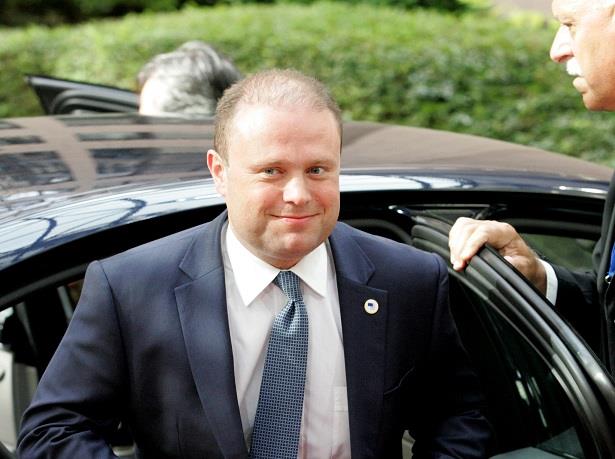
Malta to contribute financially to help with EU migration crisis
The European Council has agreed to send €1bn in aid for international agencies helping refugees in camps near their home countries.
Earlier in the evening, the European Commission had recommended that €1bn be available for future refugee related actions in 2015-2016. They also called for states to commit to restore funding for food via the World Food Programme, match EU budget contributions to the EU Regional Trust Fund in response to the Syrian crisis, match the €1.8bn of the EU Trust Fund for stability and addressing root causes of irregular migration and displaced persons in Africa, make immediate use of €300 million in pre-financing resources being transferred to member states to implement national programmes under the Asylum, Migration and Integration Fund and the Internal Security Fund-Borders, as well as examine the use of their structural funds programmes. Earlier, European Parliament President Martin Schulz mentioned the need for EU countries to help with financing to fight against the crisis, backing the Commission.
Questioned as to whether the idea of countries providing such financial aid was discussed and whether Malta would contribute, Dr Muscat said that every country is expected to help in some way or another, and that Malta is examining the amount it can give. “We cannot, however, be expected to contribute millions. We will give our fair share in a way that will not be a significant burden on our finances". He said he does not see problems on that.
He said that Malta will see how this can qualify as international development aid to meet the set targets in this regard.
Where will I raise a wall?
On Hungary’s wall, Dr Muscat mentioned that he asked EU leaders “Where will I raise the wall… in the middle of the sea? Along with Italian Prime Minister Renzi we told the EU leaders that we don’t have the luxury of raising a wall”.
He mentioned that he faces the decision either to let refugees drown or save their lives, and that the answer is obvious. “All other questions can be asked after they are saved”.
Turning to the returns policy, he said that while it has been months since a single refugee came to Malta by boat, and that Malta has sent economic migrants back, there are still a number of people who do not qualify for protection, yet the state has no idea where they are from. “Where will you return them to?” He also said that there are some countries who might not take them back. “This issue needs to be addressed”.
Today was more of a frank and honest discussion rather than a decisive one.
He mentioned that Turkey has indicated the need to discuss the migration issue, given that there are around two million refugees there. As for Lebanon, he said that if the situation goes south there, then the crisis will progress at a rapid pace.
A proposal for border guards
Libya was also on the agenda. The Prime Minister said that there was a proposal regarding EU border guards, however he does not agree with the idea. He explained that the frontiers should remain the competency of the respective country and not an EU police force with the ability to make decisions about a country’s borders. He said that if there is a call for help on the frontiers then the EU must be ready to help ‘beef up’ the frontier’s protection.
He said that today’s discussions set the scene for October’s summit and the Valletta summit following that. “The Valletta summit will not, however, come out with the silver bullet to solve the situation, but will create the basis for the management of the funds needed with regards to migration in a sustainable way”.
As for the targeting of smugglers, Dr Muscat said that EU countries are holding operations against smugglers that are seeing an effect in the Mediterranean and that countries are doing everything possible within the remit of the law.
As for the infringement procedures against Malta, he said that one is in its final stages of transposition and the other will soon be brought before cabinet. “In principle we agree but we cannot rush, as we might not have the logistics in place to enforce them”. He explained that he spoke to Commission President Junker and was told that the Commission wants all member states to fall in line on the application of directives. Dr Muscat also said that the deadline for the implementation of the two directives was last July. The Prime Minister stressed that he does not think there is a problem in transposing them and stressed that Malta was one of 19 countries that saw such infringements.
Malta had received a letter of formal notice for having failed to communicate national measures taken to fully transpose the revised Asylum Procedures Directive, and another for not having communicated the national measures taken to fully transpose the updated Reception Conditions Directive into law.
The EU leaders also agreed to set up "hotspots" by the end of November, where EU experts can register migrants more efficiently and identify those eligible for protection at a faster pace.
They also called for a renewed UN-led effort to bring an end to the war in Syria, the strengthening external borders through additional resources for Frontex and other agencies, increase in funding for the Emergency Trust Fund, assistance for the Western Balkans with handling migration flows, reinforced dialogue with Turkey and to assist Lebanon, Jordan and Turkey as well as other countries dealing with the Syrian refugee crisis.
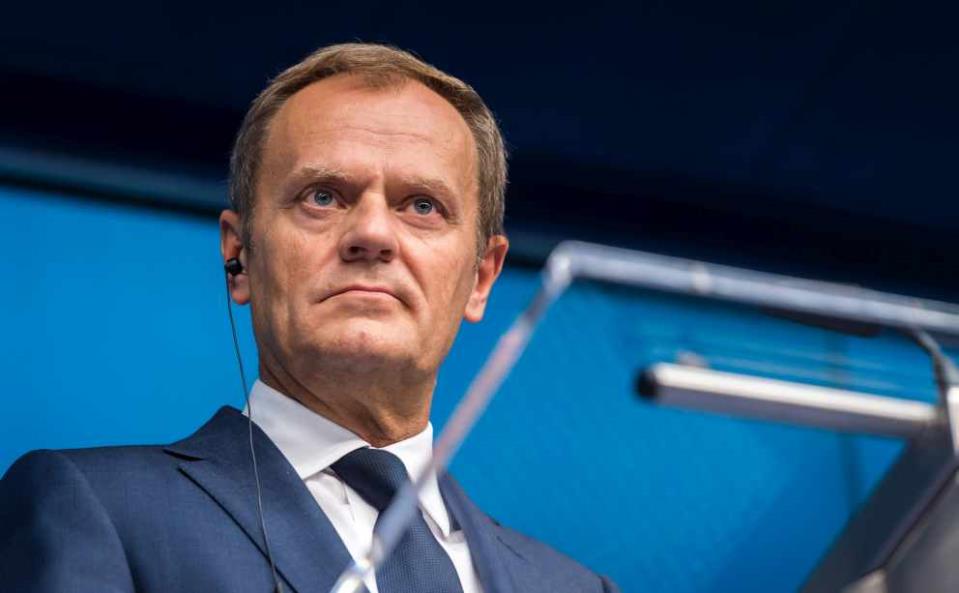
My objectives for this summit were to end the public finger pointing - Tusk
European Council President Donald Tusk, following the summit, said - "My objectives for this summit were to end the public finger pointing by having an honest discussion among leaders on the nature of the problem and possible solutions. Secondly to agree on short-term measures that need to be put in place before our regular European Council on migration in three weeks".
"Tonight our discussion was based on facts, not emotions. There are eight million displaced people in Syria, while about four million have fled to Syria's neighbours. We should be talking about millions of potential refugees trying to reach Europe from Syria alone. Not to mention Iraq, Afghanistan, Eritrea and other places. Recently I visited refugee camps in Turkey and Jordan and I heard only one message: we are determined to get to Europe. It is clear that the greatest tide of refugees and migrants is yet to come. Therefore we need to correct the policy of open doors and windows. Now the focus should be on the proper protection of our external borders and on external assistance to refugees and the countries in our neighbourhood".
"In light of this, leaders have agreed on increased help to Lebanon, Jordan, Turkey and other countries in the region. More assistance will be offered in exchange for reinforced cooperation. At least additional 1bn euro will be mobilized for help to the refugees in the region via the UNHCR and the World Food Programme. Here, let me thank those leaders who replied to my request of last Friday and have already offered fresh money to the World Food Programme".
"Leaders also agreed that the current chaos at our external borders must end. Proper management and control of our external borders is our common responsibility. It would be unfair to put all the burden on Italy or Greece or other countries. Therefore, we all agreed to offer help in every possible way, including cooperation on hotspots. Actually this is quite an important achievement because only a few days ago the topic of hotspots seemed very controversial. Today we had a good discussion and in the spirit of good cooperation all leaders agreed that hotspots will be set up by the end of November," he said
"The measures we have agreed today will not end the crisis. But they are all necessary steps in the right direction. We expect much work will already be done before we meet again at the October European Council. Tonight we have a common understanding that we cannot continue like we did before. Without changing the current paradigm the Schengen area will only exist in theory".
Yesterday, European Internal Ministers approved a plan to relocate an extra 120,000 migrants from Italy and Greece, however did not see consensus with four countries voting against. The vote still passed however dealt a blow to the European Union.
One of the countries that voted against, Slovakia, has threatened court action against the quotas for the distribution of the 120,000. "Slovak Prime Minister Robert Fico said - We will file a charge at the court in Luxembourg" and went on to say that the country will not implement the decision by Interior Ministers. He added that as long as he is Prime Minister, mandatory quotas will not be implemented on Slovak territory. This vote resulted in a divide with some member states from the rest of the EU, who were not all too happy with the decision.
Prior to the summit
European Council President Donald Tusk prior to the summit, said that conflicts in the Middle East will not end any time soon, and that there are 8 million displaced people in Syria. He said that after his trip to Turkey and other countries in the region, he said they are expecting the EU's help and said that it is likely more refugees will flow through those countries towards Europe, especially since most of them feel invited to Europe. In light of this the most urgent question we must ask ourselves tonight, is how to regain control of our external borders, otherwise it doesn't make any sense to speak of a common EU migration policy".
He said the future of Schengen is at stake and he will today propose a number of short-term measures, such as more help through the World Food Programme and the UNHCR in the region, more help for EU front-line states and immediate strengthening of external border controls through Europol, Frontex and others. "There measures will not end the crisis but they are necessary steps in the right direction. Today we must prepare a concrete plan in place of the chaos we have witnessed these last weeks. It must be a common plan with no one outside it".
Other tensions recently apparent within the EU-28 might also be discussed, such as those between Hungary and its neighbours, including Croatia which has been allowing migrants through and allegedly using busses to take migrants to the Hungarian border.
Croatia has also blocked a highway from Serbia, a non-EU state, and Serbia has said it would consider retaliating politically and economically. Croatia did this in retaliation to the heavy flow of migrants passing through Serbia into Croatia. Despite this, as well as the tension between the states and Slovakia, sources have said that the general feeling within the room is quite peaceful.
Ahead of the summit, European Commission President Jean Claude Juncker has set out key points for further funding measures.
These are - €100m more for emergency assistance for the most affected Members States; €600m more for the EU agencies in 2016; €200m more for the World Food Program in 2015; €300 million more for humanitarian aid in 2016; Up to €1bn for Turkey and € 700 million for Serbia and the former Yugoslav Republic of Macedonia.
UNHCR does not have enough funds to deal with the current crisis
EU Parliament President Martin Schulz, speaking during a press conference, said the UNHCR has made it clear that they do not have enough money to deal with the crisis at the moment, and if basic food and water are not given to refugees in Jordan, then it is hardly surprising that they would attempt to cross the European borders.
He said that closing internal borders is not a solution, but there is a need to register people crossing the external borders. He mentioned the need for a fair distribution of refugees and stabilise the external borders.
“The idea of closing internal borders may sound good but it is not practical”.
President Schulz welcomed the adoption of the second emergency plan by the Home Affairs Council on Tuesday (22/09) to relocate 120.000 refugees as already approved by Parliament last Thursday. The next step should be a binding permanent relocation mechanism for all Member States: "To distribute a few hundred thousand among 507 million in 28 countries should not pose a problem. This is neither a “German problem”, nor a “Greek problem” nor a “Hungarian problem” - it is our common task."
He told the European Council that when decisions are taken, they must be binding. “The Parliament wants to see binding solutions,” adding that this is what the Council should strive for.
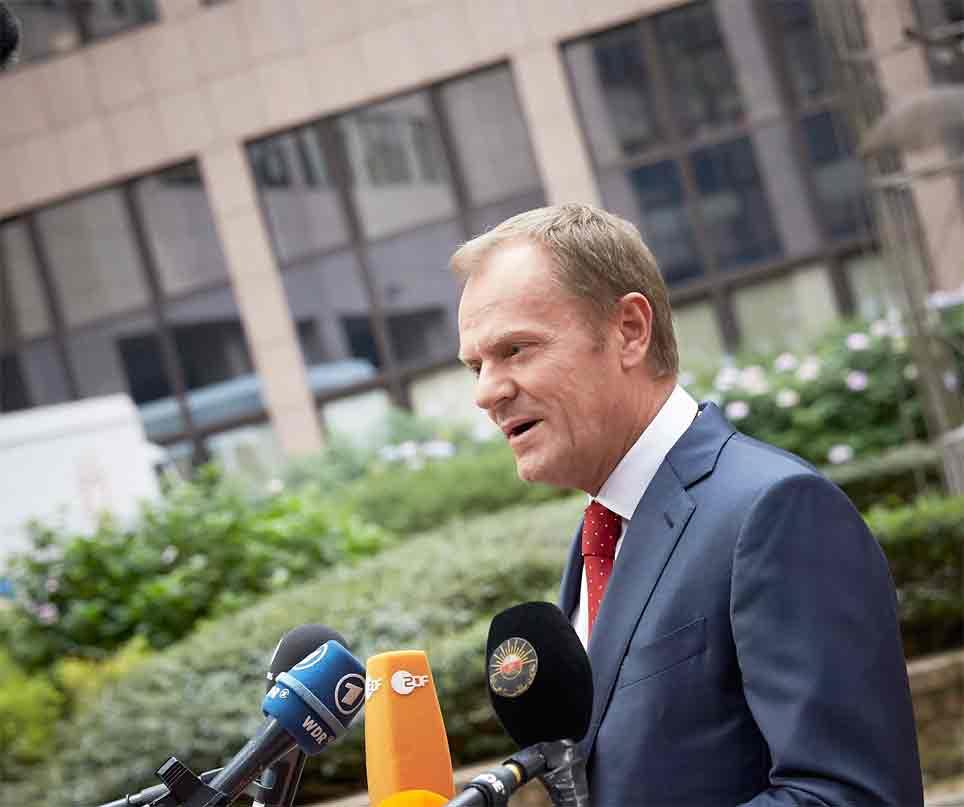
The EPP have adopted a common position on refugee crisis
Earlier in the day, the EPP party within the European Parliament held a summit of its own, where heads of government as well as political leaders from member states aligned with the party met ahead of this evening's summit.
"The flow of refugees and economic migrants arriving in the EU, mostly from Syria, Libya, Yemen, Iraq, Afghanistan, Pakistan, Nigeria, Eritrea, Somalia and the Horn of Africa, has reached an unprecedented scale, challenging our capacity to cope. According to the UNHCR, more than 50 million people are fleeing war and conflicts worldwide and many more are looking for a better future. Europe cannot solve these problems alone but only together with all our partners worldwide," an EPP statement read.
"We need a common European approach. Therefore, the EPP calls on the full implementation of the existing minimum standards of the Asylum Acquis. Furthermore the EU must step up the EU's external border control, to prevent illegal crossing. There is also a need to protect our citizens from migration flows being infiltrated by jihadist terrorists. The EPP insists that those who don't qualify for international protection be returned swiftly. We deplore the current lack of effective enforcement of return decisions. We should ensure that the right to seek asylum is respected for those in need of protection, while swift and effective return and readmission measures for those who do not qualify for protection are put in place".
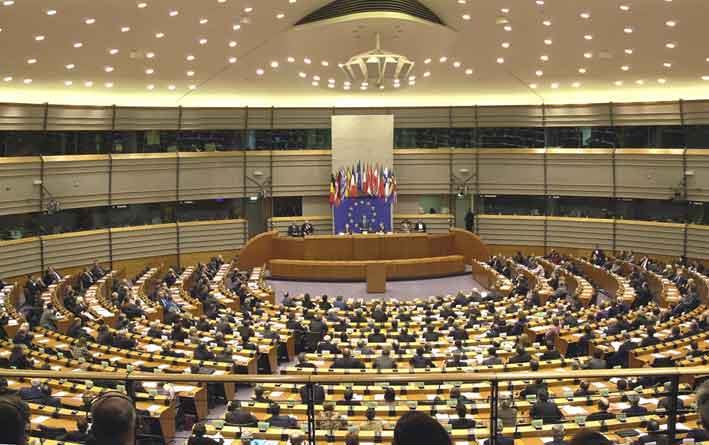
Their position called for the tackling of root causes of migration flows, increasing UNHCR funding, offering safety and humanitarian assistance as close as possible to the places of origin by creating safe zones and reception and accommodation centres in third countries where the asylum procedures can already be initiated and encouraging the European Commission and Member States to quickly implement "hotspot" facilities / processing centres in frontline Member States and in the Western Balkans countries.
The EPP also called for a reform the European Asylum System, in view of common and faster asylum procedures, to foster a clear and common return policy and to improve reception conditions for asylum seekers with the support of the European Asylum Support Office (EASO), Frontex and other relevant EU agencies.
They mentioned the need to reinforce the external borders of the EU by stepping up border controls both at sea and on land in the Southern Mediterranean, the Aegean Sea and along the so-called "Balkan route". "The uncontrolled influx of migrants into the EU needs to be stopped. We call on EU Member States to take their obligation to protect the EU's external borders seriously. The EU needs to support Member States in this effort by providing financial help, but also staff and equipment. We remain committed to open borders within the Schengen area, and therefore the EU's external borders must be secured in a more effective way".
In this regard, they mentioned the need to further enhance police cooperation and support for local authorities along the smuggling routes in the Western Balkans.
The fight against human traffickers and their organised criminal networks needs the utmost attention, the EPP said, adding that rapid action as well as a long-term, comprehensive and concrete action plans must be set up in close cooperation with third countries, by targeting priority countries and routes.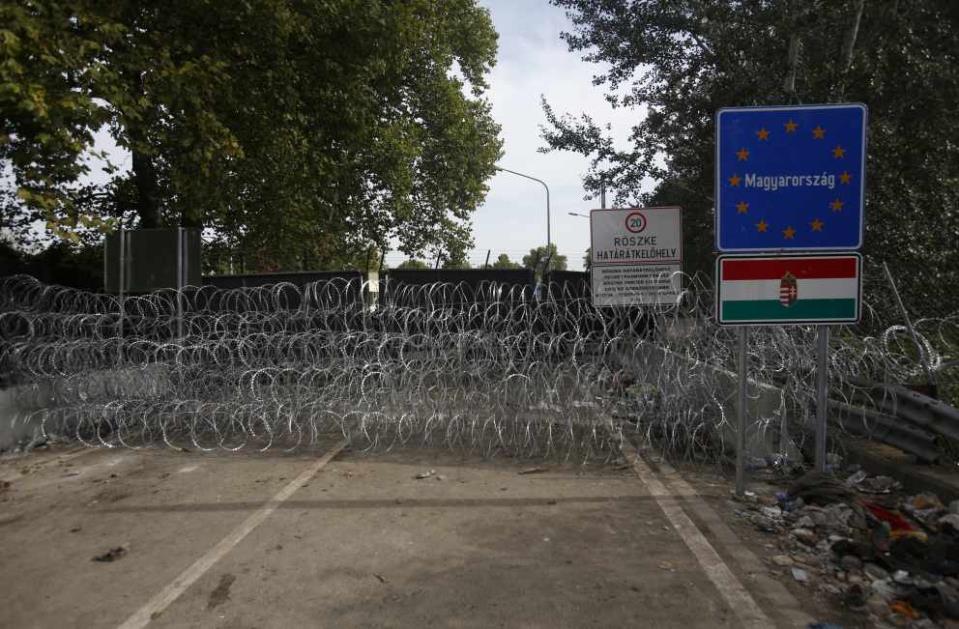
The EPP highlighted the need to reinforce cooperation with countries of origin and transit regarding irregular migrants, human trafficking and return procedures, including through EU development aid which should be linked to the cooperation of countries.
As for Africa, they mentioned the need for a new approach, comprising better opportunities for trade and development.
They also called on the Council to establish a common European list of safe countries of origin and transit, which will relieve asylum systems and facilitate effective return. "This is an important prerequisite in order to focus our asylum and reception capacities on those truly in need of protection".