Prime Minister Joseph Muscat said this evening that the budget presented by the government was a consistent one that encouraged economic growth while also promoting social justice.
Addressing a press conference in front of the Auberge de Castille, Dr Muscat said the budget was another step in implementing its roadmap. “There were no bumps and shocks, only uniform measures and continuation because we have a clear economic plan that is giving results.”
Dr Muscat said the reduction in energy tariffs would mean that families and businesses would save some €80 million, which would translate into more money in their pockets. This measure alone would amount to four times the cost of the main budget measures.
“The reduction in income tax has now reached all levels of society. We have thought of all those who had not benefitted from this measure before,” Dr Muscat said. The extension of the exemption on stamp duty for first time buyers was another social measure.
“For the first time in almost 20 years pensions have been increased. We helped the most vulnerable, those who thought that no one was listening to them. We have helped 12,000 pensioners get out of poverty or at least move a step closer to that goal.”
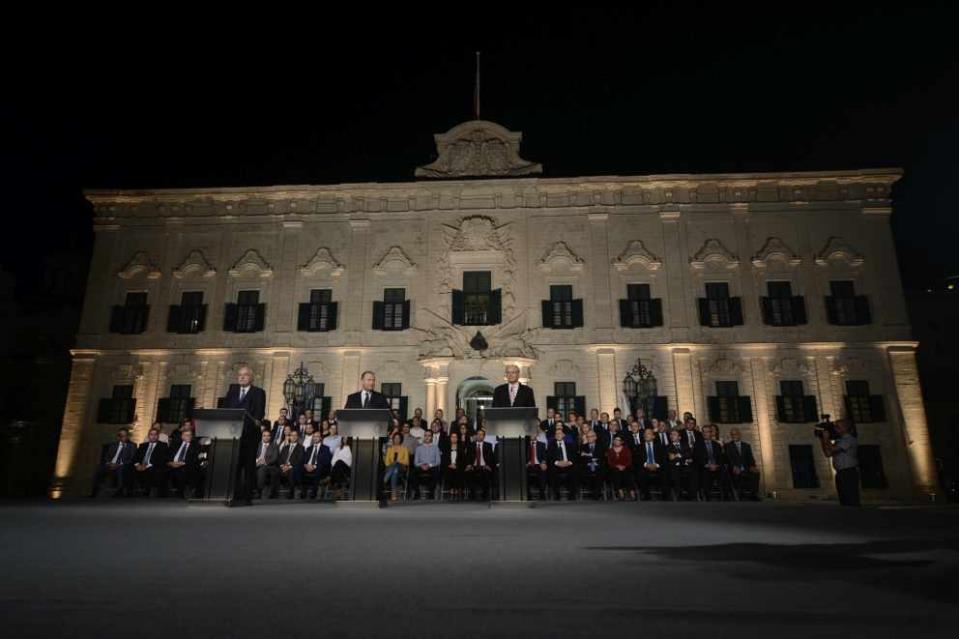
The Prime Minister said the government was creating 24 jobs a month for people with disabilities. He also spoke of the measure aimed at reducing abandoned property. The government was sending out a signal that the current situation was no longer acceptable, he said.
People were also given incentive to buy properties in Urban Conservation Areas by cutting stamp duty in half for everyone, not just first time buyers. Other measures encouraged people to scrap their old cars and purchase electric or environmentally friendly vehicles. Measures were also introduced to encourage more environmentally friendly ways of caring for the environment.
Dr Muscat spoke about cultural projects, such as the restoration of the lower part of St Elmo. He said measures were introduced to make it easier for smaller companies to compete for government tenders. The government also announced road infrastructure upgrades, a new ITS in Smart City which would cost some €65 million, and the restructuring of the Mriehel industrial estate.
It had also reduced the waiting times for elderly people to go into state homes and out of stock medicines. The ageing population, he said, was a challenge for the future generation. “We have sown the seeds for a solution. The government would be paying half the minimum wage of carers employed by people to keep their elderly relatives at home. That would cost €5,000 when taking care of them at a government home would cost €18,000 a year. It makes commercial sense,” Dr Muscat said.
Deputy PM Louis Grech said this was a balanced budget that incentivises economic growth. The budget is a reflection of this government’s policy to encourage growth and distribute wealth fairly. It shows that the social dimension is important for us as well. Our aim is not only to take our economy forward but to address poverty, take care of the environment and improve health services. It is a credible budget that shows we have a sustainable future for our country, he said.
Finance Minister Edward Scicluna said the government he formed part of had understood how important fiscal governance was. The government was using its budgets to turn the country’s direction around and was hopeful that it would reach its aims.
Accommodation tax also applies to Maltese staying in Gozo
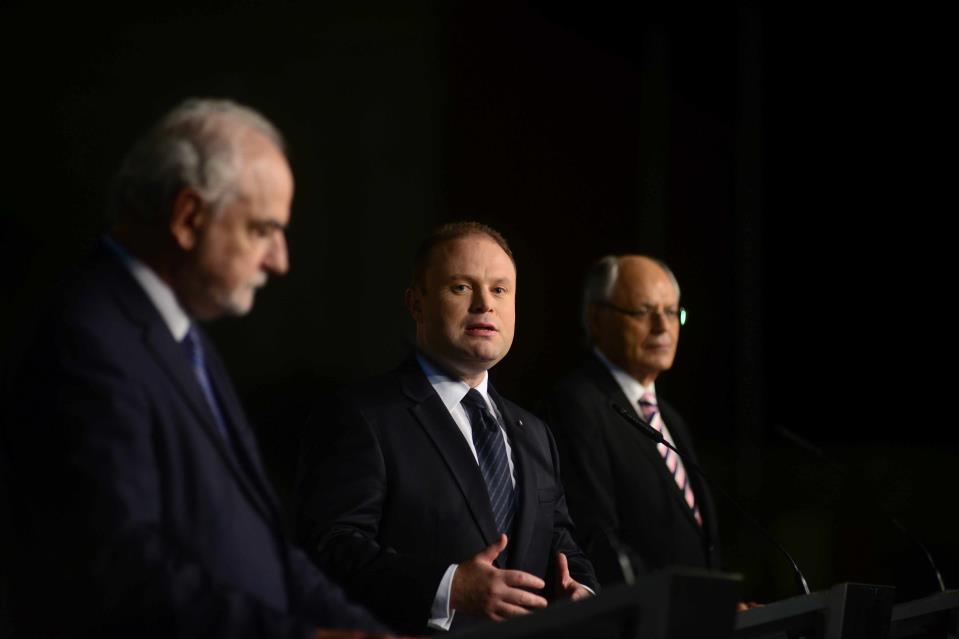
Fielding questions, Dr Muscat confirmed that the 50 cent environmental contribution would also apply to Maltese people staying at Gozo accommodation. “We are speaking to hoteliers about the best way to collect the tax. All those who spend time in accommodation will have to pay the tax, even Maltese who go to Gozo. We cannot discriminate as we are subject to EU law. Much of the money will not come from Maltese visiting Gozo but from the two million tourists who come to Malta. The funds will be used to take care of our environment."
Asked why fuel prices would go down in January and not now, Dr Muscat said that during previous administrations fuel prices would go up even when international oil prices went down. This government has consistently lowered the prices and kept them stable, with no shocks to consumers. Dr Muscat also said he was giving a personal opinion, in reply to Opposition Leader Simon Busuttil, when he said lower fuel prices would encourage people to use their cars.
Asked why the new ITS campus would be built far in the south and not somewhere central, Dr Muscat said not all students would be coming from the north. The government, he said, was refraining from building the Smart City link road until the complex was more heavily populated.
Asked about the two-year timeframe for the construction of the Kappara junction, Dr Muscat said the timeline for the project was long but also tight. “Some property had to be requisitioned and will be demolished to make way for certain flyovers.” Dr Muscat said he had spoken to Transport Malta to determine if works could be done at night, also conscious of the fact that people lived nearby. “A balance has to be found. Marsa is also a big project management challenge. The alternative is to do nothing. No one will congratulate you once the project is underway. The traffic situation is not sustainable. We know that it will create an inconvenience but it has to be done because the situation has to be addressed.”
On the Gozo tunnel link, Dr Muscat said the government would be publishing the feasibility study carried out by Gordon Cordina soon. “What we found was a rejected application to conduct a study. The government managed to obtain a study, for free, on the feasibility of a bridge connection. TM then concluded that a tunnel would be more feasible than a bridge and the rate of return, if a certain technology was used, would be attractive for the private sector. The government would also have to decide whether to have a stake in the project or not. The next step is a geological study that will involve some drilling. The main issue is not the boring of the tunnel itself – it would not take that long – the most laborious aspect is the applications and the studies needed.”
Video: Paul Jones, Photos: Jonathan Borg