Prime Minister Joseph Muscat said this afternoon that he was hopeful that a deal would be reached in the so called ‘Brexit’ Summit in Brussels. He described the UK’s demands as “sensible” and added that the Maltese government would support the demands "if properly revised."
Asked if any of the UK’s demands were of concern to Malta, Dr Muscat said this is not an issue of concerns but of sensible reform that would bring the EU closer to the member states. “We look forward to a better single market, more say for the EU member states and no abuse of social benefits. The important point is that this is not just a deal for Britain but a deal for all EU countries that are in the same circumstances, which may even include Malta.”

Dr Muscat was speaking to journalists as he arrived at the European Council in Brussels for today’s summit, which will deal with both migration and, more importantly, the future of Britain in the EU.
British PM David Cameron is making his final pitch for an EU reform as his country heads towards a referendum which will determine whether Britain stays in the EU. The UK has raised four main areas of concern: Economic governance, Competitiveness, Sovereignty and Social Benefits and Free Movement. Simply put it wants national parliaments to have stronger powers to resist EU laws, to restrict benefits to migrant workers coming from other EU countries, not to be disadvantaged by the Eurozone and a reduction in bureaucracy which, it says, hampers competitiveness.
If he comes out of the summit with a deal in hand, Mr Cameron is expected to announce the in-out referendum for 23 June.
European Council President Donald Tusk wants leaders to reach a legally binding and irreversible agreement which addresses the UK concerns while being satisfactory for all other member states. The agreement cannot undermine the EU’s fundamental values.
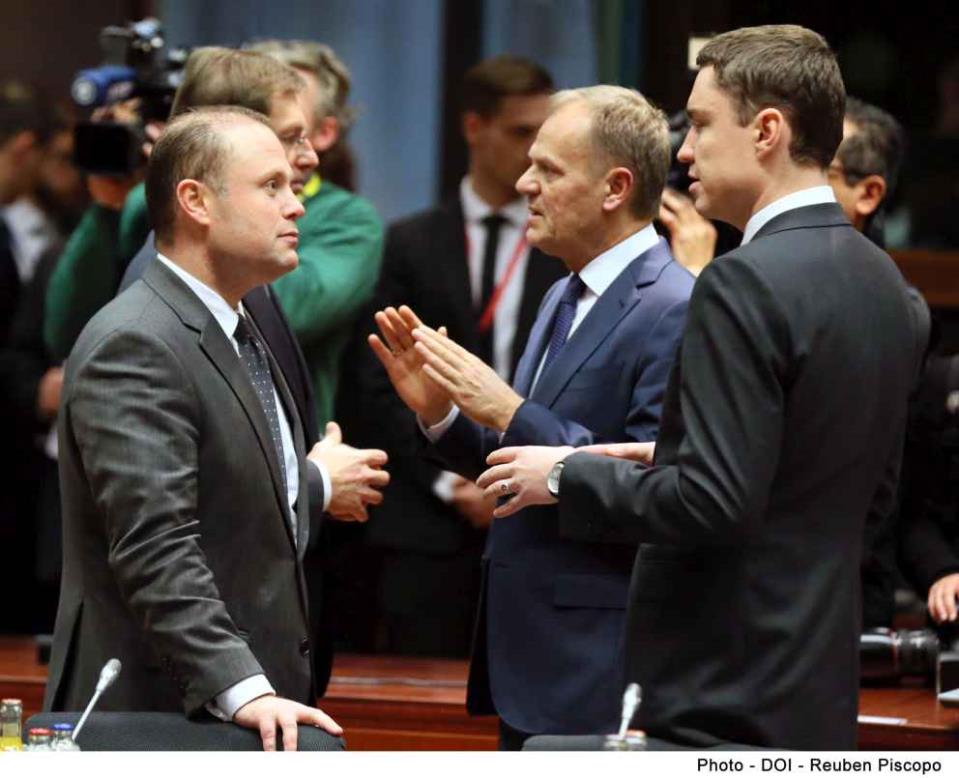
But in an invitation letter sent to the 28 heads of government, Mr Tusk stressed that there was still no guarantee that agreement would be reached. “This will be a crucial moment for the unity of our union,” he wrote, “and for future of the UK’s relations within Europe. We may differ on some political issues and I am full aware that it will be difficult to overcome them. Therefore I urge you to remain constructive. There will not be a better time for a compromise, It is our unity that gives us strength and we must not lose this. It would be a defeat both for the UK and the EU, but a geopolitical victory for those who seek to divide us.”
EU leaders will first be addressed by European Parliament President Martin Schulz. The UK issue will be addressed in the first working session but decisions will be taken on Friday, giving the leaders time to iron out the details and check with their respective governments overnight. Prime Minister Joseph Muscat is, in fact accompanied by Attorney General Peter Grech. In the meantime the leaders will discuss the migration issue over a working dinner this evening.
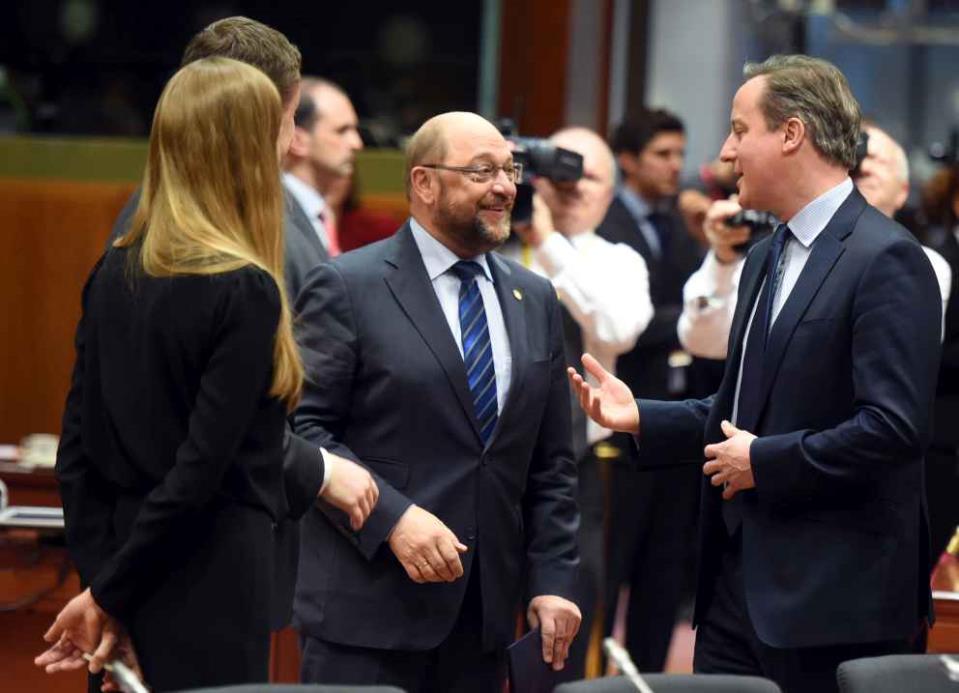
Addressing EU leaders at the start of the Summit, European Parliament President Martin Schulz said the UK brought a lot to the EU table. He said, however, that he had concerns about several of Cameron’s proposals. Ever-closer union was also about what member states can accomplish together and many EU states wanted to go further this way.
On the ‘multi-currency’ union Mr Cameron was demanding, Mr Schulz said the EU treaty made it “crystal clear” that the currency of the European Union was one: the euro. Changing this could have serious repercussions and ambiguities. Giving a de facto veto to any member state on the Eurozone issues was unacceptable, he said.
“Thirdly, the so called benefit debate. If freedom of movement creates problems on the ground then these must be addressed. But solutions cannot come at the price of discriminating against EU citizens.” The EP would fight against any form of discrimination, the German politician said.
The EP would be ready to discuss proposals that made the EU stronger, and more democratic and transparent. Mr Sculz warned, however, that this should not turn into an opportunity for other member states to “start rolling out lists of backdoor treaty changes.”
Opposition Leader Simon Busuttil said all efforts should be made to keep Britain in the EU as this was in the interest of both the UK and Malta. Malta and the UK often shared similar views on EU matters, he said. Speaking at a meeting of the European People's Party, Dr Busuttil said the interests of Maltese working and living in the UK must be safeguarded in any deal with the UK.