Making cardiopulmonary resuscitation (CPR) a compulsory part of the national curriculum, reinforcing it throughout life and improving public awareness could transform survival rates following cardiac arrest, Malta Resuscitation Council (MRC) chairperson Dr Tanya Esposito and vice-chairperson Dr Marius Caruana said.
Speaking in an interview with The Malta Independent on Sunday, the MRC said that it wants CPR to become compulsory in schools and repeatedly taught throughout life, arguing that responding to a cardiac arrest is a civic responsibility rather than a skill reserved only for healthcare professionals.
For Esposito and Caruana, one of the biggest misconceptions surrounding cardiopulmonary resuscitation is also one of the most dangerous.
They said that too many people still believe that saving somebody's life belongs solely to doctors, nurses or paramedics, when the reality is that the first person to determine whether somebody survives a cardiac arrest is often an ordinary member of the public who simply happens to be in the right place at the right time.
It is that belief which has driven much of the MRC's work over the past two decades.
Founded in 2004 and now operating under the umbrella of the European Resuscitation Council, the voluntary organisation trains healthcare professionals across every level of resuscitation while increasingly directing its efforts towards something equally important: ensuring members of the public know what to do before an ambulance arrives.
Esposito and Caruana argued that Malta had made significant progress in recent years, particularly through schools and public awareness campaigns, but maintained that the country still needed to shift its mindset if it wanted to improve survival rates following cardiac arrest.
"We have to move away from this idea that this is something for doctors and nurses," Caruana said.
"Helping another person in need is part of your civic duty. This needs to be taught, and it's a part of the education as much as the ABC that we learn," he added.
While the council continues to organise advanced life support, trauma, neonatal, paediatric and instructor courses for doctors, nurses and other healthcare professionals, the organisation has steadily expanded its work within the community, particularly through collaborations with schools, sporting organisations and public awareness initiatives.
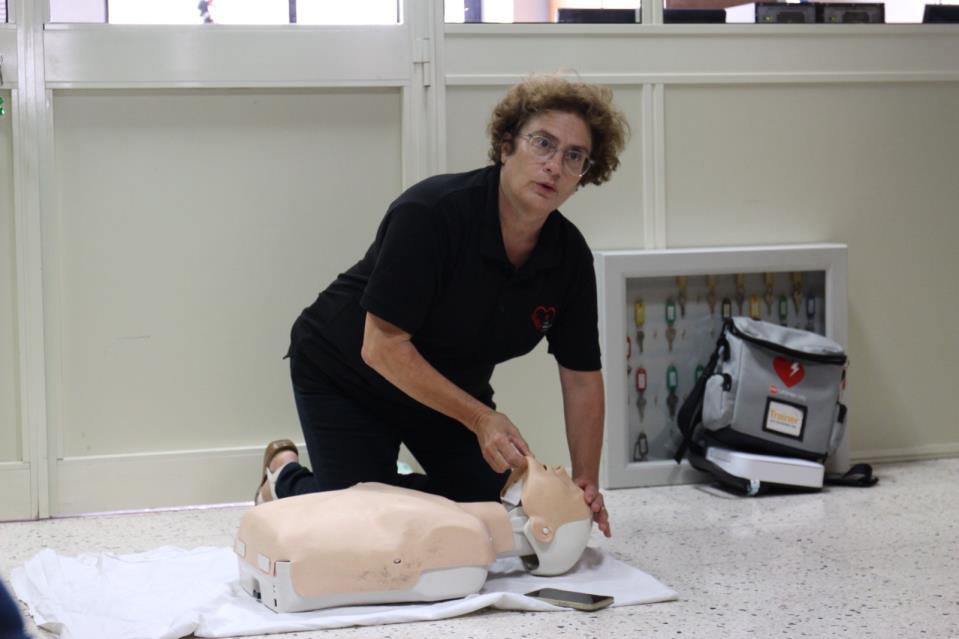
Esposito explained that the council's objective was not to replace organisations providing general first-aid training - such as the Malta Red Cross - but to ensure that as many people as possible acquired basic life support skills and that those skills were taught according to European standards.
"Our aim is to teach as much as possible," she said.
One of the council's longest-running initiatives has been its collaboration with the Education Department, through which teachers have been trained to deliver basic life support lessons themselves.
More recently, that programme has expanded to include paediatric basic life support, reflecting the likelihood that teachers may be among the first to respond should a child suffer a medical emergency.
The long-term ambition, however, extends far beyond teachers.
Several years ago, discussions began with the Education Department on ensuring every middle-school student received CPR training.
Around 3,000 students are now completing basic life support instruction every year, bringing Malta close to that objective, but Esposito said progress still depended largely on individual schools because CPR remained outside the national curriculum.
"If it was on the national curriculum, it would be enforced. At the moment, it depends on whether the head of the school thinks it's worthwhile," she said.
However, the council said that introducing CPR at secondary school should not represent the beginning of children's exposure to emergency response, but rather build on lessons introduced much earlier.
Through educational initiatives aimed at primary schools, children were already being taught how to recognise when somebody was not breathing and how to call 112, helping remove the fear surrounding emergencies long before they were physically capable of performing effective chest compressions.
Caruana said early exposure was essential because children naturally approached learning without the hesitation often seen in adults.
"We know very well that in cases of cardiac arrest, time is life. It is proven, and statistics show, that northern countries which have introduced this in their curriculum have much higher cardiac arrest survival. Why? Because people don't freeze. They don't have any inhibition. They just act," he said.
Esposito compared CPR to learning how to drive, explaining that both initially required concentration before eventually becoming automatic through repetition.
"The more you repeat it, the more it becomes second nature. In an emergency, it has to become something that is so instinctive that you don't even think about it," she added.
Teaching children also created an unexpected ripple effect within families, she said, as pupils often returned home eager to demonstrate what they had learnt.
"If the child learns, goes home to their parents, and says, 'mum, I've learned how to do this today'. Without wanting to, that child is actually teaching the parents."
The same pattern was regularly observed during community events organised by the council, where children enthusiastically volunteered to practise CPR while instructors simultaneously engaged parents standing nearby, encouraging them to learn alongside their sons and daughters.
For Caruana, that gradual cultural shift is ultimately what the council hoped to achieve.
He said that if CPR became a basic life skill rather than one associated solely with hospitals, it would help create what he described as "a national safety net", where people understood they had both the ability and the responsibility to act when someone nearby suffered a cardiac arrest. While making CPR part of the national curriculum is one of the council's principal objectives, Esposito and Caruana stressed that education alone would not be enough.
Instead, they envisage a system in which people encountered basic life support repeatedly throughout their lives, allowing knowledge to remain fresh and confidence to grow through repetition, rather than fade with time.
Caruana said that training should not end once students leave school but should instead become part of other important milestones, including obtaining a driving licence and workplace health and safety programmes.
"Finding ways to ensure people continue receiving training throughout their lives, starting from school, is essential. Such training should be made compulsory and incorporated into the curriculum. Then there's the driving licence, because so many people do the driving licence. Then it could be at your workplace where you get further exposure as part of your health and safety training," he said.
Esposito agreed that repeated exposure was essential, saying confidence did not come simply from attending one course but from practising the same skill over time.
They said that the council had already begun discussions on incorporating CPR more closely into the driving licence process, although Esposito acknowledged that turning such proposals into reality would require legislation, sufficient instructors and agreement between various stakeholders.
"It's not something that's going to come through straight off. You need to have enough trainers. The standards need to be maintained and the teachers need to have the required training."
For the council, however, improving survival rates also depended on changing how people reacted when confronted with a real emergency.
Caruana explained that many people instinctively believed the most important objective was to restart the heart, when preserving oxygen to the brain until professional medical assistance arrived is equally important.
"Our aim is to restart the heart, but our aim also is to preserve oxygenation to the brain because we want to bring that person back as intact as possible from before the cardiac arrest. If I'm brought back, I want to recognise my family, I want to recognise myself, and I want to be as independent as I was before," he said.
He said members of the public often underestimated how much they could do during those first critical minutes before an ambulance reached the scene.
"If we don't do that, for every minute that passes without doing anything, we are reducing the chance of getting that person back by 10%," he said.
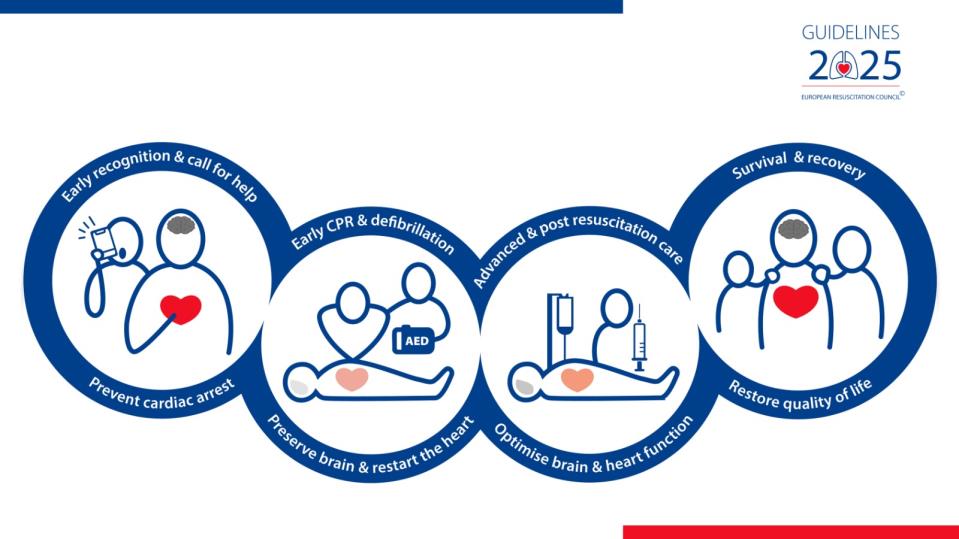
Caruana pointed to the internationally-recognised "chain of survival", noting that the first stages depended not on healthcare professionals, but on whoever happened to be present when somebody collapsed.
"Two out of four is not the doctor, not the nurse, not the consultant. It is the person who is there at the moment," Caruana said, describing the CPR Guidelines.
Esposito said one of the greatest barriers preventing people from intervening remained fear, whether that stemmed from a lack of knowledge, a lack of confidence or concerns about doing something incorrectly.
"I think it's all three. It is the fear of, 'what if I do something wrong and I make it worse?' But in truth, the patient has already died - it cannot be worse than that," Esposito said.
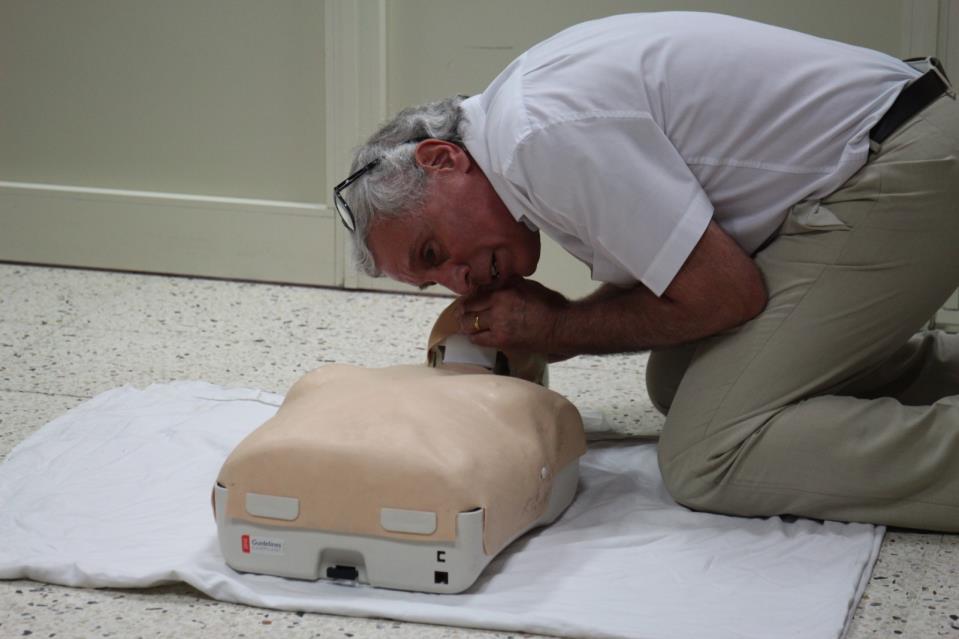
Although rescue breaths continued to play an important role in particular situations, especially involving children or drowning victims, Esposito stressed that uncertainty over mouth-to-mouth resuscitation should never prevent somebody from acting.
"Even if you don't give breaths, at least you do the chest compressions. Chest compressions on their own will get some blood going to the brain, will help to make sure that that person survives and goes home to their family, because that's what this is all about," she said.
Esposito added that many people also remained unaware that Malta's Good Samaritan legislation protected individuals who attempted to assist someone in good faith, adding that greater awareness of those legal protections as another important step towards encouraging intervention.
Reflecting on recent tragedies that had reignited public discussion about CPR, Caruana warned that public attention often faded within weeks before meaningful action could be taken.
"Every single time there is a tragedy, we talk a lot about it, then a couple of weeks pass, and it just fizzles away. We are at a crossroads here, and we need to act," he said.
Esposito echoed that sentiment, adding that the country could no longer afford to limit itself to discussing reform whenever a tragedy occurred.
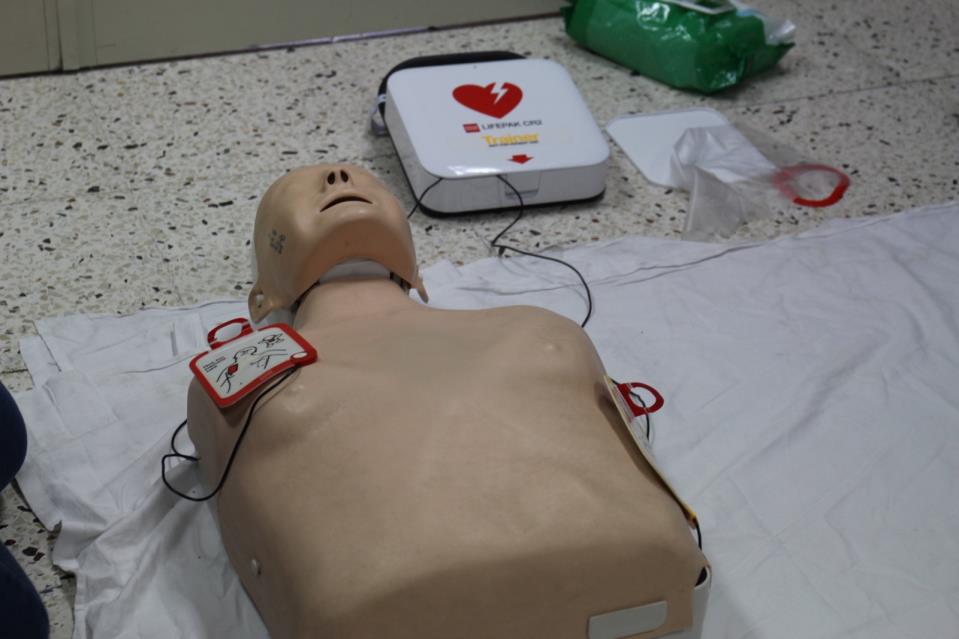
"We need to move forward. We can't just keep talking about it. If this could give the push to put it on the national curriculum, it would be great. If this could give the push to ensure that AEDs are all registered so that they're available, that would also be great."
The council also said that it is working with the European Resuscitation Council to establish a support network for both survivors of cardiac arrest and the relatives or bystanders who had performed CPR, recognising that the psychological impact often continued long after the emergency itself had ended.
"It would really be great if people want to come for support," Esposito said.
Caruana added that survivors were often expected simply to be grateful they were alive, while little attention is given to the emotional trauma that followed.
"The trauma actually starts afterwards," he said.
Esposito and Caruana said that improving Malta's response to cardiac arrest ultimately requires far more than additional legislation or awareness campaigns.
It requires embedding CPR into everyday life so thoroughly that helping somebody in those crucial first minutes becomes an instinct rather than an exception, creating a society in which saving a life is understood not as a medical profession's responsibility alone, but as everyone's civic duty, the council said.