Jason Azzopardi has been found not guilty of criminal defamation.
The criminal defamation case was filed by former police chief Peter Paul Zammit against Nationalist MP Jason Azzopardi.
It revolved around comments made by Dr Azzopardi in a press conference in July 2015, based on a Times report on the conclusions of an inquiry by the Data Protection Commissioner.
The DPC had been called to investigate a breach of confidential data from the police HQ after the personal file of a police inspector was leaked to Malta Today and later used by its managing editor in libel proceedings. Data Protection Commissioner Saviour Cachia had found that Mr Zammit, as police commissioner, was responsible for any breaches of data. The file had been leaked shortly after he had requested it to be taken to his office.
The police force had been fined €500 but the DPC had not named Mr Zammit as being personally responsible. The Times had incorrectly stated that Mr Zammit was mentioned in the report and the story was later withdrawn. However, Dr Azzopardi had, in the meantime, held a press conference based on the DPC conclusions as reported in the Times.
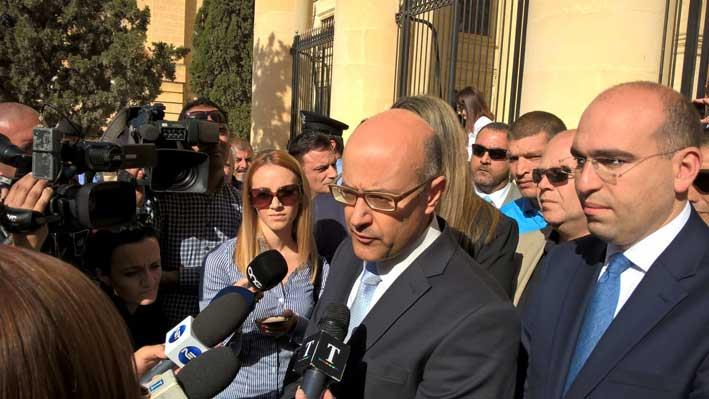
Magistrate Joe Mifsud said this morning that the court did not distinguish between one person and another but politicians and public officers, including police commissioners, were open to a higher degree of scrutiny.
The court noted that the incident was related to a press conference based on an incorrect newspaper report, which was later retracted. There had been efforts to find an amicable solution but ‘the politics of persuasion failed.’ The Magistrate noted that in the court hearing, Peter Paul Zammit said he did not wish to see Dr Azzopardi go to jail.
He said there were people who were quick to criticize the courts, as if they had become legal experts. The public was also misled when it was reported that this was a criminal libel case, instead of defamation. "Court cases are not decided by crowds in Republic Street, on a church parvis or at the grocer's," the Magistrate said.
Dr Mifsud also spoke at length about freedom of speech and expression. He pointed out that it would have made more sense for Dr Azzopardi to be prosecuted under the Press Act, instead of being accused of criminal defamation. (Criminal defamation can potentially carry a prison sentence. Criminal libel does not).
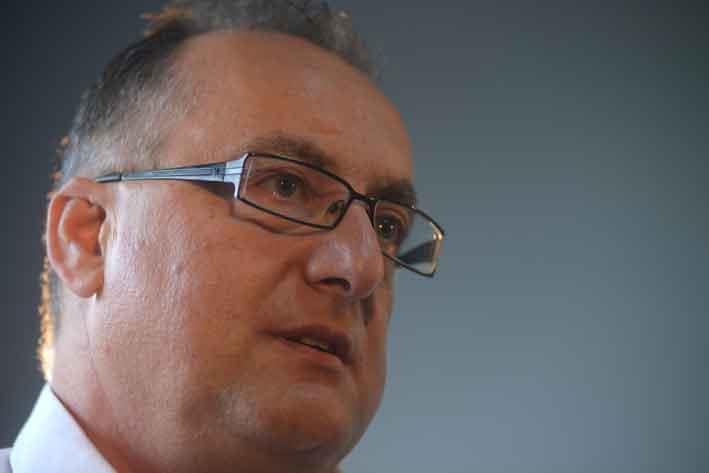
Dr Mifsud said the Data Protection Commissioner had condemned the police commissioner, as Data Controller, over the breach of sensitive data but had not named Mr Zammit in his report. The police force had to ensure that confidential files remained confidential and the data controller could face disciplinary or legal action when breaches occurred.
In its conclusions, the court noted that neither Mr Zammit nor the prosecution had produced the incorrect Times report as evidence. They failed to specify which parts of the press conference were defamatory. They did not transcribe the content of DVDs and say which part was defamatory. They, not the court, had to ask for certain evidence. In filing a court case in his capacity as a private citizen, Mr Zammit was obliged to present the evidence himself. He noted that the police had to obtain the footage from TVM and One.
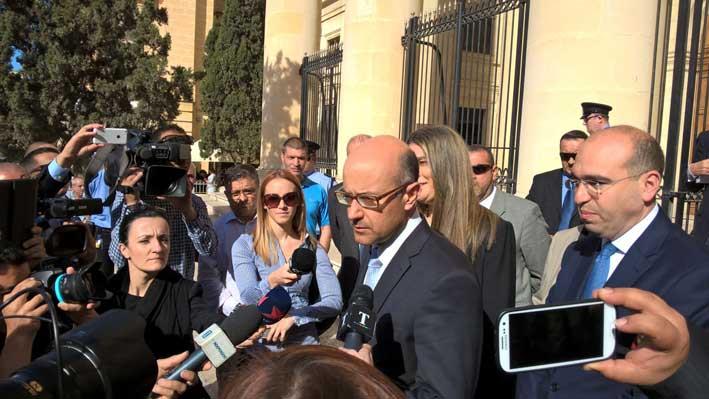
Dr Mifsud said the Police were not convinced about soundness of the case and had to rely on AG’s advice. If they were not convinced, they should have stopped there.
The accused could have waited for the official data protection commissioner report, instead of relying on a newspaper report, which turned out to be incorrect. This was happening more frequently.
Not all journalists who had experience reporting political affairs were knowledgeable with judicial matters. Journalists should be careful what they published, especially if they did not have the original reports in hand. Dr Mifsud appealed to newspaper editors to make sure that journalists were given training on different beats, including court.
The Magistrate concluded that the defamation charge could not be proven to the degree required by law. He therefore found that Dr Azzopardi was not guilty of the charge and acquitted him.
In his first comments following the judgment, Dr Azzopardi said it is clear that the PL's attempt to silence the opposition failed. The police should not have prosecuted the case, but it is evident that the government is trying to muzzle the opposition, such as is happening in the billboards case.
He thanked all his supporters and his lawyers. The case should have been made privately under the Press Act, as the court itself had said in its judgment. Let us now look beyond this,and concentrate on the enormous Panama scandal, Dr Azzopardi said.
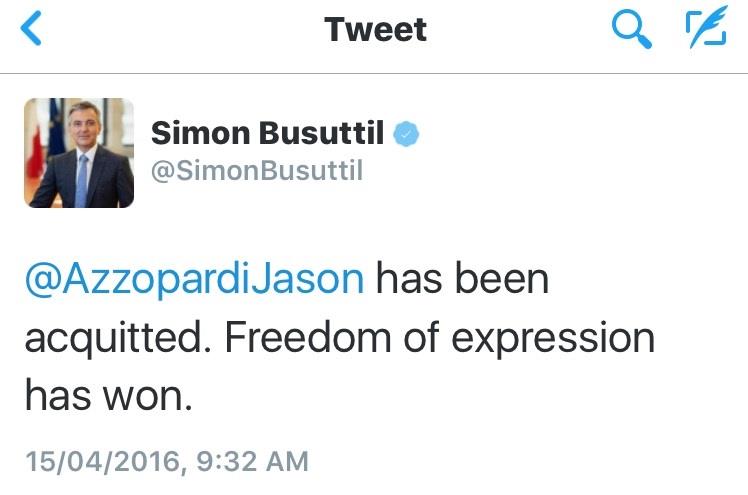
In a statement, the Nationalist Party said that the judgment is a victory for freedom of expression and a defeat for the politics of intimidation led by Joseph Muscat.
The PN said the accusations should never have been brought forward in this case, and this confirmed what the Opposition has been saying, that the case was submitted as an attempt to intimidate the Opposition.
These accusations were baseless and form part of a strategy by the government to muzzle the PN, including the attempt to bring down political billboards and the ridiculous decision by the chairman of the Briadcasting Authority who deemed the PN could not speak about the Panama scandal in a right of reply, the PN said.
In a statement, the government said the judgment shows that the law is equal to everyone.
The court did not need an Opposition demonstration for it to take an impartial decision.
The judgment also confirms that there is no attack on democracy or freedom of expression, the government said.
Head of the PN Delegation David Casa welcomed the judgement, saying “justice has prevailed”, he said.
Casa noted that the magistrate indicated that the charges should have never been brought. He stated that “it is of concern that this case went ahead despite the reluctance of the police and only after having relied on the guidance of the Attorney General”.
In a reference to comments made by S&D Group Chairman Gianni Pittella, MEP David Casa stated that “the seriousness of such events should not be underestimated. It would be advisable for colleagues here in Brussels to fully understand the actions of the political parties they chose to defend. The panama papers have demonstrated a staggering moral deficit at the highest levels of Malta’s government. It is the duty of every Member of the European Parliament to make absolutely clear that any efforts at silencing critics of the government are completely unacceptable in an EU Member State”.
Case hearing