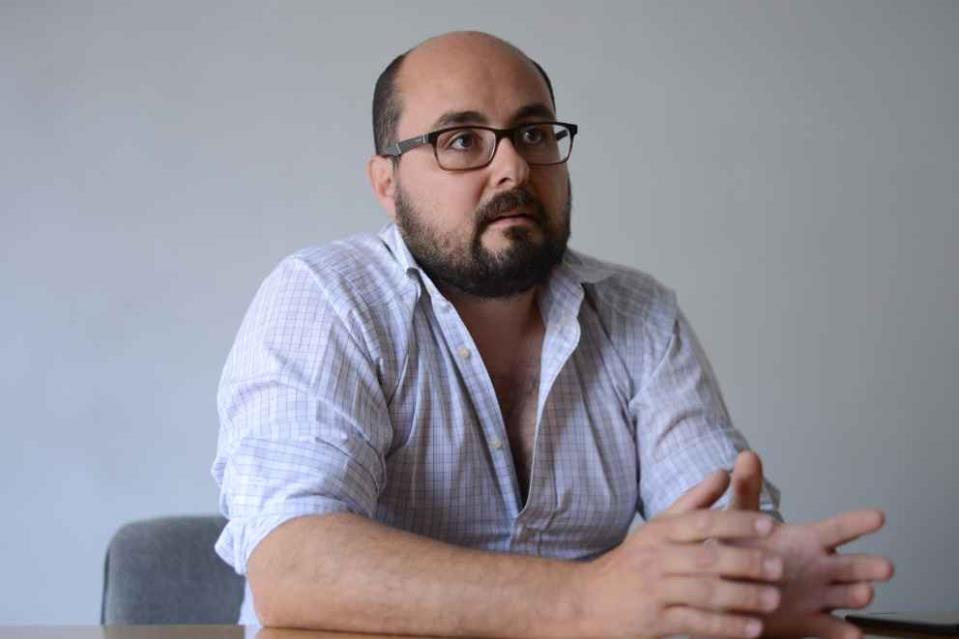
Drastic measures need to be taken before and after the proposed massive development of high-rise buildings and new hotels in the Paceville/St Julian’s area, according to planning consultant Bjorn Bonello.
These may include completely removing on-street parking along main public transport corridors in the area, replacing fixed timer traffic lights with roundabouts or at least vehicle activated ones, not allowing delivery vans to obstruct traffic and having the developers of the new structures create surplus parking spaces for public use.
While some of these measures might not prove to be too popular with motorists commuting to the area, Mr Bonello, who specialises in traffic planning and has 20 years’ experience in the field, believes they are necessary if Paceville is not to become a worse traffic gridlock than it already is.
Several developments will be taking place in the northern harbour area in the coming years. These include the development at Pender Gardens currently under construction, two towers and a hotel that will be built on the ITS site, the Corinthia 6-star development encompassing three hotels, another major development at Villa Rosa in St George’s Bay, the ongoing development at Fort Cambridge in Sliema and the Metropolis high-rise tower in Gzira. Another two high-rise projects came to light just two days ago. The massive projects could turn the streets of Sliema and St Julian’s into a motorist’s worst nightmare if tough decisions are not taken.
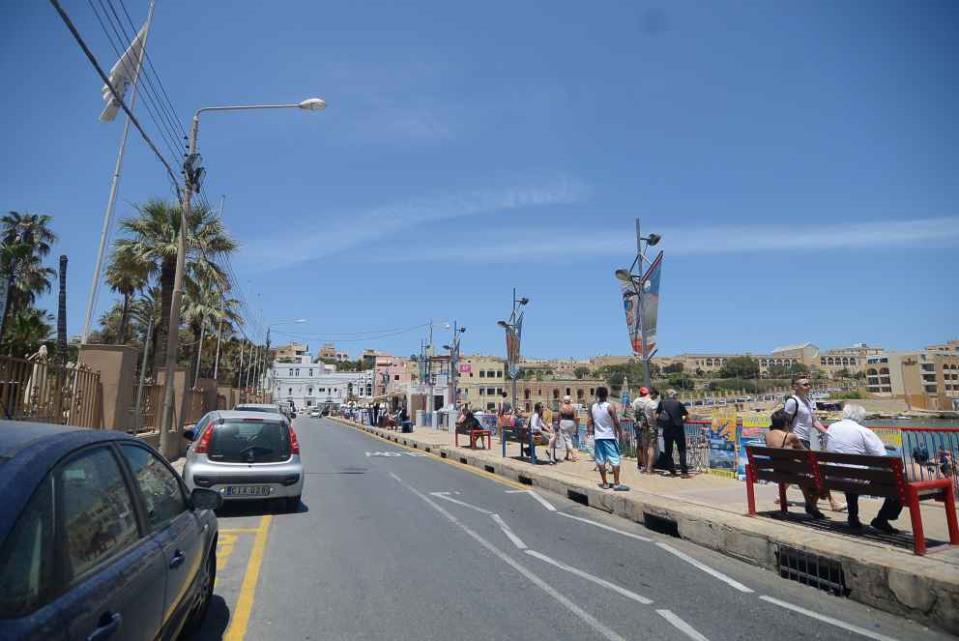
Like most other localities in Malta, Sliema, St Julian’s and Paceville are victims of failed and abused planning and traffic management policies. The issue, Mr Bonello explains, goes back decades.
“The structure plan of the early 90s was meant to deal with these very problems. We started off with a situation where you were not allowed to develop if you could not satisfy the parking demand on-site. Then the regulations were relaxed when the Commuted Payment Parking Scheme (CPPS) and Urban Improvement Fund (UIF) were created. This allowed developers to pay a contribution if they could not provide the required amount of parking spaces. The laws were further relaxed when it was decided that these developer contributions did not necessarily have to be used in the same locality or to alleviate traffic problems.”
Areas that had been earmarked for public parking in the North Harbours Local Plan (policies NHSJ02 and NHSJ03), have been compromised or not implemented as intended. The lack of parking in the area is not only reducing road capacity and creating bottlenecks but also threatening the very vitality of these localities.
Traffic, public transport strategies have failed
“There were other policy failures, including the allowed garages in residential areas to be turned into shops. The proliferation of these ‘local’ convenience shops, open until late, attract traffic, reduced parking facilities but also led to traffic congestion and bad neighbourliness. The planning authority gurus believed at the time of the conception of the ‘local shops’ policy that people would walk to these shops, instead of using their cars, and that deliveries would be carried out using small vans. Big mistake, they were probably too naïve at the time.
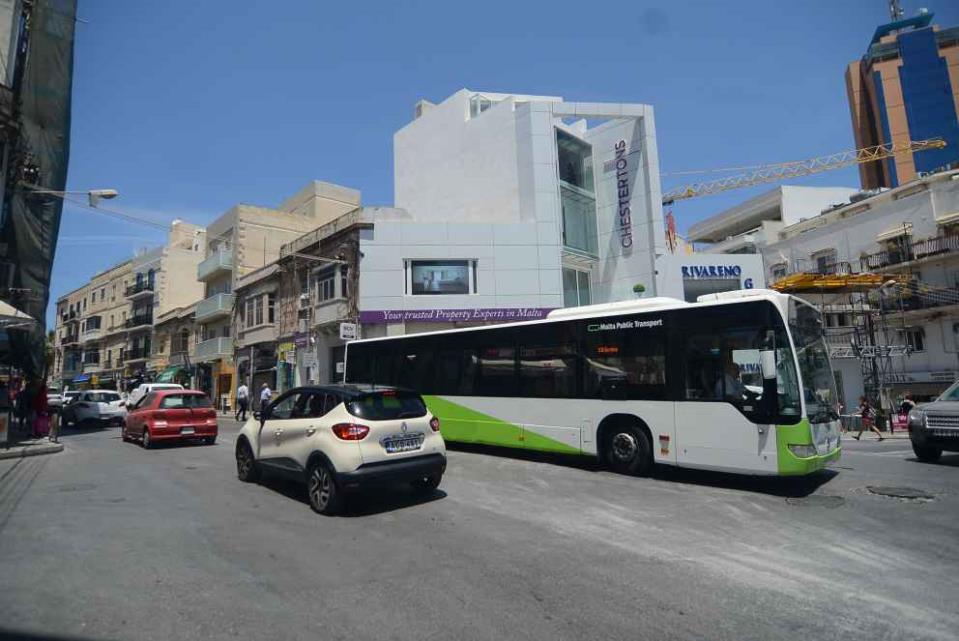
“We weakened the very same planning tools specifically conceived to avoid the problems we are facing today. We messed up our transport system because of greed and a laissez-faire attitude, because we wanted to maximise profit from every available space. We saw on-site parking spaces as a waste of space and hid behind conventional transport planning theory that envisages that if you provide less parking people will use public transport. Did that work?”
Mr Bonello says the ‘strategy’ to discourage people from using private cars and opt for public transport has failed miserably. “That system can only work when a good alternative is offered as part of a holistic strategy. We continue to throw money at the (public transport) problem without actually solving anything. There was no improvement in real terms and the increase in numbers does not mean much.”
Every street is a high street
Another problem is the fact that in Malta there is practically no distinction between residential and commercial areas. “Commercial areas should be centrally located or concentrated along major public transport routes, but instead our lack of decisiveness has led every road, residential or not, into a sort of high street in Malta. Such proliferation of uses has resulted in multiple car trips, with the latter rat running all over the island cruising to find parking and hampered by delivery trucks and double-parking.”
Mr Bonello says this is not only symptomatic of older localities, where development preceded planning regulations. “Take Swatar, a modern locality that was mostly developed according to modern planning policy regime. It is mostly a residential area but it still suffers from a lack of parking made worse by the overspill from fairly large commercial developments along Triq it-Torri.”
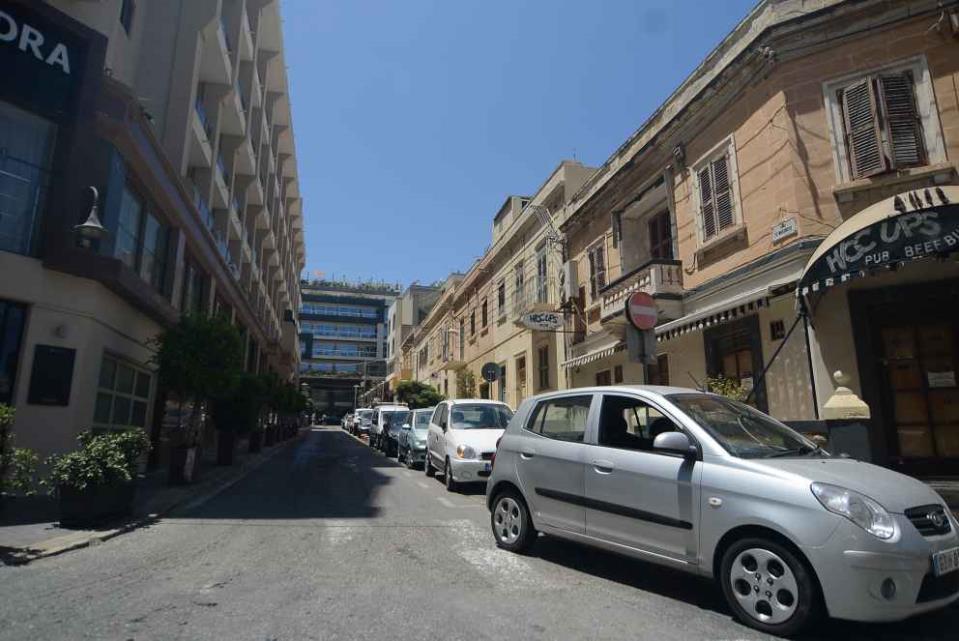
On street parking reduces road width and capacity, motorists looking for parking slow traffic and contribute to increased traffic congestion. The lack of straight roads and the inadequate road widths are also a plight for residential areas. Roads are usually between 8.2 and 8.6 metres and with parking allowed on both sides of the carriageway, there is hardly enough space left for two-way traffic. Large vehicles like buses and waste collection trucks, as well as double parking, further compound this problem.
Remove on-street parking on main roads
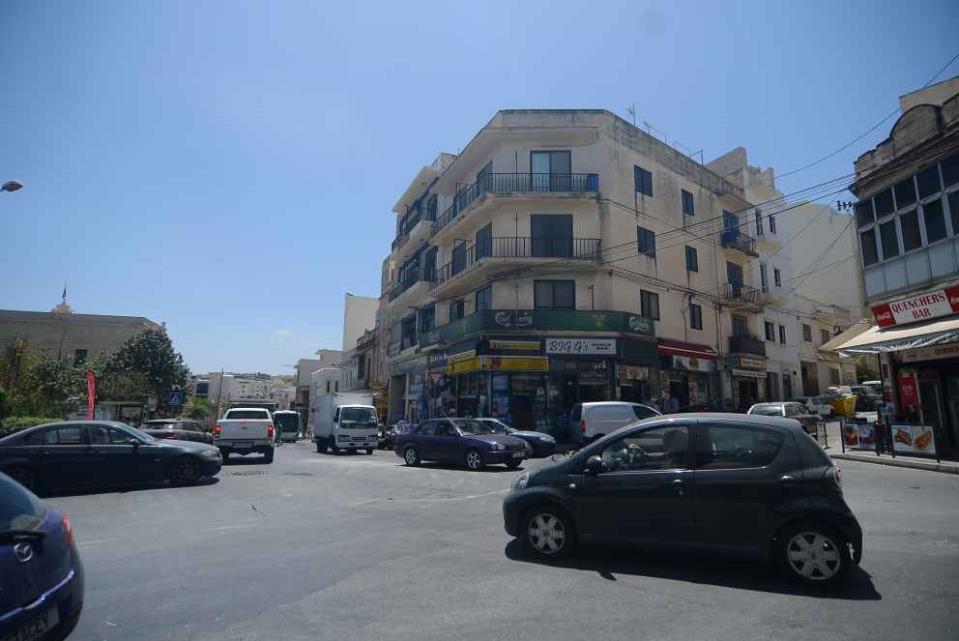
Mr Bonello points out that the Paceville/St Julian’s area enjoys high public transport patronage and good frequent service, but bus stops are often packed, thus buses stop for longer. Given that the lay-bys are not sufficiently set back, idle buses still obstruct traffic flow and sometimes queues of buses and tourist coaches tail back into a junction effectively blocking all other traffic movements. “This is a common sight at the junction between Triq San Gorg and Triq Ross. Keep in mind that the smallest of delays can have a huge ripple effect on traffic in this area.”
At the same junction, delivery trucks larger than the shops they supply, stop at corners to deliver supplies and, in doing so, restrict passage of traffic again contributing to traffic grinding down to a halt.”
Further up the road (near Melita Pharmacy), there is hardly enough space for buses to make the turn. “It is evident that on-street parking is reducing road width and contributing to traffic congestion. On-street parking is a problem. In my opinion on-street parking along the stretch of road from Triq Grot (PenderGardens) along Triq San Gorg up to the junction with Triq Borg Olivier (down in Spinola Bay) should be removed. Doing this would widen the road by at least two metres and this will increase road capacity and ease the free flow of buses and other traffic. Servicing of commercial developments can occur on specific day and off peak times.
Mr Bonello says that there are enough large developments (existing and future) within walking distance with enough surplus parking to more than adequately make up for lost on-street parking spaces. Through a holistic strategy and improved access to public transport, we would be in a position to offer commuters options, which they do not have today. Piecemeal efforts have all failed and make matters worse.
More underground parking spaces, less traffic lights
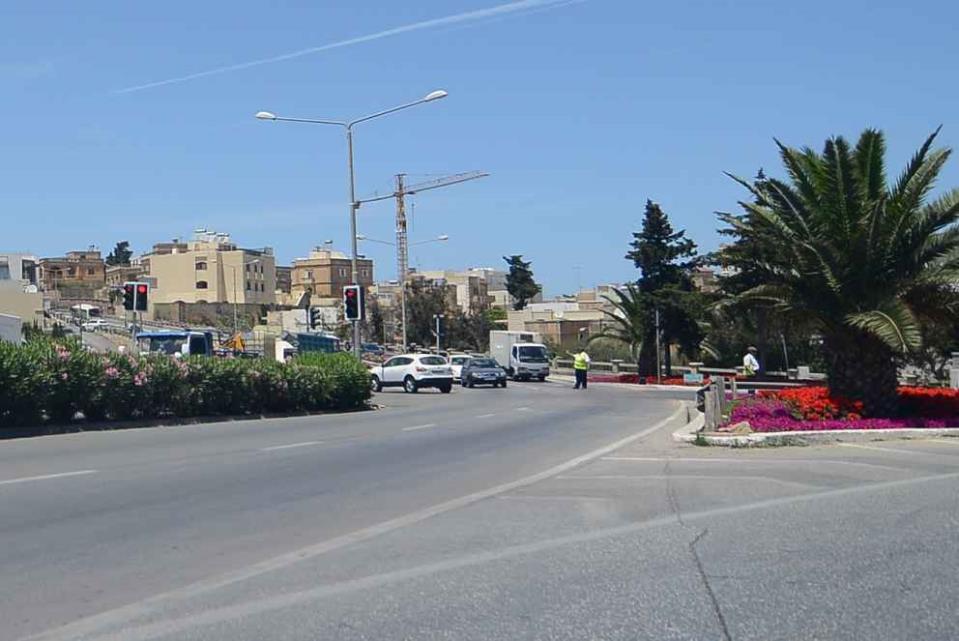
The fact is, he says, that drastic measures are needed, even if they are not popular. These also include a rethink of how traffic lights work. He points out that the timing of traffic light, combined with the natural lag they result in, cause delays and queues. “Our traffic lights use a fixed timer so there is no distinction between fluctuating need for green time during peak hour traffic and empty roads at night. Why stop traffic along the main road when there is no one at the minor roads or at night when the road is completely deserted?”
One of his proposals is to do away with the traffic lights at the Paceville junction on Triq Mikiel Anton Vassalli (Regional Road) and construct a well-designed roundabout instead even though there are certain limitations. “Well-designed roundabouts deliver and can handle high volumes of traffic, while constrained small roundabouts similar to that at the entrance of Mater Dei hospital are somewhat impaired.”
Any future developments, including the high-rise towers and hotels that form part of the upcoming projects should provide a surplus of parking spaces – at least 10 per cent extra – catering for visitors and considering use for public parking. “There has to be a sense of proportion. This is not to encourage car usage but to offer opportunities to remove on-street parking in the interest of increasing road capacity and facilitating public transport circulation.”
Current policy obliges developers to provide two parking spaces for every dwelling unit in the Sliema/St Julian’s peninsula and one parking per dwelling in most other localities. This would only make sense if we actively invest in public transport and planning holistically, in line with conventional transport planning theory. On the contrary, with car ownership at circa 1.77 per household (54 per cent owning two cars or more), we are producing denser developments, away from established public transport routes, hence encouraging car dependency without offering the off-street space for these cars, which in turn end up parked haphazardly reducing road capacity and causing congestion.
Substandard parking areas and designated routes for construction vehicles
Effort should also be put into parking facilities – we should stop seeing such facilities as an unnecessary cost and burden, Mr Bonello says. “All efforts were made when construction a popular shopping mall in Sliema but its carpark looks like an unfinished construction site making it difficult for motorists to navigate through. It is not acceptable for high-standard developments to have below standard parking facilities and, unfortunately, this is largely the case in Malta. They are seen simply as an unnecessary extra cost.”
Mr Bonello believes that no large commercial establishments (including change of use) should be issued with permits unless they have proper loading/unloading areas that do not obstruct traffic. He says mathematical models, as accurate as they may be, can never predict driver behaviour. “It can never predict the delays caused by a fork lift driver holding up traffic until he delivers goods to a supermarket or a warehouse. The accumulative effect of these little incidents in our streets is enormous.”
Deliveries for hotels and other establishments in the Paceville area should only be carried out on set days and at set times. “It needs logistic planning, coordination and enforcement.”
He also suggested that a system like Valletta’s CVA or Resident Parking Scheme in the area, to avoid hardships to residents in Paceville, St Julian’s and neighbouring localities whose residents have been repeatedly ignored.
During the construction phase of these large developments there will also be a large volume of construction vehicles passing through the area. “They are slower, cause more vibration and emissions and can damage the roads due to their weight. The most basic thing to do is to designate a lorry route for these vehicles and bar them from using other roads.”
A lack of political will
“As you can see there are solutions but I believe that the political and administrative will is lacking,” Mr Bonello says. “Paceville has always been the ‘Land of Greed’ –a n area where very few have any sense of civic pride and which has always been exploited by developers. We told karozzini owners to get off the roads to reduce traffic but we never said anything to big developers whose impact is much greater.
“We tend to be fascinated with what happens abroad, but we maintain a parochial mentality. We often pick and choose what we like from academic theory, best practice and transport systems often leaving out the parts that are uncomfortable and which make such initiatives feasible and sustainable, such as patronage, enforcement, tariffs and penalties. The way we do things, and how local politicians often decide to install zebra crossings, reserved parking spaces or one-way streets just to please a particular constituent without realising that they are jeopardising the whole system, has to stop. It cannot be allowed to continue anymore in the interest of the common good.”