It has been 100 days since the first Covid-19 case – firstly, how do you feel now, having been on the forefront of this pandemic?
We were faced with a situation – a pandemic – which had an impact everywhere. Our advantage was that we could see what was happening in other countries so we had time to modify our strategy and base it on strong public health principles so we could contain the situation. In fact, if you see from the start to now, we always followed that containment strategy – identifying the cases, isolating them, finding their contacts, and isolating them as well. Even though we are now at the stage where the number of cases spreading in the community is low, we are still following this same strategy with all the new cases.
Looking back with hindsight, if there is something you would change from Malta’s response to the pandemic, what would it be?
As a superintendence, we have a unit which is dedicated to infectious diseases. At the beginning of this pandemic, when we were preparing our systems and when we were dealing with the early cases, we worked with the people in that unit. However, we saw that this small team could not keep up – and what’s nice is that all the people in public health and a number of volunteers came onboard. So, looking back, I’d wish that those people were onboard from the very beginning as it would have made it much easier to respond to the pandemic and split the work between everyone. Something else which, looking back, we’d have liked to have had was for the information management and IT system to have been in place straight away. We already had a system, but we then had to adapt a WHO system which had been used for Ebola for the situation we had. The fact that we were trying to adapt this system in the early days of the pandemic made things a bit more difficult; had it been there beforehand it would have been much more helpful for us.
We almost at a point that we can say that we are totally open, what with the airport opening on 1 July – is it reasonable to expect case numbers to increase, even by a little bit, because we have opened up?
Yes, you can see that we have a situation where the final solution is not close – that solution being the vaccine. Clinical trials are ongoing but there are still several months before the vaccine will be made available. Therefore, we definitely could not remain in a situation where shops were closed, people weren’t going to work, and events weren’t happening, which is why we started opening slowly and evaluating at each step to see what the impact was. Now that we know that the level of community transmission is still low, we need to continue monitoring the situation – which is what we are doing – so to see that if there is a higher number of community cases, maybe even from imported cases, we continue to identify them and control them.
If there is a significant increase in the number of cases, is there a contingency plan in place on what will happen in that cases? Will we go back to having certain restrictions in place?
Like our initial strategy was with imported cases, we would be in a situation where there is a mix of community transmission and imported cases. As time passes, we have our alerting systems which are based on how many cases we have, whether they are sporadic or related to clusters, and people going into hospital and needing intensive care. Those are the parameters we use to evaluate the best means of controlling the situation.
With bars opening, we have already seen pictures of a certain level of overcrowding in such areas – does this worry you?
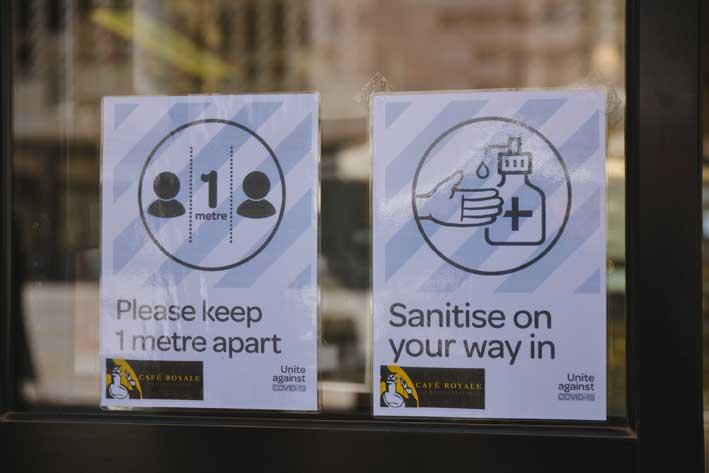
It’s important for us to keep in mind that the virus is still in the community. We are still seeing some sporadic cases, so the principles of social distancing and mitigation measures have to remain there. Our advice was, and still is, that a person should, especially if they are with strangers, keep their distance. We understand that people want to go out and have fun, especially now that we are in summer, but we must remain careful to keep protecting ourselves from the spread of the virus.
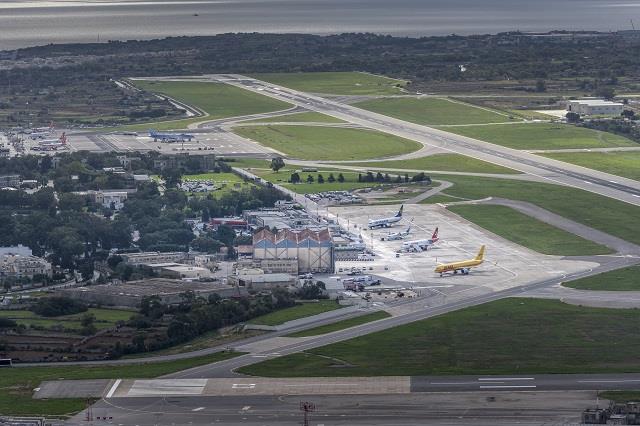
The same thing with the airport – we will have the risk of cases being imported from abroad – how worried are you about this happening?
What we’ve done against this is to follow the concept of safe corridors – seeing which countries have a virus epidemiology which is similar to Malta’s or better. This means that people coming from abroad, are coming from countries which are in a situation like our better than ours. What we have also requested is the installation of thermal screenings at the airport again – this won’t catch every case, but it is only one of the instruments we have in place to catch cases. We are going to continue our prevention campaigns and see that the same message gets to tourists as well. This being said, we have to remember that since the pandemic was of course Europe-wide, every country was already teaching its people how to prevent the virus – something which will no doubt help other countries when people start to travel from one place to another.
Even though we have a low number of cases, we are still in a state of public health emergency – why?
So far, we are still in that state because we still have restrictive measures, like the travel ban, in place. While that is in place, it is good for us to retain that state of public health emergency. Once we see that we will start relaxing that, then we can move on from this state of emergency as well.
So, once the travel ban will be lifted, we will be at a point where we can come out of this state of public health emergency…
Because there is an evaluation of the whole situation. When you remove the travel ban and other measures, then it means that you have done an assessment where you can conclude that the risk is decreasing. That does not mean that the mitigation measures should be removed – while the virus is still circulating, it is important that they continue to be followed.
In terms of numbers, Malta obviously has a much lower number of cases compared to other countries owing to its size – however Malta also has a very low percentage of positive cases when compared to the number of tests carried out when compared to other countries – why is this?
We had a very broad testing strategy. We were one of the countries which had a high testing rate; we were carrying out tests on people who were both symptomatic and asymptomatic and in fact we were among the first countries to realise the percentage of people in the population – around 1% - who tested positive while having no symptoms. We know that even if you have a person who has no symptoms, there is the chance that they transmit the virus to other people. The number of cases were low when compared to other countries because we immediately had a containment strategy for all cases. We have strong teams on case management to investigate the cases, and a strong strategy for contact tracing. Looking forward, we are also hoping to have a contact tracing app which we are working on with a consortium of European countries in place, as this can help us alert those people who may have had contact with a positive case.
We heard a lot about social distancing and the usage of masks as mitigation measures – can we expect these measures to be in force for months or maybe even years?
The thing with social distancing is that it is good for everything; we know that there are respiratory diseases which spread through droplets, so washing hands, sneezing into a tissue and so on are all prevention measures which we should always follow. They are important both for Covid-19 and for, for instance, influenza. When the influenza season starts, we are hoping that people have understood such measures and that through such prevention measures we can help reduce the number of cases of other viruses.
A lot is being said about the potential for a vaccine – but if this doesn’t materialise and we do not get a vaccine, what happens then?
The prospects of a vaccine being found are good so far. There is a lot of research ongoing and some trials are at their third phase. Some research is showing that there is a certain level of immunity against the virus. These are all positive prospects – they are prospects which we are looking closely at, and as soon as there is an effective vaccine available, we hope to roll it out. We will see that those groups of people who are of high priority receive it first, but then we will also open up to offering it to everyone. This is similar to what had happened in the influenza pandemic in 2009 – we learnt from that; it was a situation wherein when the vaccine became available, we offered it to everyone.
We are carrying out two types of tests in Malta – the normal swab test, and the antibody testing. What are the indications which have emerged from the antibody testing done so far with regards to the population’s immunity to the virus?
So far through the antibody tests which we have validated – and we have seen that this is one of the best tests available – we are starting to test for people’s immunity. As you can expect, and in line with research from abroad, the percentage of people with immunity is very low. We are looking into more studies and the possibility of doing a cross-sectional survey to assess the level of immunity. We must seek out two principles when looking into this; how long the immunity lasts, which is an important point when it comes to the administering of the vaccine as well; and how our strategy with regards to this virus will look like moving forward. However, we, and other countries, are still far from having herd immunity, so we need to keep following mitigation measures so that once the vaccine is made available, we can develop herd immunity that way.
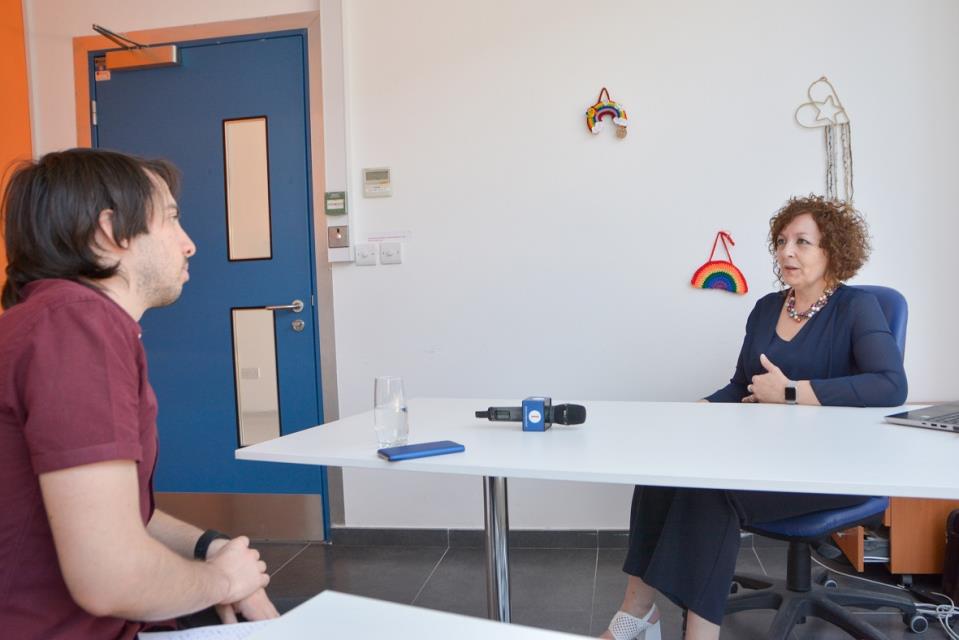
Many have missed your daily briefings and your voice of reassurance, leading to some calls for your briefings to return – what is your message to them?
On the briefings, we were doing them so to be transparent and inform the public – but we also wanted people to learn from them, and we saw cases where there were people who we found to be positive because they saw that they had symptoms which were similar to some of the cases we spoke about and came forward. However they were also important for us to keep passing on the means of prevention and to keep people in the know on what is happening – when people know what is happening, they are being given peace of mind and it is easier for them to trust the authorities. Now we are in a situation where we can keep passing information through interviews such as these but also by still providing the number of cases and some details about them – such as whether they are part of a cluster or not. We are here, here for the public to protect them, and it is our promise to continue doing that.
Finally, on a more personal level, the Nationalist Party have said that they will be nominating you for Gieh ir-Repubblika – what is your reaction to this?
Honestly, I truly appreciate everyone who worked and cooperated with us. We saw so many people cooperating with us. We were following scientific evidence which balances everything and led us to controlling the situation without going to, for instance, a total lockdown. So, on the public health side we made sure not just to control the virus, but to have the least impact possible on society. I thank everyone who may have seen me, but behind me there is a huge team of people working. The biggest thing I wish for now is for people to keep the basic principles which they have learnt in mind so that we can control not only the current situation, but any situation which can hit us in the future.
Photos and video: Neil Camilleri