Is Art in your DNA? Do you have other artists in your family that you know of?
Apparently not. I don't have any visual artists in my family on either side. Not that I am aware of at least.
My interest in art started when I was young. In our home we used to have an iron door on the upper terrace and since young, this door served as the first blank space which offered me the possibility to design whatever came to mind. I still have a vivid memory of my early years; I must have been around five. I remember designing a figure of a woman with a mantle on her head; this is one of my very early memories of drawing on this blank surface.
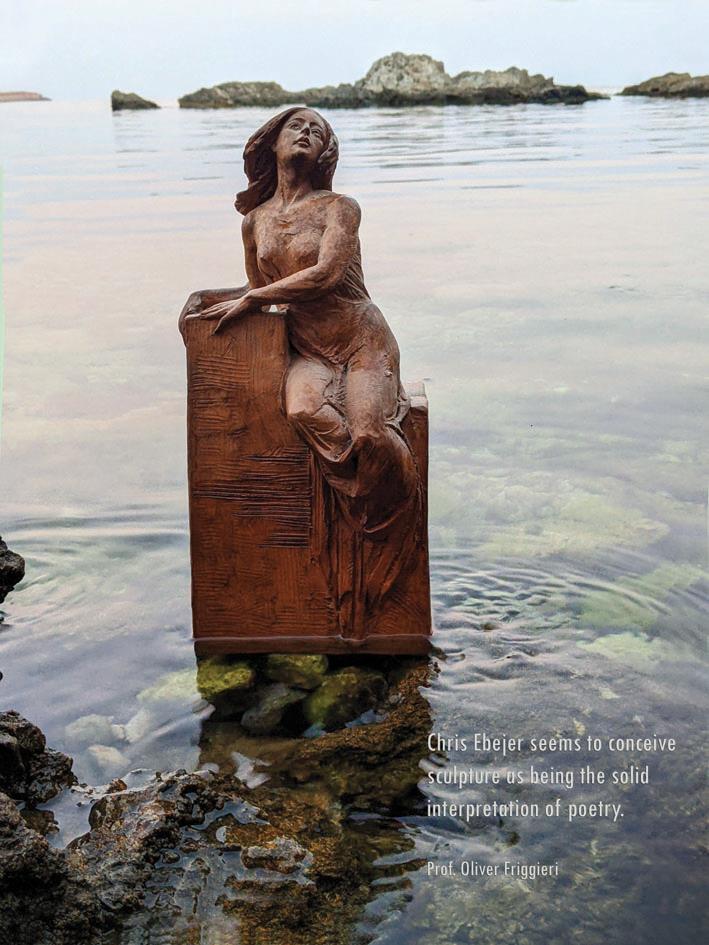
As Prof. Giansiracusa said during the inauguration speech of my current exhibition at MUŻA, the figure was always an important image of expression in western civilisation. Since I come from the Mediterranean, I couldn't but express my artistic emotion by giving importance to the figure and its movements in my creative concepts.
What do you think is the role of Art in society?
First, art is the barometer that measures levels of cultural sophistication. Throughout human existence, we have learned about cultural accomplishments from the cultural artefacts left behind. Many of these artefacts have left us permanent marks. Consider the construction of Stonehenge, the Greek Parthenon, the Roman Coliseum, the Hagia Sophia, the Gothic cathedrals. Each of these iconic structures and masterpieces also communicates important messages about the time, place and context in which the work of art was created. In addition, art makes life more beautiful as it contributes to one's aesthetic experience.
Beauty is an essential resource to redeem our suffering; expand our joy and live more in accordance with our dignity. It is not a subjective whim, but a universal human need. If we ignore this need, we find ourselves in a spiritual desert.
Regarding your present exhibition, Pathos at Muża, what influenced you most, apart from mythology?
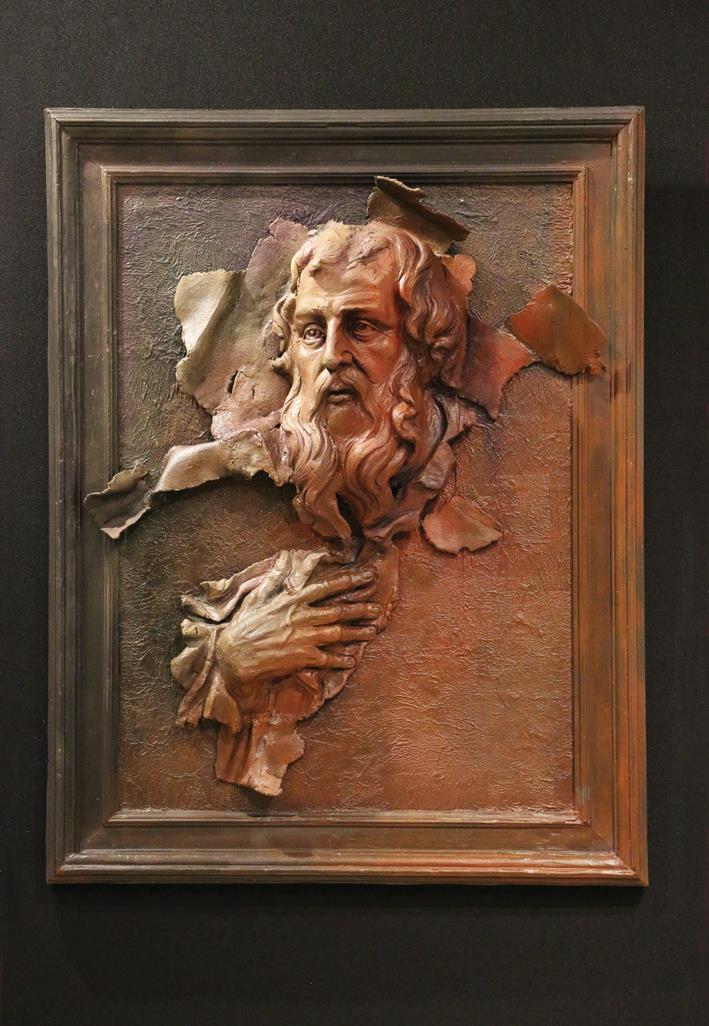
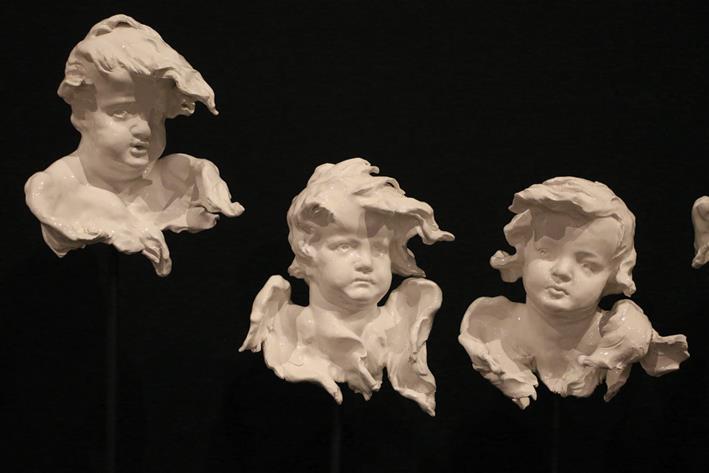
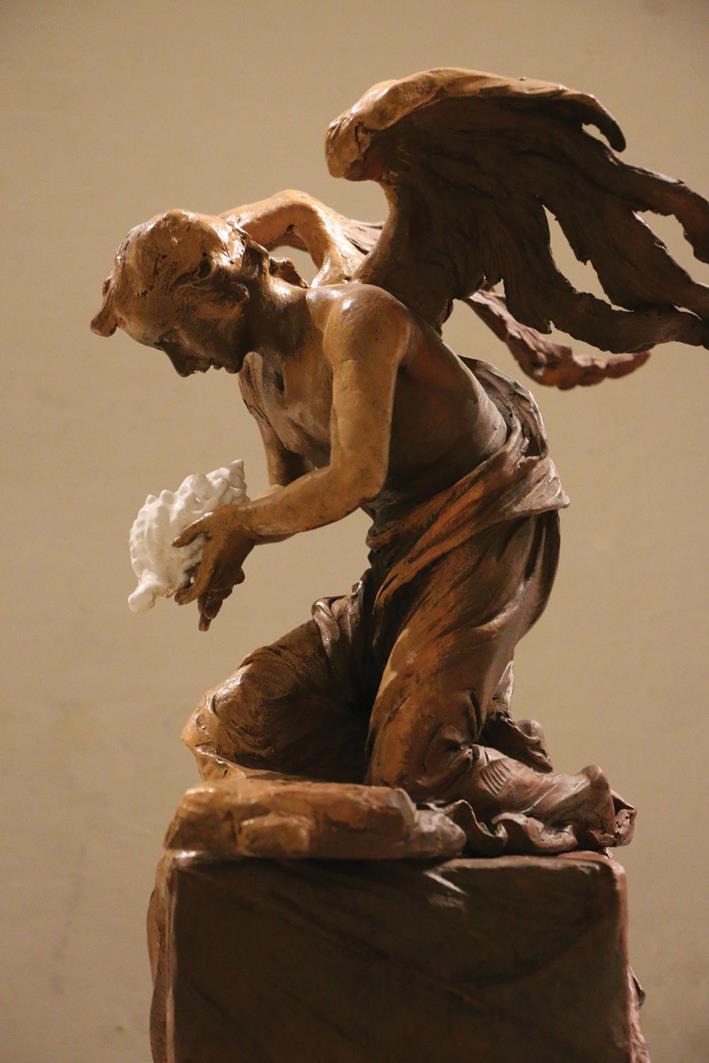
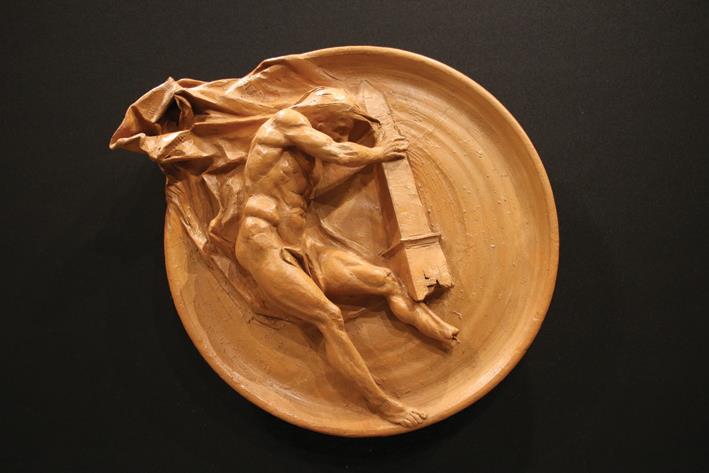
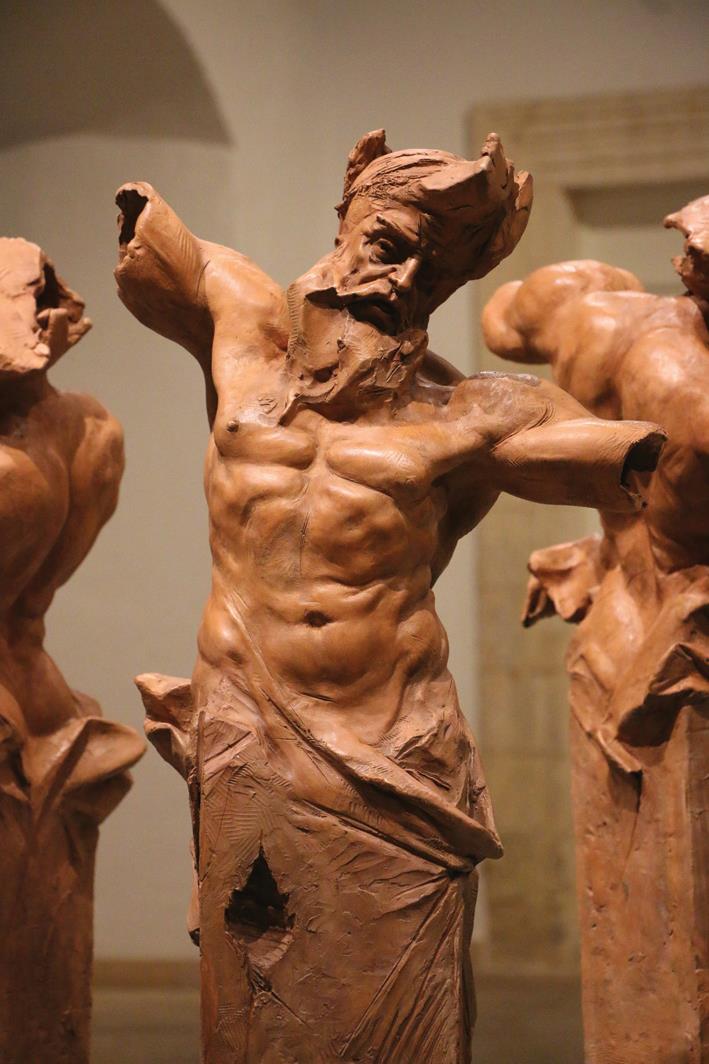
As I described clearly on the video which I produced to accompany Pathos, which in Greek means Passion, there are three main aspects represented in many of the sculptures on display, and these three aspects are related to each other. The fossils which make reference to our geographic origins being that Malta is a land sculpted by the sea, millions of years ago; the second one focuses on the aspect of or cultural origins coming from the Greek influence in the Mediterranean as a cultural subject and the third one focuses on the decay and fragmentation, which I found, creates a sense of time and mystery.
Are you influenced at all by the Graeco-Roman sculptural tradition?
The Greek culture and Roman civilization had a lasting impact on western culture, which has continued to this day. The Romans were exposed to Greek culture early on in the development of their civilization through interactions with the Greek colonies in Southern Italy, then known as Magna Graecia. As their admiration for the Greeks grew, they chose to adopt, adapt, and expand upon many aspects of Greek culture leading to the saying, "Rome may have conquered Greece, but the Greek culture has conquered Rome."
The Catholic church adapted to its religion many ideals taken from the Greco-Roman culture to model its image. Thus, it is obvious that, as people of the Mediterranean and as Europeans, we cannot eradicate our classical roots which come to us from ancient Greco-Roman philosophy. It is the very bases of our roots: politically, philosophically and culturally. The exhibition delves into the origins of our existence and taking out a leaf from history, it delves into some aspects and presents them as if we are revisiting our existence by making reference to Greco-Roman gods as if they came back into our contemporary world.
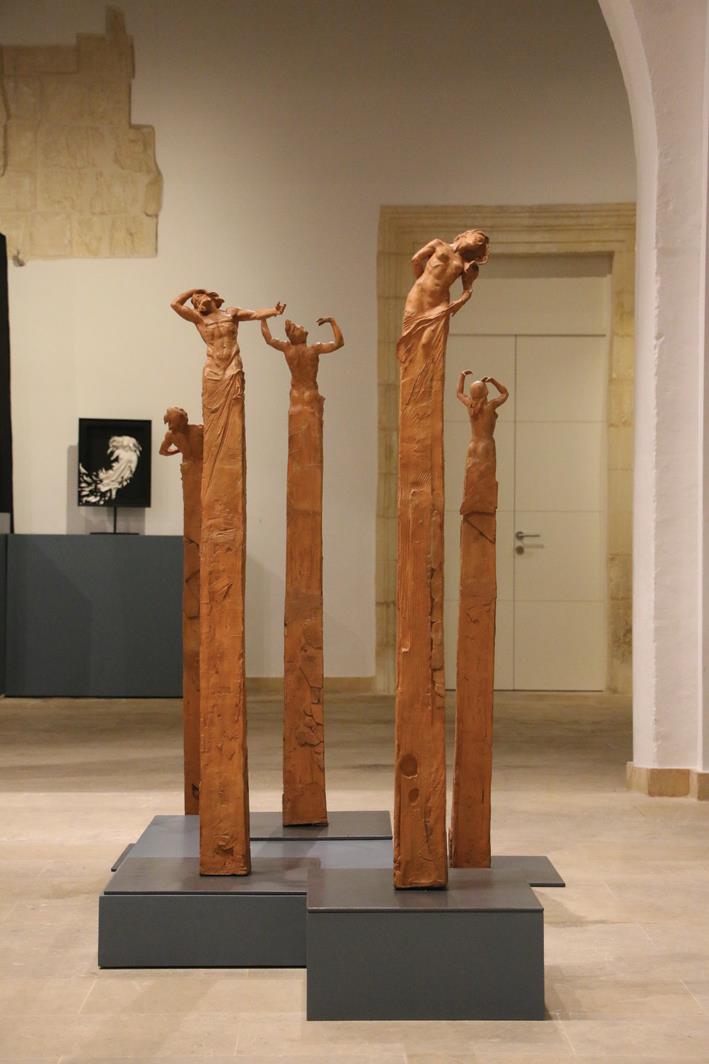
The key subject that undoubtedly takes centre stage in this exhibition are the telamons (the pillars shaped as a male figure). These gigantic atlases which were meant to support important structures, like temples are no longer the subject forced to perform a structural function, and therefore a responsible task. My telamon appears as a liberated man, finally freed from all commitments.
Do you have a favourite piece out of all that you have created so far?
There are quite a few, to tell the truth; it is not that easy to pick out a particular sculpture. Each sculpture has a meaning for me; there are those which I made in Malta and others in Italy which I brought to Valletta for this exhibition.
Now for some 'fun' questions to allow readers to get to know you better.
What is your idea of perfect happiness?
Lost alone in a beautifully planted arboretum. It is my definition of perfection: silence, trees and fresh air.
What is your greatest fear?
There are various types of fear which depend on what I am experiencing at a given moment. If I have to mention two it would be these: I have a kind of fear that I might be leaving this life early, without finalising the many projects I have in mind. Another fear is that I might have an unpleasant end.
What is your greatest extravagance?
I love collecting artefacts: antique and ecclesiastical objects and fine, white porcelain. When I am in Tuscany I love to browse around antique shops. Sometimes I feel as though I am kind of losing control of my logic when I come across some beautiful artefact which I find irresistible and which I feel I must have at all costs. Never mind logic. I give in to my emotions instead.
I recently purchased a big gold embroidered 18th century tapestry from Palermo, featuring a trompe l'oeil architectural illusion. It is a museum piece. I intend placing it in my bedroom. It is an extraordinary work of art, embroidered in a monastery. The work and time involved in making it are almost unimaginable. Then there is the patina of age and history that go with it. I would like it to be the first thing I see, every morning, when I open my eyes. I need to have beauty around me otherwise I may die of despair.
What is your favourite journey?
Definitely in the German Bavarian region or the Cotswolds in the UK. In these regions there is a bit of everything which I love: picturesque villages; stunning mountains and hills surrounded by valleys and lakes; forests and that kind of village charm with medieval gothic and baroque monasteries and chapels which you come across scattered in the countryside. Bliss.
What is it that you most dislike?
Chaos, continuous noise and I have to say it right away: our long, hot summers. Somehow they are all related in a way or another but the heat exhausts me completely and destroys my creative impulse and motivation; now you can understand why I am in love with Autumn.
You are travelling between Malta and Tuscany where you also have a studio and where you have access to a foundary. But generally, how do you organise your day?
I have been frequenting Tuscany for these last 12 years. My continuous connections and stays in Versilia now have become part of my life. There I have built memories and strong connections with the land and environment and that beautiful part of Italy; the Apuan Alps covered in greenery; the stretch of never-ending sandy coast up to the Ligurian coast; the scents of pines and the deep green of the chestnut forests; carpets of olive groves and the charming little hamlets or as better known by the Italians borghi medievali, with their quaint, cobbled streets and medieval charm; the sharp chilly mornings and the warm sunny days. During the weekend I love taking the train to go to discover one of the hundreds of hamlets which takes you back in time, when feudal lords ruled the region when Tuscany was still a grand duchy.
Do you have a favourite sculptor who lived in the past? And what about a Maltese sculptor, either contemporary or who left a mark but has passed away?
I would say I have come across the works of Igor Mitoraj (1944-2014), back in time. Of Polish origin, he had a house and studio in Versilia and when I began to create my works there, around 12 years ago, he immediately captured my attention.
Then there is Andrea Bistolfi, undoubtedly his sensual works injected in me a great sense of inspiration. Rodin never ceases to amaze me with his capacity of playing with textures, inventiveness and bronze sculptures.
Do you have a code that you live by?
I have since decided to surround myself with what gives me a sense of well being. When I lack this source I grab my bags and reach out for an agreeable destination; or create the kind of environment I so badly need for my creativity to thrive.
Pathos is showing at Muża until 10th December.