I went away for a long break and returned just a few days ago, this is the reason why I am late in writing about this event.
I met Carmelo Pistorio and his wife Ping a number of times mostly thanks to the Accademia della cucina Italiana dinners. I had also interviewed him for our newspaper. His father, Pasquale, was for a quarter century the CEO of ST Micro Electronics in Malta.
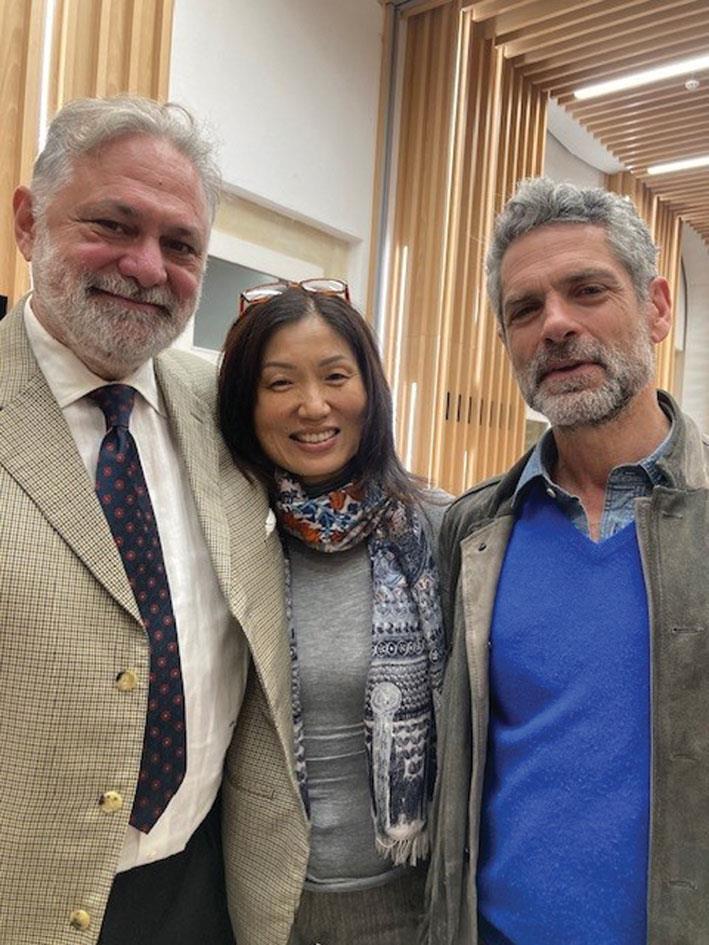
Carmelo too, is now living in Malta with his family.
He graduated from Tufts University in America, with a Bachelor in Philosophy and History. He has now decided to focus on his writing and is planning seven novels under the title City of God, a title inspired by the philosophical treatise of St Augustine. But there are also his studies at the University of Malta where he is pursuing a Masters in history by research which deals with the role of Christian teachings in shaping the Modern Era. Carmelo will soon wrap this up and for his Ph.D. he is mainly concentrating on the events that shaped our modern era and wishes to dedicate himself to bringing history alive and relatable beyond the academic sphere.
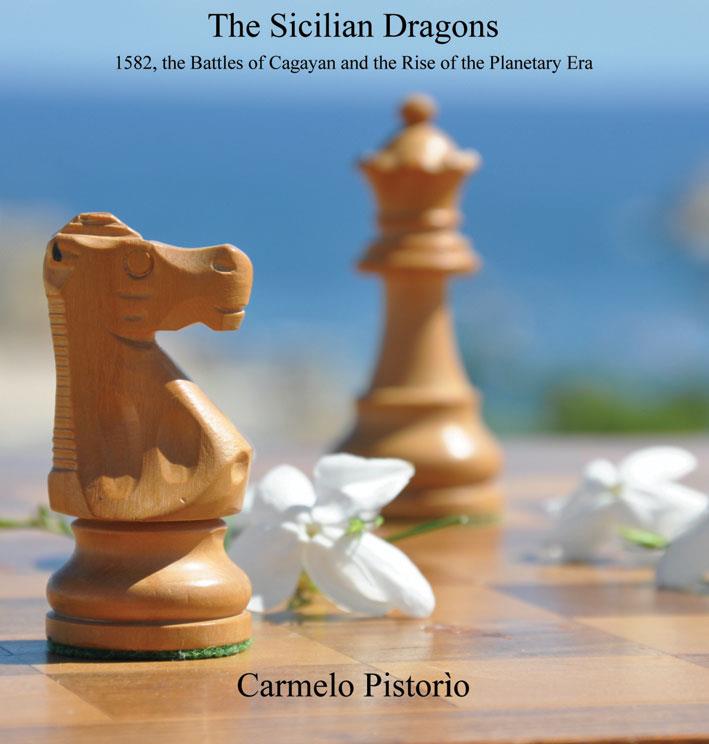
With these objectives in mind, he has just published the first volume of his novel The Sicilian Dragons: the Letters of Donna Elisabetta.
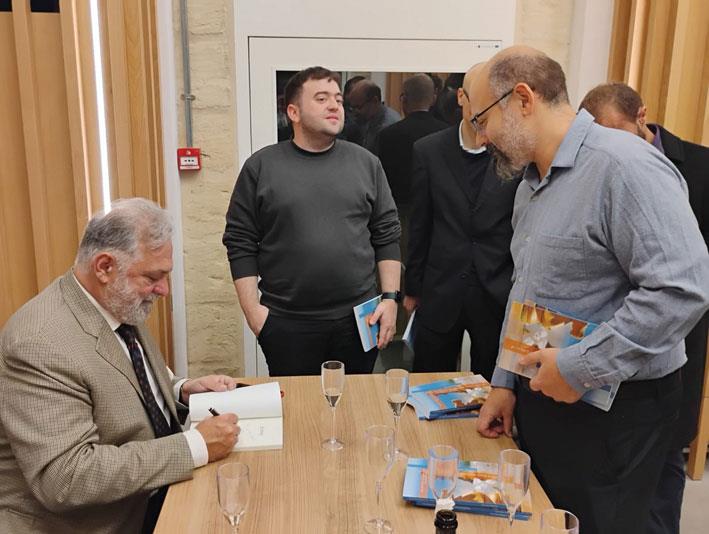
A number of friends, academics and others gathered in December, at Valletta Design Cluster for an evening to celebrate this volume, enjoy the author's excellent presentation and a convivial evening. Ping produced the prosecco and delicious canapes to lubricate the conversation.
The story of this novel is about an extraordinary event, albeit regarded historically as a minor event, around the Battles of Cagayan in Northern Luzon, in the Philippines. The book is centred around these battles.
The presentation was entitled How the West was won and the author quoted famous authors liberally throughout the evening, using quotes to support what he was saying. Francis Fukuyama, Max Plank, Dante and others were there with us.
Carmelo Pistorio is a believer and has a religious outlook. This was evident to me from our first meeting. He says religion was everything to our ancestors. "Everything is liturgy." Poetry, literature, but particularly evident in art and music. Over the centuries composers dedicated their lives to help human beings feel the presence of the Holy Spirit during Mass. "This is true for Bach, Handel, Hayden, Mozart, and to a lesser degree even Beethoven, and it is certainly true for painters up until the Renaissance." He believes that what happened is that the Christian creed that united and forged Europe - especially after the collapse of the Graeco-Roman world - slowly fractured in less universal and more dissonant bodies of beliefs that catered to nation-states and secular ideologies, until the failure of these belief systems imploded in the horrors of the 20th Century giving way to the moral and intellectual vacuum of our contemporary prevailing ideology, Nihilism. "So, if I want to depict the way our ancestors thought I am obliged to focus on the vigour of their Faith, and this in turn also reflects my own position, because I have myself gone through the process of realising the absurdity of our current Nihilism and the rationality that buttresses Christianity."
Here are some of the quotes he used, that evening, which I particularly enjoyed. George Orwell: "Wars will no longer be fought to be won, but to be perpetual." Wasn't that spot on? Another quote by the Austrian Political Economist Joseph Schumpeter: "Marx was wrong in his diagnosis of the manner in which capitalist society would break down; he was not wrong in the prediction that it would break down eventually."
The German theoretical physicist, Werner Heisenberg, a Lutheran Christian and Nobel prizewinner: "The first gulp from the glass of natural sciences will turn you into an atheist, but at the bottom of the glass God is waiting for you."
Carmelo spoke about Christian Liberation starting from Charlemagne who played a critical role in the spread of Christianity throughout Europe. King and Emperor, he also aligned himself with the Catholic Church and used his military power to extend Christian rule. His conquest of the Saxons, for example, involved the forced conversion of the Saxon people to Christianity.
Then there is Ludovico Ariosto who led the way with spirituality and humanity. He became famous after his epic poem, Orlando Furioso published in 1516. He is the man who coined the term umanesimo or humanism.
The Crusades naturally, came into this presentation :" Everyone fought, from the Duke of Alba, a Spanish grandee, to Pizarro, a swineherd. They all fought: noblemen and labourers, shepherds and burghers, scholars and magnates clergymen and rogues, clerks and knights. Every region of Spain sent its sons to fight. Garcilaso, Ercilla, Cetina,Alcázar, Cervantes, Lope de Vega, Calderón fought. An entire people fought, without differences of class, loyalty, duty, profession or wealth." Thus wrote Claudio Sánchez Albornoz in España, un Enigma Histórico. Everyone fought for their faith, not for a chunk of Ukraine.
Then there was The Great Siege and we certainly know all about that.
Much has been written about the Great Siege of 1565. The victory of the Knights of St John over the Ottomans is one of the most celebrated events in sixteenth-century Europe. Voltaire wrote that 'Nothing is better known than the siege of Malta'. The siege was the climax of an escalating contest between a Christian Alliance and the Islamic Ottoman Empire for control of the Mediterranean. It had pitched against each other two ideologies, the West against the East.
After all the two great powers of the 16th century Mediterranean were Spain and the Ottoman Turkish Empire.
Edward Gibbon remarked: 'The knights neglected to live but were prepared to die, in the service of Christ.' Yes, they waged incessant war against the Muslim political dominance over the Holy Places and the rest of the Mediterranean. They were a thorn in the side of the great Ottoman Empire. They had attacked and taken Rhodes between 1305 and 1309 and almost immediately clashed with the Turks. Suleiman, humiliated, undertook to expel them from Rhodes following an arduous and terrible siege, in the course of which the sultan is said to have lost 90,000 men. But he was so impressed by the bravery and courage of the knights that he accorded them honourable terms. He is said to have remarked, as he watched the aged Grand Master Villiers de l'Isle Adam embarking: 'It is not without some pain that I compel this Christian at his age to leave his home.'
And so it goes on.
I am now reading the book and enjoying it. I admire the bravery of Donna Elisabetta, a single mother in 16th century Malta, with no family, waiting for her husband to return from fighting pirates in the Philippines. Fortunately, as her confessor, Don Martino says, "As long as The Religion calls Malta home, no child will ever go hungary on these islands." Throught Faith and Fortitude Donna Elisabetta manages to raise her family.
I would like to finish off with a quote from Werner Heisenberg: "Where no guiding ideals are left to point the way, the scale of values disappears and with it the meaning of our deeds and sufferings, and at the end can lie only negation and despair. Religion is therefore the foundation of ethics, and ethics, the presupposition of life." Isn't this what is happening to Catholic Malta?
[email protected]