For artist Miriam Sorrell, a new and deeply personal creative chapter began to unfold following her exhibition at the Citadel in Gozo last year. What started as an exploration of mixed-media collage gradually evolved into something far more significant - the discovery of a fresh artistic language that brings together painting, imagination, memory and the themes that have occupied her throughout her life.
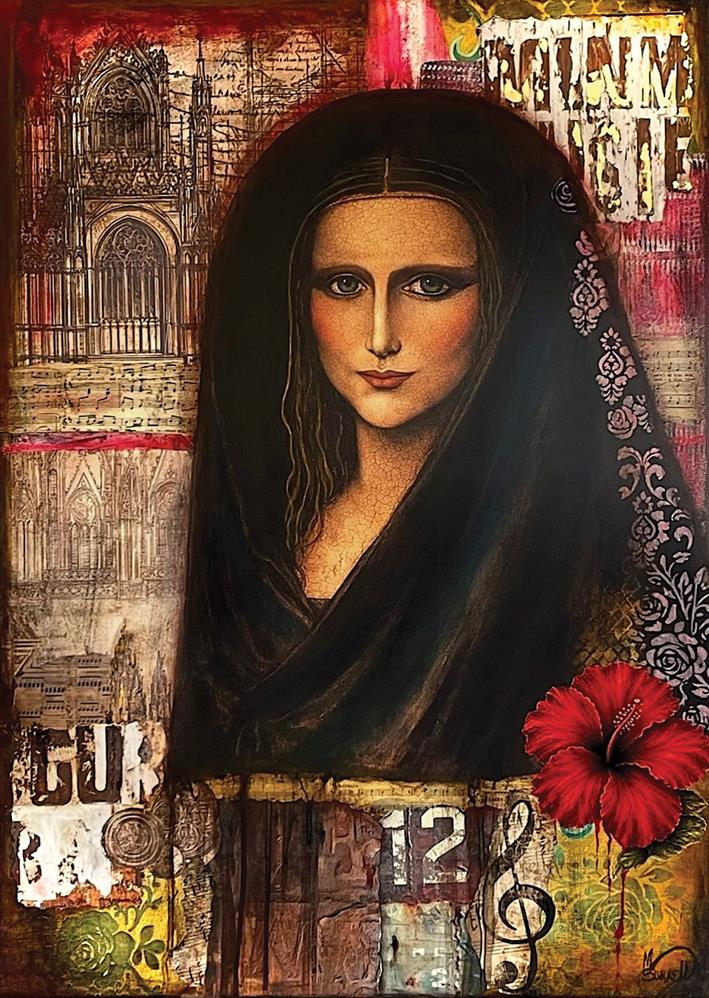
As she immersed herself in collage, a compelling body of work began to emerge. Historical imagery, fragments of text, vintage patterns, distressed surfaces and expressive brushwork started to converse with one another, creating works rich in texture and meaning. For Sorrell, the process felt less like inventing something new than uncovering something that had been quietly waiting to be expressed.
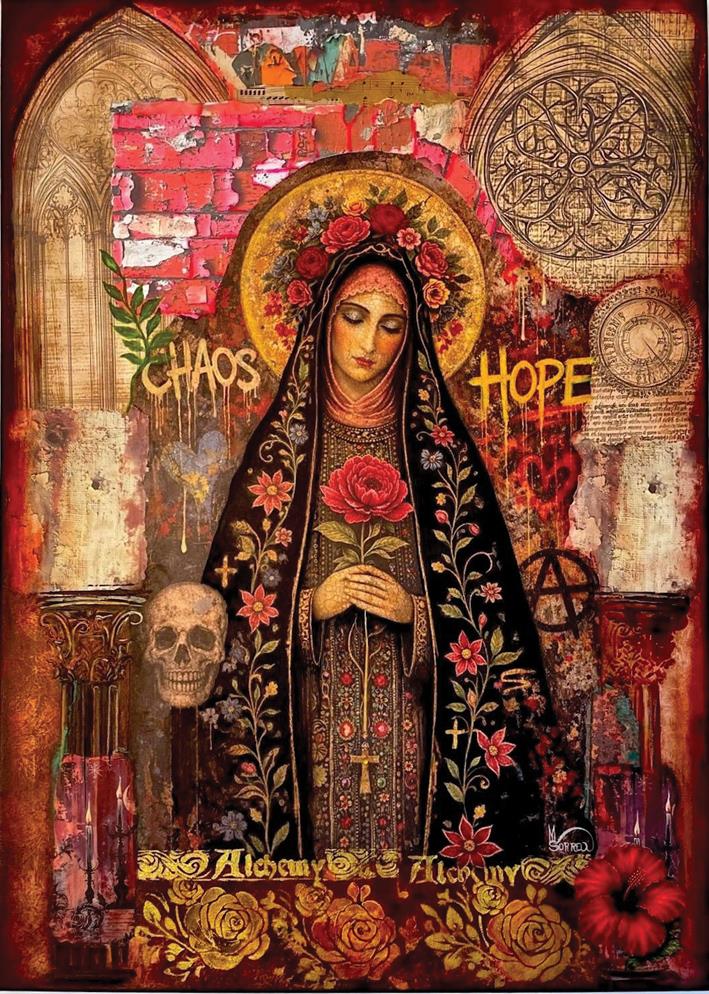
She describes this direction as her Urban Contemporary Renaissance - a style that places classical imagery within a contemporary context, exploring the tensions between beauty and decay, tradition and disruption, vulnerability and strength. Central to this developing collection are her striking reinterpretations of Leonardo da Vinci's Mona Lisa. Far from simply revisiting a familiar masterpiece, Sorrell transforms the iconic image into something distinctly her own, layering it with symbolism, colour, texture and contemporary references.
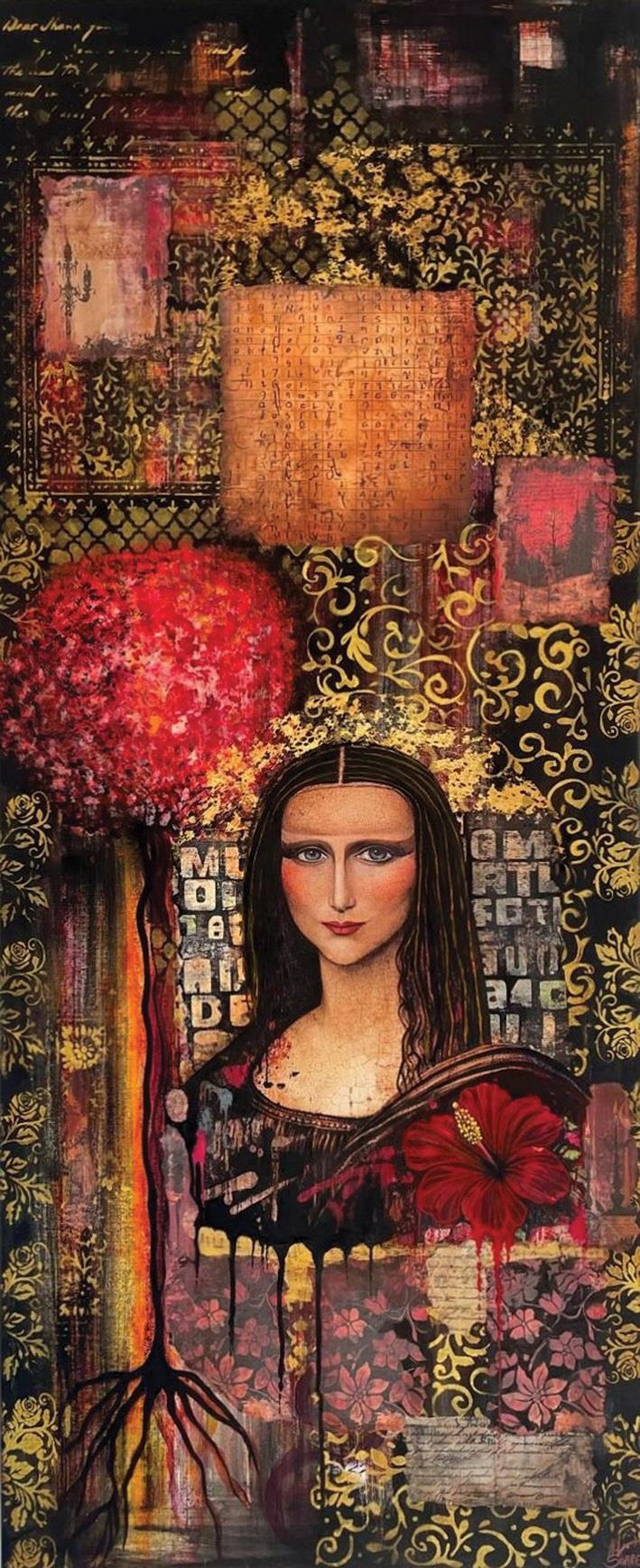
The featured work exemplifies this approach. The enigmatic figure of the Mona Lisa is reimagined within a richly textured collage of patterned papers, musical notation, decorative motifs and fragments of visual culture. Vibrant splashes of colour interrupt the classical composition, while a vivid red hibiscus flower commands attention in the foreground. The result is an arresting dialogue between old and new, serenity and fragmentation, permanence and change.
Running through much of Sorrell's recent work is an exploration of the feminine. Her paintings celebrate feminine beauty, resilience, complexity and power, while also raising questions about how women have been represented, idealised, revered and controlled throughout history. Sacred imagery, with the Madonna central to several paintings, appears alongside contemporary visual interventions, creating thought-provoking contrasts that invite viewers to draw their own conclusions.
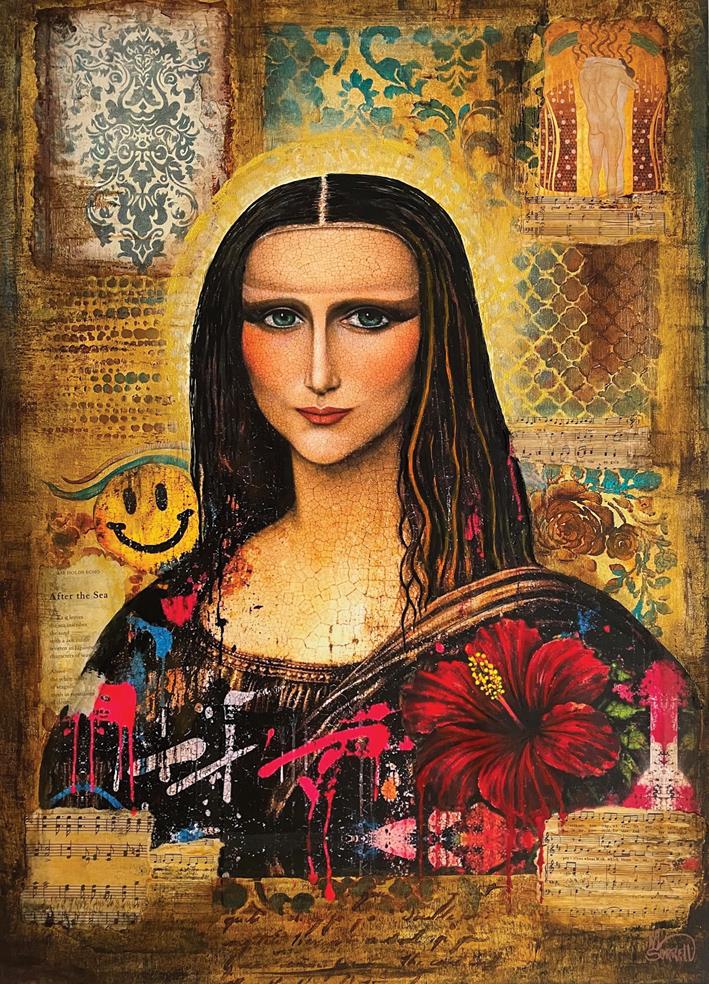
Rather than offering definitive answers, Sorrell prefers to leave space for multiple interpretations. A serene, beautiful and composed feminine figure surrounded by depraved urban chaos may suggest strength and endurance in the face of upheaval, while simultaneously prompting reflection on the gap between the reverence afforded to idealised images of women and the realities often experienced by women themselves.
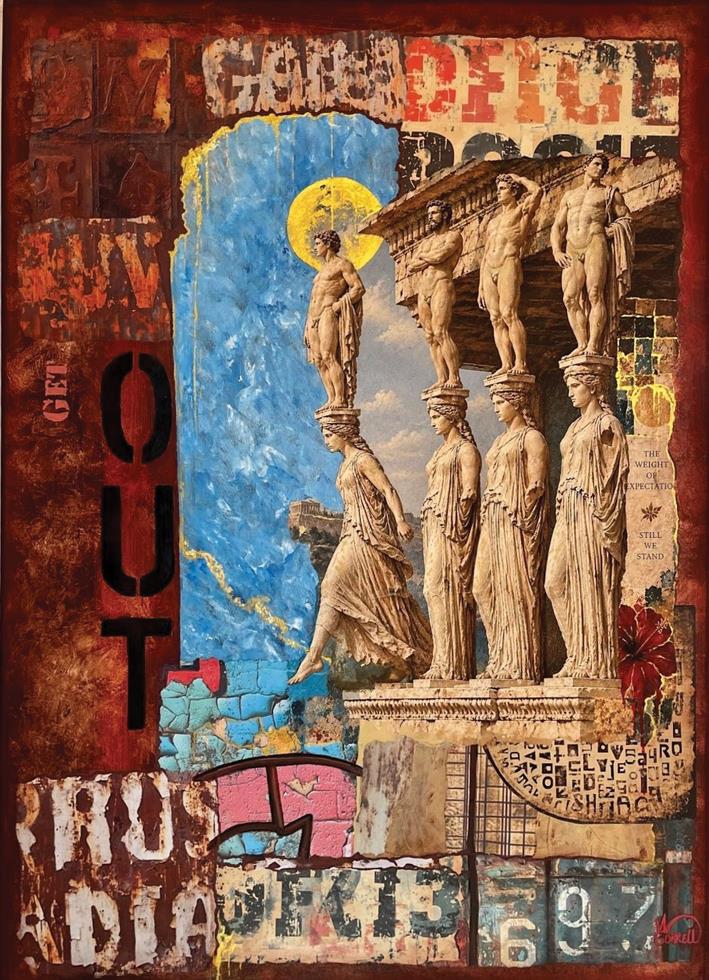
An increasingly recognisable feature of her work is the red hibiscus flower, which appears throughout the collection as a personal emblem and visual signature. Often accompanied by a small jewel-like detail, it creates a subtle thread linking the works while allowing each composition to retain its own character and story.
This artistic evolution builds upon a long and varied creative career. Sorrell has held ten solo exhibitions and participated for three consecutive years in Cancer Research UK's prestigious Art for Life exhibitions at Christie's in London, exhibiting alongside contributors including David Bowie, Sam Taylor-Wood and architect Richard Rogers.
Her creative path has also extended into the literary world. An early pioneer of vegan food blogging, she went on to become a Random House author. Her cookbook Mouthwatering Vegan received endorsements from Sir Paul McCartney and PETA President Ingrid Newkirk, and was presented to 26 members of the United States Congress.
Today, however, her focus is firmly on the development of this new artistic language. Through the interplay of painting and collage, she works intuitively, discovering relationships, meanings and unexpected connections as each composition unfolds. The process itself has become a source of creative nourishment and renewal.
Now expanding the collection and preparing to present it to wider audiences online, Sorrell is eager to engage with galleries, curators, collectors and art lovers internationally. More than a change of medium, this new body of work represents an artistic awakening: a moment when years of experience, reflection and creative exploration have found a powerful new means of expression.
You can find her works at www.miriamsorrellart.com