We're thrilled to be hosting Cristian Sammut's debut solo exhibition, The Universal Man, at il-Kamra ta' Fuq until 3 August. As part of our annual programme, we're committed to offering a platform to emerging artists for their first solo shows, and Sammut's will undoubtedly leave a lasting impression on our calendar.
I was introduced to Cristian through another artist I've collaborated with, Trevor Diacono, who insisted that I had to meet him and see his work. And so I did. We met one bright morning at il-Kamra ta' Fuq, where Cristian arrived with a selection of paintings; bold, gestural, and immediately striking. The decision was instant: he had secured himself a spot in the programme. His work felt strong, raw, and refreshingly different.
As always, let's start with a bit of background. A self-taught artist and trained architect, Cristian is drawn to unplanned, unfiltered approaches to artmaking. His earlier architectural work explored the collective impulse toward ornamentation, concepts that continue to echo in his paintings today. Deeply rooted in the shared human experience, his practice emphasises the act of creation itself as a vital, almost ritualistic gesture. He gravitates toward the authentic, unrefined energy of art made outside large-scale societies, where the focus is not on thinking, but on simply being.
In 2020, he completed a course in oil painting through the CityLit Visual Arts Programme. While The Universal Man marks his first solo exhibition, it is by no means his first public appearance. In 2024, he exhibited with The Queer Museum as part of ARC: Art from Rebellion and Connection at the Cookhouse Gallery (UAL).
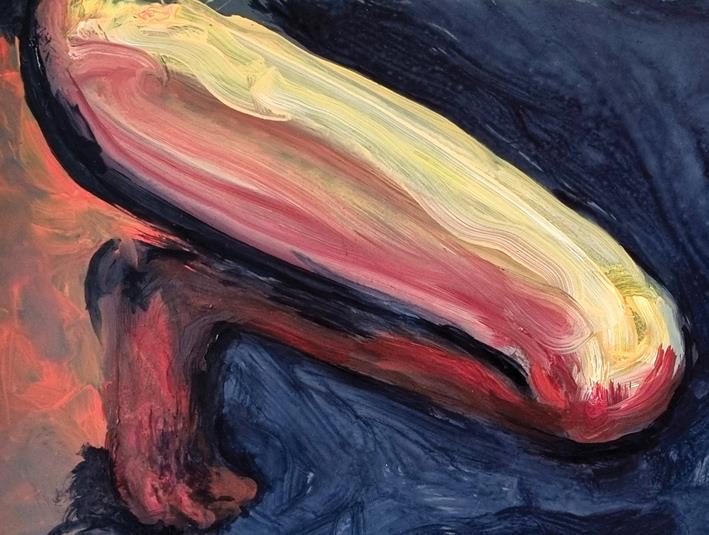
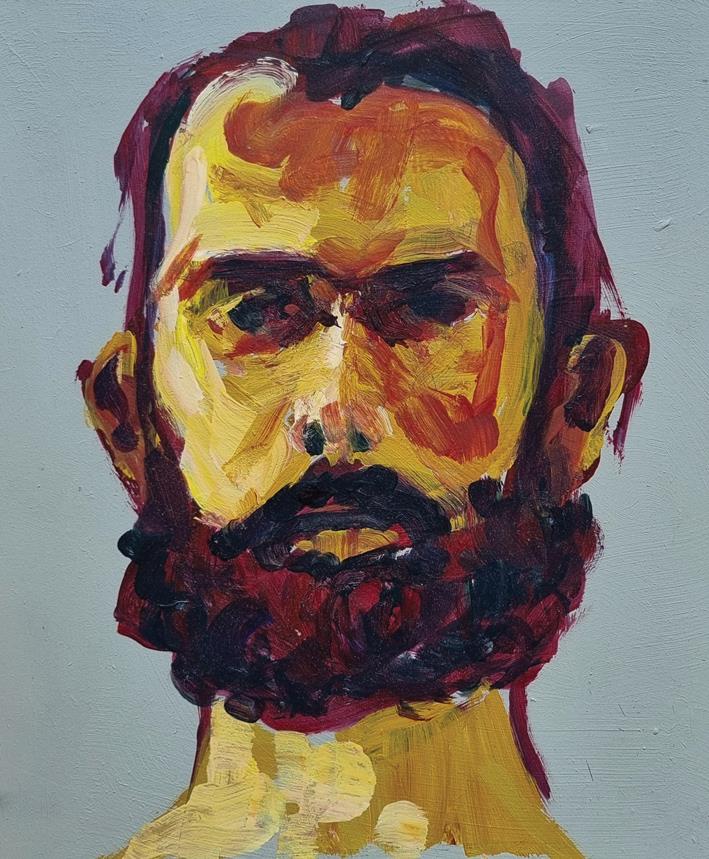
Sammut's style is grounded in gestural, expressive brushwork and spans a range of media, including oil, acrylic, and mixed techniques. He fluidly blends figuration with abstraction, working through instinctive, automatic, and subconscious modes of creation. His approach echoes the mark-making impulses of early modern humans and the raw expression of outsider art, leading us directly into the body of work presented in The Universal Man, where all these threads converge.
The works are broadly divided into two, let's say, series: one consisting of portraits, and the other of semi-abstract figures. Within the portraits themselves, we can further identify a group of smaller, sketch-like studies, executed in quick, fresh strokes that seem to capture everyone and no one.
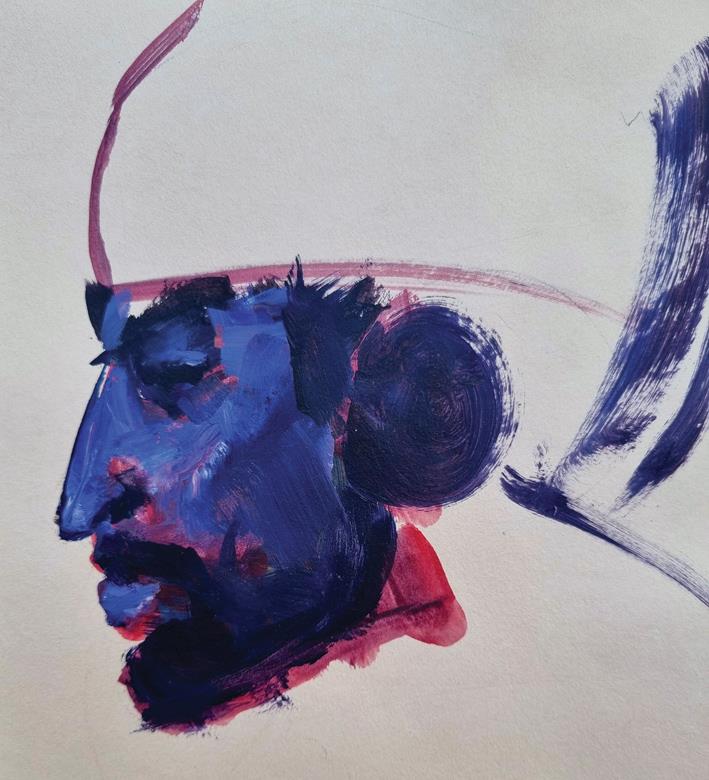
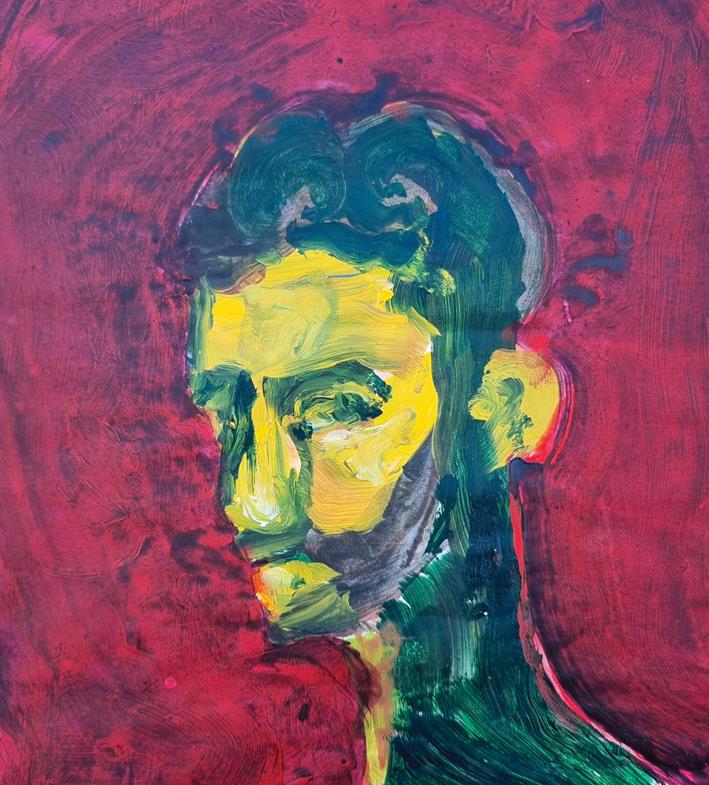
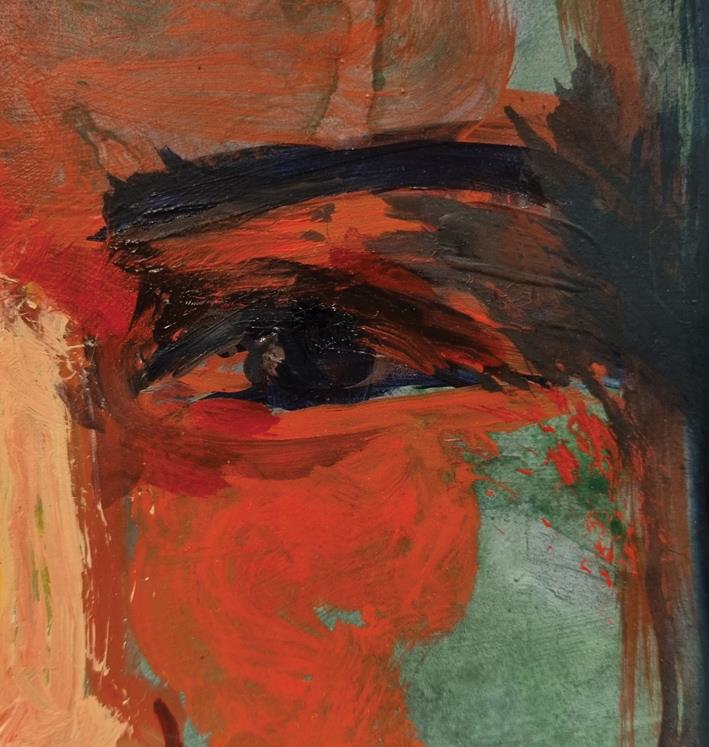
Starting with the portraits, it's important to note that there are no names. No distinguishing features. No narrative cues. What emerges is not a portrait of a person, but a portrait of presence; raw, instinctive, and profoundly human. Painted exclusively from life, Sammut's faces are stripped of specificity. Any detail that remains dissolves into beautiful, fluid brushwork; we feel the artist building these faces out of bold, unfiltered gestures. Some appear in profile. Others face us head-on. All refuse to be categorised. What we are left with is something archetypal, a shared consciousness, a flicker of humanity that transcends time or place. These portraits do not ask us to identify the subject. Instead, they invite us to recognise ourselves. It could be you. It could be me.
Looking at the semi-abstract paintings, it becomes immediately clear that Sammut's work draws from the lineage of early cave art and Aboriginal mark-making, where the act of creating was less about representation and more about existence, about asserting presence. The caves of Lascaux in France, Altamira in Spain, and Chauvet-Pont-d'Arc in the Ardèche region remain some of the most iconic, their walls pulsating with images of animals, human figures, and abstract symbols rendered with surprising sophistication and emotion. These were not mere depictions but declarations: I was here. We were here. A primal urge to leave a trace.
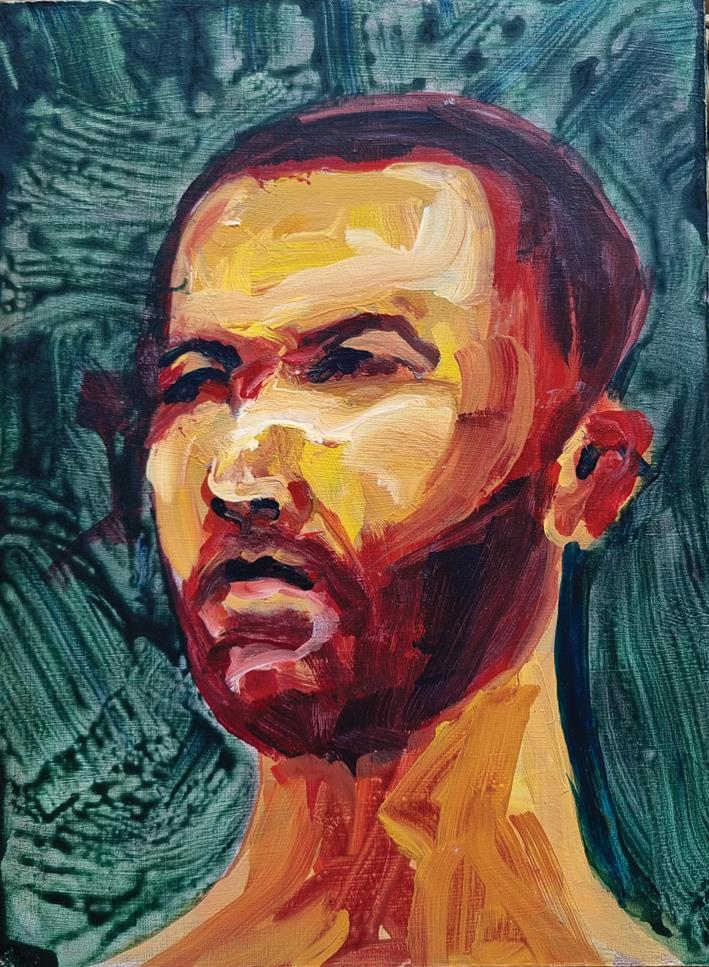
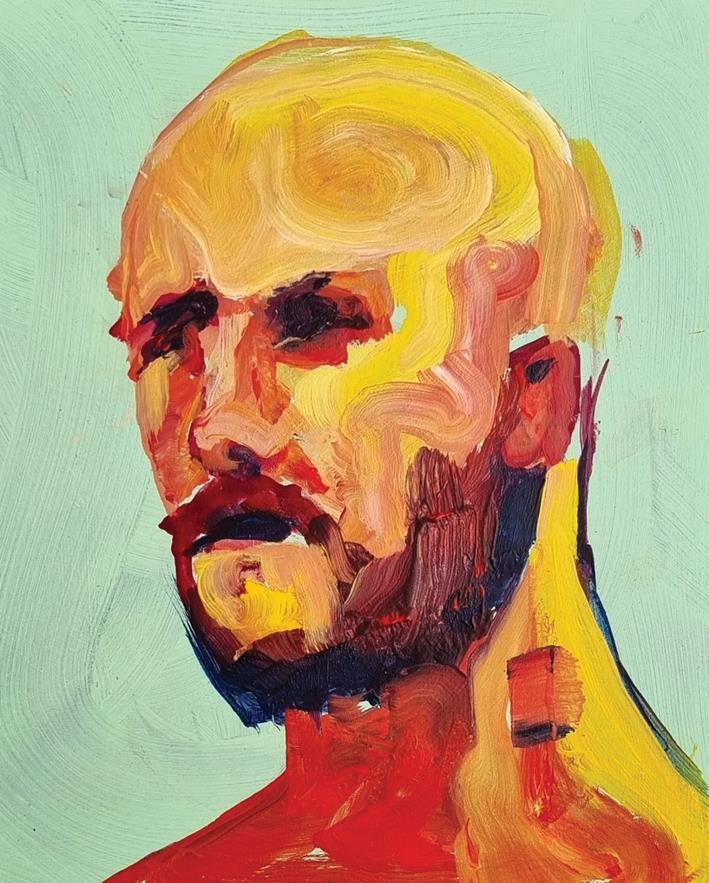
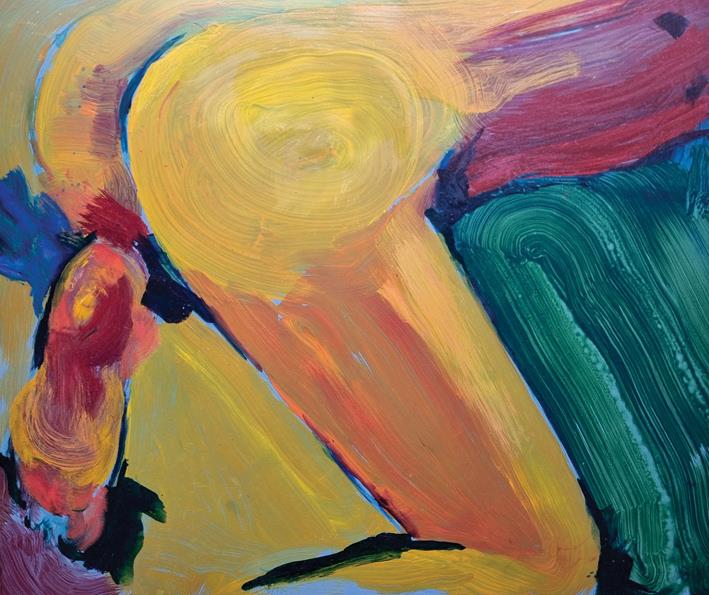
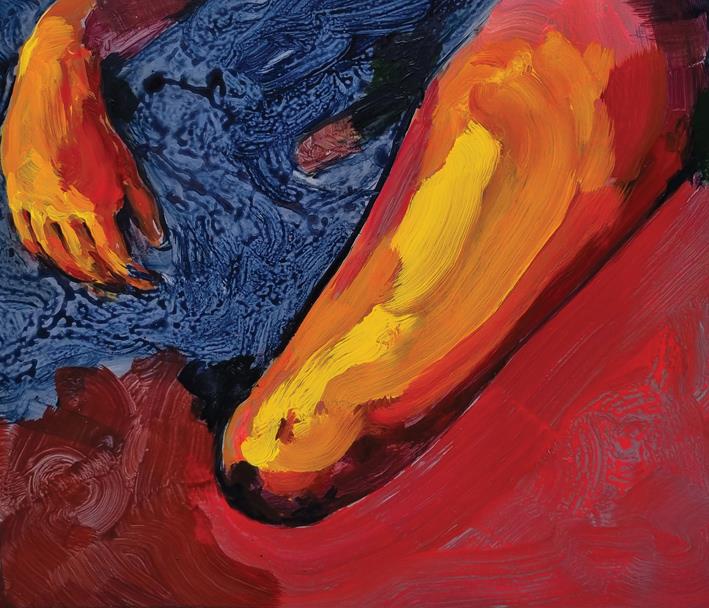
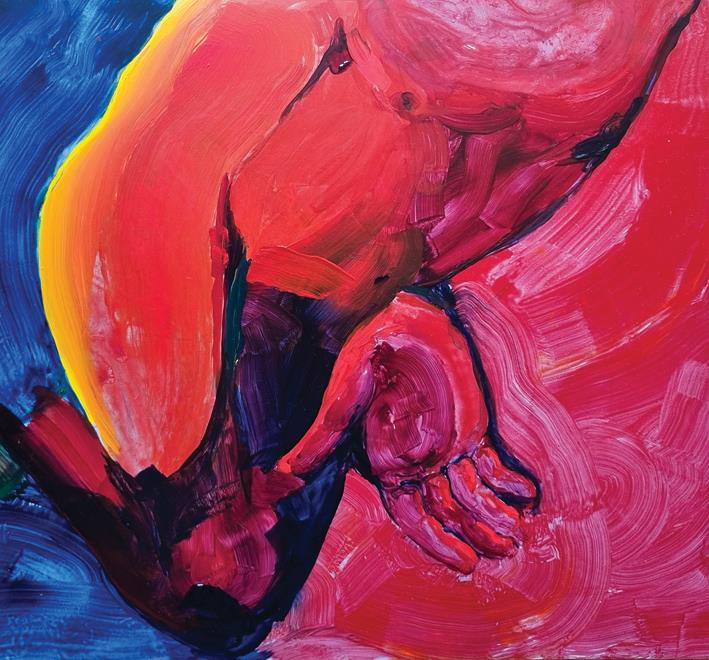
Sammut's brushstrokes echo this instinct. They are bold and unfiltered, often smeared by hand, again recalling those earliest forms of art, leaving behind fingerprints and traces of movement. At times, the medium is applied thickly and with weight; at others, he deliberately dilutes it, letting the pigment bleed across the surface in fluid gestures that suggest impermanence, absence or transformation.
The semi-abstract works are complex, both in composition and execution. The figures refuse to be pinned down. The colour palette is unapologetically bold; reds, dark greens, blues, yellows, all clashing and colliding in a daring, visceral way. Bodies melt into abstraction. Limbs stretch, dissolve, re-emerge, sometimes in contorted forms, as if caught mid-motion or mid-metamorphosis. Experiencing these works within the exhibition space, being fully surrounded by them, creates the feeling of stepping into a vast, life-sized puzzle: a wild ecstasy of limbs, torsos, and penises tangled together in a chaotic, yet strangely coherent, dance of colour and gesture. What we're seeing isn't a likeness. It's a record of being, a raw imprint of life. And as viewers, we are drawn into this crowd, this shared physicality, where no one is named but everyone is undeniably present.
There is a tension here: between emergence and disappearance, between the body and the spirit, between civilisation and instinct. It feels like a return to a collective human presence, one that predates language, culture, and ego. The individual is absent. The individual is no longer important. There's an almost anti-Renaissance quality to this approach, where identity gives way to essence.
What drives Sammut isn't the desire to capture someone, but the need to express that someone was there. And in standing before his paintings, the viewer becomes part of that exchange. Presence meets presence. Nothing is fixed, but everything matters.
None of the works in The Universal Man bear titles. This omission is not an afterthought, but a deliberate act, an invitation, or perhaps a refusal. In leaving his paintings untitled, Sammut resists the impulse to define, categorise or anchor meaning. Just as his figures are stripped of individual identity, so too are the works freed from linguistic framing. Titles, after all, imply certainty; they narrow the space between what is seen and how we're told to see it. Here, that space remains open. The viewer is not asked to read the work, but to encounter it, to sit with its presence and draw meaning instinctively, not intellectually. Much like a handprint on a cave wall, the gesture exists without a caption, and yet says everything it needs to.
To conclude, in this exhibition, we are witnessing the act of being human and remembering what it means to simply be.
The Universal Man is on view at il-Kamra ta' Fuq until 3 August. For more information, follow the exhibition and venue on social media.
