Over the years, the regatta faced difficult periods, especially when interest was decreasing and the number of rowers declined significantly. Several clubs struggled to field enough crews to participate in both the 'Open' and 'B' categories. This situation forced club committees to make tough decisions about where their best chances of winning lay, despite regulations prioritising participation in the 'Open' category.
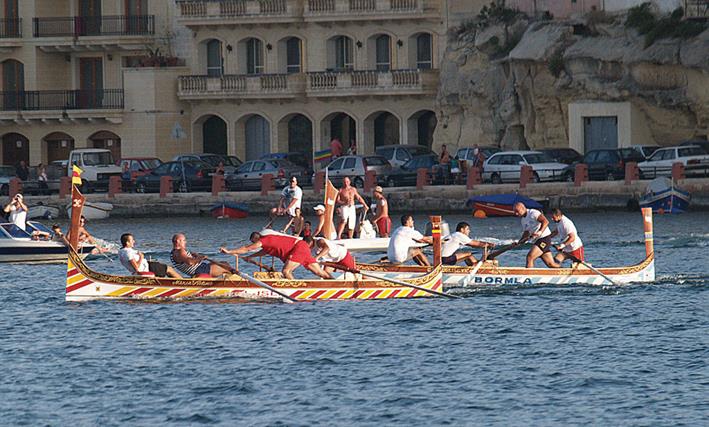
In reality, while the top two or three clubs benefited from strong sponsorships and could recruit elite rowers, the less competitive clubs found it increasingly hard to succeed. Successful crews naturally attracted attention from top clubs, who often offered money to secure their services. As a result, whenever a rower moved to a stronger club, it created significant challenges for the one he left, especially if there were no new rowers to fill the gap.
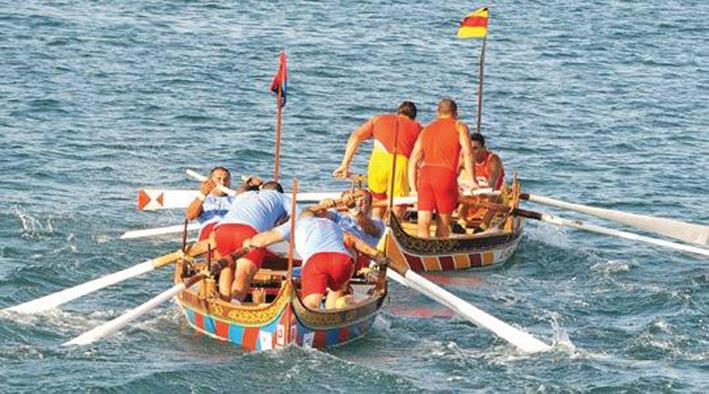
The Regatta Association's decision to limit each club to one boat per category created discontent among boat race enthusiasts. History seemed to repeat itself! Many young rowers abandoned the sport, as had occurred when the Association first introduced the Aggregate Shield for the Freedom Regatta. It's well known that during time trials, the strength of the crews often made it easy to predict the winner of the Aggregate Shield when only one boat per category participated.
With two boats, however, the outcome became less predictable, as many factors, such as lane positions, sea currents, wind conditions, collisions, and disqualifications, could influence the results. The removal of the second boat option frustrated club supporters, and the regatta began to lose its appeal among the thousands of spectators who once followed it passionately, especially on the 8th of September. Another factor that contributed to the decline in popularity was the authorisation of other sports, like football and water polo, to be played on the same day - something that had not been allowed in the past, when the National Regatta was given exclusive focus.
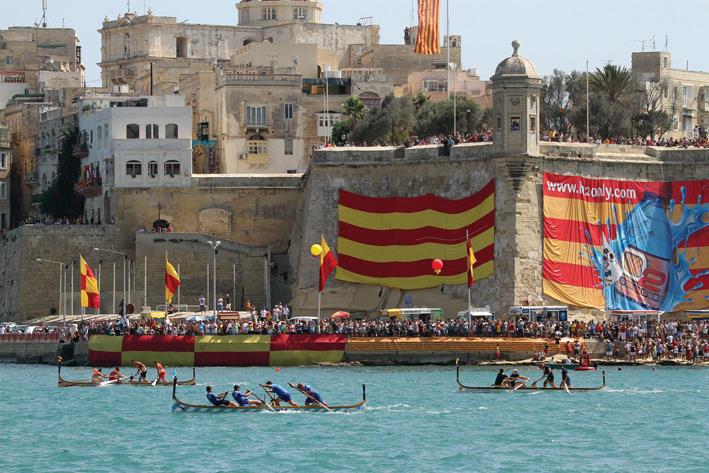
Although regatta clubs had a healthy number of registered rowers, in the late 1990s, some of the most respected and physically resilient among them, despite being well paid by their clubs readily switched allegiances when better offers came along. This marked a significant shift from earlier decades, particularly the 1970s and 1980s, when rowers typically stayed loyal to their clubs until retirement. Back then, rowers were signed to their clubs for periods of three to five years. Today, however, rowers frequently change clubs, often based on financial offers, registration terms, or the makeup of the crews they would be joining.
In 2004, the Birżebbuġa Regatta Club reorganised after a 24-year absence and applied to rejoin the Regatta Association with the intention of participating in the 2005 National Regatta. Although based in Birżebbuġa, and having trained near their club between 1974 and 1976, in preparation for the 2004 regatta, they rented a warehouse on the Senglea shoreline to store their racing boats. From that point on, they began training on the Grand Harbour racecourse.
In later years, the Gozo Regatta Club also affiliated with the Association, though they only took part in two editions due to travel difficulties and a shortage of rowers. From time to time, other towns and villages such as Żurrieq, Marsaxlokk, and Siġġiewi showed interest in forming a club and affiliating to take part in the boat races. Of these, only Siġġiewi succeeded in establishing a regatta club, and in recent years it has participated in both national regattas.
At the turn of the century, the regatta clubs of Senglea, Marsa, and Bormla dominated all boat categories in the two national regattas. These clubs had the strongest crews, made up of the best rowers in the area. Meanwhile, other clubs like Marsamxett, Birgu, and Kalkara, hindered by a lack of sponsors, struggled to attract enough rowers to fill boats for all the 'Open' and 'B' category races. In contrast to the traditional port clubs, Birżebbuġa, despite not having a strong regatta history,managed to attract more local rowers than some of the long-established clubs.
This situation persisted for several years, with just two or three clubs winning all the trophies, while the rest took part in some races more to honour tradition than to seriously compete for the flags. In recent years, the Regatta Association introduced a ladies' Fishing boat race (Frejgatini) in both regattas, with hopes that this will eventually lead to the creation of a full ladies' regatta.
Fortunately, in recent times, all regatta clubs, including Siġġiewi, have seen an influx of young rowers eager to win flags for their clubs. However, despite this renewed energy and participation, the regatta has been steadily losing popularity among the thousands of spectators who once followed the races with passion and excitement. Several reasons account for this decline. Besides having just one boat per club in each category, the regattas include eleven races that usually take five or more hours to complete. Many spectators find it difficult to remain standing and exposed to the sun for such long periods.
Another deterrent is the prolonged delay between races, which sometimes exceed fifteen minutes, especially when the next race's boats are not ready at the starting line. Additionally, the berthing of tourist ships along Lascaris Wharf has obstructed traditional viewing spots, further contributing to the drop in spectator numbers at both regattas.
At present, one can observe that while in all regatta clubs the enthusiasm and activity among the local rowers seem to be in high spirits, and training in gyms and boats normally begins in February in preparation for the 31st of March Freedom National Regatta. After a short pause, they resume training and continue until the eve of the 8th September National Regatta.
While the mid-1980s, at the beginning of September when training was at its peak, thousands of spectators and supporters from the six traditional regatta clubs used to follow the final training sessions daily from the Gardjola Gardens and Senglea Point, Lascaris Wharf, and the old Custom House, unfortunately, presently, only a few supporters attend the crews' training at the racecourse.
At that time (1980s), as in the past, the Regatta was considered a spectacular manifestation of strength, excitement, passion, and emotion. Thousands of spectators and supporters used to pack every venue around the racecourse, while the sea from Ras Ħanżir to the finishing point was filled with boats and other crafts, most of them tied to the wooden planks enclosing the course.
Nowadays, only a few hundreds tend to follow the boat races in the Grand Harbour, while many others prefer to watch the Regatta on television, with live commentary, analysis, and interviews with the winning crews. One must also add that another factor affecting the Regatta's popularity among spectators is the lack of organisation and the unwillingness to revise the old structural format into a more competitive model. Presently, despite this setback, this annual historical spectacle of strength and willpower is still sportively demonstrated by the rival crews throughout the eleven boat races.
Knowing the history of boat races, if the Regatta Association wishes to revive this tradition and regain the popularity it enjoyed, when thousands of spectators and supporters would gather to follow these races up to the early 1990s, it must restructure its format into a more compatible regatta: a blend of traditional and modern elements that could also attract the thousands of tourists visiting Malta at the beginning of September.
An effective proposal, which I discussed privately with members of the six clubs, is as follows: whether this format remains in place or not will ultimately depend on the results it yields. At present, the racing course accommodates eight boats - one from each participating club: Birgu, Bormla, Senglea, Valletta, Marsa, Kalkara, Birżebbuġa, and Siġġiewi. Taking the 2025 edition of the National Regatta as a reference point, I suggested that each Regatta Club field its best registered rowers in the 'Open' category boats. Following the regatta, the top four clubs in the final classification would go on to compete in the 'Open' category for the Aggregate Shield during the 2026 editions of both the Freedom Regatta and the National Regatta. The remaining four clubs would compete in category 'B' for a new trophy - the Victory Aggregate Shield. In this system, the club finishing last in the 'Open' category in 2026 would be relegated to category 'B' in 2027, while the top club in category 'B' would be promoted to 'Open'. Consequently, each club would enter two boats per category, maintaining a total of eight boats per race.
The two National Regattas would then consist of ten races, with the current category 'B' system discontinued. Naturally, with two competitive boats per club, predicting the outcome of either regatta would become much more difficult and exciting. While most of the club members I consulted expressed interest in the proposal and indicated that they would raise it in their respective committee meetings, there was, regrettably, no clear response as to whether they agreed with it or had alternative suggestions. It appears that many club committees remain focused solely on their current competitive standing, preoccupied with the section in which their club can most easily win a flag, rather than considering the long-term future and sustainability of the Regatta.
Evidently, the future of the boat races depends on the interest and commitment of the clubs' committees towards the regatta itself. If their focus lies solely on the individual success of their own clubs, chasing flags, rather than on the long-term future of the regatta and the preservation of this age-old tradition in the Grand Harbour, then sadly, this historic event may eventually come to an end. Regardless of how many clubs take part or how active and enthusiastic the rowers are within their communities, the regatta will continue to lose its popularity if supporters and spectators lose interest in following the races. Without public engagement, it risks fading into obscurity.
This historic tradition, held in the Grand Harbour for nearly 400 years, is a vibrant annual showcase of strength, rivalry, and community pride, as crews from around the harbour compete passionately for the coveted Aggregate Shield. It is a legacy that must be protected and cherished - not only for today, but also for our children and for generations to come.
This first parts of this article were published on 29 June,6 and 13 July. This is the final part of this article.