From 31st July to 28th August, Fabio Borg will present a curated selection of his recent work in the exhibition Tender Incisions at Konsum163. This showcase invites viewers to engage with the intimate and layered dimensions of his art, offering deeper insight into the evolving themes and techniques that define his creative journey.
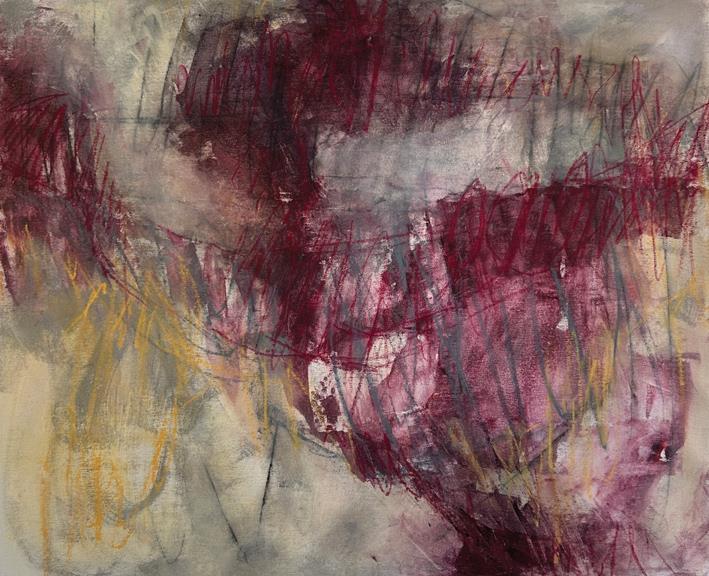
'Tender Incisions': The Art of Fabio Borg
In an age saturated with polished images and consumable aesthetics, the work of Fabio Borg insists on something far more essential - an art that listens inwardly, that remembers, that vibrates with emotional depth. His paintings are not scenes or symbols, but resonant terrains of memory, intuition, and inner urgency. With a practice grounded in immediacy and rooted in the unseen, Borg invites us not to observe, but to feel. What follows is not a survey, but a descent into the layers, tremors, and tenderness that define this singular body of work.
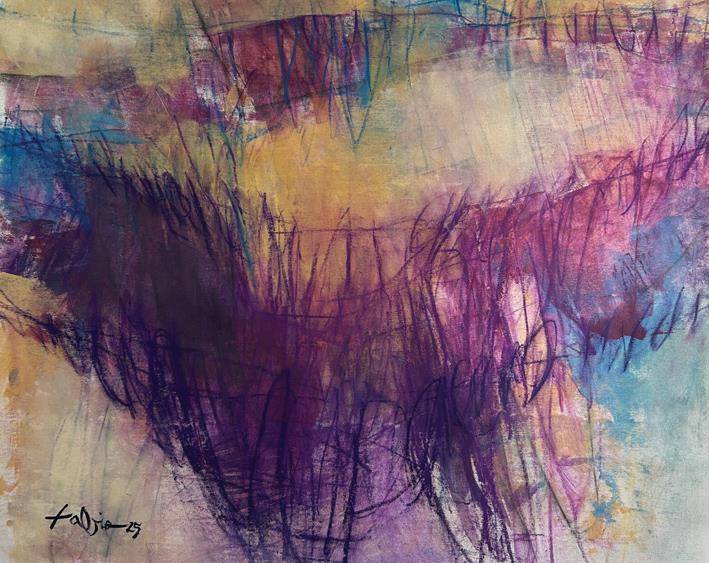
Fabio Borg's paintings do not enter a room quietly. They assert their presence not through spectacle, but through a depth that demands attention without ever needing to shout. His work operates not within the easily visible, but within something more elusive, something that echoes. The canvases function like seismographic records of emotional tremors: they do not illustrate events, but chart the aftershocks of feeling, embedded deep within the structures of memory. To stand before one of Borg's paintings is not to witness an act of creation, but rather a kind of excavation, ere nothing is newly discovered, but everything is deeply remembered.
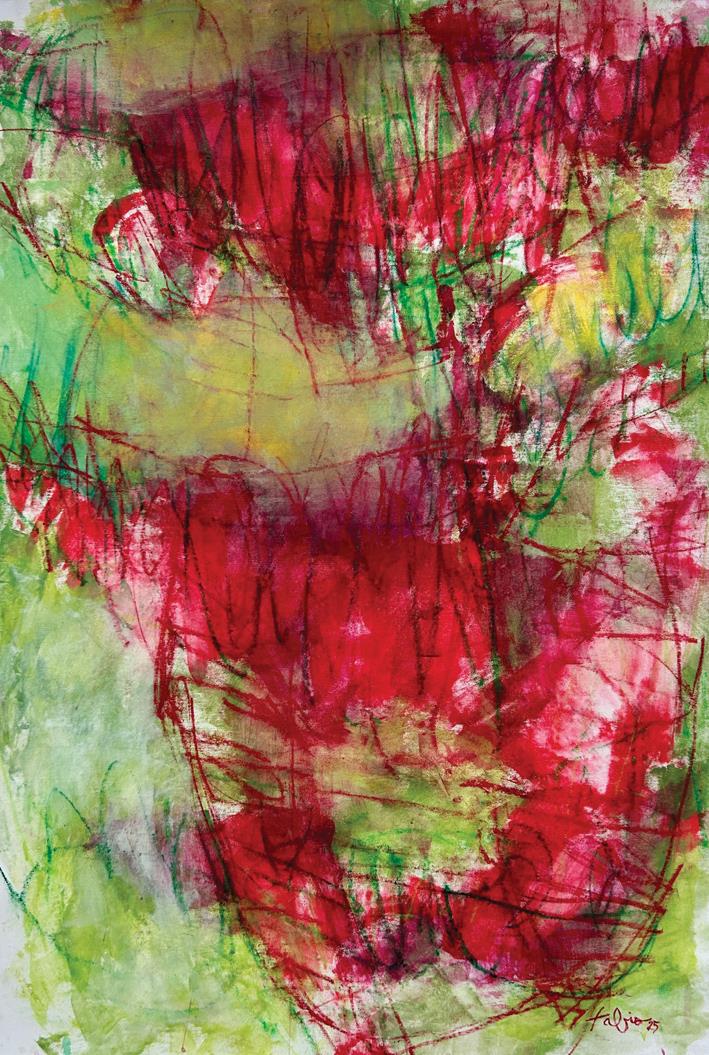
There is no linear narrative to follow, no temporal sequence to decode. In Borg's world, memory is not something depicted; it is something activated. One might feel they have encountered these images before, though not with the eyes. Colour veils, scraped surfaces, and tremulous lines act not as decorative flourishes, but as mental imprints - sedimented layers of experience, carefully unearthed. Borg assumes the role of geologist of the self, peeling back psychological strata to reveal what has long been buried beneath the conscious.
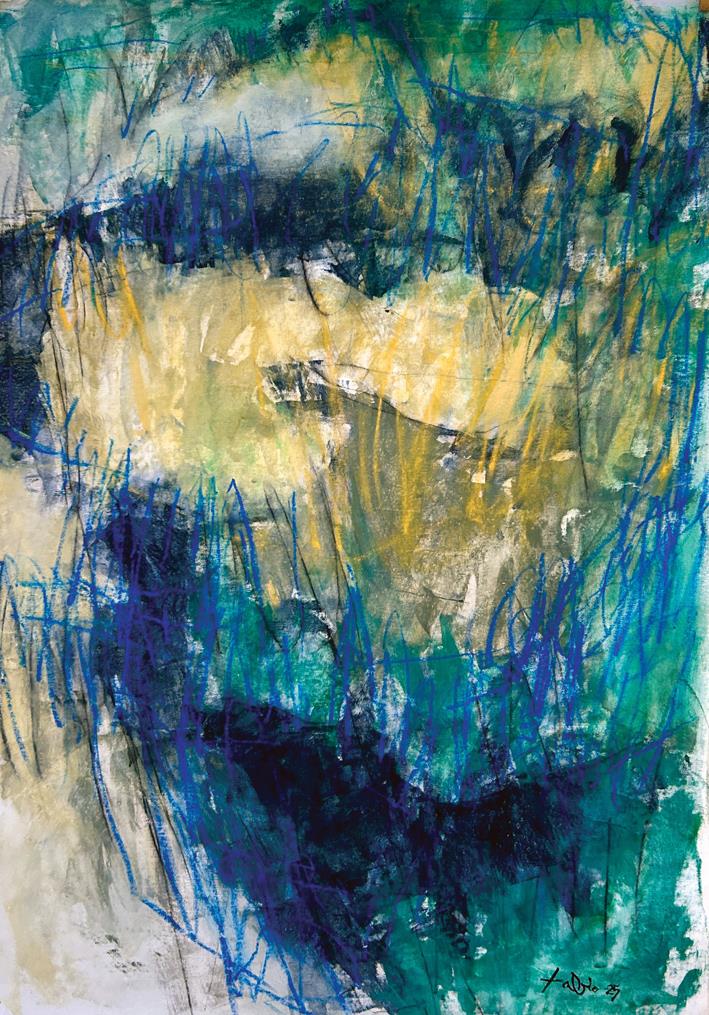
The line, in Borg's visual language, is neither contour nor outline; it does not define shape or contain form. Instead, it pulses across the surface like a nervous system, immediate, autonomous, and often volatile. This graphic rhythm trembles and stretches, creating a kind of drawn heartbeat that feels as fragile as it is insistent. With the force of charcoal or the tremor of pastel, these marks make his imagery unmistakable. Borg's line does not serve the colour - it confronts it.
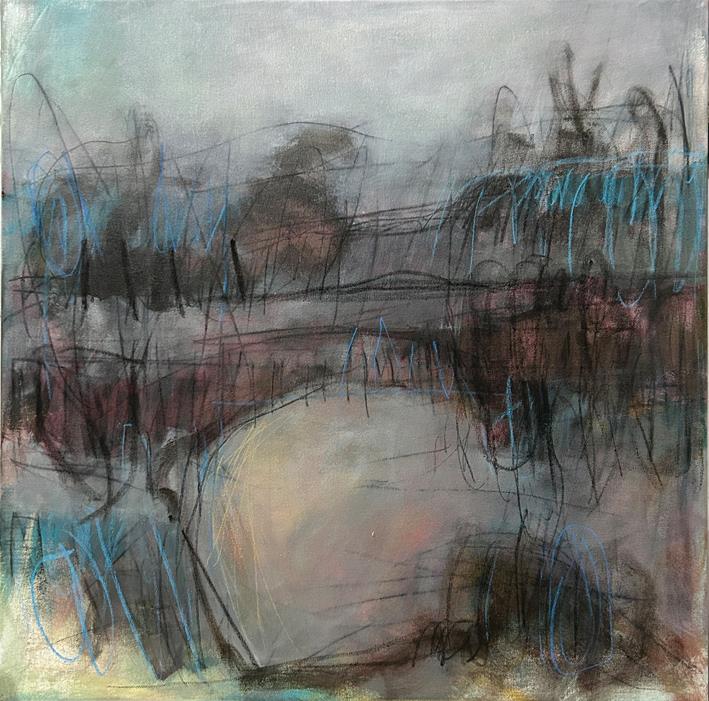
While his fields of colour create open, immersive atmospheres, the line interrupts with an urgent clarity, like an intrusive thought cutting through calm. It is in this duality, between the fluid seduction of colour and the disruptive insistence of line, that the emotional architecture of Borg's work takes shape. The paintings vibrate with a tension that never seeks resolution, but instead sustains a kind of expressive friction at their core.
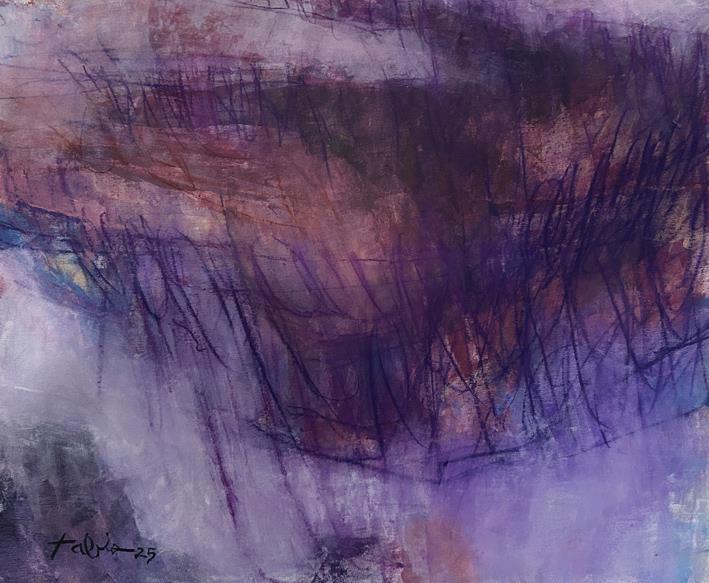
"I paint what I see inside." Frequently repeated by Borg in interviews, this statement is not a poetic embellishment, but a clear artistic credo. His paintings are not reflections of the world around him, but renderings of inner states-landscapes shaped by intuition, emotion, and memory. Within his compositions, nothing feels arranged or deliberate; instead, each element asserts its necessity, emerging from a space of heightened emotional urgency.
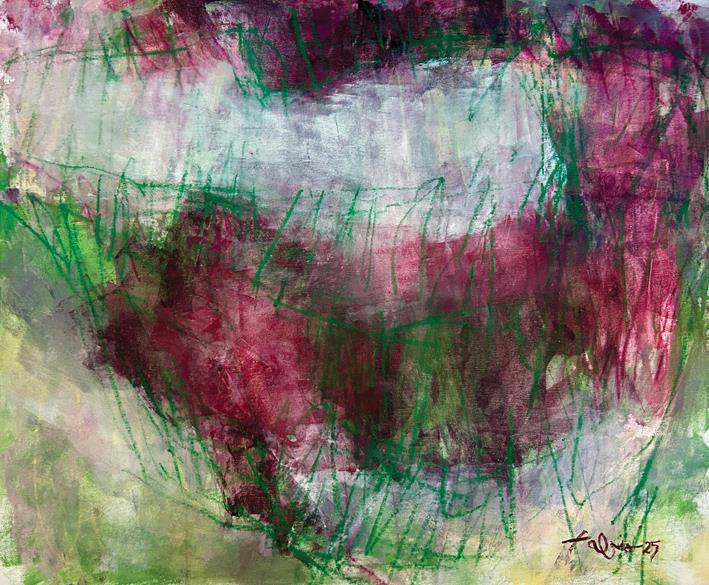
Borg often speaks of this urgency as a defining condition for his work, and it is this that animates his canvases with such immediacy. The painting process is not one of calculation, but of surrender. The canvas becomes not a place of planning, but a threshold where internal currents break through. Borg places his trust not in the intellect, but in the instinctive knowledge of the hand, he does not plan or conceptualize the image entirely in his mind before creating it; he remembers it through the act of painting itself.
In contrast to a culture where images are designed for ease of consumption, Borg's paintings refuse to be digested. They are not sleek surfaces, but membranes, thresholds through which emotional realities pulse. What we encounter in his work has no equivalent in the visible world; it is a visualisation of the invisible, a rendering of affective states that language cannot grasp.
Every brushstroke, every incised line, every field of colour stands not for something seen, but for something felt. These works do not offer decoration or instant comprehension. They resist being simply looked at, they must be faced. The viewer is not invited to understand, but to resonate. These works do not speak in clear voices; they echo in the viewer's body. What remains is not a flash of insight, but a lingering sensation, subtle, unresolved, and deeply human.
In Borg's work, colour is never an accessory to form, it is the very substance of the emotional experience. Ranging from warm flesh tones to the spectral pale of fading memory, from toxic greens to bruised violets, his colour fields evoke internal states rather than external references. They do not represent places, but suggest atmospheres of mind and mood. For Borg, colour is a spatial medium of affect, a field within which psychological realities are held and intensified.
These chromatic expanses are frequently disrupted, scratched through, marked, overlaid by graphic interruptions that resemble wounds. The softness of the painted surface is broken, and the rupture is made visible. Colour seduces, but the line intervenes. This dynamic mirrors the contradictions of emotional life: beauty that conceals pain, calm pierced by unrest. Borg does not hide these tensions; he allows them to coexist.
Fabio Borg paints quickly, but his speed is never careless. It is born of necessity, an urgency to capture the emotional impulse before it dissipates. For him, painting is not reflective, but reactive. Working alla prima, in a single act of wet-on-wet immediacy, he refuses the distance that thought or hesitation might impose between sensation and gesture. This is not a matter of stylistic choice, but a philosophical stance: the image must emerge in the same breath as the feeling that calls it forth.
The result is work that pulses with life. Even when dry, the paint seems to vibrate, as if still coming into being. Borg's chosen media, acrylics and pastels are not just practical; they are ideological. These materials preserve spontaneity, catching emotional urgency in its rawest form, before it can be smoothed over or revised. Each painting becomes a document of unfiltered presence.
The title of his exhibition in Munich at Konsum163, Tender Incisions captures the paradoxical spirit at the heart of Borg's work. Here, tenderness is not sentimentality, but an act of radical truthfulness. His paintings are driven by a commitment to vulnerability -not as weakness, but as the most powerful form of artistic honesty. There is nothing passive in this softness. It cuts, it insists, it remains.
The marks left in these works are not always visible; they are felt. They speak of memories that cannot be undone, of impressions that shape the inner self long after the outer wound has healed. Borg's work does not offer resolution or consolation, but something deeper: the recognition that truth often arrives not through clarity, but through sensation. What remains, ultimately, is not narrative, not comprehension - but resonance.