MADC's first-ever production of King Lear brought Shakespeare's tragedy to life in the open-air setting of San Anton Gardens, where the natural surroundings intensified the emotional weight of the story. Rather than diminishing the experience, the outdoor venue helped ground the play's themes of madness, betrayal and fragility, allowing the audience to fully integrate into the unfolding drama. With the last performance today, 27 July, the production succeeds in offering a visceral, accessible take on one of Shakespeare's darkest works.
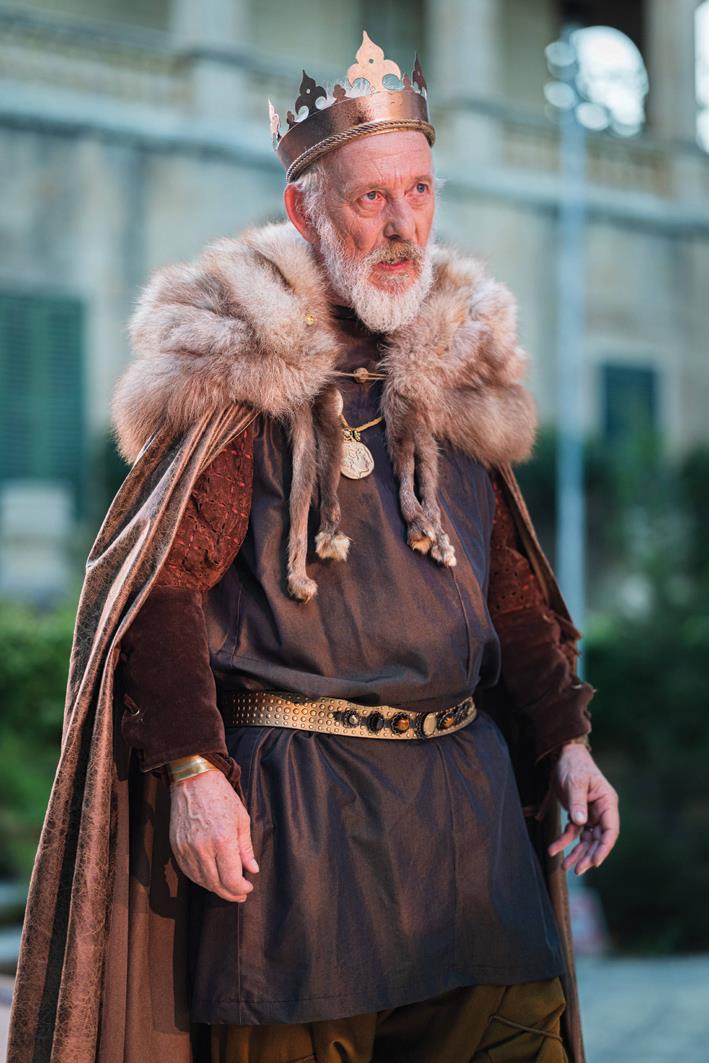
Stephen Oliver as King Lear
Director Chris Gatt approaches this complex tragedy with clear respect for the text, yet injects enough contemporary relevance to keep it fresh. He balances the emotional depth of the characters with an understanding of the broader political implications. The decision to stage the production outdoors might seem ambitious for such an intense play, but the result is surprisingly cohesive. The natural elements - rustling trees, evening light, and even the occasional ambient sounds - never feel out of place. Instead, they enhance the chaos and unpredictability at the heart of the story.
At the heart of the production is Stephen Oliver, who delivers a powerful and emotionally rich portrayal of King Lear. His performance is intense and captivating; the descent into madness is palpable and keeps the audience on edge. Oliver's Lear is not simply angry or confused - he is torn apart by betrayal, love and age, and the audience can feel every crack in his crumbling authority. His presence dominates the stage, even in quieter moments, and the psychological unraveling of his character is handled with both strength and nuance.
The casting of Lear's daughters is particularly strong. Faye Paris as Goneril and Daniela Carabott Pawley as Regan play the ambitious, manipulative sisters with chilling conviction. Both bring an edge of cruelty that is grounded rather than exaggerated. Melissa Mercieca's Cordelia, in contrast, is calm and grounded - a performance that embodies quiet integrity. Her moments on stage are few but deeply impactful.
Leah Grech's portrayal of the Fool is another standout. Her performance offers moments of levity that never undercut the gravity of the situation. Instead, Grech's Fool becomes an emotional compass, highlighting Lear's spiraling mental state through wit and observation. Her chemistry with Oliver adds another layer to the story's emotional depth.
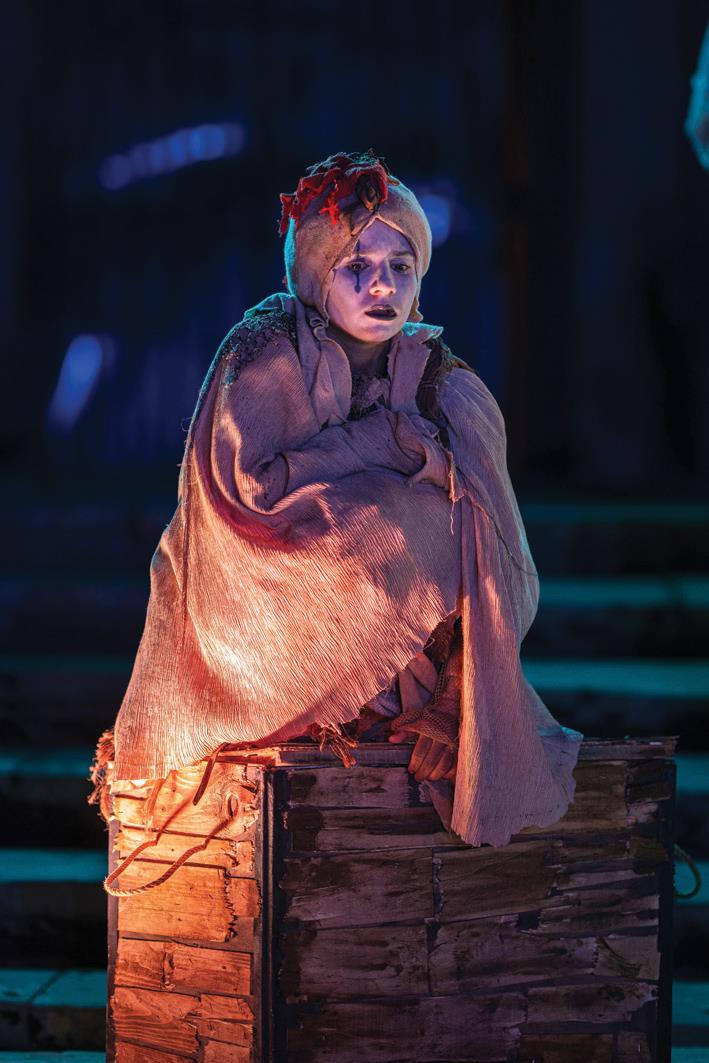
Leah Grech as The Fool
Michael Mangion delivers a compelling turn as the Earl of Gloucester, especially in scenes that parallel Lear's own journey of betrayal and suffering. His chemistry with Alex Weenink, who plays Edgar, adds depth to the subplot. Weenink captures Edgar's transformation with intensity, while Daniel Formosa's Edmund convincingly portrays the manipulative illegitimate son, embodying the hunger for power that drives much of the play's conflict.
The supporting cast also holds its own. Simone Ellul as the Duchess of Kent is solid, loyal, and direct - a figure of constancy amid the unfolding turmoil. Edward Caruana Galizia brings a brooding quality to the Duke of Cornwall, while Bernard Zammit plays the Duke of Albany with appropriate restraint, his character's moral awakening serving as one of the play's few glimmers of hope.
MADC's choice to finally tackle King Lear, one of Shakespeare's most complect and emotionally raw works, shows a confident step forward in its summer Shakespeare tradition. For decades, the company has brought classic works to Maltese audiences in the summer months, but Lear has long remained untouched - likely due to its depth and demands. This year, however, Gatt and his team rose to the challenge.
One of the most resonant aspects of production is how well it aligns with current political and social climates. King Lear may have been written in the early 1600s, but its themes - the dangers of unchecked ambition, the fragility of the authority, and the cost of betrayal - remain deeply relevant. The story holds a mirror to modern governance and interpersonal power struggles, and this production doesn't shy away from highlighting those parallels.
The psychological complexity of the play is handled with care. It would have been easy for the open-air format to strip the play of its intimacy, but that's not the case here. On the contrary, the audience's proximity to the actors, combined with the natural setting, brings viewers closer to the action and emotion. You're not simply watching Lear fall apart; you're experiencing it alongside him.
Lighting and sound design are used effectively, especially in scenes that demand emotional tension. The storm scene - one of the most iconic in the play - is executed with subtlety, relying on the performance and natural setting rather than overly dramatic effects. This decision keeps the audience focused on the characters, where the real drama lies.
Costume design remains traditional, with period dress reinforcing the timeless quality of the story. It avoids distraction, instead letting the performances and text take centre stage. Similarly, the set is minimalist, using the garden's existing features to full advantage rather than overwhelming the space with artificial constructions.
MADC's commitment to nurturing emerging talent is also on display here. The mix of seasoned actors and younger performers creates a dynamic cast that mirrors the generational and ideological divides at the heart of the play. It also reflects the company's ongoing role in developing Malta's theatrical scene.
This production of King Lear does more than deliver Shakespeare to a summer audience - it challenges the audience to reflect, empathise and confront uncomfortable truths. The themes of love, power, loyalty and madness feel more immediate than ever. And in Oliver's Lear, we are given a portrait of a man and a leader whose flaws are all too human.
Ultimately, MADC's King Lear is a bold and thoughtful staging of one of literature's greatest tragedies. Today's last show at San Anton Gardens, promises an engaging night of theatre that doesn't just entertain but resonates deeply. For anyone curious about how Shakespeare can still speak to us centuries later, this is a production well worth seeing.
Suitable for audiences aged 10 and above.
Tickets and more information can be found at www.madc.com.mt
Photos: Josmar Muscat
