The Lino Spiteri Foundation's six-month Headstart course is helping persons with disabilities gain basic skills they may be lacking in, often leading to their first formal qualification, LSF CEO Esmeralda Micallef Zarafa said.
Micallef Zarafa spoke to The Malta Independent on Sunday about the foundation's work, and said that the programme fills critical gaps, and helps participants become more employable, independent, and adds a crucial confidence boost.
For a decade, the LSF has worked to bridge one of Malta's inclusion gaps: employment for persons with disabilities.
Micallef Zarafa and Corporate Client Services team leader Kirsten Caruana spoke about breaking down barriers, building stronger workplace cultures, and why companies are beginning to see disability as strength, and not a liability.
With its hands-on approach and close collaboration with both jobseekers and employers, the foundation, which is named after the late Lino Spiteri, a former Labour Minister, has grown into a vital bridge between vulnerability and opportunity.
"We work on three fronts," Micallef Zarafa explained. "First, the person with a disability. We assess them, profile them, and help them get as close to a job as possible, as quickly as possible," she said.
From registration to training and referral support, this process starts with the assumption that anyone walking into LSF wants to work, and the foundation's role is to clear the way, she said.
The second pillar is outreach to corporate companies in Malta, something Micallef Zarafa said remains one of the most underdeveloped areas across Europe, but in which Malta is making great strides.
"Almost all local enterprises are subject to a 2% quota law. That came into force at the same time we were founded," she said.
"We have a specialised unit dedicated to supporting companies, not just in recruitment, but in brokering government schemes, setting up interviews, and what we call job-carving," Micallef Zarafa said.
LSF's job-carving method, recognised by the EU as a best practice, tailors job roles to fit the strengths and abilities of each candidate.
The foundation's third and largest unit, job-coaching, ensures that this support continues once someone is placed in a workplace, she said.
"That is where we work hand in hand with clients, before and after employment. It is very practical, day-to-day help," Micallef Zarafa said.
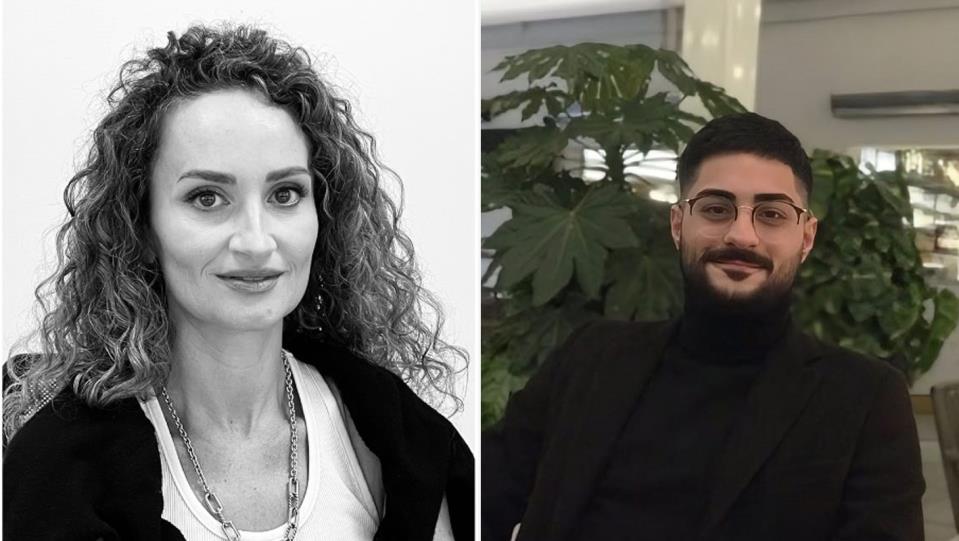
Esmeralda Micallef Zarafa (left) and Kirsten Caruana (right)
Caruana added that the job-coaching unit focuses on helping each individual become independent at work.
"That could mean anything from training and coaching, to setting alarms and creating checklists," Caruana said.
This human, tailored approach, while professional, also creates trust, as LSF always encourages companies to focus on the added value this person can bring to their team, Caruana said.
"Our goal is that these persons become independent at the place of work. We look at which tasks they need support with, help them accordingly, depending on the individual's needs and the job they will be working," Caruana said, adding that the job-coaching unit collaborates a lot with the corporate relations unit for any additional help, towards a holistic approach which focuses on the person's strength.
He said that the unit taps into both internal and external resources that the person with a disability might need to utilise to further develop at the place of work.
Micallef Zarafa was asked what are the main challenges persons with disabilities still face when trying to enter the world of work in the country, and how the foundation is working to address these barriers in a meaningful way.
Micallef Zarafa said that most of the foundation's clients come to LSF lacking basic skills, literacy, numeracy, communication and social skills.
To address this, the Foundation created Headstart, a six-month MQF Level 4 course offering basic training in several areas, including IT skills, teamwork, communication and financial literacy.
She said that the majority of participants receive their first formal qualification through the course, and a stipend.
"It can be a game-changer. We have had participants who were already employed asking to take it in parallel," Micallef Zarafa said.
Yet for many, it is their first step into the working world, as some have never had a placement or experience outside their homes.
"Sometimes there is a disconnect with parents. What someone can do at home is not always what they can manage at work," Micallef Zarafa said.
Despite Malta's 2% quota system, many companies still opt to pay the fine rather than hire a person with disability.
However, according to Micallef Zarafa, these are becoming the minority.
"We do not collect the fines, Jobsplus does, but we know that most companies now prefer to employ someone rather than pay the penalty. Our support, combined with the generous schemes available, has helped shift that trend," she said.
According to Micallef Zarafa, around 52% of companies that fall under the quota are now compliant. There is also a large number of small enterprises that fall outside the quota, but still choose to employ persons with disabilities, Micallef Zarafa said.
"These businesses do not show up in our official numbers, but they are a huge part of our work," she added.
She added that for many employers, reluctance is not rooted in prejudice, but in fear.
"It's a fear of the unknown. They do not know what it looks like to have a person with a disability on the job. That is why our support is so important," she said.
With the recent reform in Malta's Labour Migration Policy, employers who neither employ a person with disabilities or fail to pay the fee are now prohibited from hiring new TCNs to work with them.
She was asked how she viewed this change and whether she believes this will be an effective incentive to increase inclusion.
"When we started off with this legislation being enforced, there were many people saying it would work against the market rather than in favour of the market, to legislate the 2% quota law," Micallef Zarafa said.
She expressed her strong belief that the law plays a crucial role in making companies recognise the importance of employing individuals with vulnerabilities, adding that without it, LSF would not have made such progress over the years. She further added that these laws make employers realise that this is something they need to pay attention to.
Micallef Zarafa said that she is in favour of the new amendments, and said that this eye on the local sphere has already been in place, such as in terms of public procurement, tendering, and other aspects.
"Companies are always asked whether they are in line with the quota law, and at the most, if not in line, that they are up to date with their fines. Once it is a law, it is only fair that it is enforced. From my perspective, I am pleased that it is being enforced," she said.
Asked what tends to convince a company to take the leap and hire a person with disabilities, Micallef Zarafa said that there is a mix of elements.
"For some it is just the incentives, for some it is just that they do not want to be fined, for others it would be a bit of everything. For many, it would be genuine interest in giving this a shot. Maybe they know somebody, or they have somebody in their family who has a disability," she said.
"When we go abroad in the EU and we speak about what we do in Malta, funnily enough, we have been classified as a very, very good example of how it should work. And we've gone to several countries like Slovenia, Montenegro, France and Belgium, and we keep talking about our best practices, the small island that we are," she said.
Micallef Zarafa said that one of the things LSF always tells foreign foundations is that it is a matter of having the right initiatives in place, the right schemes to support employers and Malta has got many of them at the moment.
"We provide the right support at job and human resource level, so that companies can be supported. It is a concert of all of these things. Some would be more important to some employers than others, but the truth is that it is working beautifully, because there are so many aspects that are in favour of the ultimate employment of persons with disability," Micallef Zarafa said.
She said that LSF works with all the markets and sectors in Malta, from hospitality to office work, factories, restaurants, hotel businesses and more.
Micallef Zarafa specified that there is not one type of job that persons with disabilities are looking for, however she explained that persons who require the foundation's assistance tend to be further away from the open labour market and lack qualifications and basic skills; and hence are looking for lower-level jobs. Persons with disabilities who are able to acquire further education are not the foundation's typical client.
"The ones that come here require support and therefore will start off with a basic job," Micallef Zarafa said.
Asked if once employed, these people progress to higher ranks, she said that while this does not happen often, there is a possibility.
"There is also the possibility of increasing tasks, making the tasks more complex, increasing hours, as most of our clients work on a part-time basis or a full-time reduced, but mainly, they are all very happy to have a job and to be gainfully employed," Micallef Zarafa said.
She stated that having a job empowers persons with disabilities by enhancing their autonomy and allowing them to earn their own income.
One thing still missing in many workplaces, is what Micallef Zarafa called a buddy system, someone internal who checks in, offers small but meaningful support.
"At some point, we need companies to take over. These individuals will not stop being vulnerable, but they will improve, they will learn, and they will be able to do the job," Micallef Zarafa said.
"They'll just need someone to check in once a week, maybe even once a day," she added.
She said that this buddy system is definitely lacking in the Maltese environment, but also across the globe. Micallef Zarafa said that this may be due to today's self-sufficient and autonomous type of generation.
"We have this mentality of 'I do my job and get the hell out of here', rather than helping each other. However, it is not that far from what we do on a humane level, when you notice that a colleague seems down. We ask them if they are okay, or if they want to have a coffee," Micallef Zarafa said.
She said that these are things which are done on a daily basis, without much thought.
"The buddy system would be doing it with a specific target of supporting a vulnerable person with some form of disability at the place of work who obviously has disadvantages when compared to everyone else, such as in communication, in getting what they need and want," Micallef Zarafa said.
LSF has also seen hundreds of individuals thrive with the right support, even those long considered unemployable, she said.
"There are people who lived in day centres because they were too challenging to live at home. Now they are working. We had a young 19-year-old man with multiple disabilities, we extended his Headstart training twice. Now he's 25, working a desk job, and an integral part of his team," Micallef Zarafa said.
Caruana added that some employers who initially hesitated, gave it a shot and ended up hiring more persons with disabilities after their first experience.
"They see it works, and the belief starts to change," he said.
Micallef Zarafa said that the foundation's ethos is grounded in professionalism, not charity.
"When I joined in 2016, the dominant mentality was still 'miskin'- poor them," Micallef Zarafa said.
"From day one, we have worked as a specialised recruitment agency. We do not want pity. We want performance, and we help make that happen," Micallef Zarafa said, adding that that includes job trials, employee screenings and job-coaching.
"We attend interviews with our clients. We shape jobs, and we never ask for compensation, as LSF is a non-profit organisation," she said.
Caruana added that LSF always tell employers to consider the value this person will add, and not just the quota.
He said that job-carving is there for a reason, to create a tailored job for this individual, so that one can get the best value out of them, and the knowledge that the company will continue to thrive along the way.
He continued that if anything happens, they can always reach out to LSF and the foundation will support as necessary.
Micallef Zarafa said that this ripple effect goes beyond the individual, as when someone with a disability gets a job, their entire support system changes too.
"They become more independent, they receive their own salary, they gain autonomy. We even teach them to open their own bank accounts," she said.
"Workplaces become more cohesive, more empathetic. We have had companies tell us their entire work culture softened after hiring one person," she said, adding that for many of these persons with disabilities, the impact of simply having a job is transformative.
"These are loyal employees. For them, this is not just a job, it is life-changing," Micallef Zarafa said.
She said that together as a team, "we will all achieve. At some point in life, we will all be vulnerable, or love someone who is. This helps us become a better society".