Our first artist for the month of August is none other than our own Antoine Farrugia, with his solo exhibition Għamja l-Għajn. Funnily enough, it's only his second solo at il-Kamra ta' Fuq since we opened our doors around four-and-a-half years ago, which just goes to show how packed our exhibition programme really is. (Some artists still don't believe me when I say we're fully booked... even Antoine can't land a slot every year!)
Since it's been a while since I last wrote about Antoine, here's a little refresher. He may not have exhibited at il-Kamra recently, but he certainly hasn't been idle. Following his last solo here, Xulliela Bajda, he held another solo at The Phoenicia and a major exhibition at the Parliament Building in Valletta, aptly titled It's All Paperwork, a show that pushed the boundaries of globigerina limestone by carving it to a paper-thin elegance. Not stopping there, he also took on a massive commission for a hotel, producing 140 stone sculptures in just 15 months. And to top it off, one of his large-scale works was auctioned at The Top Charity 2024 by the Omenaa Foundation, fetching a remarkable €75,000.
Oh, and yes, he's now the second loudest person I know.
Antoine's work always seeks to uncover or excavate, if you like, the hidden beauty lying within the material, particularly those often discarded pieces of globigerina limestone. He often mentions that he's always on the lookout for the harder variety of the stone: pieces that have been exposed to the elements and naturally hardened over time. To quote him directly, he's after "ġebla indimonjata". He finds these stones in all sorts of places, sometimes from the expected source, like a quarry, but more often than not, he seeks out the discarded ones. The throwaways. The ones replaced with bricks and forgotten.
I still remember one time, a small group of us were in Gozo, all crammed into Antoine's van, when he suddenly slammed the brakes in the middle of nowhere. Without saying a word, he hops out, beaming, and retrieves a stone lying abandoned by the roadside. I've always wondered what kind of marvel that one turned into!
Over the years, Antoine has worked with various materials and created large-scale sculptures in metal, wood and marble. But globigerina limestone remains closest to his heart. He's deeply committed to raising awareness about how we're destroying this natural resource, through the demolition of old buildings, often replaced with concrete and bricks, and, in doing so, losing a part of our identity. The honey-coloured stone, so synonymous with the Maltese islands, is slowly disappearing, and Antoine's work serves as both a celebration of this treasure and a quiet protest.
Indeed, Maltese stone is precious, not only as a cornerstone of our identity, but also for its global significance. In 2019, Malta's globigerina limestone was officially designated a Global Heritage Stone Resource (GHSR) by the International Union of Geological Sciences (IUGS), via its Heritage Stone Sub-commission. This places it alongside revered materials such as Carrara marble (Italy), Portland stone (UK) and Larvikite (Norway). The GHSR status underscores the stone's exceptional geological, historical, and cultural value. For over 5,000 years, globigerina limestone has shaped Malta, from the prehistoric temples of Ħaġar Qim and Mnajdra (alongside Coralline Limestone), to the honey-hued facades of churches and cityscapes. Its fine grain and remarkable workability have made it an enduring material of choice for generations of Maltese builders and sculptors.
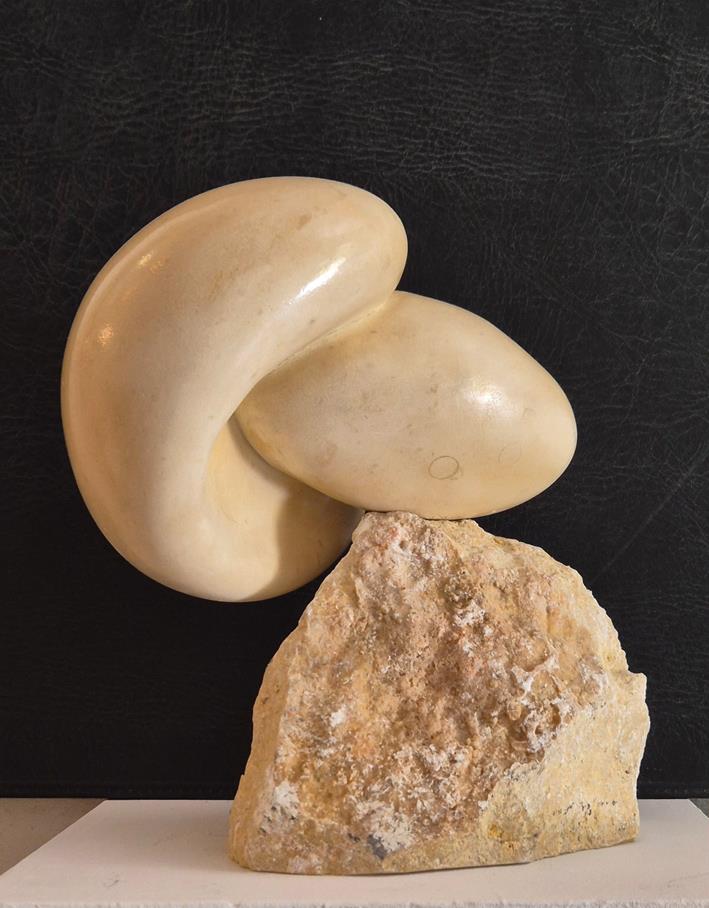
But back to the exhibition, you might be wondering, why the title Għamja l-Għajn? As he has done many times before, Antoine chose a title in Maltese. The Maltese language is of paramount importance to him, and he continues to assert its significance through his exhibition titles. Għamja l-Għajn suggests both a veiling and a revealing tension between what is seen and what is felt. As mentioned earlier, Antoine has an uncanny ability to perceive hidden forms within each stone.
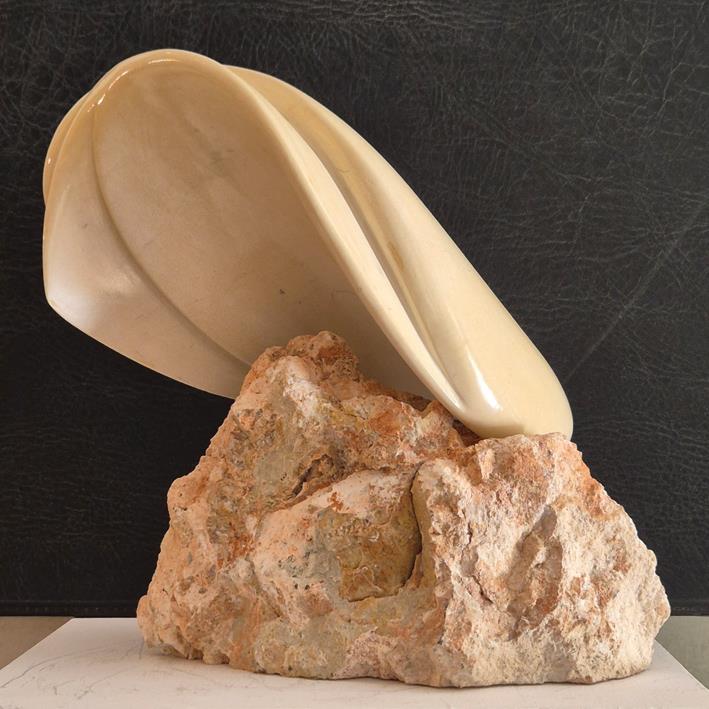
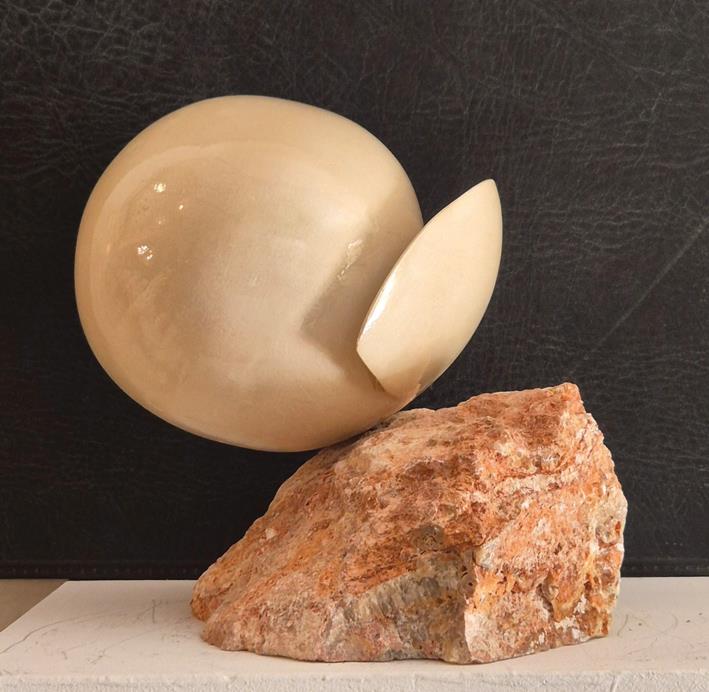
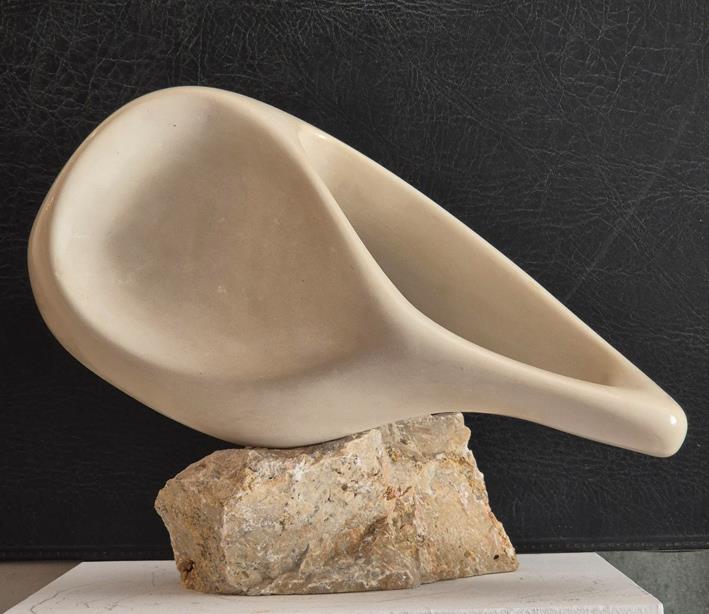
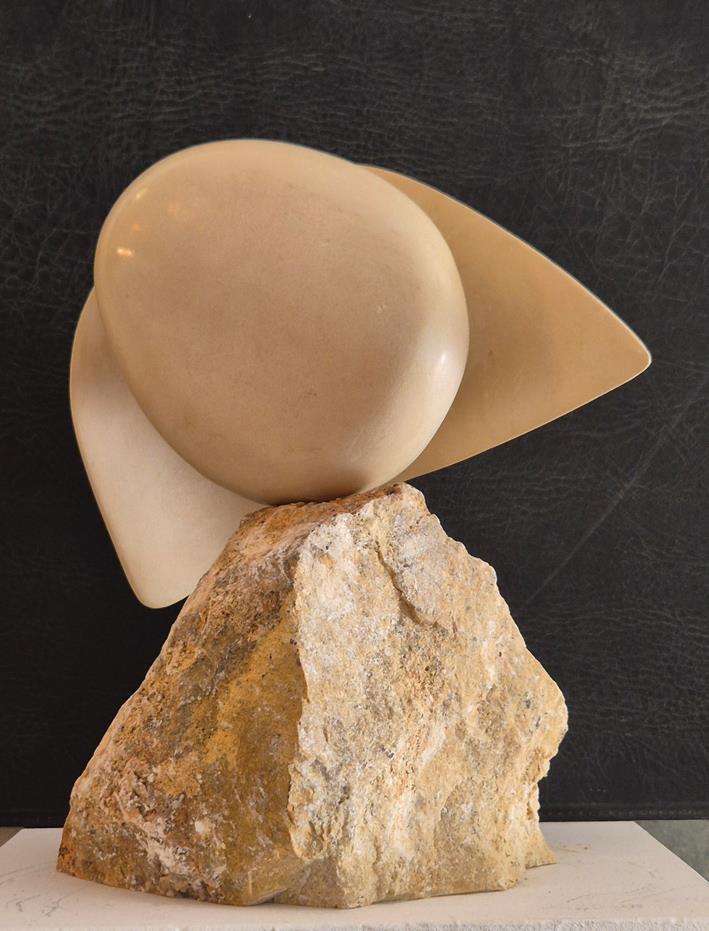
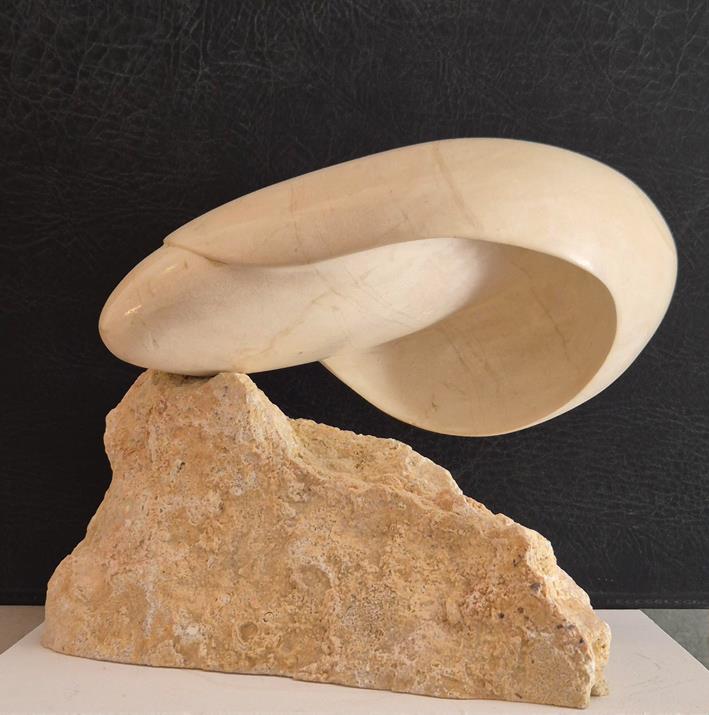
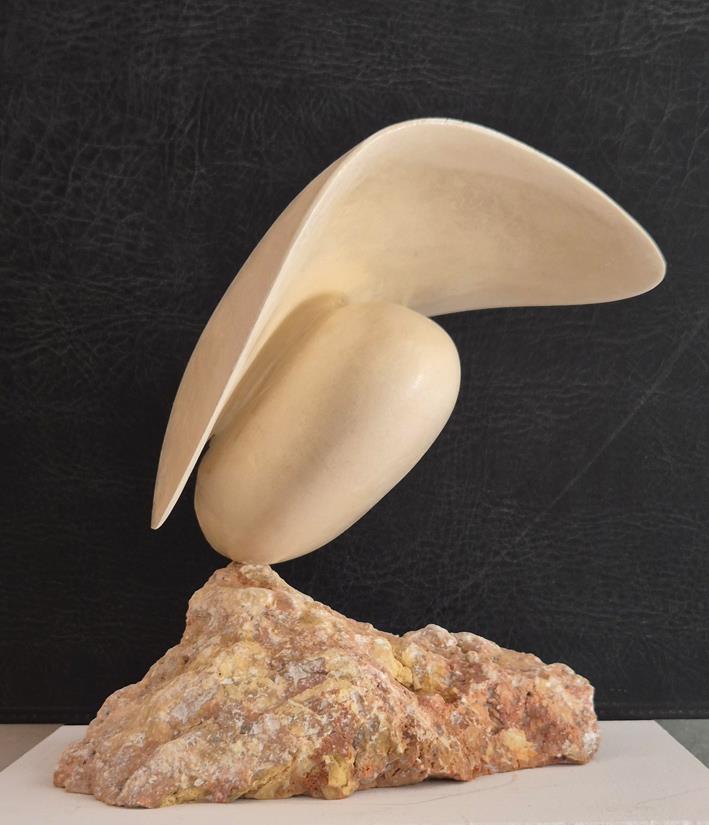
A new aspect in this exhibition is Antoine's decision to use extremely raw stone for the bases of the sculptures. This creates a striking contrast with the highly polished, sensual surfaces of the works themselves. I'll take a little credit here. The idea came unexpectedly, during one of my spontaneous visits to his studio, when I spotted a piece drying outside, attached to a rough, uncut stone, which he uses as a base only during the work in progress. I immediately loved the contrast and pointed out that he should use bases like that. The rugged bases used for the exhibition also have a story. They were chosen from a place in Gozo by Antoine and Austin Camilleri. Getting even one edge flattened for the base bottom was a bit of an ordeal, complete with a usual dose of drama. And the rest, as they say, is (very) recent history.
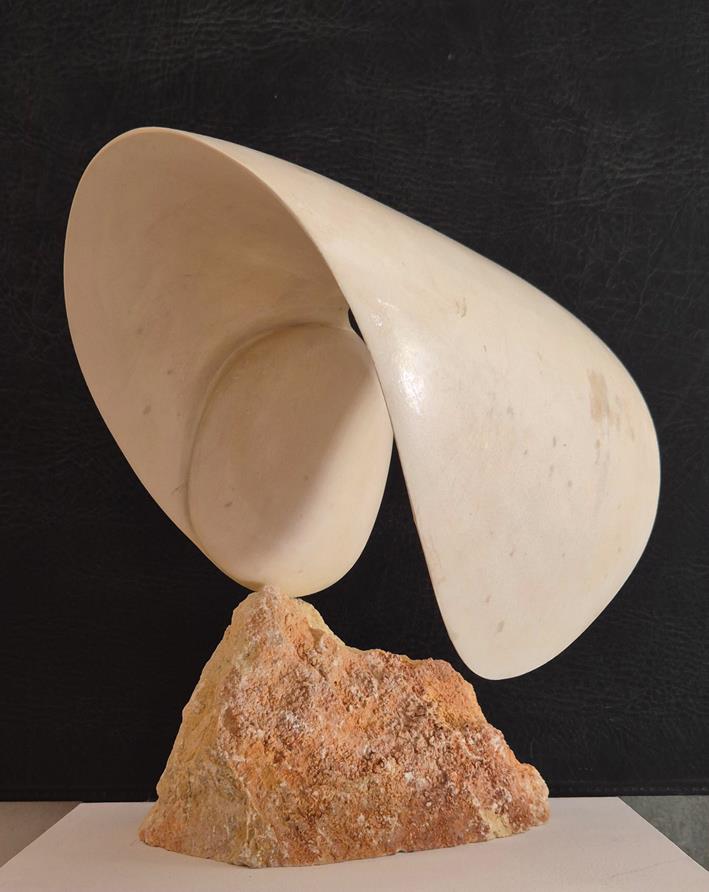
This play on duality between title and material runs throughout the exhibition, where refinement meets rawness, and instinct meets control. For Antoine, abstract form remains paramount: a sculptural language he has honed over years of working with stone, where each piece becomes both a technical achievement and a soulful expression. These works are not only a continuation of his commitment to abstraction, but also a tribute to the very material that has shaped his practice.
We catch glimpses of influences from Antoine's previous works, forms that echo the monumental commission (140 small sculptures), where now we see hints of these forms reimagined at a larger scale. Some other pieces even take us back to the astonishing paper-thin delicacy that left us in awe during It's All Paperwork. These are not repetitions, but quiet reminders and fragments of where the artist is coming from, offering us a pathway to follow through his ongoing artistic journey.
As always, my eternal struggle with Antoine is about the titles, or rather, the lack thereof. He remains firmly committed to keeping his works Untitled. For those curious about the reasoning, he has a rather entertaining story to share from a residency he did years ago in Germany. That said, for those who own a work by Antoine, you'll know we've found a bit of a compromise. In fact, those who adopt one of his sculptures are given the honour of naming it themselves, which becomes the official title that is then issued on the certificate of authenticity.
The beautiful photos accompanying this article are lovely, of course, but nothing compares to seeing sculpture in real life. So we warmly invite you to come visit the exhibition and experience the works in person. And remember... please don't touch the sculptures, we know, they really are tempting!
Għamja l-Għajn reveals Antoine's ongoing bravura in execution, as well as his ability to inject both presence and purity into every sculpture. Whether experienced as meditative objects or tactile encounters, these works invite us to reflect on transformation, perception, and the silent strength embedded in stone. The exhibition affirms Antoine's place as one of Malta's foremost sculptors, rooted in tradition, yet always pushing the boundaries of form.
The exhibition runs until 24 August and is curated by yours truly at il-Kamra ta' Fuq.
For more information find them on social media