My second visit to the Caravaggio 2025 retrospective exhibition at Palazzo Barberini in Rome felt like a homecoming. Not just to enjoy the paintings but to continue to appreciate the raw emotional power of Caravaggio himself.
On my first visit, I was overwhelmed, almost breathless, caught in the grip of what some might call the Stendhal Syndrome, that heady mix of awe, emotion and sensory overload in the presence of great art.
This time, with that initial intensity softened, I could truly see. I noticed the subtleties I had missed before: the interplay of gestures, the texture of shadows, the human complexity buried beneath the drama. With clearer eyes, I engaged with the works on a deeper level, not as a stunned observer but as a listener in conversation with Caravaggio's world.
Looking deeper: stories behind the paintings
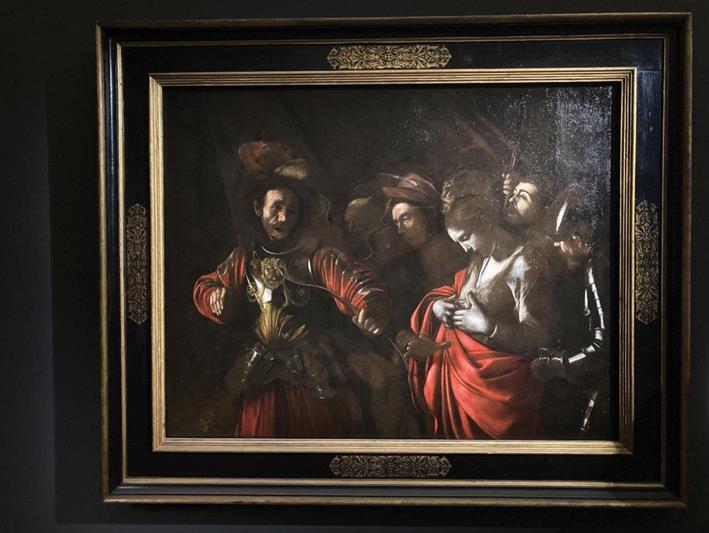
The dramatic Martyrdom of Saint Ursula, c. 1610, likely Merisi's final painting, was commissioned by Marcantonio Doria, a prominent Genoese nobleman, in honour of his stepdaughter Anna Grimaldi, a nun known as Sister Ursula. Painted in Naples before Caravaggio's return to Rome, a journey he never completed, the work was recently restored, revealing three previously hidden figures: a soldier beside Attila the Hun, a probable pilgrim and an armed figure with a helmet.
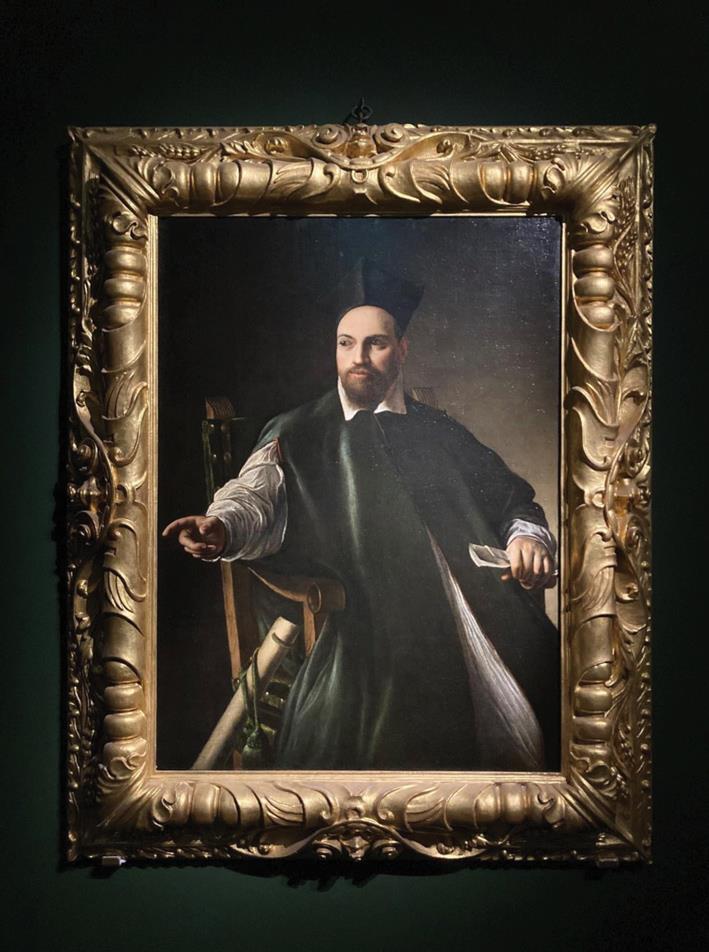
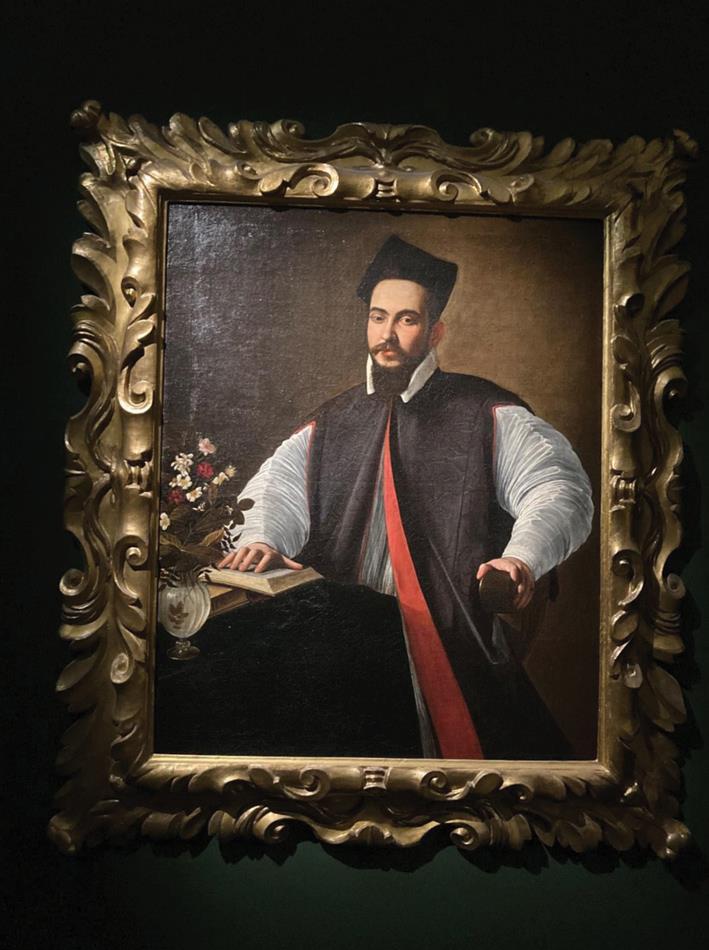
The newly revealed Portrait of Maffeo Barberini, c. 1599, shows Caravaggio's patron captured with both reverence and stark realism. At the time, Barberini was not yet pope but a young monsignor rising through the Church's ranks. After many years in private hands, the painting was publicly exhibited for the first time in 2024 and now belongs to Palazzo Barberini. Seeing this work inside the very palace commissioned by the man in the portrait added powerful layers of meaning.
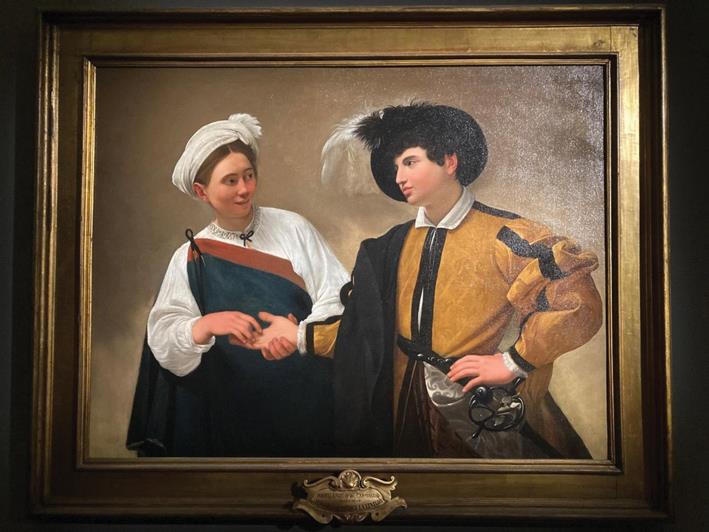
The Fortune Teller, c. 1594, comes from the Capitoline Museums, just metres from Palazzo Barberini. The setting feels intentional, intimate and charged with memory. It was here, in the orbit of Cardinal Francesco Maria del Monte, that Caravaggio's career began to take shape. Del Monte was more than a patron; he was a protector and a believer in Caravaggio's turbulent talent. I could almost feel the echo of that support.
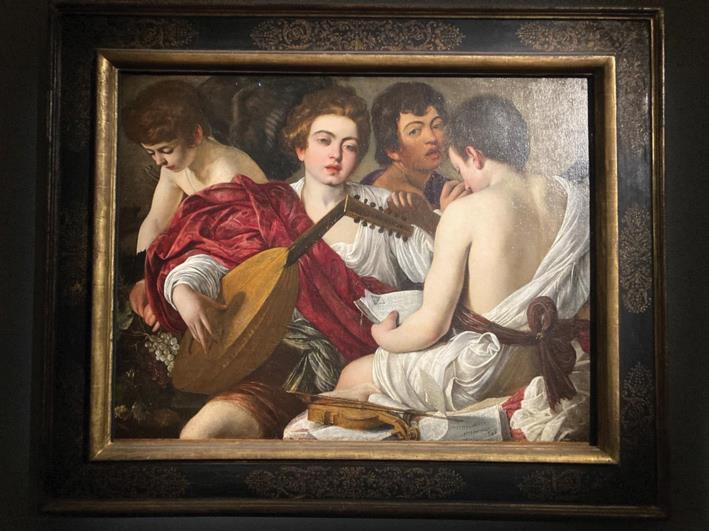
Seeing The Musicians, c. 1595, once more, on loan from the Metropolitan Museum of Art, brought fresh emotional clarity. On my first visit, I was captivated by its composition. This time, I was struck by its vulnerability. The way the figures seem both staged and lost in their own worlds creates a tension between performance and reality that only Caravaggio could render so intimately. This painting was commissioned by Cardinal del Monte, who had a passionate interest in music.
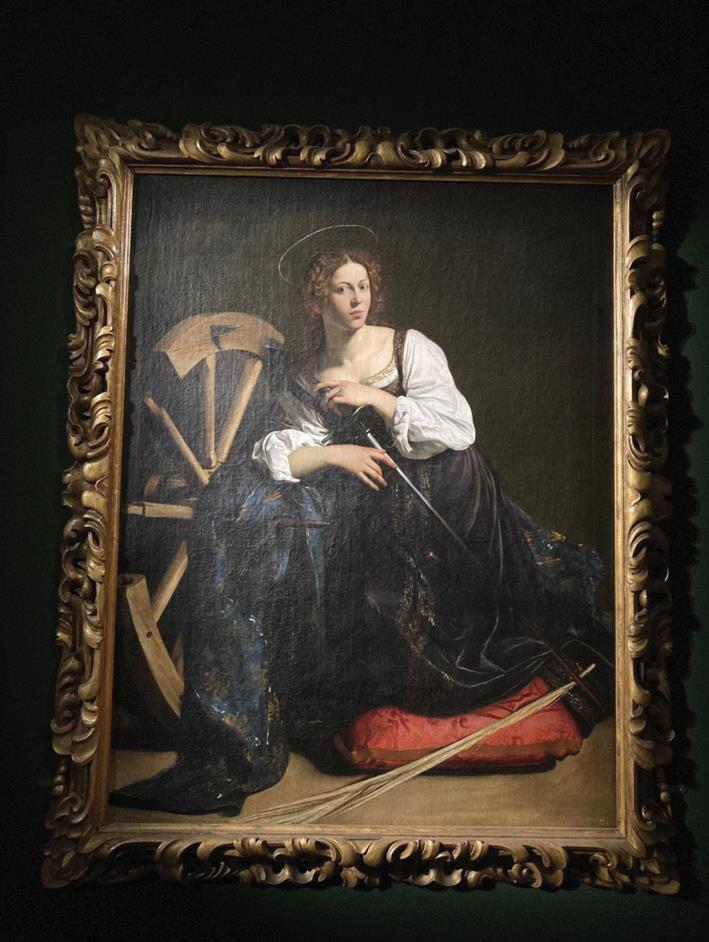
And then there is Saint Catherine of Alexandria, returned temporarily from Madrid's Thyssen-Bornemisza Museum. Knowing the story behind its sale, made its presence even more powerful. This painting is not just a masterpiece; it is a survivor. Seeing it again, I noticed details I had missed the first time: the quiet defiance in the saint's gaze, the soft resignation in her posture, perhaps echoes of Fillide Melandroni, the courtesan believed to have modelled for it, and of Caravaggio's own troubled life.
Galleria Borghese's Caravaggio treasures: three of six on display
The Galleria Borghese owns six Caravaggio masterpieces, the largest collection in the world. This is a remarkable legacy.
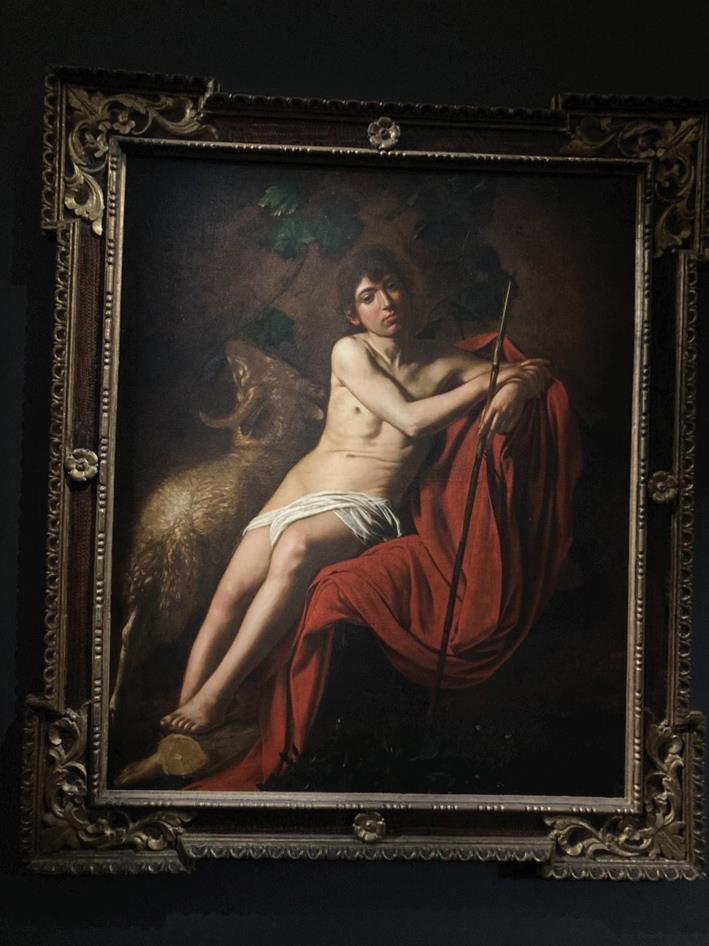
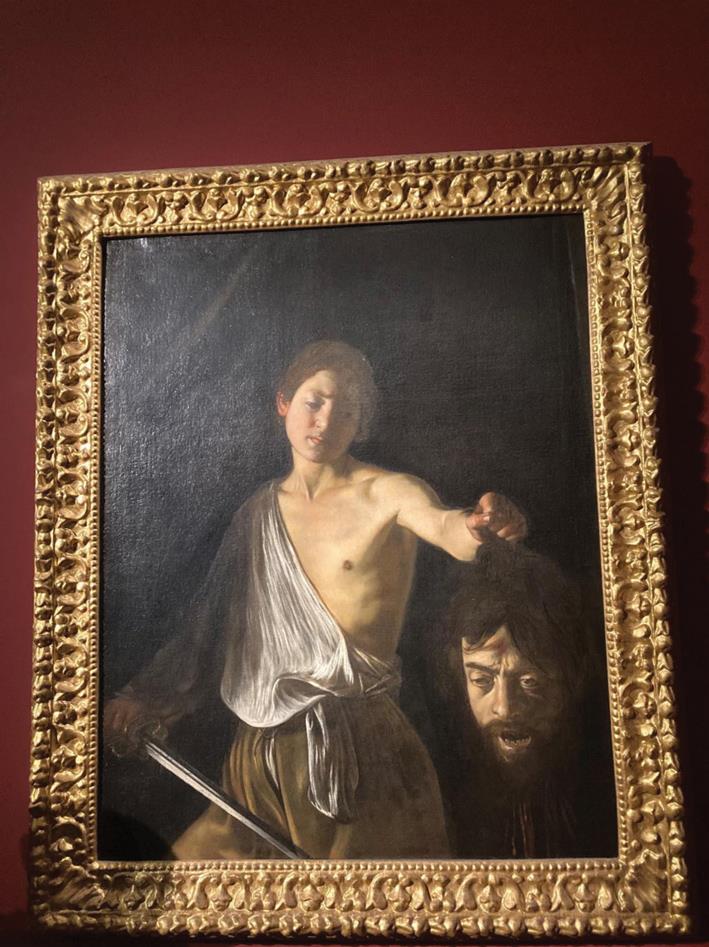
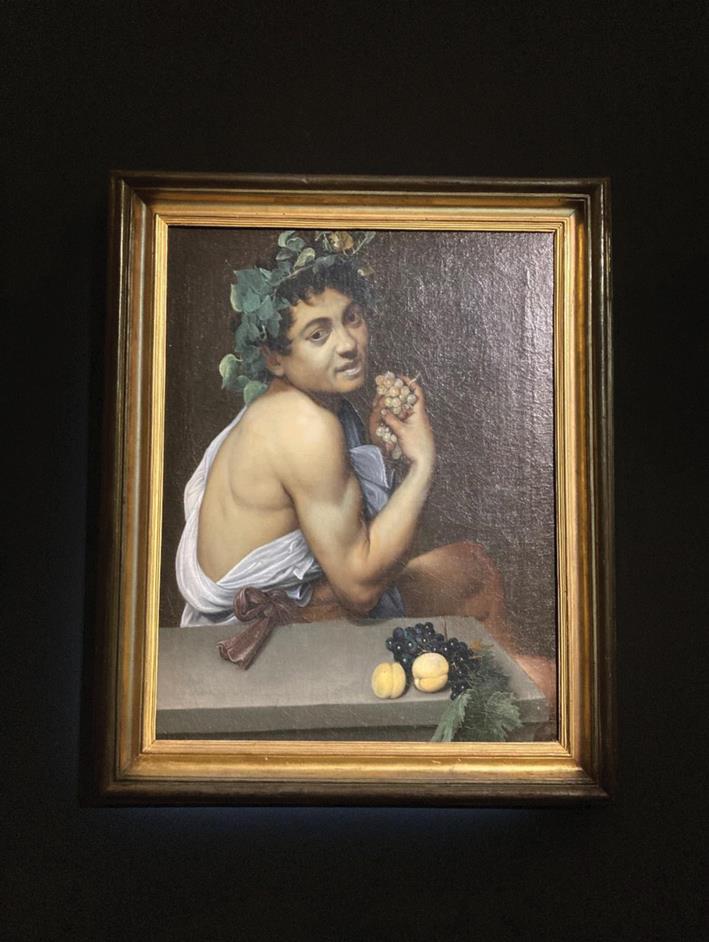
Three of those paintings were loaned to this exhibition: Young Sick Bacchus, Saint John the Baptist and David with the Head of Goliath. Their presence added weight and historical depth to the show.
About David and Goliath, c. 1600/01, Francesco Boneri, known as Cecco di Caravaggio, is the young, sorrowful David in one of Caravaggio's last tragic works, from the Galleria Borghese, where he holds the enormous head of Goliath. Boneri was a student, apprentice, model, and perhaps even lover of Caravaggio. The young man followed Merisi to Naples in 1606, when the painter fled there, wanted for murder, but he stayed in the city while Caravaggio went on to Malta and then Sicily. Did they ever reunite?
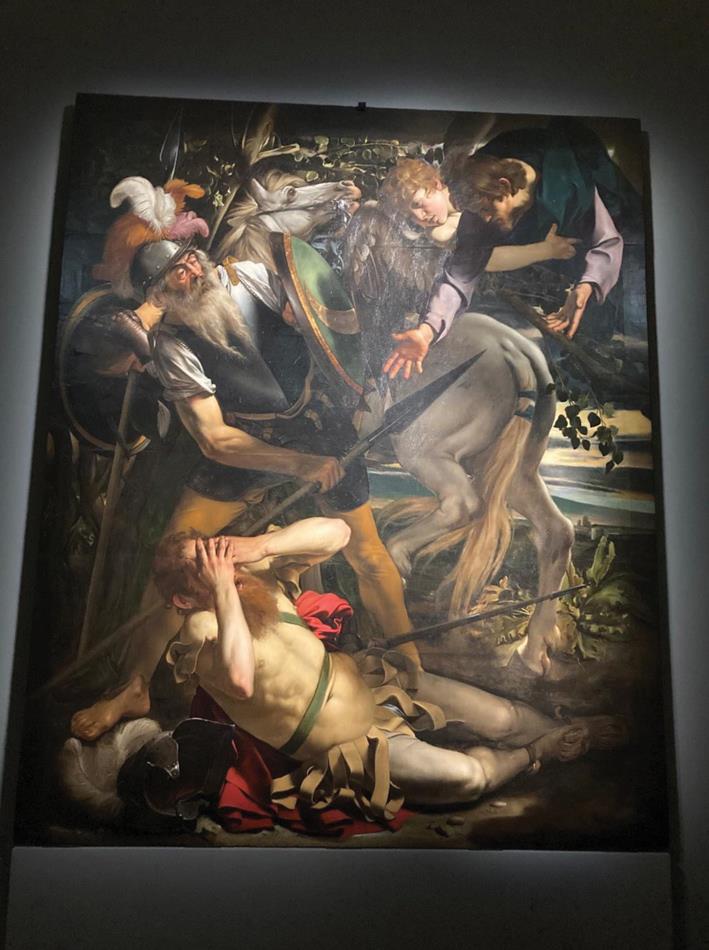
But my favourite painting from the exhibition was undoubtedly The Conversion of Paul, c. 1601, from the private Odescalchi Balbi Collection in Rome. It depicts Saul falling, blinded, with Christ leaning down, capturing a raw, powerful moment. This original never made it to the commissioned chapel; the second Caravaggio version now hangs in the Cerasi Chapel of the Church of Santa Maria del Popolo.Seeing this rare original in person was truly unforgettable.
A return to the Casino dell'Aurora
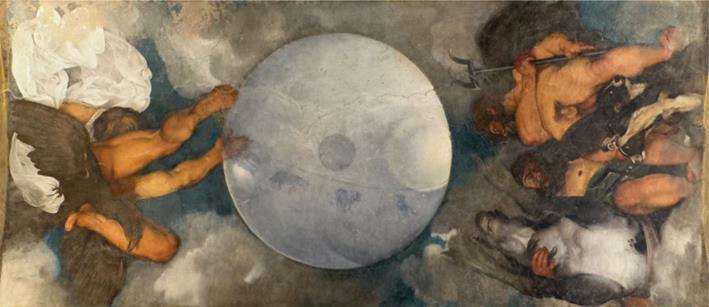
I also took the opportunity to revisit the Casino dell'Aurora, located on Via Lombardia, just off the iconic Via Veneto. A street known around the world for its glamour and as a symbol of La Dolce Vita in Rome. Caravaggio's Jupiter, Neptune and Pluto, c. 1597, mural is an extraordinary display of mythological drama rarely seen. The three Roman gods are all self-portraits of the artist himself.
Addicted to beauty: the art of returning
And perhaps that is the nature of experiencing beauty and meaning, the first encounter is often too overwhelming so that one is unable to fully absorb so much beauty. I have felt the same when visiting natural wonders, UNESCO World Heritage sites, iconic landmarks, historic cities, and renowned museums and art galleries worldwide, especially those places rich in cultural resonance.
It takes time to understand them. Even with Rome, a city I have visited hundreds of times, I never stop exploring, discovering, learning. No wonder it is called the Eternal City. True appreciation, I have learned, often begins with a return.
This second visit was not about ticking paintings off a list. It was about reconnecting. With art, yes, but also with history, with Rome and with the uneasy brilliance of an artist who painted life not as it should be but exactly as it was.
Editorial note: David has a degree in Communications from the University of Malta.
He would like to thank Professoressa Francesca Cappelletti, the director of Galleria Borghese and curator of the Caravaggio 2025 Exhibition, for granting him accreditation to revisit the exhibition.