What story or emotional journey do you hope visitors will experience as they walk through this exhibition?
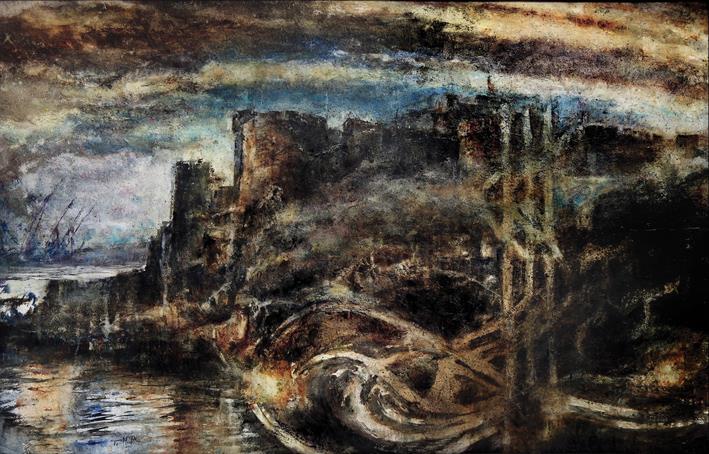
These paintings serve as windows into a distant and turbulent past - an era marked by holy wars and relentless raids by Barbary corsairs on our islands. The works tell stories rooted in these harsh realities. I hope visitors are transported into that time, where daily life was shadowed by struggle and faith offered the only solace. It's a journey into a world where hope was deeply intertwined with religion, and where resilience was born of necessity.
Is there a central theme or motif that ties these works together, or do they each stand as independent meditations?
There is a strong unifying thread throughout the exhibition. All the paintings explore life in 16th-century Malta, with a particular focus on the siege of 1565. These works offer glimpses into the psychological and emotional states of our ancestors - how they coped, resisted, and believed in the face of existential threat.
Your paintings evoke a strong sense of myth and mystery. Do you begin with a narrative in mind, or does the story emerge through the brushstrokes?
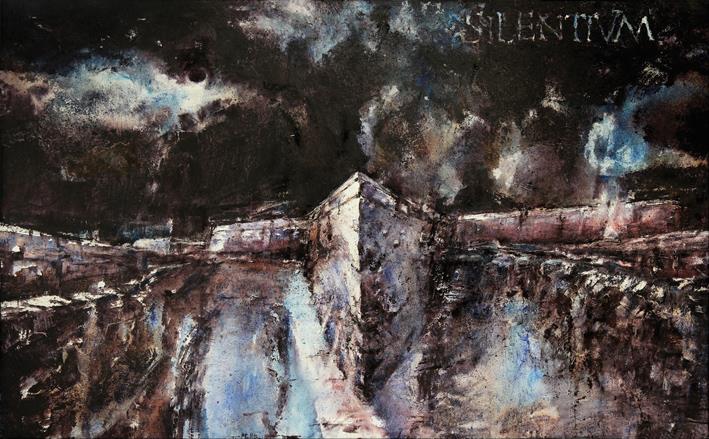
In my solo exhibitions, I typically begin with a clearly defined theme, often exploring opposing forces - good and evil, Christianity and Islam, order and chaos. These dualities provide a foundation for the drama and tension that characterise my work. I begin by deeply researching a subject, allowing different facets of the theme to unfold and guide the creation of each piece. While earlier works may have been more clear-cut, I now seek abstraction and ambiguity. I want viewers to find their own meaning within the mystery.
How do you choose your colour palette - especially the deep, dramatic tones that dominate your work?
The dark, almost monochromatic palette is a defining feature of my work. Black is perhaps the most used colour in my practice. My approach to colour has been shaped over many years - it doesn't come instinctively but is the result of years of experience. I minimise colour deliberately, relying more on texture and value to intensify the impact of the image.
What role does symbolism play in your compositions? For instance, the sword, the helmet, the galleys - do they carry personal meaning?
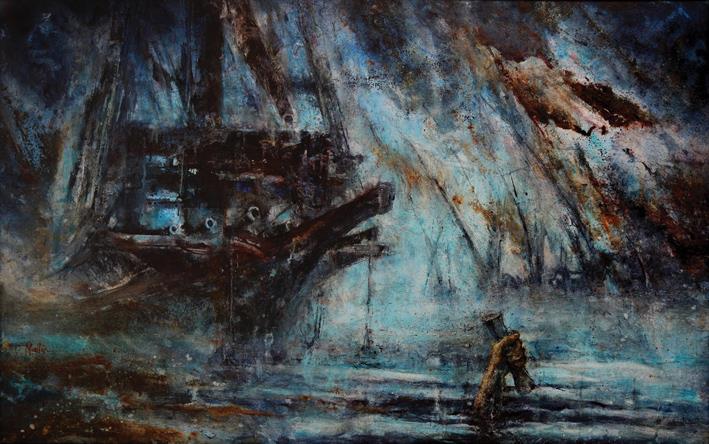
The Symbolist movement of the late 19th century played a central role in the creation of this series. In particular the fragmented, mosaic-like style of Russian artist Mikhail Vrubel influenced a number of the works in this exhibition - Philerme being a prime example. The motifs I use - the cross, the sword, the galley - are not literal representations. Rather, they serve to evoke emotional and existential tensions: belief and mortality, war and peace, order and chaos. We still witness these same tensions daily on our TV screens in the context of modern conflict.
Are there particular historical periods, literary works, or personal memories that inspire your visual language?
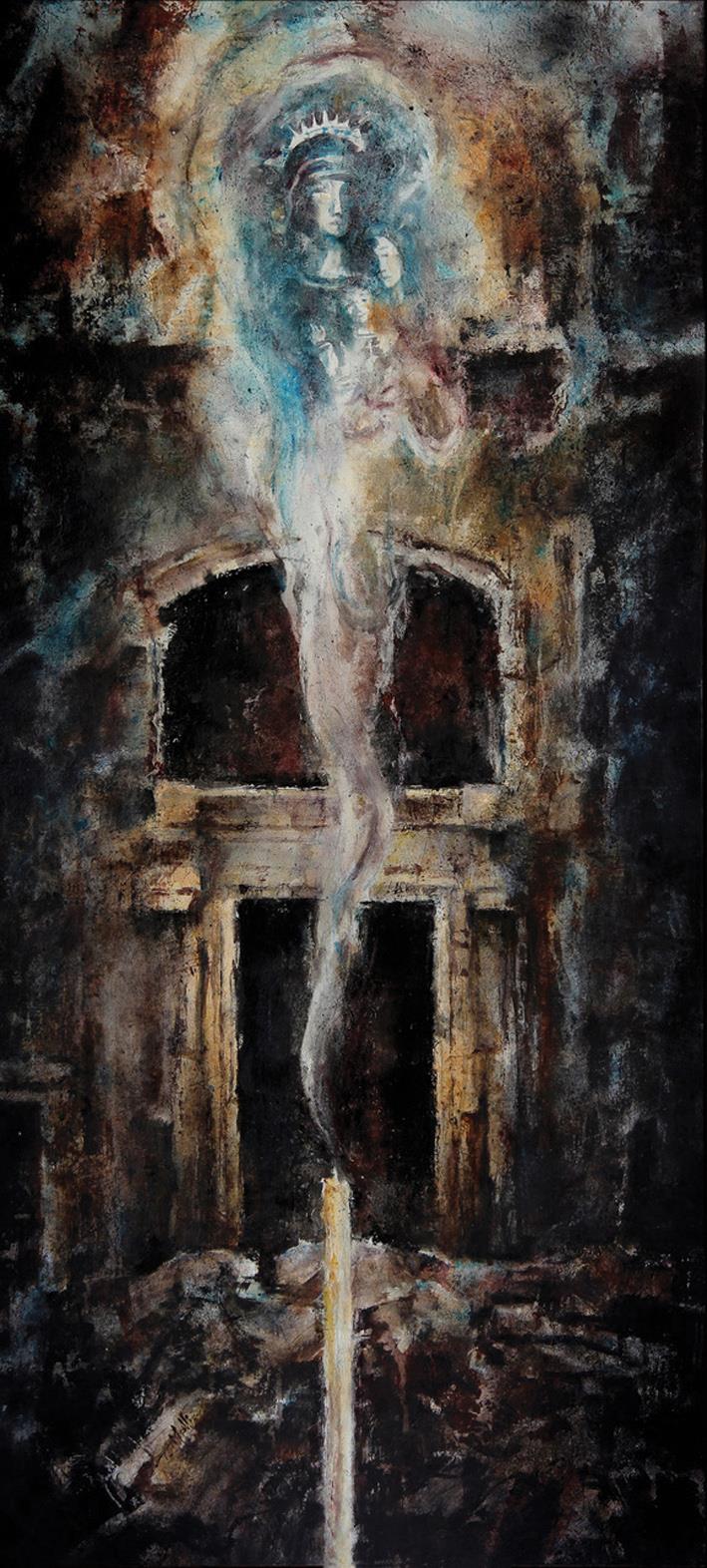
I began drawing from a very young age, encouraged by my father, who was also an artist. In my twenties, I transitioned to painting more seriously, initially working with watercolour. Early influences included John Blockley, William Thon, and Andrew Wyeth. Today, Anselm Kiefer and Nicola Samori are two of the artists I follow mostly for inspiration.
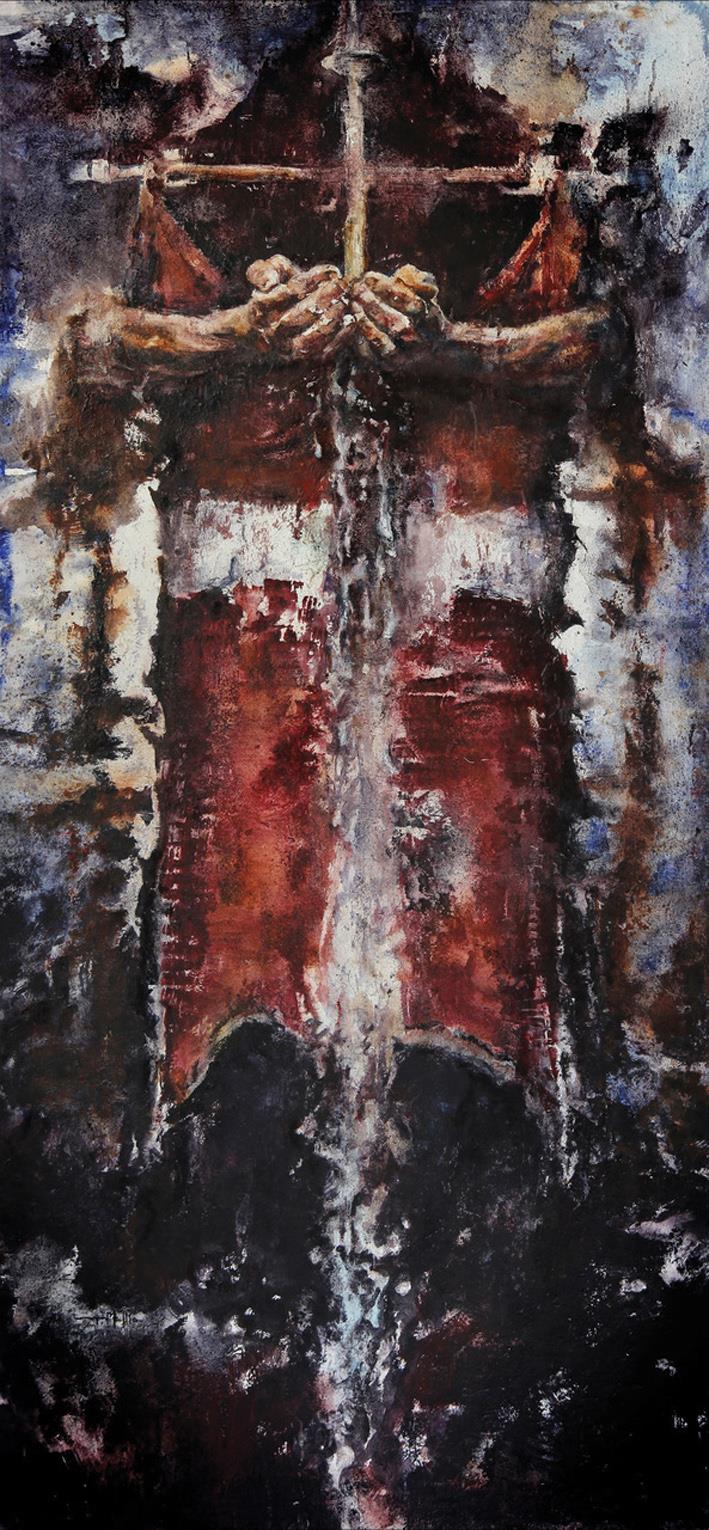
The figures and objects in your paintings seem to hover between reality and dream. Do you see your art as a form of storytelling, or more as emotional expression?
My work is less about illustrating history and more about suggesting its emotional landscape. I aim to evoke a visceral response by inviting viewers to inhabit the world of those who lived through the events I reference - to feel their fear, sorrow, resilience, and faith. The figures and objects are intentionally ambiguous, hovering between reality and metaphor.
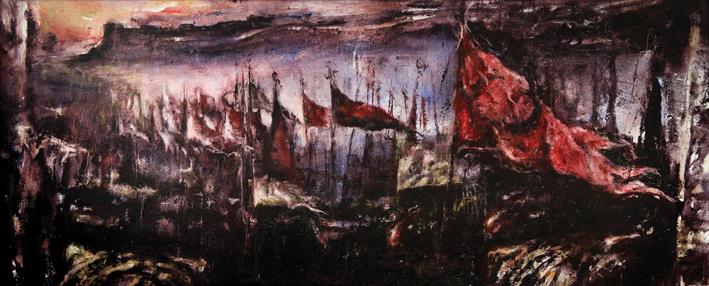
Looking back at your earlier work, how do you feel your style or themes have evolved?
In my early years, I focused on plein-air watercolour painting, which grounded me in observation and natural forms. Over the past decade, my technique has grown more complex, incorporating mixed media and less conventional surfaces like rice paper. Working in the studio has allowed for greater control and thematic depth. I've shifted toward more conceptually driven work, often exploring themes of human behaviour, conflict, spirituality, and environmental degradation.
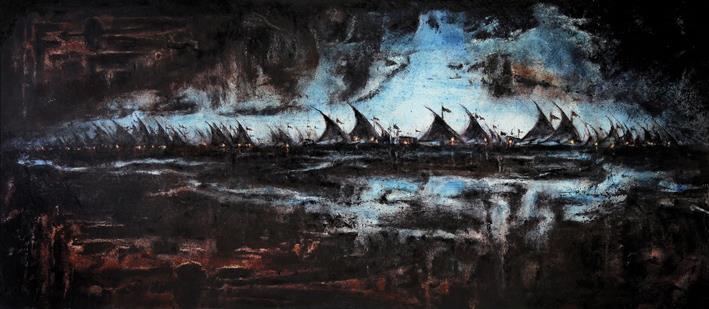
Is there a painting in this exhibition that challenged you the most -either technically or emotionally?
Each painting presented its own set of challenges, both technically and emotionally. These works are the result of three years of research, introspection, and layered experimentation. They contain multiple strata of meaning - some overt, others buried beneath the surface. It's difficult to single out one piece, as each was part of a continuous process of discovery and reckoning.
What kind of dialogue do you hope your paintings spark with the viewer?
I hope the work invites a contemplative pause - a moment to reflect on our shared past and to confront the emotional residue left by conflict. Through symbolism and ambiguity, I want viewers to ask themselves: who are we, in the shadow of suffering? How do we respond to the wounds of history - those of the displaced, the abandoned, the forgotten?
If someone were to walk away with just one feeling or thought after seeing your work, what would you hope it to be?
Compassion.
What does painting give you that no other medium or activity can?
Painting allows me to push the boundaries of creation on a two-dimensional plane. It's a space where the physical meets the spiritual -where ideas can materialise through texture, form, and gesture. No other medium offers this kind of immediacy and depth for me.
Do you ever feel that your paintings teach you something about yourself that you didn't know before?
Yes, often. When I was young, my mother once told me I struggled to finish what I started. Over time, I think I've disproven that. Now in my seventies, I continue to push myself toward new creative frontiers, still learning, still striving.
NOW FOR SOME QUESTIONS WHICH ALLOW US TO GET TO KNOW YOU BETTER
What is your idea of perfect happiness?
Peace of mind.
What is your greatest fear?
Being alone.
What is your greatest regret so far?
Thankfully, none that I can think of.
What is your greatest extravagance?
I'm an audiophile. I can't resist the temptation to improve my music system - constantly upgrading equipment and collecting vinyl records. It's a passion that borders on obsession.
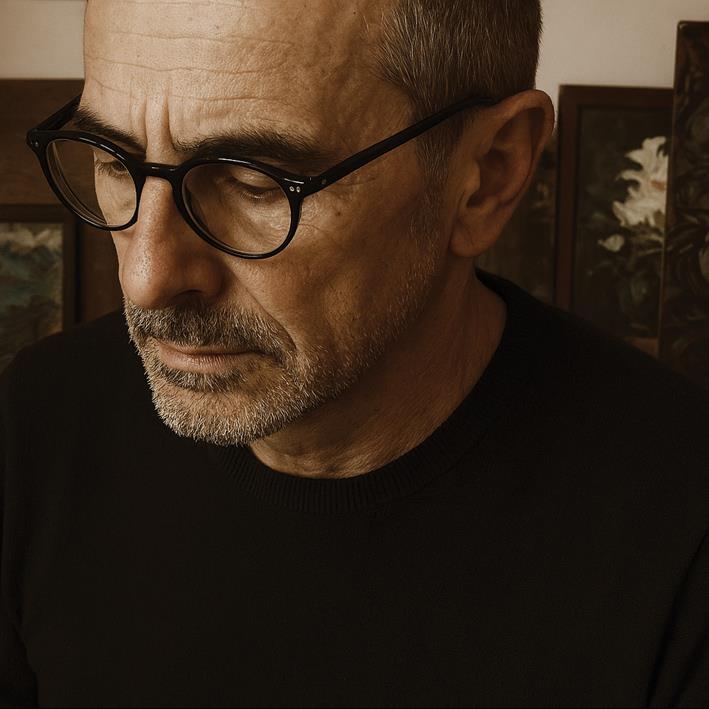
Tonio Mallia is a visual artist with a career spanning over four decades. Born in 1955, he began his artistic journey in his early twenties as a landscape watercolourist. Over the years, he devoted his energy to experimenting with various techniques and mediums, including acrylics, inks, and oils. Known to discard convention in order to more effectively realise an image to its fullest impact, Mallia utilises a variety of surfaces particularly heavy textured handmade and rice papers. His subject matter evolved and matured, often exploring themes related to human behaviour. Key thematic interests include universal issues such as conflict, spirituality, and environmental concerns.
The artist says
"The concept behind this exhibition emerged during
Bellum in Mundum, my previous