Many were sad when he left Malta, but Clint Scerri Harkins is temporarily back, and so is his art, which will be with us for a couple of weeks at il-Kamra ta' Fuq. I'm talking about a remarkable photographer, a great friend, and yes, also a wonderful chef. Many still dream of the beef and Guinness little pies he prepared for us at New Life Bar shortly before his departure. (Yes, Clint, it's a giant hint!)
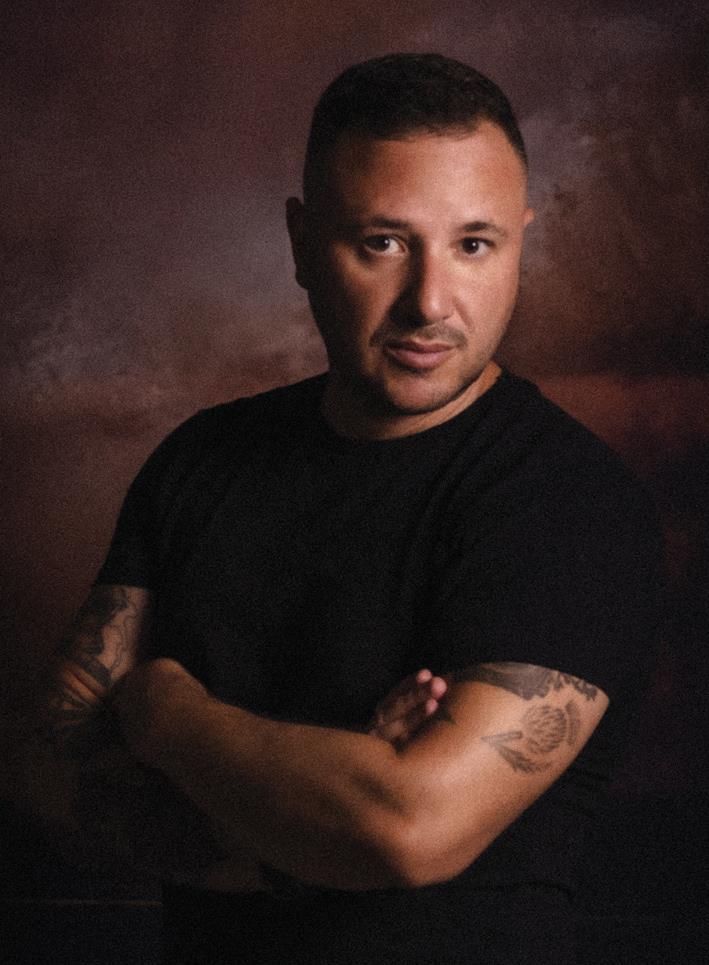
Originally from Mdina, Clint moved to Parma, Italy, where he continued to develop his photographic practice while also gaining experience in other areas of the art world. Yet throughout it all, his constant pursuit of beauty has remained at the heart of his work.
I consider myself fortunate to have been involved in all three of his solo exhibitions over the years. His first, Satya, curated by Simon Sultana Harkins and held at Splendid in Valletta, marked Clint's early exploration of the nude from an intimate perspective. The works presented in that show captured private, delicate moments through the lens, confronting both the feeling and reality of being one with Beauty.
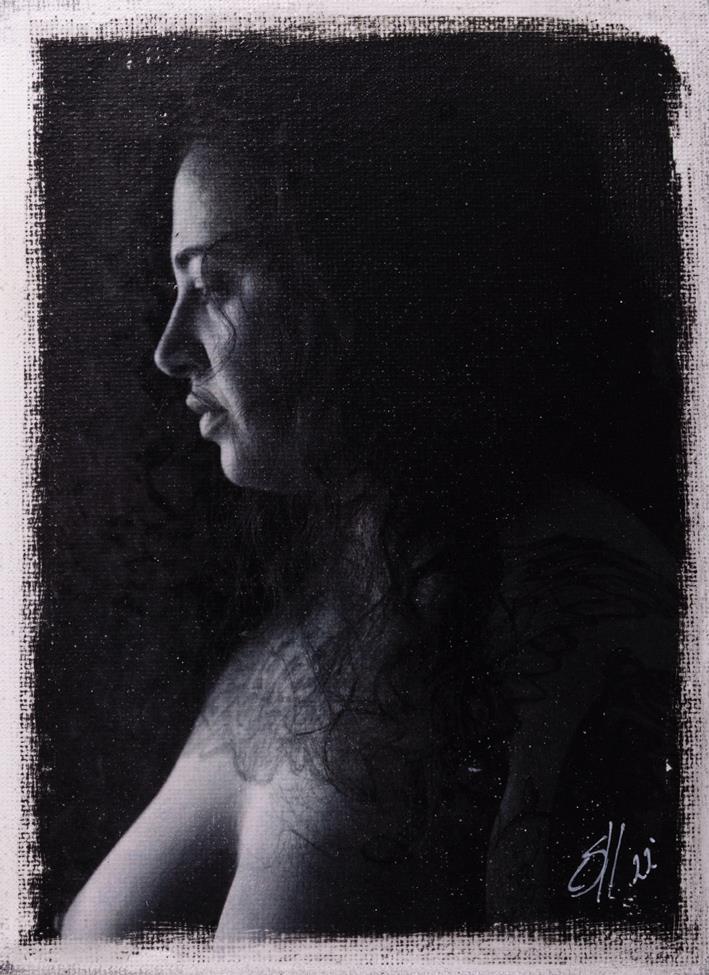
Satya was followed by the exhibition HER at il-Kamra ta' Fuq, curated by yours truly, where Scerri Harkins captured his better half, Rebecca Ranieri, in a series of intimate yet carefully composed images. Shot during the Covid-19 lockdown, the works reflect a period of isolation where his only available subject was his partner - proof that creativity can flourish even in moments of restriction and uncertainty.
I personally feel that KÁLLOS is conceptually a continuation of Satya. Not only in Clint's constant search for beauty within the human form, but also in his use of ruins as backdrops, sites that function like theatrical props and lend an unexpected context to the photographs, while deepening the exhibition's central idea. When I asked Clint about his choice of title, he explained that his process begins with research and preparation around a central idea. In this case, he was initially drawn to the notion of "abandoned beauty". Several works were indeed taken in derelict spaces, places that are beautiful in ruins. His signature theme, of course, remains the nude, and once again he includes models with different body types in his work, echoing the belief that beauty truly lies in the eye of the beholder.
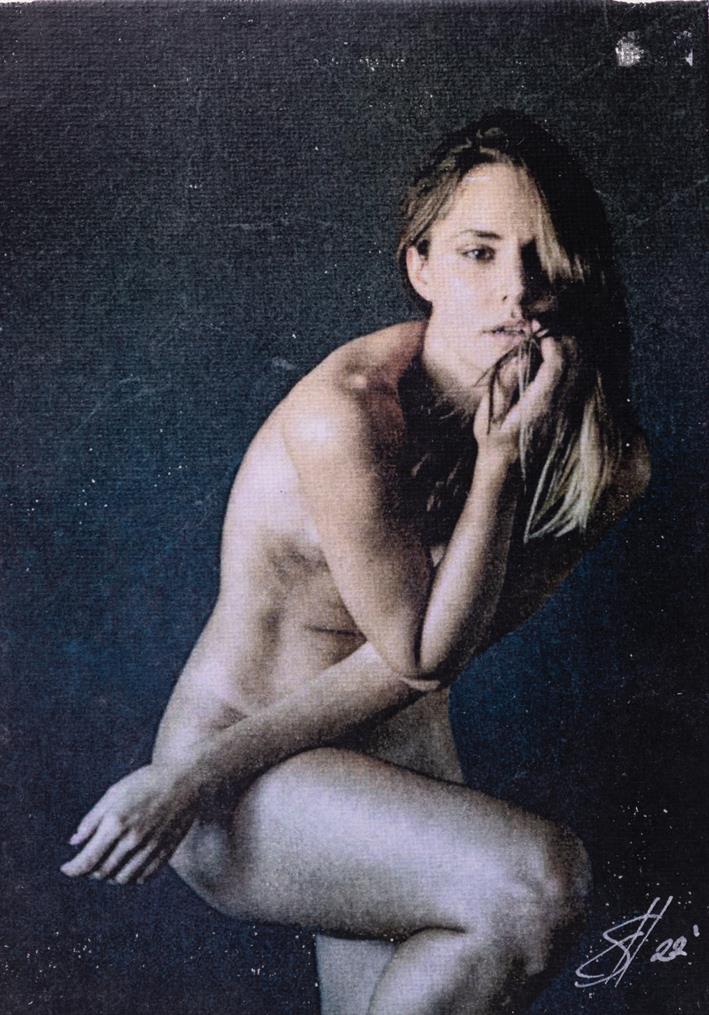
In searching for a word that encapsulated this vision, Clint came across kállos, an ancient Greek concept of beauty that transcends gender and physical appearance, embracing both inner virtue and outward form. This exhibition draws from that ideal, reimagining classical notions of harmony and excellence through the lens of contemporary fine art nude photography.
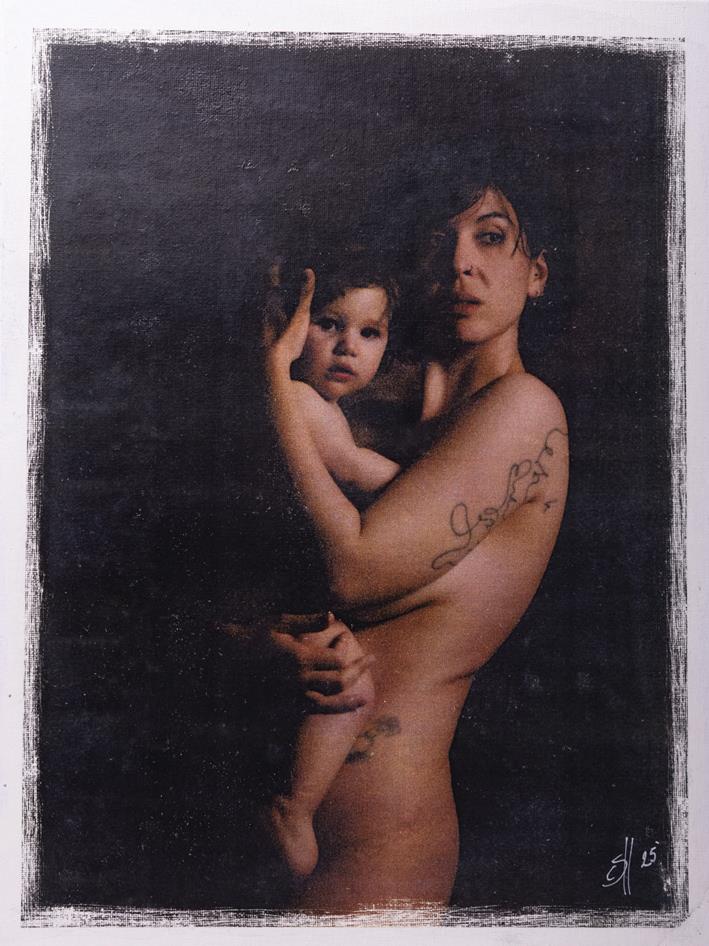
From HER we also see a direct link to one of the models, none other than Rebecca herself, who returns to the lens not only in her own beauty, but now as a mother. She is lovingly captured holding their daughter, little Neave. Through these works, Clint celebrates the beauty of motherhood, most strikingly in Hygieia, a reference to the ancient Greek goddess of health and sacred care.
As in Satya, Clint does not confine himself to a single body type. Instead, he seeks beauty in diversity: different sizes, different genders, tattooed and unmarked, some partially covered in drapery that both conceals and reveals, others completely nude. Some appear as conquerors, others in shy, tentative poses - perhaps first-time sitters - while others strike the assured stance of seasoned models.
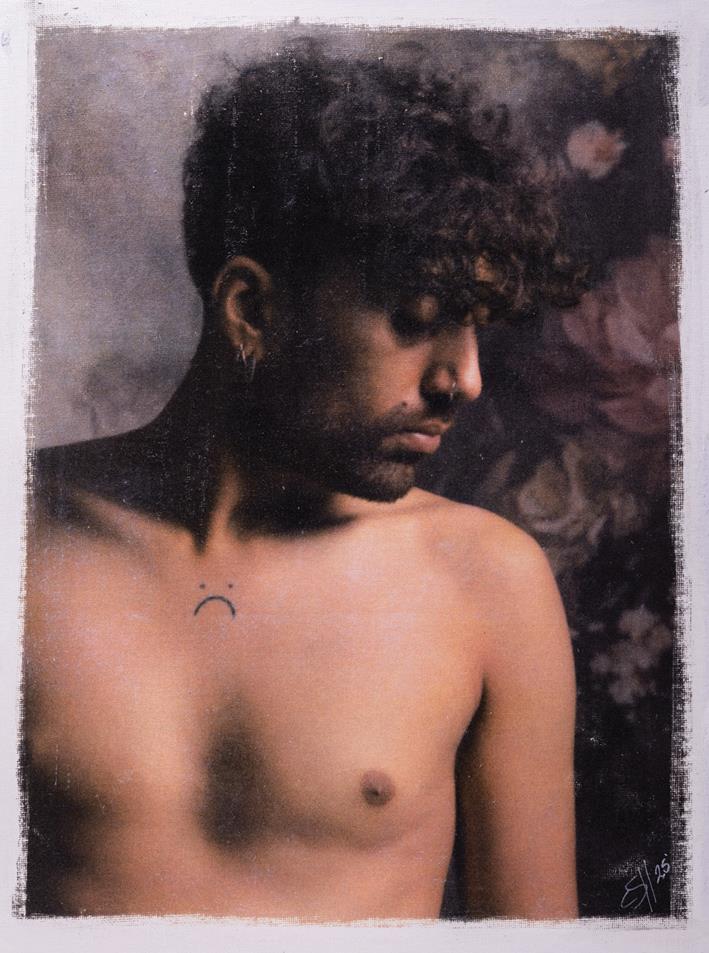
This exhibition also marks, I believe, the first time Clint has worked with a male model. Shown partially nude, he is portrayed in a series of whimsical images where Clint draws particular attention to the sitter's distinctive tattoo, a sad-smiley face inked on his chest, which subtly conveys something of his inner character as we see in Lýpi (sorrow, tender melancholy).
With another model, Clint created a striking series where she wears only jewellery around her neck and wrists. Captured in self-assured poses, she exudes the presence of a queen, confident in her own skin, facing the world in all her beauty.
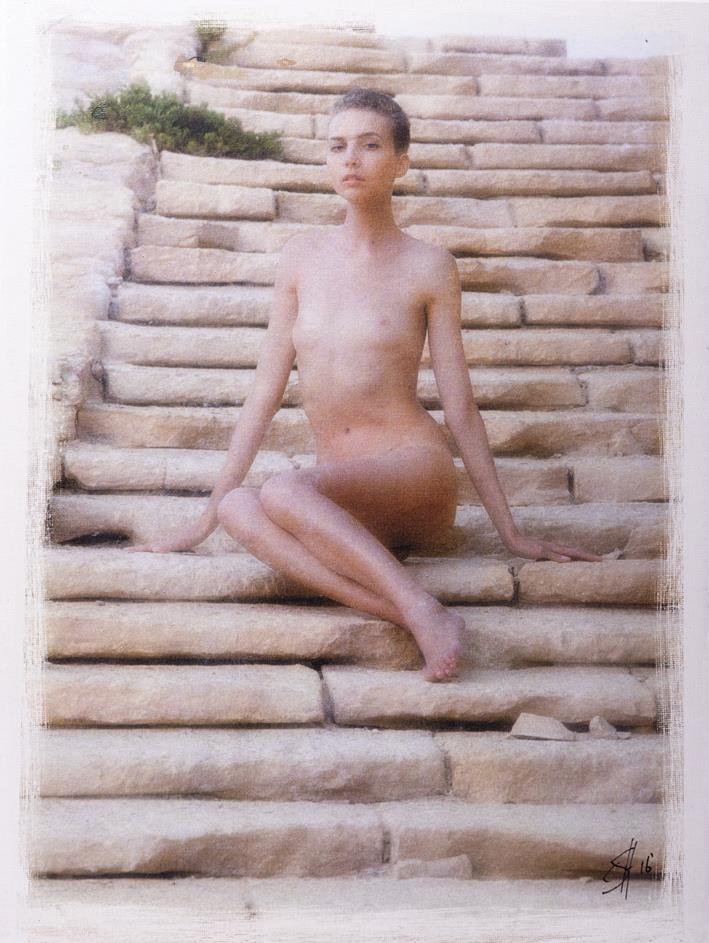
The chosen locations for these shoots, often dilapidated, time-worn structures, also enrich this dialogue of imperfection. Their weathered textures and faded histories mirror the vulnerability of the human form, creating an atmosphere where decay and beauty coexist. In one series, Clint sets his subject within the ruins of a once-grand staircase, as in Eirínē (peace, tranquility). In another, the backdrop is the remnants of a perhaps once-stately building, now reduced to broken walls, as seen in Hestía (hearth, sacred shelter). Bathed in dramatic light, the model seems to merge with her surroundings, simultaneously present and elusive. In these moments, Clint fuses the stillness of ruins with the living presence of the human body, layering beauty upon places that already hold countless untold stories.
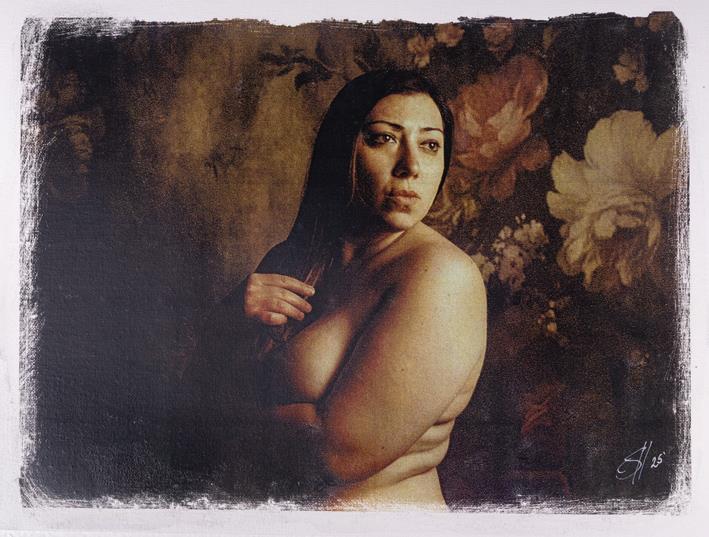
This sense of nostalgia also emerges in a series shot against faded floral wallpaper. Though it anchors us to no specific time, it speaks eloquently of passing years, reminding us that external beauty inevitably fades, while inner beauty and memories endure.
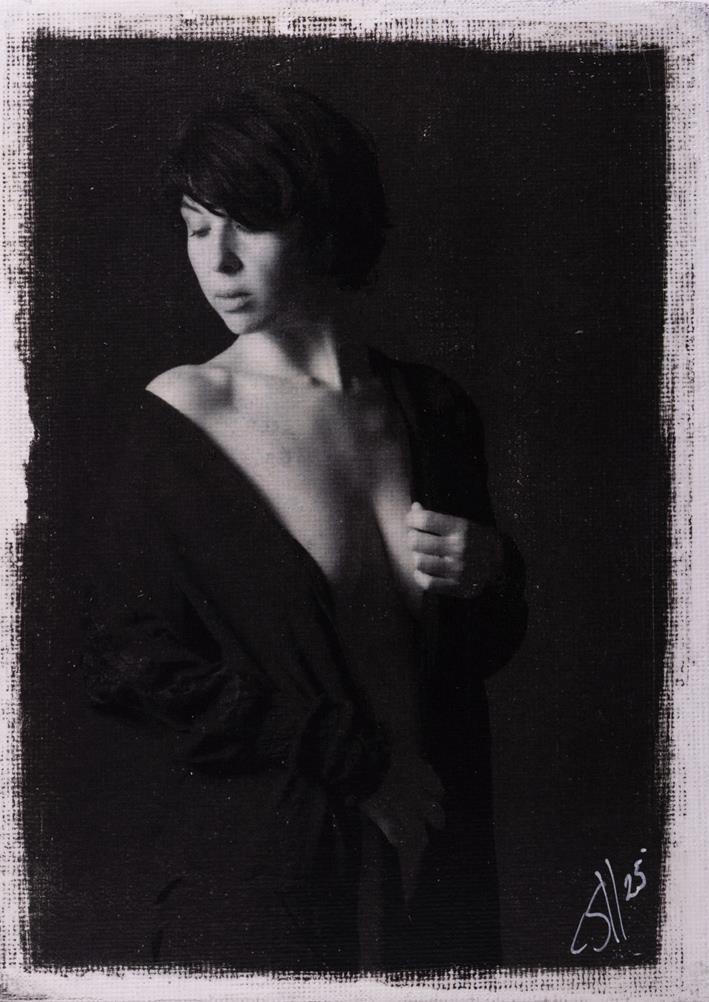
The theme of imperfection carries through into the very technique Clint chose for this exhibition. He employs a matte gel transfer process, manually transferring images from printed photographs onto canvas board or textured paper. Most of the works are intimate in scale, often no larger than A5, like fleeting moments or private memories. The process resists precision: areas of ink may fail to transfer, smudges may appear, or sections may be left blank. Far from flaws, these irregularities lend the images a vintage quality, as if they were relics from another era. By embracing the imperfections of both place and process, Clint imbues each work with a tactile presence that transcends time.
The results of this technique often evoke the atmosphere of very early photography. One work in particular, Asteri (star), recalls the pioneering explorations of nude photography by Eugène Durieu, both in pose and in execution, bridging past and present through form and light.
Ultimately, KÁLLOS is not an exhibition about the nude, but about the search for beauty, and the possibility of finding it in the unrefined spaces where form, feeling, and time converge.
The photographs are presented in an extremely limited edition: each work exists as a unique 1/1 print, accompanied only by a single artist's proof. This rarity enhances their intimacy, positioning them less as multiples and more as personal relics.
KÁLLOS runs until 14 September at il-Kamra ta' Fuq.
Follow us on social media for more information.
