Valletta, 26 July 2025. This morning, the Grand Harbour looked calm, its waters catching the gold of the rising sun. But at the St Elmo breakwater, a quiet ceremony unfolded. I saw a man toss a handful of reeds into the sea, their green stems floating gently out toward the open water. Nearby, a small group of Italians stood in silence, some in naval blazers, others in simple shirts.
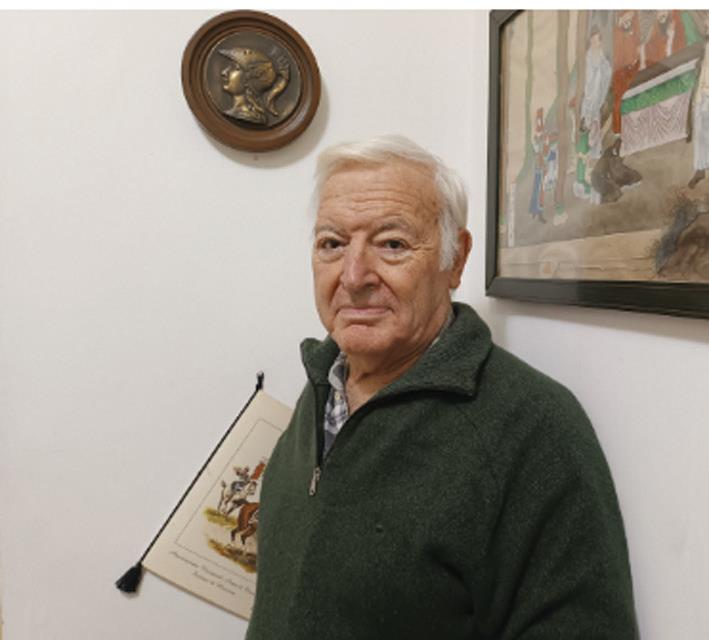
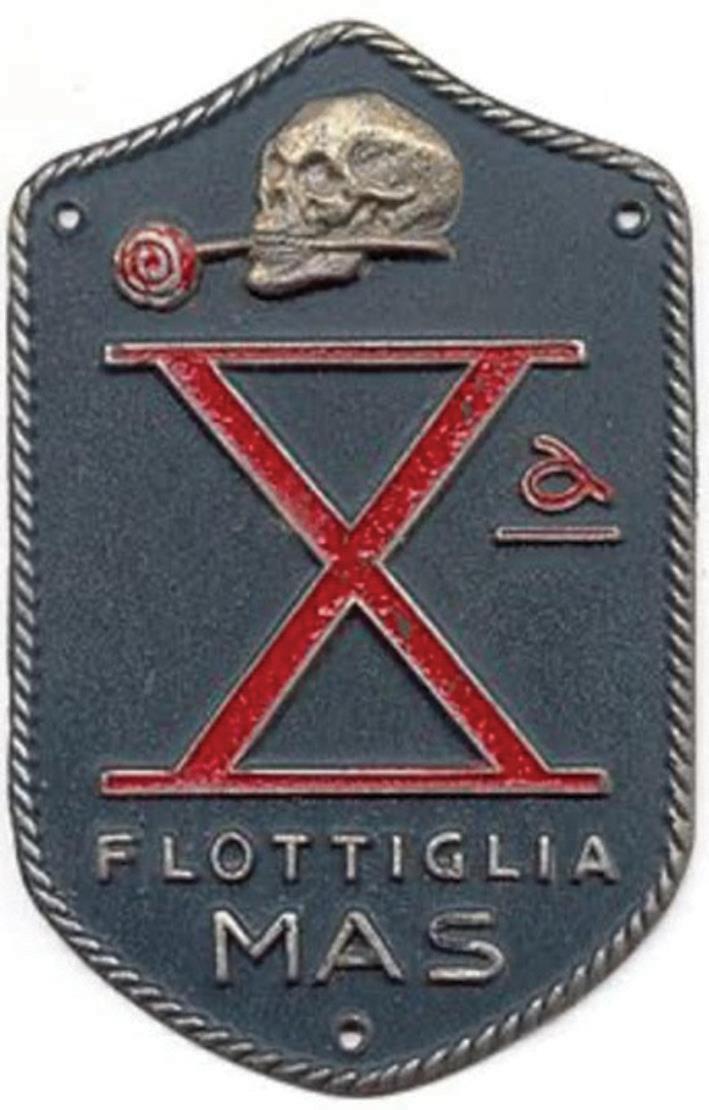
Intrigued, I approached one of the members, who identified himself as part of Memento Audere Semper Bocca di Serchio, an association led by Giulio Cozzani. Cozzani currently serves as the president of this group, which brings together Italian veterans and historians committed to preserving the legacy of the Decima Flottiglia MAS, the elite naval sabotage unit renowned for executing one of the most daring yet costly operations of the Second World War. Under Cozzani's leadership, the committee strives to honour and maintain the memory of this remarkable chapter in military history.
When I asked what they were commemorating, the answer came without hesitation: "Teseo Tesei. He died here, 84 years ago, trying to break into this harbour."
That evening, I read everything I could find, from wartime British reports to Maltese scholarship and Italian memoirs, to understand who Teseo Tesei was, what happened on 26 July 1941, and why the raid still resonates.
A pioneer before the war
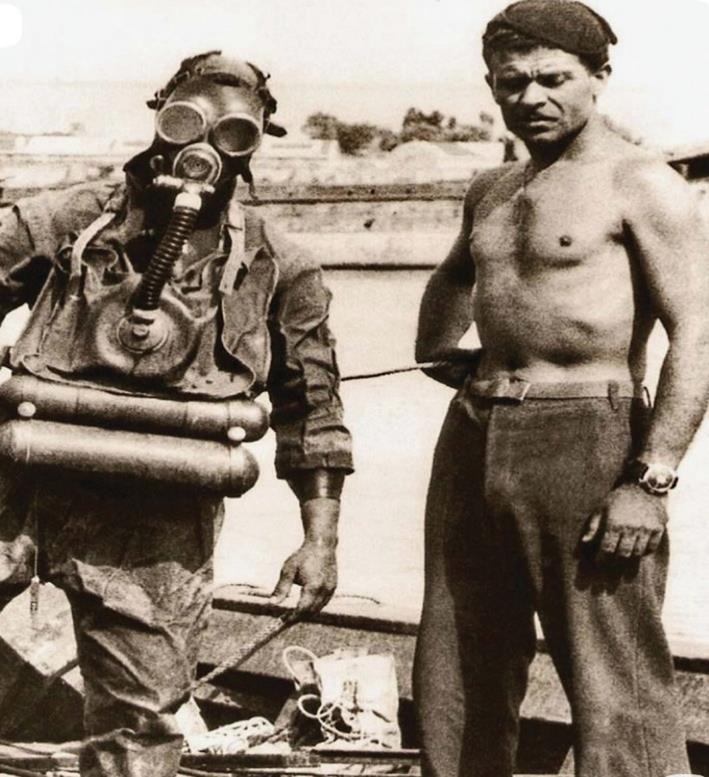
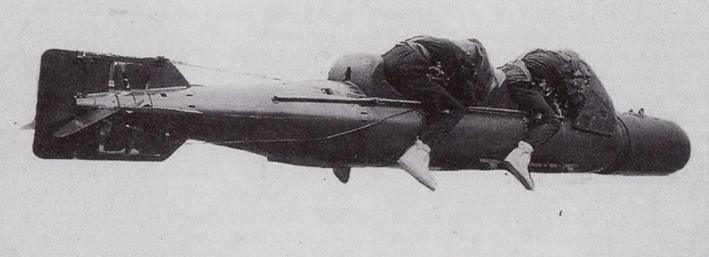
Tesei's wartime role cannot be understood without acknowledging his pre-war work. In the mid-1930s, alongside fellow officer Elios Toschi, he developed the Siluro a Lenta Corsa (SLC), a manned torpedo derived from the World War I mignatta. Success hinged on solving a critical technical problem: breathing underwater for hours without detection.
Early systems, like the British patent Davis Submerged Escape Apparatus, offered less than 20 minutes of oxygen. Working with diving innovator Angelo Belloni, Tesei developed the Model 49/bis rebreather, enabling missions of over three hours underwater. This single advance, tested personally by Tesei, made it possible to infiltrate enemy harbours stealthily.
By 1941, the Maiale had already proven its worth at the Gibraltar raid. Malta, however, would be far more challenging.
The night of the raid. Target: Malta's Grand Harbour. A new hypothesis on the death of Tesei
In 1994, historian Joseph Caruana of the University of Malta published A New Hypothesis on the Death of Teseo Tesei, offering a reassessment of Italian and British wartime sources.
In the pre-dawn hours of 26 July 1941, Major Tesei, commander of Italy's elite Decima Flottiglia MAS, faced a critical test of skill and resolve. One of his Maiale human torpedoes central to the audacious assault on Malta malfunctioned. For nearly 30 tense minutes, Tesei worked under immense pressure to repair the delicate craft, fully aware that every passing second could jeopardise the mission. As 430am approached, he made a resolute decision: scuttle the damaged torpedo and proceed with a single Maiale, embracing the peril of the operation.
Into the dark, turbulent waters, Tesei launched his solitary craft, undeterred by overwhelming odds. Onshore, Malta's defenders were on maximum alert .The artillerymen were on high alert, ordered to sleep at their posts, with nearly every searchlight across the harbour in operation. This was not only due to the early-morning signalling of the torpedo vessel Diana, which later returned to the Sicilian coast, but also, while seeking information from the Valletta police logs, some interesting details emerged: four air-raid warnings were recorded that night. Around 3.30am a loud explosion near the breakwater marked prior defensive activity, followed by the hum of motor engines in the darkness. One warning came just 10 minutes before Tesei was spotted by Gunner Zammit, who opened fire and likely killed him in action at 4.48am. Tesei approached Marsamxett without cover or surprise, as the coastal artillery stood fully loaded and ready to fire.
At approximately 4.48am he fired a precise six-pounder burst along the Maiale's path. According to Joseph Caruana's 1994 technical study, this fire likely disabled the torpedo or triggered an underwater detonation, potentially sealing Tesei's fate before he could reach the harbour. Italian naval literature cross-references this timeline, highlighting the meticulous operational planning of the Decima Flottiglia MAS.
Though the mission ended in tragedy, Tesei's unwavering courage, technical mastery and decisive leadership became legendary. His daring embodies the spirit of the Decima Flottiglia MAS: precision, innovation and audacity under fire. Today, his name remains etched in Italian naval history as a symbol of extraordinary bravery and commitment to duty.
Captive testimonies: Jeffrey Sammut and the POW experience
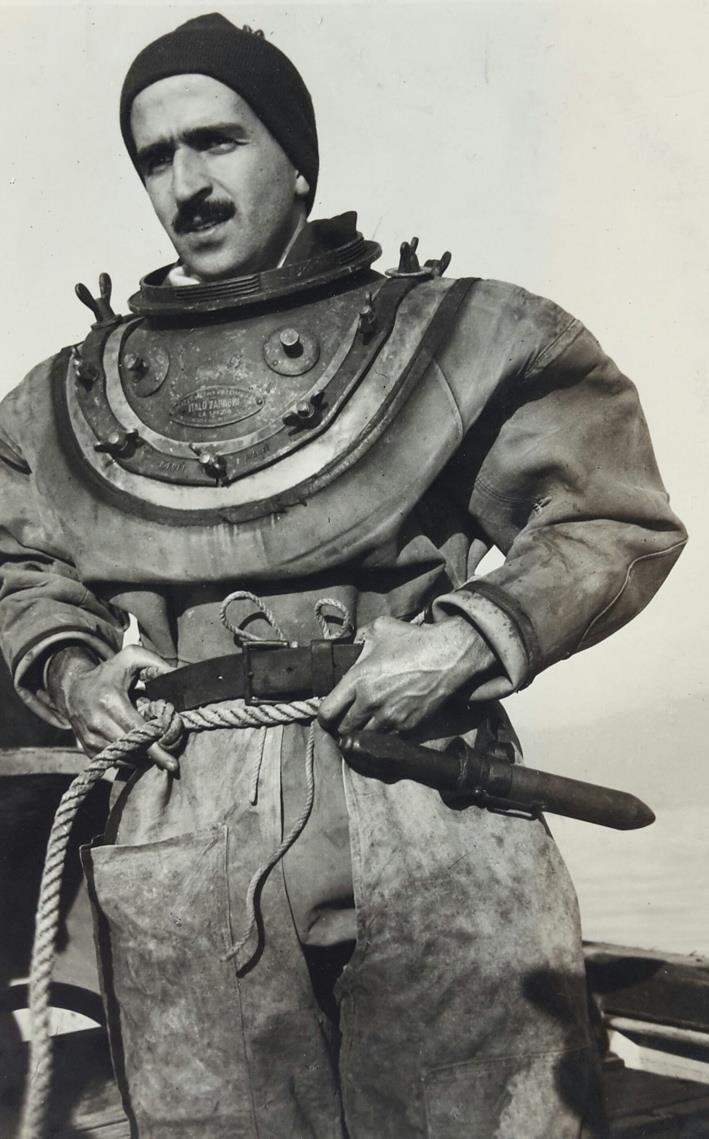
In his recent book historian Jeffrey Sammut: Malta: The Interrogations of Italian Prisoners of War, Sammut brings forward a different layer of evidence, the voices of the men who took part. Using transcripts from British intelligence questioning of captured Decima MAS operators, Sammut reconstructs the mission from the assailants' perspective.
Sammut's interrogation records shed additional light on operational breakdowns, weather factors, and the defenders' readiness, offering rare glimpses from the assailants' perspective. While the precise cause remains uncertain, one reality is undisputed: Tesei's element of surprise was gone, and the odds against him were overwhelming.
These accounts, recorded in meticulous detail, reveal moments of confusion, miscommunication and sheer physical exhaustion. They also show that some operators believed the British defences were stronger than anticipated, with radar and searchlights coordinated far more effectively than in earlier Decima successes. Sammut's work broadens the narrative beyond the romanticised image of Italian naval commandos, showing them as both daring and fallible.
What if?
If Tesei and his team had managed to slip inside the Grand Harbour undetected, the results could have been catastrophic for the Royal Navy. Italian SLC charges placed beneath destroyers, cruisers, or supply ships could have disabled multiple vessels in one strike. The Mediterranean Fleet's operational capacity might have been crippled, forcing Britain to reroute convoys and potentially delaying relief to besieged Malta.
Such a blow, coming in mid-1941, might have emboldened Axis planners to consider Operation Herkules, the proposed invasion of Malta. While historians caution against overestimating a single raid's impact, the strategic possibilities remain tantalising.
Legacy and memory
As Sammut's and Joseph Farrugia's works show, history is rarely the property of a single viewpoint. The Malta raid lives on in a space between legend and forensic reconstruction, caught between nationalist myth and the raw testimony of those who were there. Eighty-four years later, the stones of the St Elmo breakwater still face the sea as they did on that July morning, silent witnesses to a drama of innovation, bravery, and the enduring limits of human technology.
The circumstances surrounding the death of Tesei remain uncertain. Some accounts suggest he may have been killed by a projectile fired by Gunner Zammit or by friendly fire from his own side. Another theory holds that the maiale (human torpedo) he was using exploded prematurely, leaving no remains to be recovered. According to some historians, during a morning patrol shortly after the raid, British patrols near Ricasoli, discovered a diving goggle along with traces of hair and skin, which were later attributed to Tesei, providing the only tangible evidence of his fate.
Although the Malta raid ended in failure, the Decima MAS continued to demonstrate their operational capability. In December 1941, they successfully sabotaged the port of Alexandria, inflicting significant damage on the Royal Navy and causing notable naval hindrances.
This operation underscored that despite setbacks, the Decima MAS remained a formidable force. The failed assault on Malta was thus only a temporary setback; motivated by the memory of their captured and fallen comrades; the Decima continued their fight until their eventual disbandment. Their resilience and determination ensured they never ceased to be a dangerous adversary throughout the war.
The legacy of the Decima MAS lives on not only in historical records but also in the collective memory of naval special operations, inspiring future generations of combat divers and unconventional warfare specialists worldwide.
Sources.
1. Caruana, J. (1991) Malta, 26 Luglio 1941: 'Una nuova ipotesi sulla morte di Teseo Tesei. University of Malta'
2. Spertini, A. 'La X Flottiglia MAS: Storia delle unità d'assalto della Regia Marina'
3. Sammut, J. (2024) 'Malta's POWs - The Interrogations of Italian Prisoners of War'. Valletta: BDL Books.
4. O'Hara, V.P. (2009) 'Struggle for the Middle Sea: The Great Navies at War in the Mediterranean Theatre, 1940-1945'. Annapolis: Naval Institute Press.
5. Pianigiani, G., Foti, S. and Pinelli, R. (n.d.) 'Decima Flottiglia MAS: Dalle origini all'armistizio'. Pisa: Edizioni ETS.
6. Crociani, P. and Battistelli, P. 'Italian Navy & Air Force Elite Units 1940-45'. Oxford: Osprey Publishing.
7. Cappellini, A. (1947) 'Torpedini Umane contro la Flotta Inglese'