More than a century after its publication, Marcel Proust's À la recherche du temps perdu remains one of the most powerful meditations on nostalgia in literature. At its heart is the famous madeleine scene, where a simple taste triggers a cascade of childhood memories, illustrating what Proust called "involuntary memory." This moment captures the essence of nostalgia - not as a conscious act of recollection, but as a sudden, sensory return to a forgotten emotional world. For Proust, nostalgia is not just wistful longing; it's a tool for recovering lost time and understanding the self. He suggests that the past often resurfaces through everyday experiences. Nostalgia isn't just about looking back - it's about making sense of the present through the lens of what once was.
Nostalgia has a way of wrapping us in warmth and longing all at once. It is one of those beautifully paradoxical emotions - both a balm and a tug. Sometimes it is a little bittersweet. It's a bridge to our past selves.
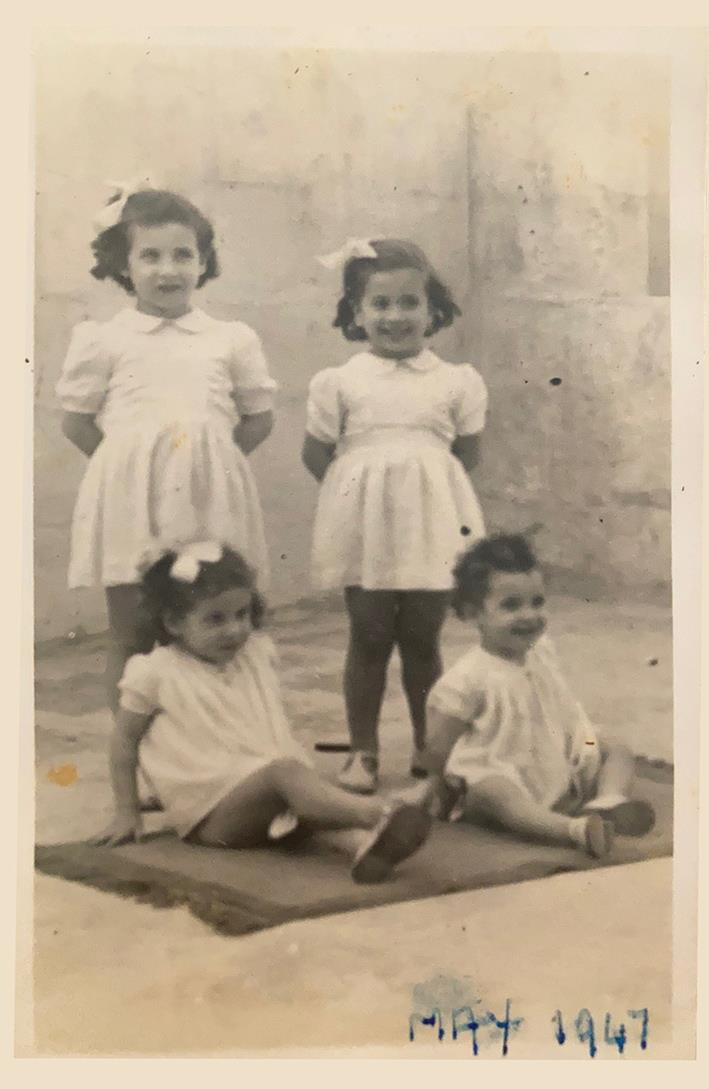
It often brings people closer - memories, old stories, familiar places. It can stir a yearning for times that can't be relived, or for people who are no longer near or alive.
It can be triggered by anything, as mine was recently.
We have a family chat and we're there on WhatsApp every day, often a few times a day. Three of us are just over 80; another, at 76, is nearly there. We are officially old, although my sisters insist that "we are getting old but not old yet." They say we don't look old. I say, of course we do. They're too short-sighted to see the reality in the mirrors. Thank goodness I am, too.
Our exchanges are mostly about our parents and our childhood, friends and family. How we wish we had asked our parents more questions. Our memories are similar in many ways, but not in others. Who is right? We agree to disagree.
We all seem to have similar memories about going to Aldo Micallef Grimaud, the artist who lived a few doors away with his parents and three brothers. Immediately I say his name, I remember his brother Aurelio, who always seemed so gay, whistling past our door. This memory was triggered by tea at a sister's house, for she has inherited the painting, but also by a retrospective of Aldo's work at Muza.
My mother had commissioned the artist to do a portrait of her four daughters. We all found it boring to sit for half an hour or so in silence, keeping still and staring into space. To lure us, she would give us sixpence every time we went - individually, of course. Once the session was over, we would immediately cross Dingli Street and pop into Golden Gate, which at that age to us was truly golden; they sold comics of all types and a great variety of sweets. My favourite were the multicoloured Liquorice Allsorts. Sixpence worth of those, at the time, gave you quite a handful - enough to destroy many teeth without much effort. I look at them now, when I see them at Lidl, and tell them: "I would love to buy you, but alas, I now have diabetes and you are verboten, like so many good things." However, sometimes the temptation and feeling of nostalgia are overwhelming, and I do buy a packet, eat them one by one, hide the evidence from my daughters, and then spend the rest of the day feeling guilty, hoping I am not going to lose a leg because of my greed.
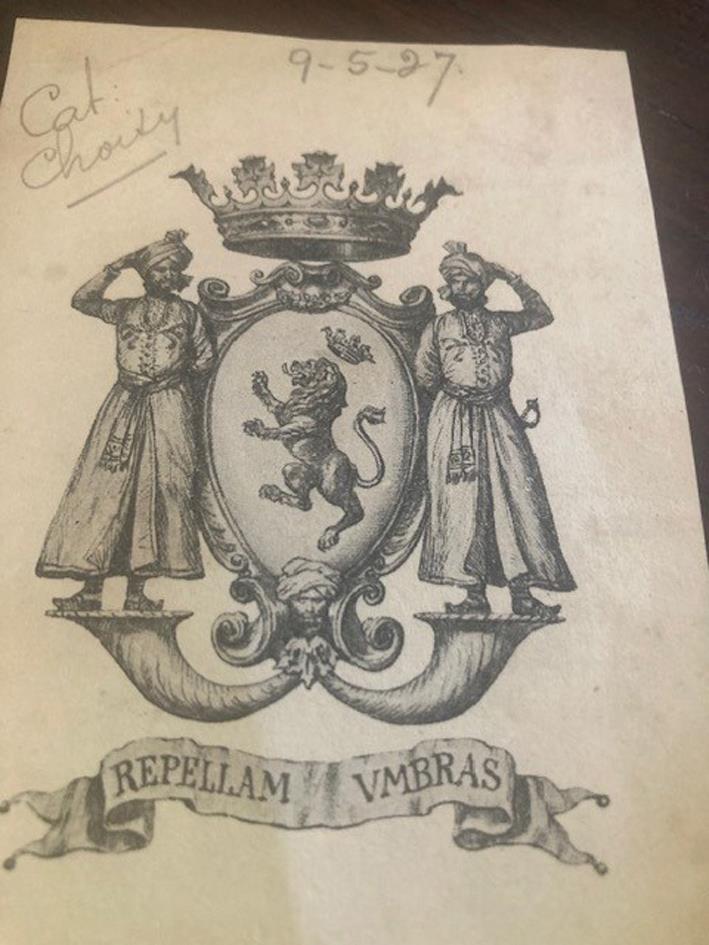
Another source of nostalgia recently was a bookplate that fell out of Axel Munthe's The Story of San Michele, which I am re-reading. Although it has no name, I immediately recognised it as belonging to the Prosper d'Epinay collection at the Carnegie Town Library in Curepipe, where I worked for quite a few years as head librarian.
I am quoting this from my Fellowship thesis, Libraries in Mauritius. My supervisor was Dr D.H. Simpson, Librarian of the Royal Commonwealth Society, assigned to me by The Library Association (of Great Britain). I was lucky and sent each chapter, as it was finished, by diplomatic pouch, thanks to the services of the British High Commission. You can imagine that the post to and from Mauritius, 40 years ago, was very erratic. Here is the quote:
"Towards the end of the 19th century, epidemics of malaria broke out in Port Louis, the capital. The Franco-Mauritian elite started moving to the cooler and consequently healthier part of the island -Curepipe. This was the start of the development of the town of Curepipe. By now, Port Louis already had two public libraries - the City Library and that of the Mauritius Institute."
There were some distinguished names running the Carnegie over the years, such as Félix Giblot-Ducray, Tristan Blandain de Chalain, and the last before I took over - Camille de Rauville. The latter came home regularly, as apart from being a writer, he was also a historian, my husband being more a historian than anything else.
At the time, we did not know what gender our eldest was going to be, and we decided to call her Camille, whether it turned out to be a boy or a girl - partly because we liked the name and partly after Camille de Rauville. He had introduced the Dewey Decimal Classification to the library and set up a card catalogue... all those years ago.
I was recruited after cyclone Gervaise had hit the island which it devastated and many precious books were lost. I remember having to handle all this, and I am to this day bewildered as to how I managed.
I have happy memories of my work there. The staff was respectful and became fond of me. When I arrived and parked, three of them would rush out to carry my briefcase.
I remember mostly Roger. If only I had taken photos. Roger always put some kind of package behind a curtain under the stairs. I had always assumed it was his lunch. But eventually I was to find out it was opium. These people were so badly paid, had so many problems - opium must have brought them some kind of solace. I closed my eyes and said nothing. After all, he did not consume it on the premises.
Another memory was of a woman employee who was a divorcée with children. She married the town engineer, who was much younger than her, and he wanted a child. She could not conceive, it seems, and finally had a phantom pregnancy. It was very sad. I wonder if they ever got their child.
One last anecdote about my years in Curepipe. One day I received a frantic phone call from the deputy town clerk, a woman of substance. She told me that, without checking the envelope, she had opened - by mistake - a letter addressed to the town clerk, who was married to a German woman. It was a passionate letter from his mistress abroad.
"What am I going to do? If I give it to him, he will kill me," Miss H told me.
Well, there really was no other option but to tear it up and hide the evidence. Letters lost in the post were common in those days. The mistress would simply write another one. I felt sorry for the town clerk's wife, a quiet woman. I knew her well, for her daughter and ours were in the same class at the Lycée. Little did she know what was going on behind her back.
In a world where nostalgia is increasingly curated through social media memories and algorithmic reminders, Proust's vision feels strikingly modern. His work reminds us that the most meaningful recollections aren't chosen - they choose us. And when they do, they don't just bring back the past -they help us understand who we've become.
Édith Piaf has many great songs, most of them nostalgic. One of her lesser-known ones is Nostalgie. I love it too.